
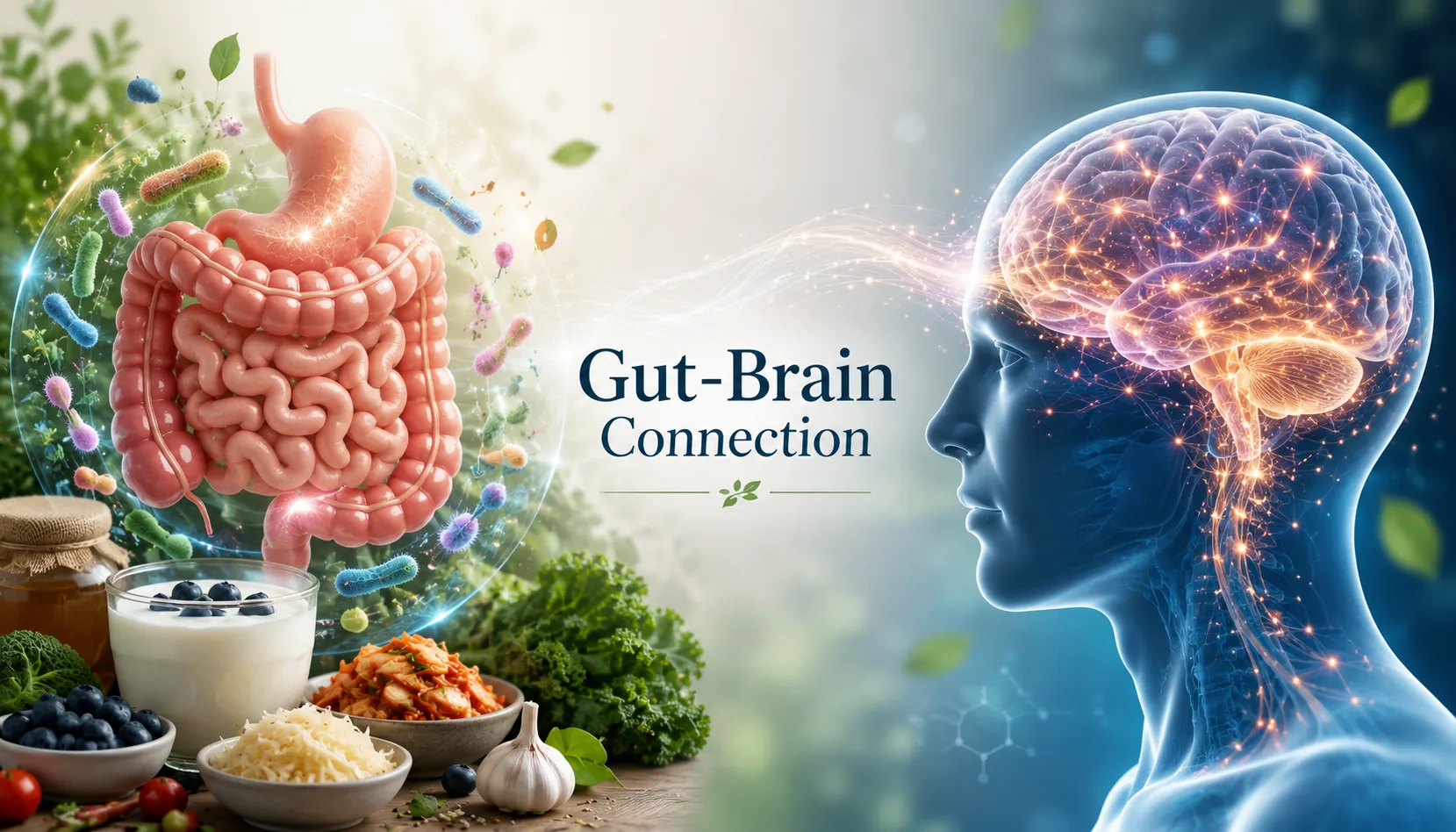
Your gut and brain are in constant conversation. Not metaphorically. Through nerves, hormones, and chemical signals, your digestive system talks to your brain in real time, and your brain talks back.
This is not fringe wellness theory. It is one of the most actively researched areas in neuroscience and psychiatry. A 2026 review published in Frontiers in Microbiomes describes the gut-brain network as ‘a complex bidirectional communication system’ with direct implications for mood disorders.
Here is what the research actually shows, what gets overstated in supplement marketing, and what you can do with this information.
What the Gut-Brain Axis Is
The vagus nerve runs directly from your brainstem to the enteric nervous system in your gut, carrying signals in both directions. Your gut contains roughly 100 trillion microbes, collectively your gut microbiome, and these microbes influence everything from your immune system to neurotransmitter production.
Your gut produces approximately 90 to 95% of the body’s serotonin, according to research from Caltech on gut microbiota and serotonin production. This surprises most people because serotonin is usually discussed as a brain chemical tied to mood.
Important nuance: gut serotonin does not cross the blood-brain barrier. It does not directly produce the serotonin your brain uses for mood regulation. But it regulates gastrointestinal function and the enteric nervous system’s communication with the central nervous system. The relationship is real. The mechanism is more indirect than popular science suggests.
What Disrupts the Gut-Brain Axis
Disruptions to the gut microbiome are associated with increased risk of anxiety, depression, and other mental health conditions. The relationship runs in both directions: gut dysfunction can worsen mental health, and chronic stress can damage gut lining and microbiome diversity.
Research has identified several factors that disrupt this system:
- Antibiotic overuse, which kills beneficial bacteria alongside pathogens
- Ultra-processed food diets that reduce microbiome diversity
- Chronic psychological stress, which changes gut permeability (sometimes called ‘leaky gut’)
- Early-life disruptions including cesarean birth, lack of breastfeeding, and early antibiotic exposure
The Serotonin Story (More Nuance Than You Have Been Told)
The 90 to 95% serotonin figure gets cited constantly. What rarely gets explained is that gut serotonin and brain serotonin are functionally different. Gut serotonin regulates peristalsis (gut movement) and is associated with conditions like IBS, which in turn strongly correlates with anxiety and depression. The link to mental health is real, just not the direct ‘gut serotonin = happy brain’ story that supplement companies sell.
What matters for mental health is that a healthy gut microbiome supports the tryptophan metabolism pathway. Tryptophan is an essential amino acid your body uses to produce serotonin precursors. Found in pumpkin seeds, oats, eggs, and legumes.
Do Probiotics Help With Mental Health?
The honest answer: possibly, with modest effect sizes.
Specific strains of Lactobacillus and Bifidobacterium have shown statistically significant reductions in anxiety and depressive symptom scores in randomized controlled trials. But effect sizes are modest, and the research is still early. Studies are limited by small sample sizes, short durations, and diverse study designs.
Fecal microbiota transplantation (FMT) is emerging as a more targeted intervention in clinical research, but it remains experimental for mental health applications.
Bottom line: probiotics may help as part of a broader approach. They are unlikely to replace professional treatment for clinical depression or anxiety disorders.
What Actually Supports the Gut-Brain Axis
| Intervention | Mechanism |
| Diverse plant diet (30+ plant types/week) | Increases microbiome diversity, produces short-chain fatty acids that support gut-brain signalling |
| Fermented foods (kefir, yogurt, kimchi, miso) | Directly introduces live cultures; some research shows benefits for mood |
| Regular physical activity | Increases gut microbiome diversity independently of diet |
| Stress management (sleep, mindfulness, social connection) | Reduces chronic stress impact on gut permeability and microbiome stability |
| Prebiotic fibers (garlic, onion, asparagus, oats) | Feed beneficial bacteria; support the environment for a healthy microbiome |
When to Seek Professional Help
If you are experiencing persistent low mood, anxiety, or digestive symptoms that affect your daily life, gut-brain research gives you useful context, but it does not replace clinical assessment. A gastroenterologist and a mental health professional working together is more effective than any dietary intervention alone.
The gut-brain axis is a real and significant system. It also gets used to sell supplements that promise more than the evidence supports. The most effective approach combines good nutritional habits with professional mental health support when needed.
FAQ
Does gut health really affect mood?
Yes, through the vagus nerve, microbiome-produced neurotransmitter precursors, and immune signalling. The relationship is bidirectional and well-documented. The mechanism is more complex than direct serotonin production, but the link between gut dysbiosis and mood disorders is real.
What foods are worst for the gut-brain axis?
Ultra-processed foods, high-sugar diets, and excessive alcohol reduce microbiome diversity and increase gut permeability. Artificial sweeteners may also disrupt gut bacteria composition, though research is ongoing.
Can probiotics help with depression?
Some strains of Lactobacillus and Bifidobacterium have shown modest benefits in clinical trials. They are not a replacement for therapy or medication, but may support other treatment approaches. Consult a doctor before using probiotics for mental health purposes.
Readers value wellness advice that is practical, balanced, and backed by research. WritoryBuzz creates engaging health and lifestyle content that informs audiences, builds credibility, and strengthens long-term organic visibility.