
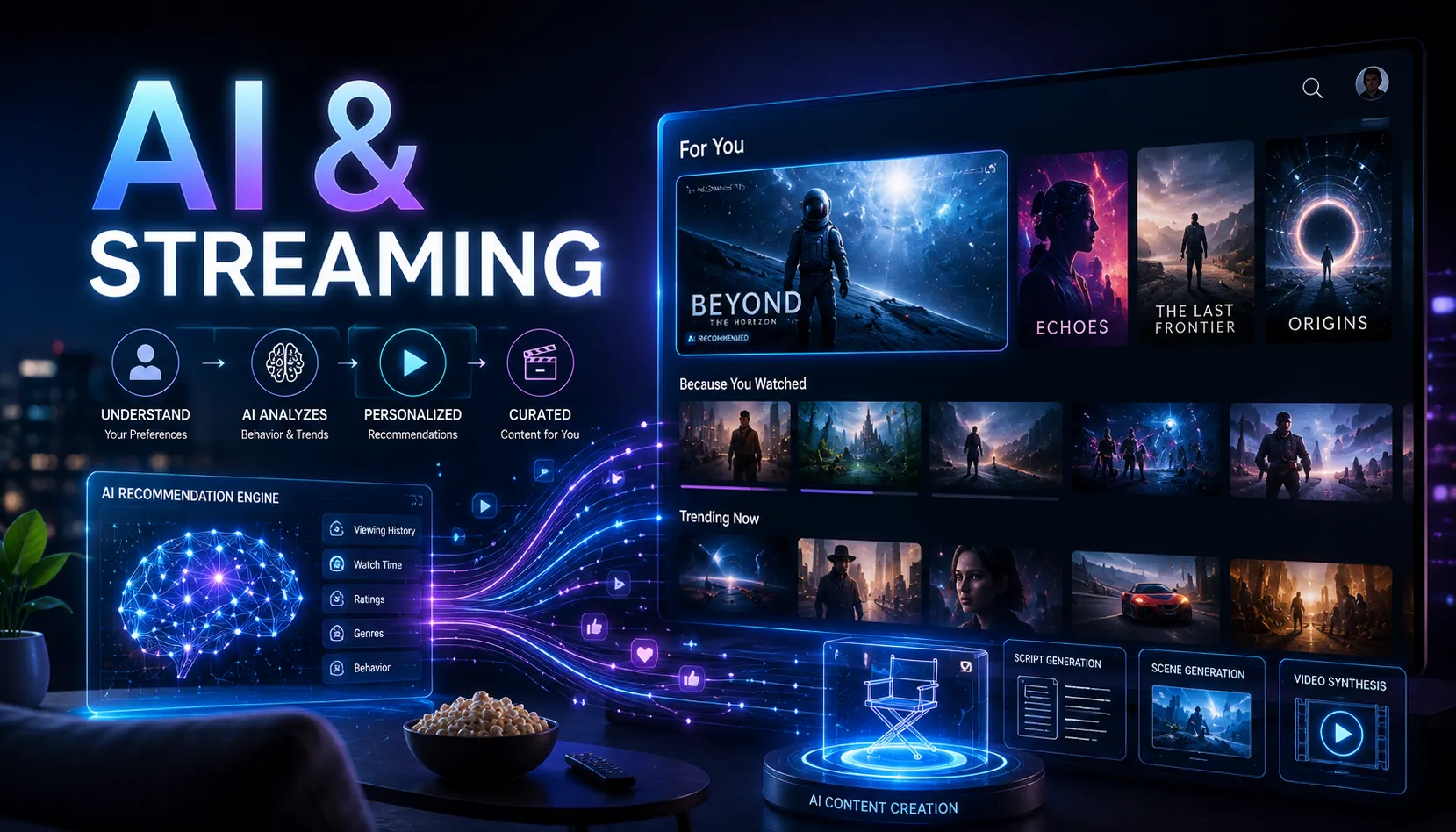
Your streaming service knows more about your viewing habits than most people in your life do. It knows when you pause, when you rewind, what you watch twice, and what you turn off after four minutes.
All of that data feeds AI systems that do two different things: decide what to show you next, and increasingly, decide what to make next.
Here is what is actually happening inside these platforms in 2026, what it means for what you watch, and where the system breaks down.
The Recommendation Engine: How It Actually Works
Netflix’s recommendation system is not simply ‘what did you watch last.’ It runs on a combination of collaborative filtering (what similar users watched after watching what you just watched), content-based filtering (what features of the content match your viewing patterns), and contextual signals (time of day, device, how you are browsing).
The most important signal is not clicks. It is completion rate, re-watches, and saves. A show you watch entirely carries far more weight than one you clicked on and abandoned.
Netflix has said their recommendation engine is responsible for around 80% of what people choose to watch on the platform. The algorithm essentially is the editorial team.
Why the Algorithm Fails You
The same logic that makes recommendations feel accurate also creates filter bubbles.
If you watch three crime thrillers, the system serves you crime thrillers. The more you follow its recommendations, the more the algorithm narrows. You stop seeing the documentary or foreign film that might become your new favourite category.
There is also a cold-start problem for new users. Before you have viewing history, the system defaults to what is popular and what the platform wants to promote. Your early recommendations are less about you and more about the platform’s current priorities.
AI in Content Creation: How Far Has It Gone
Streaming platforms have been using AI for specific production tasks since the early 2020s. In 2026, the applications have expanded significantly.
| Application | How It Is Being Used |
| Thumbnail selection | A/B testing thousands of thumbnail variations per title using computer vision to find the highest click-through version per user segment |
| Script analysis | AI models evaluating scripts for predicted audience engagement, identifying plot patterns from high-performing shows |
| Casting analytics | Historical viewership data informing casting decisions based on audience response to specific actor combinations |
| Dubbing and localization | AI-powered voice dubbing that matches lip movement and emotion, dramatically reducing localization costs for global releases |
| Content greenlight | Platforms using viewership prediction models alongside human executives to decide which projects to commission |
Fully AI-generated narrative content at feature length remains experimental rather than mainstream. What has changed is that AI is deeply embedded in every stage from development to delivery.
What This Means for What Gets Made
The concern among writers and directors is not hypothetical. When greenlight decisions factor in algorithmic engagement predictions, the system favors content that resembles what already worked. This is why so many shows feel like iterations of other shows.
AI-generated thumbnail optimization is a clear case where technology serves the viewer. AI-driven content commissioning is more complicated: it may improve commercial success while reducing creative risk-taking.
The best shows of 2026 continue to come from creatives given room to build something specific rather than something optimized. The algorithm can surface them to the right audience. It struggles to generate the vision that makes them worth watching.
Spotify and Music: The Algorithm as Discovery Engine
Spotify’s AI recommendation system, particularly Discover Weekly and Daily Mixes, is widely considered more successful than video streaming equivalents. The key difference: music discovery has lower stakes per recommendation.
A song you do not like takes three minutes. A show you do not like takes forty. This affects user tolerance for algorithm risk and how aggressively the system can surface unfamiliar content.
Spotify’s approach also benefits from more granular signals: you can skip a track without leaving the app, giving the system real-time feedback the video platforms lack.
How to Use the Algorithm Instead of Being Used by It
- Deliberately watch something outside your usual pattern. One good foreign film or documentary resets the category distribution.
- Use the ‘not interested’ button consistently. On Netflix this is a genuine training signal.
- Browse by genre or specific language rather than the home screen, which is almost entirely algorithm-driven
- For Spotify: manually seed a playlist with specific tracks rather than starting from a recommendation
FAQ
How does Netflix decide what to recommend?
A combination of collaborative filtering (similar users’ behavior), content-based filtering (matching features of content to your history), and contextual signals including time, device, and browsing behavior. Completion rate and re-watches are the strongest signals.
Is Netflix using AI to make shows?
AI is used in thumbnail optimization, script analysis, casting analytics, and content greenlight decisions alongside human executives. Fully AI-generated original shows are not yet standard production, but AI is deeply embedded in every stage of development.
Why does my streaming service keep recommending the same types of content?
Because you keep watching them. The algorithm narrows as it learns your preferences. Intentionally watching content in a new category, or using the not-interested feedback signal, is the most effective way to broaden recommendations.
AI can personalize recommendations, but compelling content is what keeps audiences engaged. WritoryBuzz creates insightful, SEO-focused content that helps brands attract attention, build authority, and grow loyal audiences.