
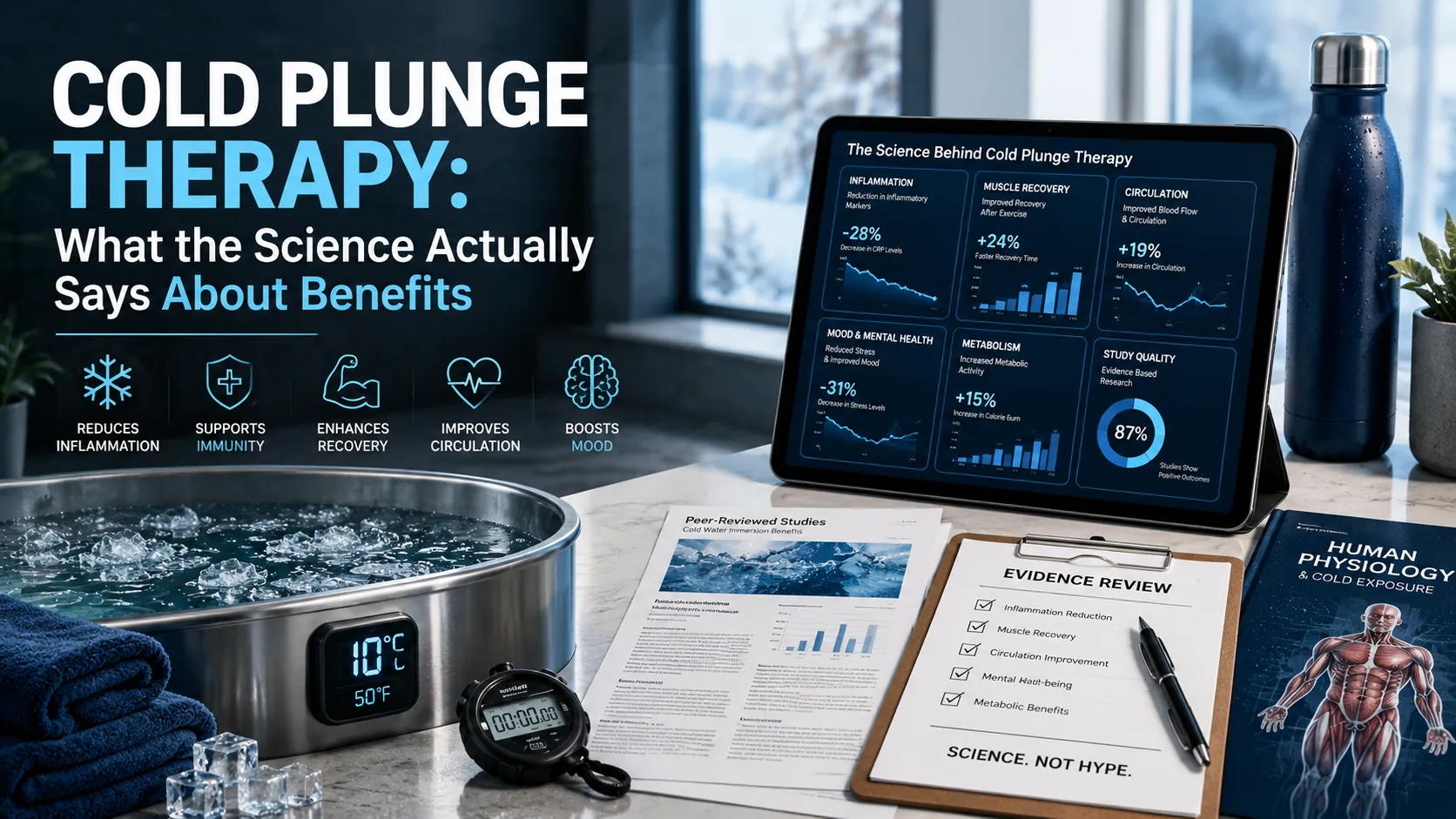
Ice bath sales on Amazon surged from under 1,000 units monthly in late 2022 to over 90,000 units twelve months later. A 2025 PLOS One meta-analysis of 11 studies involving over 3,000 participants provides the most comprehensive evidence picture yet. Some benefits are well-supported. Others remain primarily anecdotal. Both deserve honest representation.
Cold water immersion has legitimate scientific backing for specific outcomes and significantly overstated claims for others. The challenge with evaluating cold plunge therapy in 2026 is that popular claims run far ahead of the evidence, while dismissive responses ignore the genuine physiological effects that decades of research in athlete populations have documented. This guide covers what is actually established.
What Happens Physiologically When You Enter Cold Water
Cold water immersion triggers a cascade of measurable physiological responses: blood vessels constrict (vasoconstriction), reducing blood flow to the skin and periphery. Heart rate initially spikes before settling. The sympathetic nervous system activates, releasing norepinephrine and dopamine. Brown adipose tissue (brown fat) is activated for thermogenesis. Cold shock proteins are upregulated over repeated exposure.
A University of Ottawa study published in 2025 found that cold water immersion for 7 days significantly improved cellular resilience and autophagic function, helping cells manage stress at the cellular level. This cellular adaptation represents a different category of effect from the immediate physiological response.
What the Research Strongly Supports
Athletic Recovery and Muscle Soreness Reduction
The most robust evidence for cold plunge therapy is in athletic recovery. A 2022 meta-analysis in Sports Medicine found cold water immersion superior to other recovery methods for reducing muscle soreness after intense exercise. A 2023 review in Frontiers in Physiology confirmed cold water therapy reduces delayed-onset muscle soreness (DOMS) and accelerates fatigue recovery when used immediately post-exercise.
A 2018 Cochrane meta-analysis in the Cochrane Database of Systematic Reviews found cold water immersion reduced muscle soreness by 15 percent more than passive recovery following exercise. This is moderate-quality evidence across multiple trials. The mechanism is clear: vasoconstriction limits inflammation and swelling in muscle tissue following intense exercise.
The important caveat: A 2023 Mayo Clinic review found cold water immersion may blunt adaptive responses to training. Cold reduces the inflammation that drives muscle adaptation. During competition phases when performance is the priority, cold immersion is valuable. During training phases focused on building fitness and strength, routine post-training cold immersion may reduce the training effect you are seeking.
Acute Stress Reduction
The 2025 PLOS One meta-analysis found cold plunge therapy produced significant stress reduction 12 hours after exposure through a shift from sympathetic to parasympathetic nervous system dominance. The analysis confirmed benefits for sleep quality and overall wellbeing among consistent practitioners.
Norepinephrine release during cold exposure is measurable and significant: studies show increases of 200 to 300 percent. Norepinephrine is associated with alertness, focus, and mood elevation. The acute effect that many cold plunge practitioners describe as feeling energised and mentally clear after a plunge has a physiological basis in this norepinephrine response.
Metabolic Effects
Cold exposure activates brown adipose tissue (BAT), which generates heat by burning energy. BAT activation increases metabolic rate during and after cold exposure. Research has also documented improvements in insulin sensitivity from regular cold water immersion. For metabolic health applications, the evidence is promising but most studies are small and short-duration.
What Remains Unclear or Overstated
Immune function: Limited evidence, primarily short-term studies. The Wim Hof Method claim of dramatically enhanced immunity has not been robustly replicated in controlled trials with normal populations.
Depression and mental health treatment: The acute mood-improving effect from norepinephrine release is documented. Whether this translates to therapeutic benefit for clinical depression requires more rigorous long-term study than currently exists.
Longevity and anti-aging: The cellular adaptation findings from the University of Ottawa study are interesting preliminary data. Extrapolating from cellular resilience improvements to longevity claims requires studies that do not yet exist.
Weight loss: Cold exposure increases metabolic rate during and after the plunge. The additional caloric expenditure is modest (approximately 50 to 100 additional calories per session for most people) and not a primary weight management strategy.
Practical Protocol
Temperature: 10 to 15 degrees Celsius (50 to 59 degrees Fahrenheit) for most documented benefits. Below 10 degrees increases risk without proportional additional benefit.
Duration: 3 to 11 minutes. Most positive research uses 5 to 10 minute sessions. Longer is not better past 15 minutes.
Timing: Post-exercise for recovery benefits (within 30 minutes of training). Morning for alertness and mood effects. Avoid immediately before sleep as the sympathetic activation may impair sleep onset.
Frequency: 3 to 5 times per week for athletic recovery. Daily use is sustainable for most healthy adults but not necessary for the documented benefits.
Who Should Not Cold Plunge
- People with cardiovascular disease: cold shock response stresses the cardiovascular system significantly
- People with Raynaud’s syndrome or peripheral vascular disease
- People taking medications that affect heart rate or blood pressure without medical consultation
- During pregnancy
- People who have experienced hypothermia recently
- Never alone without someone present for safety, particularly during initial attempts
Does cold plunge therapy actually work?
For athletic recovery and muscle soreness reduction, yes: moderate-quality evidence from multiple meta-analyses supports 10 to 15 percent reduction in DOMS compared to passive recovery. For acute stress reduction and mood effects, physiological mechanisms (norepinephrine release) are well-documented. For other claimed benefits (longevity, significant immune enhancement, clinical depression treatment), evidence is preliminary or insufficient.
What temperature should a cold plunge be?
10 to 15 degrees Celsius (50 to 59 degrees Fahrenheit) is the range used in most positive research and recommended by sports medicine practitioners. Below 10 degrees increases the physiological shock without proportional additional benefit and increases safety risks. Above 15 degrees reduces the cold exposure stimulus.
How long should you stay in a cold plunge?
3 to 11 minutes based on research protocols. Most studies use 5 to 10 minute sessions. Duration beyond 15 minutes does not add meaningful benefit and increases hypothermia risk. Beginners should start with 30 to 60 seconds and build duration gradually over multiple sessions.
Does cold plunging help with muscle soreness?
Yes, this is the best-evidenced benefit. A 2018 Cochrane meta-analysis found cold water immersion reduced muscle soreness by 15 percent more than passive recovery. A 2022 Sports Medicine meta-analysis ranked cold immersion superior to other recovery methods for DOMS. The important caveat: routine cold plunging after strength training may reduce muscle adaptation, so timing relative to training goals matters.
Can cold plunge therapy improve mental health?
Cold exposure produces a significant norepinephrine release (200 to 300 percent increase documented in studies), which produces the acute mood-improving and alerting effect most practitioners describe. Whether this translates to therapeutic benefit for clinical depression or anxiety disorders requires more rigorous long-term research than currently exists. The acute effect is real; the therapeutic claim requires more evidence.
Is cold plunge therapy safe?
For healthy adults following safe protocols, yes. The risks are concentrated in specific populations: cardiovascular disease, Raynaud’s syndrome, peripheral vascular disease, and pregnancy. Cold shock response produces significant cardiovascular stress on entry. Never cold plunge alone, particularly initially. Gradual temperature and duration progression reduces the shock response as the body adapts.
The Evidence Supports Selective Use
Cold plunge therapy is evidence-supported for athlete recovery, acute stress reduction, and the norepinephrine-driven mood and alertness effects that practitioners consistently report. It is not the multi-system cure that some wellness content suggests. The honest position: significant benefit for specific purposes, modest evidence for general wellness claims, real risks for specific populations, and a safe practice for healthy adults following appropriate protocols.