
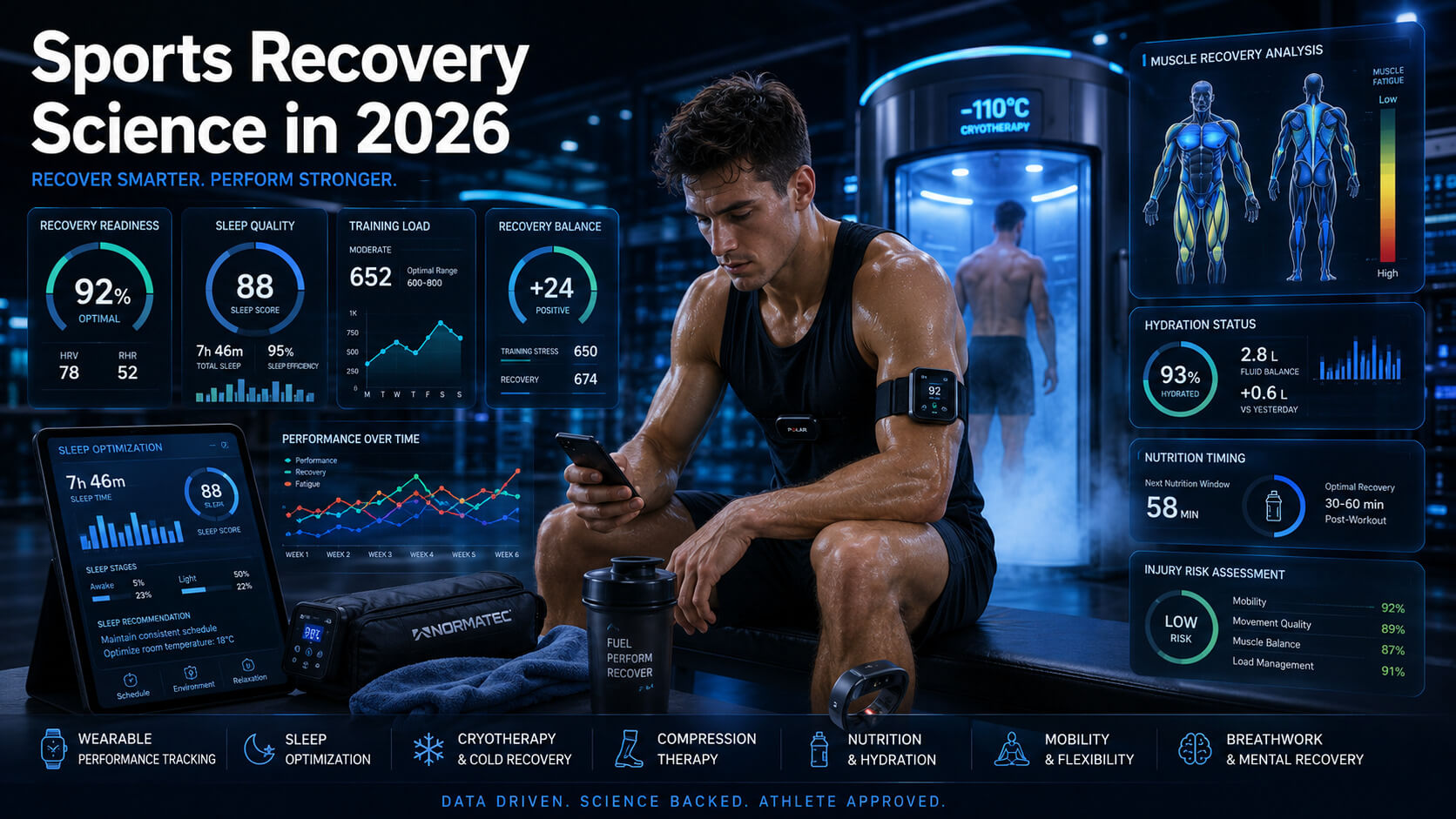
The old coaching philosophy was simple: push harder, train more, outwork everyone else. The physiology was always more complicated than that. Adaptation does not happen during training. It happens during recovery.
When you train, you create physiological stress. Muscle fibres are damaged. Glycogen stores are depleted. The nervous system is taxed. The performance improvement only comes after the body repairs and rebuilds in response to that stress. Training is the stimulus. Recovery is where the adaptation is earned.
Elite athletes in 2026 treat recovery as a performance discipline, not an afterthought. The question is which recovery methods actually earn their place in a protocol and which are expensive theatre.
Recovery Is Where Adaptation Happens
The physiology of adaptation is worth understanding before evaluating recovery methods. During hard training, the body experiences what exercise scientists call a supercompensation cycle. Performance temporarily decreases after a training load (the stress phase), then the body overcorrects during recovery, building slightly above the previous baseline (the adaptation phase).
If the next training load arrives before recovery is complete, you train from a depleted baseline. Do this consistently and performance plateaus, then declines. Overtraining syndrome — the formal clinical condition of accumulated physiological debt — affects a significant percentage of competitive athletes at some point.
The ‘More Training’ Trap
The instinct for most athletes when performance stalls is to train more. The counterintuitive reality is that stalled performance in a well-trained athlete is more often a recovery failure than a training volume failure.
The athletes preparing for the 2026 Games are not doing significantly more training volume than athletes of previous generations. What has changed is the precision of recovery protocols. Sleep technology, nutritional timing science, and load monitoring through wearables have made recovery quantifiable in ways it wasn’t a decade ago.
The Evidence Table: What Works, What Doesn’t, and What’s Expensive Theatre
Not all recovery methods are created equal. The evidence base varies significantly.
| Recovery Method | Evidence Level | Primary Benefit | Verdict |
| Sleep (8–10 hrs, athletes) | Very strong | HGH release, muscle repair, CNS reset | Non-negotiable foundation |
| Protein timing (20–40g post-exercise) | Strong | Muscle protein synthesis | Do it consistently |
| Carbohydrate restoration post-exercise | Strong | Glycogen replenishment | Critical for next-day performance |
| Cold water immersion (10–15°C) | Moderate | Acute soreness reduction | Useful; blunts some adaptation |
| Active recovery (low-intensity movement) | Moderate-strong | Lactate clearance, blood flow | Better than full rest on day after |
| Compression garments | Moderate | Perception of recovery, minor swelling | Useful for travel and multi-day events |
| Massage / soft tissue work | Moderate | Soreness, range of motion | Useful, especially pre-competition |
| Cryotherapy chambers | Weak-moderate | Perception and inflammation | Expensive; marginal over cold water |
| Stretching (static, post-exercise) | Weak for recovery | Flexibility, perceived relaxation | Minimal recovery effect; not harmful |
| Infrared sauna | Emerging | Cardiovascular adaptation, relaxation | Promising; not yet strong evidence |
The Non-Negotiable Foundation: Sleep
Every recovery protocol built on inadequate sleep is a protocol built on sand. Sleep is where the most important physiological recovery processes happen: growth hormone release (which peaks in the first hours of deep sleep), muscle protein synthesis, glycogen restoration, and central nervous system recovery.
The general adult recommendation is 7 to 9 hours. Elite athletes need more. Research consistently shows that athletes who sleep 9 to 10 hours per night perform better on strength, speed, reaction time, and mood metrics than those sleeping 7 to 8 hours, even when training load is identical.
How Elite Athletes Approach Sleep Differently
Professional sleep habits among elite athletes go well beyond simply going to bed early. The practices that appear most commonly across sports science literature and athlete testimonies:
- Sleep extension during competition preparation. Many athletes add 30 to 60 minutes extra for two to three weeks before a major competition, building a sleep reserve.
- Consistent sleep and wake times, including rest days and travel. The circadian disruption from irregular schedules impairs recovery even when total hours are adequate.
- Environmental control. Black-out conditions, cool room temperature (15 to 18°C), and noise management. The same environmental science that applies to general populations applies at elite level with higher stakes.
- Napping strategically. A 20 to 30 minute nap between morning and afternoon training sessions improves afternoon performance markers in studies of professional athletes. The timing matters: napping too late in the day interferes with night sleep.
HRV as a Recovery Measurement Tool
Heart Rate Variability (HRV) is the variation in time between individual heartbeats. Counterintuitively, a healthy, recovered cardiovascular system has more variation between beats, not less. A low HRV reading indicates that the autonomic nervous system is under stress — the body is still recovering.
HRV measurement has moved from a research tool to a practical daily monitoring method for elite athletes. Most modern sport wearables (Whoop, Garmin, Oura Ring) measure HRV during sleep. Athletes with suppressed HRV below their personal baseline are advised to reduce training intensity or volume that day, regardless of how they feel subjectively.
The practical value of HRV is not in the absolute number but in the trend. An athlete whose HRV has been declining for a week despite normal training load is accumulating recovery debt. Intervening early prevents the deeper hole of overtraining syndrome.
Nutrition for Recovery: The Basics That Most Athletes Under-Execute
The nutrition science of recovery is clearer than almost any other area of sports performance. The fundamentals have not changed in 20 years. Most athletes still do not execute them consistently.
Protein Timing and Quantity
Muscle protein synthesis — the process through which muscle repairs and grows after training stress — requires adequate protein and is maximally stimulated in the window following exercise.
The current consensus from sports nutrition research: 20 to 40 grams of high-quality protein within 30 to 60 minutes post-training. Beyond the post-exercise window, distributing protein intake across four to five meals through the day (rather than concentrating it at one meal) produces better 24-hour muscle protein synthesis rates than the same total protein consumed less frequently.
Leucine is the amino acid most directly responsible for triggering protein synthesis. Whey protein has the highest leucine content of common protein sources. For athletes on plant-based diets, soy protein is the closest equivalent. Rice and pea protein combinations achieve comparable leucine content to whey when combined.
Carbohydrate Restoration
Glycogen (stored carbohydrate) is the primary fuel for high-intensity exercise. Training depletes it. The speed at which it is restored depends almost entirely on carbohydrate intake in the hours after training.
For athletes with less than 8 hours between training sessions, aggressive carbohydrate restoration (1 to 1.5g per kilogram of body weight per hour for the first 4 hours post-exercise) is supported by the research. For athletes with 24 hours or more between sessions, total daily carbohydrate intake matters more than timing.
This is one of the most commonly neglected recovery interventions among recreational athletes. The instinct to reduce carbohydrate intake for body composition reasons directly conflicts with the recovery requirement, particularly during high-volume training periods.
Cold Water Immersion: What the Evidence Actually Shows
Cold water immersion (ice baths, cold plunge) is one of the most visible recovery practices in professional sport. Many elite athletes use it. The evidence behind it is more complicated than the Instagram version suggests.
For acute soreness reduction and subjective recovery perception in the 24 to 48 hours after a hard session, cold water immersion at 10 to 15°C for 10 to 15 minutes has moderate evidence of benefit. It reduces markers of inflammation and is consistently rated positively by athletes for how they feel afterward.
The Adaptation Blunting Problem
The nuance that most recovery articles miss: cold water immersion blunts some of the long-term training adaptations that resistance training is designed to produce. The inflammatory response that ice baths suppress is the same inflammatory response that signals muscle repair and growth. Chronically suppressing it reduces hypertrophy gains over time.
The practical implication from sports scientists: cold water immersion is better suited to athletes whose priority is performance in the next 24 to 48 hours (competition-heavy periods, tournament play) rather than athletes in a training block focused on building strength and muscle. Many elite athletes use cold immersion heavily during competition phases and reduce or eliminate it during off-season training blocks.
Active Recovery vs Full Rest: Which Wins?
Full rest — doing nothing physically — is less effective than active recovery for most athletes in the 24 hours after a hard session. The reason is physiological: low-intensity movement increases blood flow to muscles, accelerates the clearance of metabolic waste products (particularly lactate), and maintains range of motion without adding meaningful stress.
Active recovery sessions should be genuinely light. 20 to 40 minutes of walking, swimming, cycling, or yoga at an effort level that never elevates heart rate above roughly 60 percent of maximum. The common mistake is making active recovery sessions too intense, which adds to rather than reducing the training load.
Full rest is appropriate after competition, in deload weeks built into training periodisation, and after illness or injury. Otherwise, most athletes benefit from doing something light rather than nothing.
The Psychological Dimension: Allostatic Load
Allostatic load is the cumulative physiological and psychological burden from all stressors — not just training. An athlete under financial stress, going through a difficult relationship, or managing sleep debt from non-training reasons will recover more slowly from identical physical training loads than the same athlete under less total stress.
This is under-discussed in sports science communication because it is harder to measure and prescribe than an ice bath protocol. But the evidence is consistent: psychological stress elevates cortisol, which directly competes with the anabolic hormones responsible for tissue repair and adaptation.
Elite sport performance teams increasingly include psychologists and mental skills coaches not just for competition psychology but as part of the recovery infrastructure. Managing life stress, maintaining sleep despite competition pressure, and building psychological recovery techniques (meditation, controlled breathing, deliberate rest) are treated as performance variables, not soft extras.
What Elite Recovery Looks Like Week to Week
Based on what sports scientists and performance coaches report from professional environments, a representative elite athlete’s weekly recovery structure looks something like this:
- Daily: 9+ hours sleep with consistent timing. HRV monitored each morning. Protein and carbohydrate intake timed around training sessions.
- Post-hard session: protein recovery within 60 minutes, carbohydrate restoration, active recovery movement or cold water immersion depending on training phase.
- 1 to 2 times per week: soft tissue work (massage or self-myofascial release), extended mobility session, deliberate low-stimulus rest (no screens, reduced cognitive load).
- Weekly: training load review using HRV trend, session RPE data, and performance metrics. Training intensity adjusted based on accumulated recovery status.
- Monthly or per training block: a deliberate deload week (20 to 40 percent volume reduction) to allow deeper systemic recovery that daily protocols cannot produce.
| The Point Most Athletes Miss
Recovery is not just between sessions. It is built into the architecture of the training plan itself. Periodisation — the deliberate cycling of training intensity, volume, and recovery across weeks and months — is what separates elite programming from recreational training. The best recovery protocol in the world cannot compensate for a training plan that never includes genuine recovery phases. |
Frequently Asked Questions
Does cold water immersion actually improve athletic recovery?
For acute soreness reduction in the 24 to 48 hours after hard training, yes — with moderate evidence. But cold water immersion blunts the inflammatory response that drives long-term muscle adaptation. Most sports scientists recommend using it selectively during competition-heavy periods rather than throughout a strength-focused training block.
How much sleep do elite athletes actually get?
Most research on elite athletes shows they aim for 9 to 10 hours per night, and many add deliberate sleep extension in the weeks before major competition. Sleep is the highest-return recovery intervention with the strongest evidence base, and it is routinely underinvested in by recreational athletes compared to more visible interventions.
What should you eat immediately after training for recovery?
20 to 40 grams of high-quality protein (whey or equivalent) and carbohydrates in a roughly 1:1 to 1:3 protein-to-carb ratio within 30 to 60 minutes of finishing training. For athletes with sessions spaced less than 8 hours apart, aggressive carbohydrate restoration (1 to 1.5g per kg body weight per hour) in the first 4 hours post-exercise is supported by the research.
What is HRV and should amateur athletes track it?
Heart Rate Variability is the variation in time between heartbeats. Higher HRV indicates better recovery status. Consumer wearables (Whoop, Oura, Garmin) now measure it reliably enough for practical use. The value is not in the absolute number but in your personal trend – a declining HRV over several days signals accumulated fatigue worth responding to by reducing training intensity.
Build the Foundation First
The most impactful recovery protocol available to any athlete is also the least glamorous: consistent high-quality sleep, well-timed protein and carbohydrate intake, and smart management of total training load.
Cold plunges, compression boots, and infrared saunas are fine marginal additions if the foundation is solid. They are expensive noise if it isn’t.
Elite athletes have access to every recovery modality available. What actually appears in their daily routines when you remove the Instagram content is mostly sleep, food, movement, and deliberate rest. Everything else is the margin.
Want to grow your sports, fitness, wellness, or technology brand online? Publish high-authority guest posts through WritoryBuzz and improve your SEO, digital visibility, and industry credibility with strategic placements on trusted sports and technology websites.