
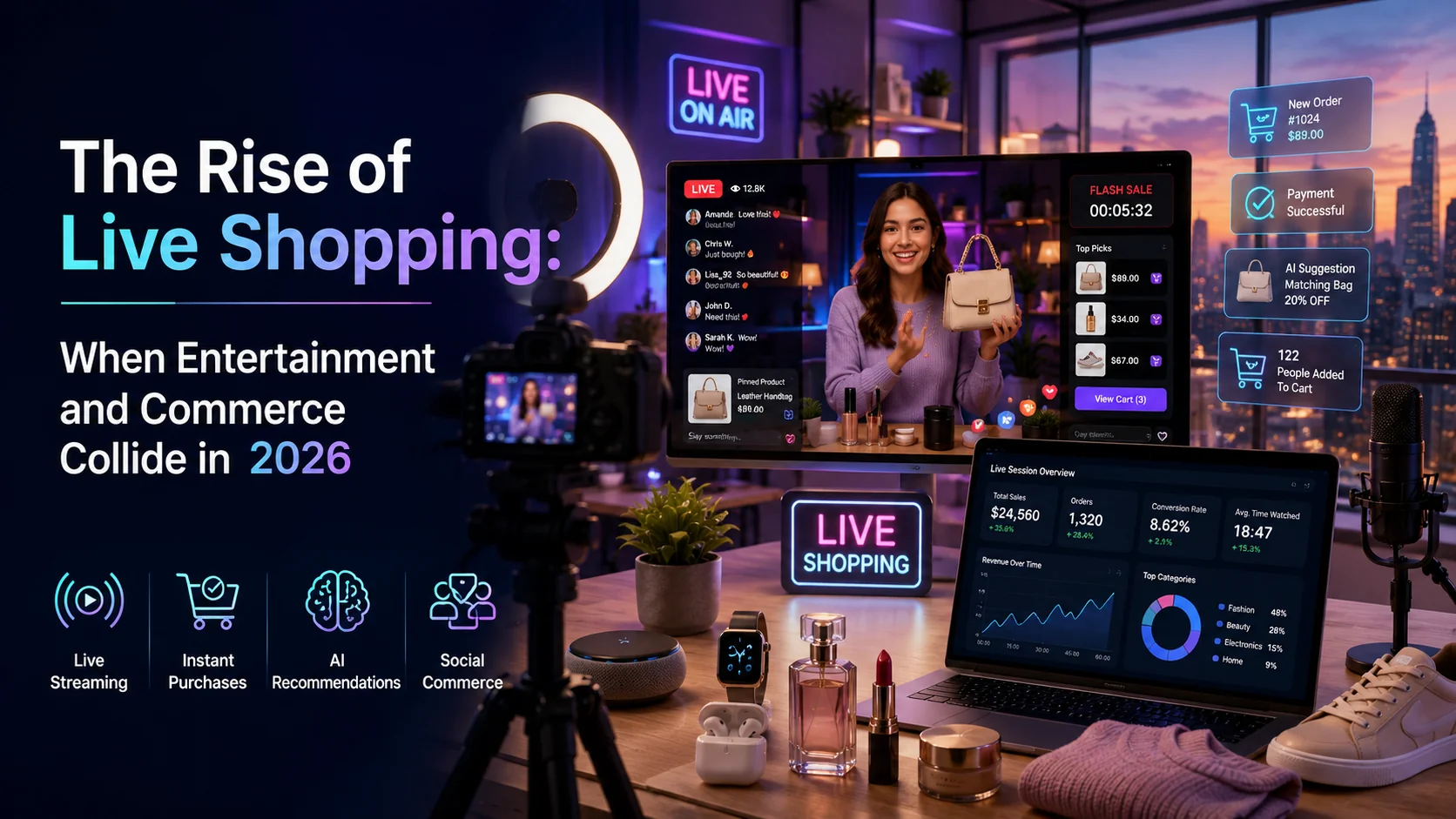
China’s live shopping market exceeded $700 billion in 2025. TikTok Shop processed over $33 billion in goods globally. In the US, live shopping grew 76 percent year-on-year in 2025. The format combines the authenticity of a live broadcast with the immediacy of one-click purchase. It is the most significant new commerce format since social commerce itself.
Live shopping blurs the line between entertainment and purchasing. A viewer watches a host demonstrate a product, interacts through live chat, sees real-time purchase counts and limited-time offers, and completes a purchase without leaving the stream. The entertainment creates desire. The social proof (others buying now) creates urgency. The seamless checkout removes friction. Together they produce conversion rates that dwarf standard e-commerce.
The Platforms Competing for Live Commerce
TikTok Shop
TikTok Shop processed over $33 billion in global gross merchandise value. After aggressive expansion in the US market in 2023 and 2024, it has established the largest live shopping audience in Western markets. The algorithmic discovery advantage means a new live seller can reach a relevant audience without existing followers if the content quality is sufficient.
TikTok Shop live streams typically combine an engaging host, real product demonstrations, live Q&A, limited-time coupon codes, and visible purchase counters. The affiliate programme allows creators to earn commission on products sold through their livestreams, creating a large network of motivated sellers.
YouTube Shopping
YouTube integrated shopping features across both pre-recorded video and live streams. Shoppable product tags appear on screen during live streams, allowing viewers to purchase without leaving the video. YouTube’s advantage is its established creator ecosystem and long-form content tradition. High-trust creators with established audiences convert their credibility into purchase intent.
Amazon Live
Amazon Live connects live streaming to Amazon’s existing e-commerce infrastructure. Brand-run and influencer-run live streams feature Amazon products with direct purchase links. The advantage: viewers are already in purchase mode on Amazon. The limitation: Amazon Live has not yet achieved the entertainment quality or creator ecosystem scale of TikTok or YouTube.
Instagram Live Shopping
Meta has integrated shopping features into Instagram Live, allowing product tags on live broadcasts. The reach is substantial given Instagram’s 2 billion monthly active users. The format performs well for fashion, beauty, and lifestyle categories where visual demonstration and personality drive purchase decisions.
Why Live Shopping Converts Better Than Standard E-Commerce
Live shopping conversion rates consistently outperform standard e-commerce landing pages. The typical e-commerce conversion rate is 2 to 4 percent. Live shopping events on established platforms report 8 to 15 percent conversion rates for relevant products. Several factors contribute:
Real-time social proof: Seeing purchase counts rise during a live stream (‘235 people bought this in the last 10 minutes’) creates urgency that static sales counters cannot produce. The social proof is live and visible.
Live demonstration: Products demonstrated live address pre-purchase anxiety more effectively than product photography. Viewers see how a product actually works, how it looks on a real person in real time, and can ask specific questions.
Urgency mechanics: Limited-time live-only discount codes, countdown timers, and limited stock announcements are far more credible during a live event than in a standard e-commerce context where every sale appears perpetual.
Entertainment investment: A viewer who spends 30 minutes watching an engaging live stream has built a relationship with the host that increases purchase intent beyond what a product page alone achieves. Entertainment creates emotional investment.
What the Chinese Market Tells Us About the Future
China’s live shopping market, at over $700 billion annually, is 5 to 7 years ahead of Western markets in development. Chinese platforms like Taobao Live, JD.com Live, and Kuaishou have developed the ecosystem from novelty to primary commerce channel. The patterns that emerged in China are appearing in Western markets with a predictable lag.
Key Chinese dynamics now visible in Western markets: live shopping as a daily habit rather than an event, creator-brand co-creation partnerships rather than simple sponsorships, and AI-generated hosts for brand live streams (several major Chinese brands now run 24/7 live streams using AI presenters that never need breaks).
For Brands: How to Start
Test on TikTok Shop first: The algorithmic discovery advantage makes TikTok the easiest platform to reach new audiences without existing followers. Start with 30 to 60 minute product-focused live streams with a clear host, real demonstrations, and live discount offers.
Creator partnerships over owned live: Brands without established live streaming presence typically convert better through established creators than through brand-run streams. The creator’s audience trust transfers to the product recommendation.
Prepare the fulfilment: Live shopping events can generate concentrated purchase spikes that overwhelm unprepared fulfilment operations. Ensure inventory, fulfilment, and customer service can handle 5 to 10 times typical hourly order volume during peak live events.
What is live shopping and how does it work?
Live shopping combines live streaming with real-time purchasing. A host demonstrates products in a video broadcast while viewers watch, ask questions in live chat, see social proof indicators like purchase counts, and complete purchases without leaving the stream. TikTok Shop, YouTube Shopping, Amazon Live, and Instagram Live Shopping are the primary Western platforms.
How big is the live shopping market in 2026?
China’s live shopping market exceeded $700 billion in 2025. TikTok Shop globally processed over $33 billion in gross merchandise value. The US live shopping market grew 76 percent year-on-year in 2025. The global live commerce market across all platforms is projected to exceed $1 trillion by 2028.
Why do live shopping events convert better than regular e-commerce?
Live shopping produces 8 to 15 percent conversion rates compared to 2 to 4 percent for standard e-commerce. The conversion advantage comes from real-time social proof (visible purchase counts), live product demonstration, credible urgency mechanics (live-only discount codes), and the emotional investment built through extended entertainment viewing.
How can small brands participate in live shopping?
Start with TikTok Shop for algorithmic discovery advantages. Partner with creators who already have your target audience rather than building a brand live channel from zero. Ensure inventory and fulfilment can handle live event purchase spikes. The minimum viable live shopping setup is a good camera, a clear product demonstration, and a capable host who can hold viewer attention.
What products sell best on live shopping streams?
Beauty, fashion, food, and consumer electronics consistently perform best. Products that benefit from demonstration (showing how they work, how they look in real use), products with visual appeal, and products where real-time Q&A addresses purchase hesitation. Low-consideration products with impulse-friendly price points under $100 convert particularly well.
Is live shopping coming to Western markets at China’s scale?
Yes, with a lag. The patterns established in China (live shopping as a daily commerce habit, AI-generated hosts for 24/7 streams, creator-brand co-creation models) are appearing in Western markets at 5 to 7 year lag. TikTok Shop’s $33 billion GMV represents early-stage adoption. The trajectory toward live commerce as a primary channel for certain product categories is established.
Entertainment Has Always Sold
The home shopping network of the 1980s was the first form of live shopping. QVC built a $9 billion business on the same principles that TikTok Shop now applies at digital scale: a charismatic host, real demonstration, visible social proof, and urgency. The format is not new. The distribution, the interactivity, and the scale are.
For brands, the question is not whether live shopping will matter but which platform and which creator ecosystem to invest in now, before the format reaches full saturation.