
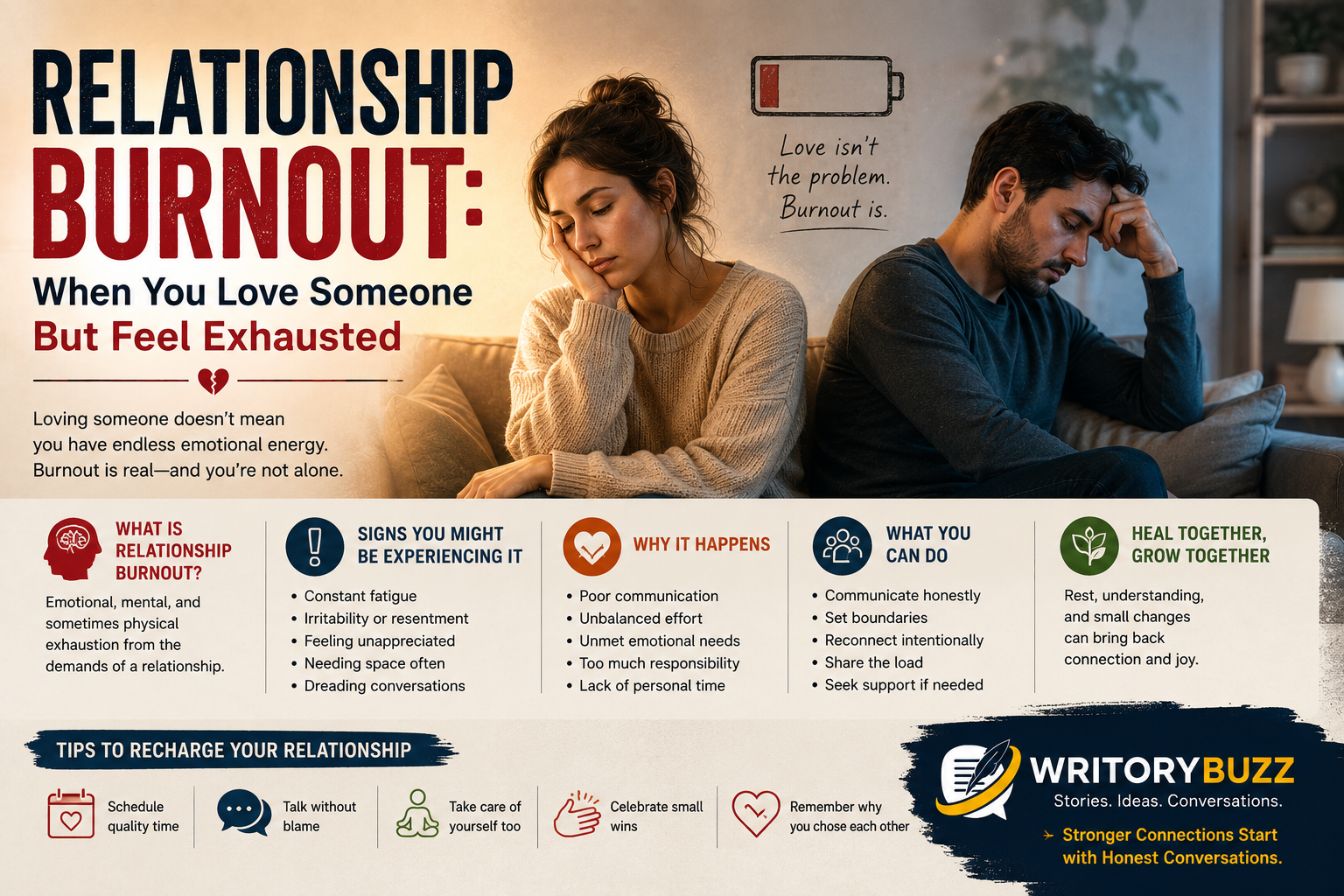
Relationship burnout is the state of emotional exhaustion, disconnection, and decreased relationship satisfaction that develops when relational demands consistently exceed relational resources over time. It is not the same as falling out of love. It is the depletion of the emotional energy that makes connection feel rewarding rather than effortful.
The distinction matters because the response to burnout is different from the response to incompatibility. Burnout is recoverable when identified and addressed. The confusion of burnout with relationship failure leads many couples to end relationships that were fundamentally sound but temporarily depleted.
Signs of Relationship Burnout
Emotional flatness rather than conflict: A characteristic feature of burnout (versus other relationship difficulties) is reduced emotional reactivity. You are not angry. You are not excited. You are not interested. Where there was once responsiveness, there is now flatness. This is the emotional numbing associated with burnout in any context.
Intimacy feels like effort rather than connection: Activities that previously felt nourishing (conversation, physical affection, shared activities) feel like tasks to be completed. This is not indifference to the person but depletion of the resource that makes connection feel rewarding.
Increased irritability from small things: Trivial behaviours or habits of your partner that previously caused no reaction now produce disproportionate irritation. This is a sign of emotional resource depletion: the reserve that usually absorbs minor frictions is exhausted.
Preferring to be alone: A strong pull toward solitude and away from the relationship, even when things are not actively difficult. The introversion of burnout is specifically relational: it is the relationship demands, not other people in general, from which you are retreating.
Doubting the relationship without clear reason: Burnout produces a cognitive confusion about the relationship itself. Doubt and dissatisfaction that have no specific cause are often burnout symptoms rather than genuine incompatibility signals.
What Causes Relationship Burnout
Sustained unbalanced giving: Relationships with a significant asymmetry in emotional labour, care-giving, decision-making, or conflict management deplete the primary contributor over time. The depletion is gradual and often invisible until it is substantial.
External life stressors overlapping: Work stress, parenting demands, financial pressure, health challenges, and caregiving for family members all draw from the same emotional resource pool that relationships require. When multiple external demands are high simultaneously, the relationship receives what remains.
Unresolved relationship issues: Repeated conflicts that are managed (calmed down) rather than resolved accumulate unresolved tension. Each managed-but-unresolved issue leaves a small residue of resentment and energy expenditure. Over time, this accumulation becomes burnout.
Lost sense of individual identity: Relationships where individual interests, friendships, and identity have been progressively sacrificed for couple-identity produce the enmeshment that drains rather than nourishes.
Recovery: What Actually Helps
Name it without blame: The first and most important step is identifying burnout as the experience, not relationship failure, not personality incompatibility, not the partner’s fault. ‘I am exhausted and I think we have both been running on empty’ is a different conversation than any blame-based framing.
Reduce the relationship workload temporarily: Lower expectations on both sides for a defined period. Fewer obligations, lower-intensity interactions, more space for individual restoration. This is counterintuitive because burnout can feel like a signal to work harder on the relationship. The opposite intervention is usually what helps.
Restore individual energy sources: The relationship cannot refill what life outside the relationship has depleted. Exercise, friendships, solo interests, adequate sleep, and professional help where relevant are not selfish during relationship burnout. They are the prerequisite for having anything to give.
Address what was not addressed: Burnout that has a specific underlying cause (asymmetric emotional labour, repeated unresolved conflict, a specific resentment) recovers only when that cause is genuinely addressed. A therapist can provide the structure that makes these conversations productive rather than escalating.
Couples therapy: Not as crisis intervention for a failing relationship but as structure for a depleted one. Gottman-trained therapists specifically address the ‘Sound Relationship House’ model that identifies which structural elements of the relationship need repair.
What is relationship burnout?
Relationship burnout is emotional exhaustion, disconnection, and decreased satisfaction from a relationship where demands have consistently exceeded relational resources. It differs from falling out of love in that the depletion is temporary and recoverable when addressed, whereas incompatibility is structural. Burnout produces emotional flatness and withdrawal rather than active conflict.
Is relationship burnout the same as falling out of love?
No. Burnout produces emotional depletion that flattens positive feelings temporarily, similar to work burnout. Falling out of love involves a more fundamental change in attraction and care. Burnout typically coexists with genuine care for the partner and is recoverable with appropriate rest and repair. Confusing burnout with relationship failure leads to unnecessary endings.
What are the signs of relationship burnout?
Emotional flatness rather than active conflict, intimacy feeling like effort rather than connection, increased irritability from minor things, preference for solitude specifically from the relationship, doubt about the relationship without clear cause, and feeling depleted rather than supported by time with your partner.
How do you recover from relationship burnout?
Name it as burnout rather than relationship failure. Temporarily reduce relationship demands and lower expectations for both partners. Restore individual energy sources through individual restoration activities. Address any specific underlying causes (asymmetric emotional labour, unresolved conflicts). Consider couples therapy as structure for recovery rather than crisis intervention.
Can a relationship recover from burnout?
Yes, when it is identified and addressed appropriately. Burnout recovery requires both partners understanding the state accurately, temporarily reducing relational demands, individually restoring their resources, and addressing any structural issues causing the depletion. Relationships with genuine care and compatibility recover well from burnout with appropriate intervention.
When should couples seek therapy for relationship burnout?
When self-identified burnout is not improving with rest and reduced demands, when there are recurring unresolved issues contributing to the depletion, when the conversation about the relationship itself is producing more stress than relief, or when one or both partners are uncertain whether the relationship has a future.
Burnout Is Not a Verdict
The most important thing to know about relationship burnout is that it is a state, not a sentence. It describes where a relationship is, not what it is. The response to burnout is rest, restoration, and repair, not ending. The relationships that misidentify burnout as incompatibility are the ones most often regretted.