
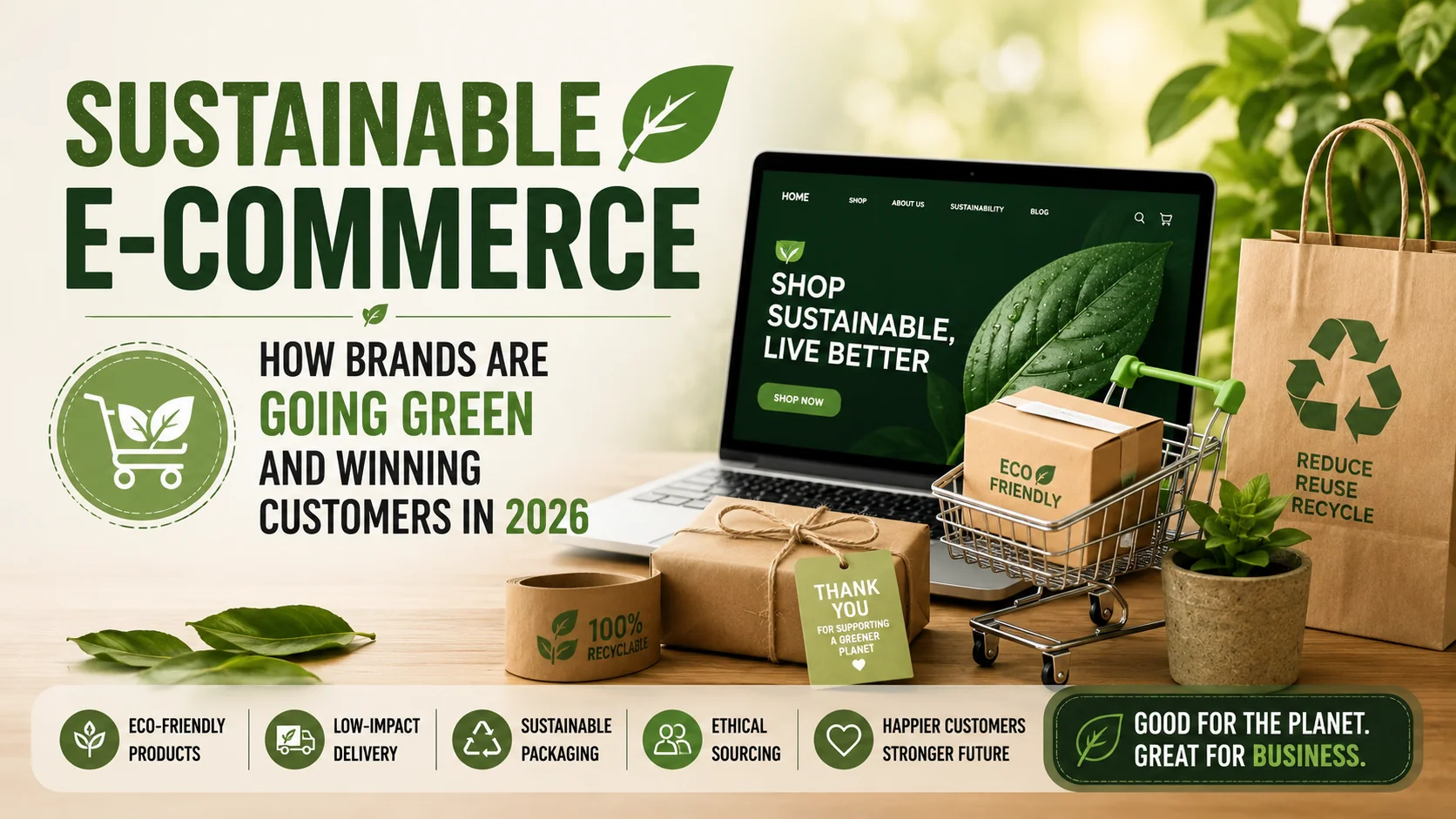
Sustainability used to be a nice-to-have for e-commerce brands. It is now, for a growing segment of consumers, a condition of purchase. A 2025 McKinsey survey found that 35% of global consumers actively avoid brands they believe have poor environmental practices. Among consumers under 35, that figure runs closer to 52%.
The brands that have worked this out are not just doing good. They are building genuine competitive advantages through operational choices that also happen to be better for the planet.
This article covers what sustainable e-commerce actually looks like in practice, which approaches are working, and what the shift means for brands that have not yet started the transition.
What Sustainable E-commerce Actually Means in 2026
Sustainability in e-commerce touches every part of the business: where products come from, how they are packaged, how they travel to the customer, and what happens at the end of a product’s life. The brands doing this well have made changes across all four areas, not just one.
Greenwashing, the practice of making environmental claims that are not backed by genuine action, has become harder to sustain. The EU’s Green Claims Directive, which requires businesses to substantiate environmental marketing claims with verified data, came into force across member states in 2025. Similar legislation is advancing in the UK and several US states.
Packaging: The Visible Face of Sustainability
Packaging is the part of sustainability that customers see and touch. It is also where many e-commerce brands have made the most visible changes. Plastic mailers have been replaced by recycled cardboard, paper tape, and compostable plant-based films in the catalogues of thousands of DTC brands.
The more meaningful change is right-sizing. Over-packaging, putting a small product in a large box with masses of filler, was the default in e-commerce for years because it was logistically convenient. Brands now optimise box size to product size, which reduces both material use and shipping volume, lowering both environmental impact and cost per shipment.
Loop Industries and Novamont supply packaging materials to major e-commerce brands based on circular chemistry principles. Several Scandinavian brands ship products in packaging explicitly designed to be returned and reused by the logistics partner.
Shipping and Logistics: The Hardest Part to Fix
Shipping accounts for the majority of an e-commerce brand’s direct carbon footprint. Last-mile delivery by van or motorbike in urban areas produces disproportionate emissions per kilogram delivered compared to bulk freight.
Electric vehicle delivery fleets are expanding. Amazon, DHL, and Zara have committed to specific fleet electrification timelines. Several cities in the Netherlands, Norway, and Japan now restrict diesel delivery vehicles in city centres, which has accelerated the transition.
Carbon offsetting fills the gap where direct emissions reduction is not yet possible. Brands like Allbirds and Patagonia have used verified carbon offset programmes for several years. The important distinction is additionality: offsets should fund projects that would not have happened without the offset investment.
The Circular Economy: Making Returns Work for Sustainability
| Model | How It Works | Examples |
|---|---|---|
| Resale programme | Brand resells returned or used products | Patagonia Worn Wear, IKEA Buy Back |
| Repair service | Brand extends product life through repairs | Nudie Jeans, Apple Self-Repair |
| Take-back scheme | Brand collects end-of-life products for recycling | H&M Garment Collecting, Dell Reconnect |
| Rental model | Customer pays per use rather than ownership | Rent the Runway, Grover Tech |
Transparent Supply Chains: What Customers Want to See
Supply chain transparency has moved from a B2B requirement to a consumer marketing tool. Brands that can show customers exactly where their products come from, under what conditions, and to what environmental standard are building trust that their competitors cannot easily copy.
Everlane built its brand almost entirely on radical transparency, publishing the cost breakdown of each product and the factory it comes from. Fashion brand Reformation publishes a quarterly sustainability report that tracks water use, carbon output, and percentage of sustainable materials in plain language.
QR codes on products that link to supply chain data are becoming common in premium food, fashion, and electronics. Consumers can verify claims rather than just taking a brand’s word for it.
Sustainability as a Growth Strategy, Not Just a Cost Centre
The commercial case for sustainability has strengthened significantly. Shoppers who prioritise sustainability have higher average order values and lower churn rates than the average customer. They return to brands they trust and they talk about those brands to others.
B Corp certification, which requires a verified assessment of social and environmental performance, has become a meaningful signal for some customer segments. Over 7,000 companies globally hold B Corp certification as of 2026, and several have reported measurable conversion rate improvements from displaying the certification badge.
Government procurement rules in the EU, UK, and India increasingly factor environmental performance into supplier selection. For e-commerce brands selling to businesses, sustainability credentials are moving from optional to contractually required.
Common Mistakes Brands Make on the Sustainability Journey
Greenwashing with vague language. Claims like ‘eco-friendly’, ‘sustainable’, and ‘green’ without specific, verified data behind them are increasingly risky under new regulations and make customers who check feel deceived.
Focusing only on packaging while ignoring product sourcing. A recycled cardboard box wrapped around a product made in a factory with no labour or environmental standards is not sustainable e-commerce.
Doing sustainability as a campaign rather than as operations. A one-time tree-planting partnership or a seasonal ‘green’ product range without structural change reads as opportunism to the customers who care most about these issues.
FAQs
Does sustainable packaging cost more?
In the short term, many sustainable materials cost more per unit than conventional alternatives. Right-sizing packaging and reducing void fill often offset this, and at scale, recycled and plant-based materials have been closing the price gap significantly over the past three years.
What is the difference between carbon neutral and net zero?
Carbon neutral means a company’s net carbon emissions are zero, which can be achieved through offsetting remaining emissions. Net zero typically means reducing emissions as close to zero as possible before using any offsets, with a higher bar for how far actual emissions must fall before offsets are applied.
How do I verify a supplier’s environmental claims?
Third-party audits from bodies like SGS, Bureau Veritas, or the Rainforest Alliance give independent verification. Certifications like FSC for wood products, GOTS for organic textiles, and Bluesign for chemicals in manufacturing are internationally recognised standards.
The Path Forward for E-commerce Brands
Sustainability in e-commerce is not a destination. It is a direction. The brands that are succeeding have set clear, measurable targets, publish their progress honestly, and treat setbacks as data rather than crises.
The place to start is a carbon footprint baseline across your logistics chain. Without that number, improvement cannot be measured and claims cannot be substantiated. Once the baseline exists, a prioritised roadmap becomes possible.
WritoryBuzz tracks sustainable business models and consumer trend data throughout 2026. Follow our business coverage for analysis of which sustainability strategies are generating measurable commercial returns.