
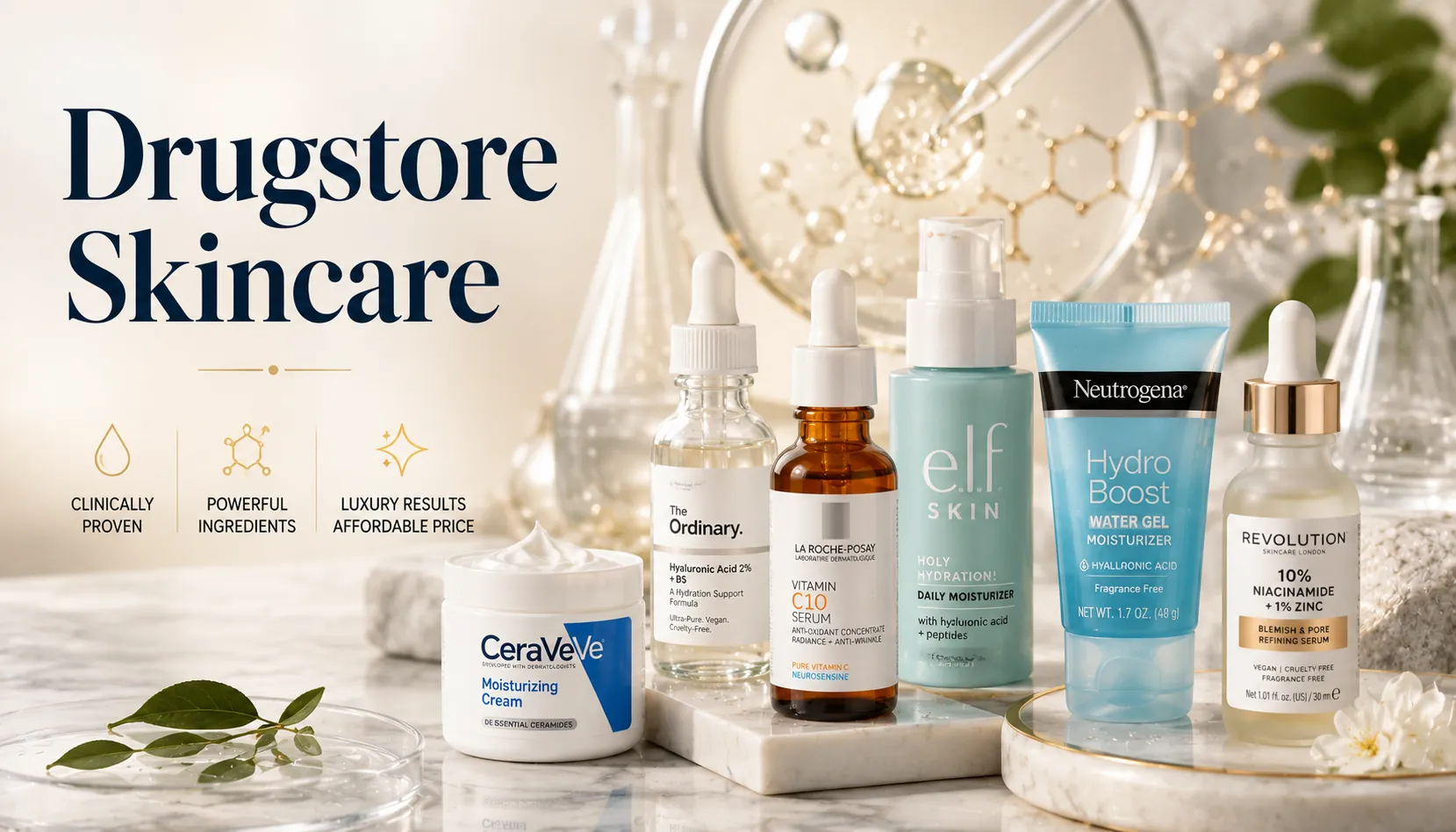
Luxury skincare marketing is excellent at creating the impression that a $400 face cream does something a $15 one cannot. In most cases, the active ingredient doing the actual work is identical. What you are paying for is the packaging, the fragrance, the brand name, and the retail markup.
This does not mean expensive skincare is never worth buying. Some delivery systems, formulations, and concentrations do justify a higher price point. But the majority of the results dermatologists point to come from accessible active ingredients available at every pharmacy.
Here are the drugstore products that consistently overdeliver, organized by skin concern.
Why Dermatologists Keep Recommending CeraVe and Neutrogena
Both brands were developed with dermatological input and built around active ingredients with strong clinical evidence: ceramides (CeraVe’s core), niacinamide, glycerin, and hyaluronic acid. They are fragrance-free, non-comedogenic, and tested for sensitive skin.
CeraVe’s ceramic-based formula was developed specifically to restore the skin barrier, the same mechanism expensive barrier creams charge a premium to address. The active ingredients are chemically identical. The delivery mechanism differs, but for most users the difference is imperceptible.
By Skin Concern: What to Buy and Why
Hydration and Dry Skin
CeraVe Moisturizing Cream ($18-22): ceramides + hyaluronic acid + glycerin in a thick cream formula. Dermatologist-recommended for dry and eczema-prone skin. The jar format is not ideal for hygiene (use a spatula) but the formula is excellent.
Neutrogena Hydro Boost Water Gel ($18-25): hyaluronic acid serum in a light gel texture. Works for oily skin types who want hydration without heaviness. Comparable formulation to hydrating serums costing 5 to 10 times more.
Anti-Aging and Skin Texture
RoC Retinol Correxion cream ($20-25): retinol is one of the few ingredients with decades of clinical evidence for improving fine lines, evening skin tone, and stimulating collagen production. This formulation has been tested for decades and delivers consistent results. Start with 2-3 times per week and build up frequency as your skin adjusts.
The Ordinary Retinol 0.5% in Squalane ($11-14): a clean, affordable retinol in a squalane base that reduces irritation. The Ordinary’s entire model is based on removing the margin that brand premiums add to effective actives.
Hyperpigmentation and Uneven Skin Tone
Neutrogena Rapid Tone Repair Vitamin C serum ($17-22): vitamin C is the primary evidence-based ingredient for brightening and protecting against UV-induced pigmentation. L-ascorbic acid (the active form) is unstable and light-sensitive, which is why formulations must be stored in dark packaging. Check the packaging before buying; clear bottles degrade the active ingredient.
The Ordinary Alpha Arbutin 2% + HA ($9-12): arbutin inhibits melanin production at a lower irritation threshold than kojic acid. At this price point, it is one of the best value hyperpigmentation actives available.
Acne and Oily Skin
CeraVe Foaming Facial Cleanser ($12-15): removes excess oil without stripping the skin barrier. Niacinamide reduces sebum production and pore appearance over time. Fragrance-free and non-irritating.
Differin Adapalene Gel 0.1% ($13-18): adapalene became available over the counter in most markets and is a retinoid specifically studied for acne. Clinical evidence comparable to prescription tretinoin at lower concentrations. This is genuinely exceptional value: a prescription-class active ingredient at drugstore price.
Sunscreen (Where You Should Not Cut Corners)
EltaMD UV Clear Broad-Spectrum SPF 46 ($37-40): this is the one product on this list that sits above drugstore price range and is still worth including because SPF is where formulation genuinely matters. Zinc oxide-based SPF is more photostable and less irritating than chemical filters for most skin types. EltaMD is not luxury but it is not standard drugstore either. Consider it affordable rather than budget.
Budget option: Neutrogena Ultra Sheer Dry-Touch SPF 70+ ($11-14) is a reliable chemical SPF. It is not comparable to EltaMD for sensitive or acne-prone skin, but the protection factor is genuinely high and the texture is wearable under makeup.
The Ingredient Comparison: What You Are Actually Paying For
| Product Type | Budget vs Premium Price |
| Ceramide moisturizer | CeraVe Moisturizing Cream: $18 | La Mer Moisturizing Cream: $350+ |
| Retinol | The Ordinary 0.5% Retinol: $11 | SkinCeuticals Retinol 0.5: $95 |
| Hyaluronic acid serum | Neutrogena Hydro Boost: $22 | Dr. Barbara Sturm Hyaluron Serum: $300 |
| Vitamin C serum | Neutrogena Rapid Tone: $20 | Skinceuticals C E Ferulic: $182 |
| SPF | Neutrogena Ultra Sheer SPF 70: $13 | La Roche-Posay Anthelios: $40 |
The active ingredients doing the biological work (ceramides, retinol, hyaluronic acid, L-ascorbic acid) are the same molecules regardless of what they cost. Formulation stability, texture, and fragrance-free status are worth comparing. The brand name and packaging are not.
FAQ
Are drugstore skincare products actually effective?
Yes, when they contain the right active ingredients. Ceramides, retinol, hyaluronic acid, niacinamide, and vitamin C all have clinical evidence behind them regardless of price point. CeraVe, Neutrogena, and The Ordinary are formulated around these ingredients with dermatological input.
What ingredients should I look for in affordable skincare?
Ceramides for barrier repair, hyaluronic acid for hydration, retinol or retinoids for anti-aging and acne, niacinamide for oil control and pigmentation, and L-ascorbic acid for brightening. Any product containing these in non-irritating formulations is doing the actual skincare work.
How do I know if an expensive product is worth it?
Look for clinical evidence for the specific ingredients, not brand marketing claims. If the expensive product contains the same active ingredients at the same concentration as a budget alternative, you are paying for packaging and brand positioning. The exceptions: products where delivery system genuinely changes efficacy (some vitamin C formulations) and medical-grade SPF with superior photostability.
Effective skincare is about proven ingredients, not luxury price tags. WritoryBuzz creates practical beauty and wellness content that helps readers make informed decisions and build routines that work.