
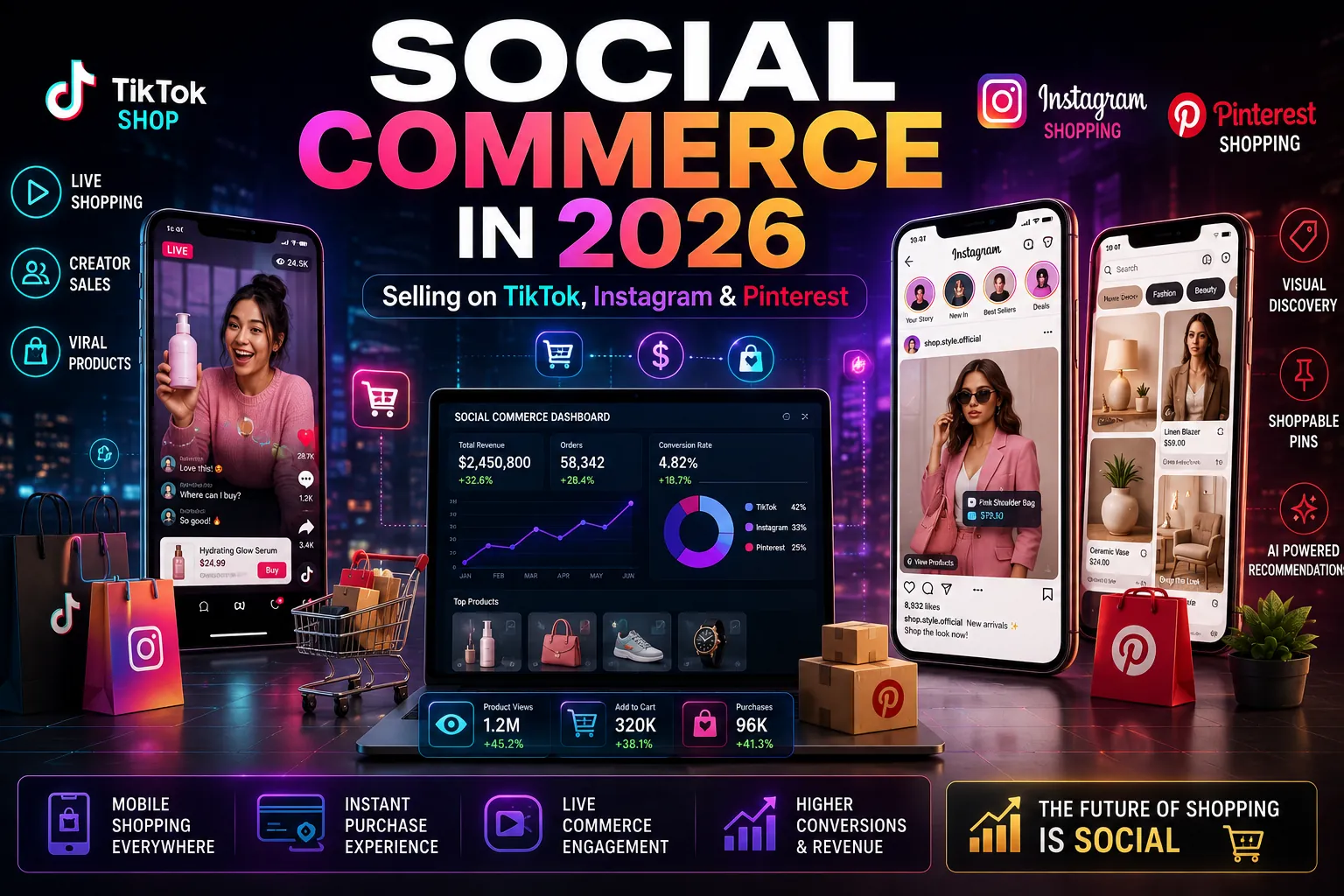
Social commerce, the ability to complete a purchase without leaving a social media platform, has crossed from interesting experiment to serious retail channel in the past three years. TikTok Shop generated over $20 billion in gross merchandise value in 2023, its first full year of US operation. Instagram Shopping has become a standard catalogue feature for consumer brands. Pinterest’s shopping integration has been building quietly into one of the highest-intent discovery platforms in e-commerce.
The question for e-commerce brands in 2026 is not whether to be on social commerce platforms but which ones to prioritise and how to operate on each effectively. The platforms are meaningfully different in how their audiences buy and what content drives conversion.
Platform Comparison: Who Buys What and Why
| Platform | Primary Audience | Discovery Model | Purchase Intent | Best Product Categories |
|---|---|---|---|---|
| TikTok Shop | 18-35, Gen Z and younger Millennials | Algorithm-driven video discovery | Impulse, entertainment-driven | Beauty, fashion, food, gadgets under $50 |
| Instagram Shopping | 25-44, Millennial-heavy | Follow-based + explore | Aspiration and brand-led | Fashion, home, lifestyle, higher ACV |
| 25-54, female-skewing | Search and idea boards | Planned, high purchase intent | Home decor, fashion, food, DIY, weddings |
The fundamental difference between the platforms is where in the purchase journey they capture buyers. TikTok creates demand through entertainment and catches impulse buyers mid-scroll. Pinterest captures demand that already exists and converts planned purchasers researching ideas. Instagram sits between them, operating on brand relationship and aspirational identity.
TikTok Shop: High Volume, Low ACV, Content-First
TikTok Shop integrates product listings directly into TikTok videos and livestreams. A creator can tag a product in a video; viewers tap the tag and complete the purchase without leaving the app. The checkout experience is native and frictionless, which is why conversion rates from TikTok Shop impressions can be meaningfully higher than from a link-in-bio traffic model.
The content model that drives TikTok Shop sales is authentic demonstration. Products that show well in a 30 to 60 second video, ideally with a visible transformation or result, outperform products that require explanation. Beauty products, cleaning products with visible results, food with clear recipe application, and fashion with outfit context all perform consistently.
The TikTok Shop affiliate programme allows brands to pay creators a commission on sales generated through their content. For brands without established TikTok followings, seeding product to relevant creators and running an affiliate programme is the most capital-efficient entry route. A single viral creator video can generate more sales in 48 hours than a month of brand-owned content.
Instagram Shopping: Brand-Building With Commerce Integration
Instagram Shopping requires a Facebook Commerce account connected to a product catalogue. Once set up, products can be tagged in feed posts, Reels, Stories, and the dedicated Shop tab. Checkout is available for US brands directly in Instagram; international brands typically link out to their Shopify or WooCommerce store.
Instagram Shopping works best for brands with a strong visual identity and an established or growing following. The platform rewards consistency of aesthetic, brand voice, and posting frequency. Brands that treat Instagram as a brand-building channel that also converts, rather than a direct response channel, consistently outperform those trying to extract immediate sales from every post.
Reels are the primary organic reach driver on Instagram in 2026. Shoppable Reels, combining short-form video with product tags, produce the best combination of reach and commerce integration the platform offers. Producing three to five Reels per week is the output level that the Instagram algorithm rewards with significant organic distribution.
Pinterest: The Intent Platform That Most Brands Underinvest In
Pinterest is used differently from TikTok and Instagram. People come to Pinterest with a goal: planning a home renovation, planning a wedding, looking for recipe ideas, researching outfit styles. The content they save reflects purchase intent that is specific and near-term, not general entertainment.
Pinterest’s own research shows that 83% of weekly users have made a purchase based on content they saw on the platform. The average order value from Pinterest traffic is consistently higher than from Instagram or TikTok, reflecting the planned purchase nature of the platform’s user base.
Pinterest Shopping connects product catalogues through a verified merchant account and enables product pins that show current price and availability. These product pins appear in relevant searches and category browsing, and click directly to the product page on the brand’s site. Pinterest does not yet support native checkout in most markets.
The content strategy for Pinterest is fundamentally different from other platforms: static images and Idea Pins (multi-page visual guides) optimised for search discovery. Pinterest has a search engine with keyword-driven discovery, and pins have a far longer half-life than posts on other platforms. A well-optimised pin continues driving traffic for months or years.
Creator Partnerships Across Social Commerce Platforms
Across all three platforms, creator partnerships drive social commerce results more efficiently than brand-owned content for most categories. Creators have earned audience trust in their specific niche; their product recommendations carry weight that branded content rarely replicates.
The affiliate model is standard for TikTok Shop. For Instagram, paid partnerships with whitelisting (allowing the brand to run the creator’s post as a paid ad) combine creator authenticity with paid distribution. For Pinterest, creator partnerships are less developed but brands seeding product to relevant lifestyle creators generate consistent organic pins.
Micro-influencers, those with 10,000 to 100,000 engaged followers in a specific niche, consistently outperform macro-influencers on conversion metrics in social commerce. Their audiences are more targeted, their trust relationship is stronger, and their cost per engagement is significantly lower.
Measuring Social Commerce Performance
Attribution in social commerce is imperfect. TikTok Shop provides native analytics with view-through attribution. Instagram Shopping can be connected to Google Analytics 4 via UTM parameters. Pinterest Analytics provides impression and click data but last-click attribution misses significant Pinterest influence on purchases completed on-site.
The most useful measurement approach for social commerce combines platform-native analytics for in-platform conversion data, UTM-tagged links for on-site traffic attribution, and self-reported attribution surveys for customers (asking how they first found the product) to capture the full picture.
FAQs
Which social commerce platform should I start with?
Start with the platform your target audience already uses for discovery in your category. If your audience is under 30 and your products are under $50 with visible results, TikTok Shop is the clear starting point. If you are building a premium lifestyle or home brand for 25 to 45 year olds, Instagram Shopping. If you sell home, food, or fashion products to planners with higher purchase intent, Pinterest deserves significant investment.
Do I need a large following to sell on social commerce platforms?
No, particularly on TikTok. TikTok’s algorithm distributes content based on engagement rather than follower count, meaning a brand with 500 followers can have a product video reach a million people if the content performs. Leveraging creator affiliates removes the brand following requirement entirely. Instagram and Pinterest reward established followings more, but paid amplification can substitute in early stages.
What are the fees for TikTok Shop?
TikTok Shop charges sellers a commission of 2 to 8% depending on product category, plus payment processing fees. Affiliate commissions paid to creators are separate and set by the brand (typically 5 to 20% for effective creator recruitment). The total cost of sale on TikTok Shop is comparable to marketplace fees on Amazon for most categories.
Building a Social Commerce Strategy
The brands succeeding in social commerce in 2026 have stopped treating it as a paid media channel and started treating it as a content and community channel that also drives sales. The investment is in content production, creator relationships, and community engagement, with commerce as the outcome rather than the premise.
Start with one platform, build a repeatable content process for it, measure what converts, and optimise for three to six months before adding a second platform. Multi-platform social commerce done poorly spreads resource thin and produces mediocre results on all channels.
For social commerce strategy, creator economy analysis, and platform update coverage throughout 2026, WritoryBuzz tracks how e-commerce brands are building revenue through social channels.