
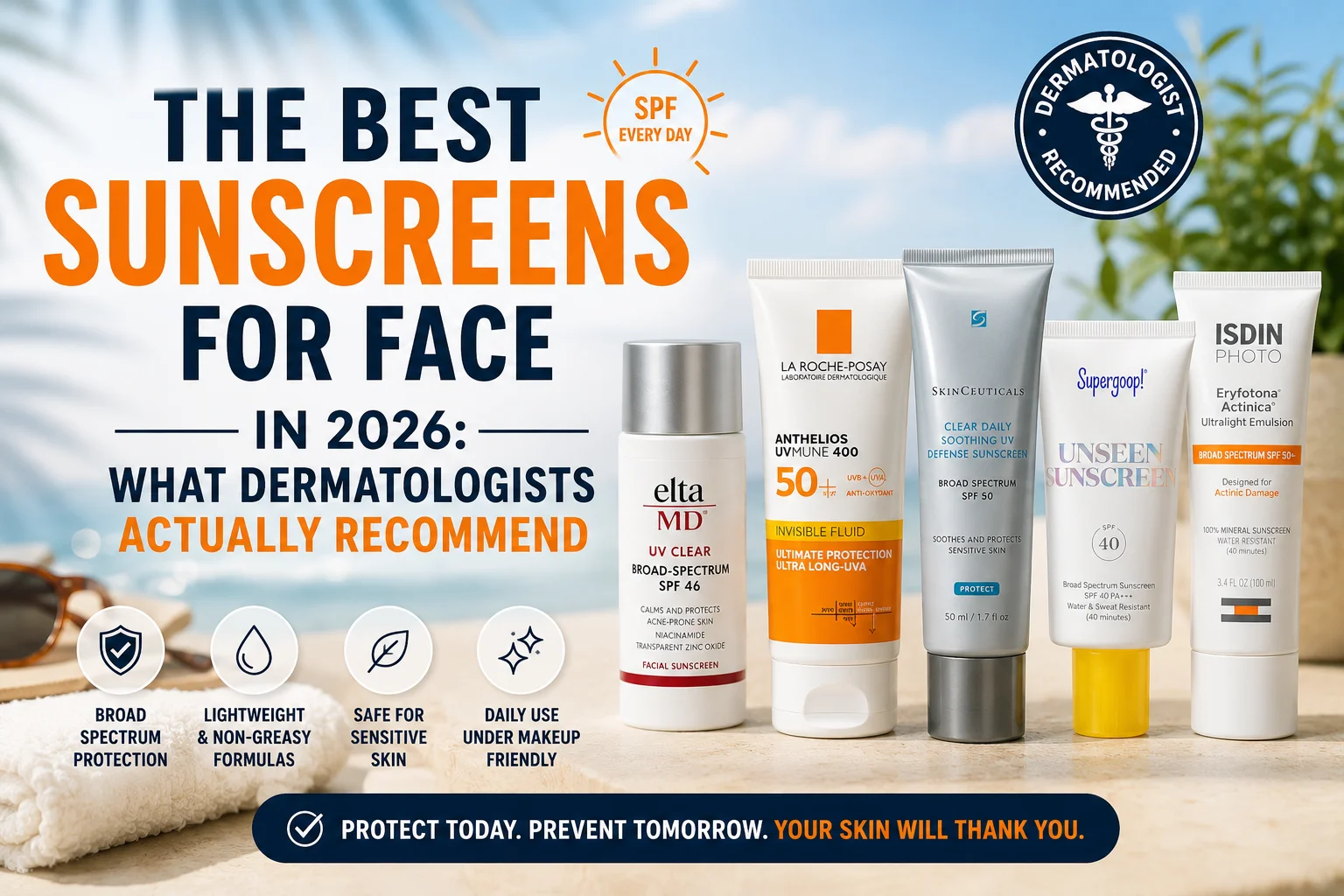
Sunscreen is one of the few skincare interventions with a genuinely robust evidence base. Daily SPF use is the single most studied and most consistently supported anti-ageing intervention, and more importantly, the most supported cancer prevention measure for people with regular sun exposure.
The reasons most people do not apply it consistently come down to formulation: sunscreen that leaves a white cast, pills under make-up, feels greasy, or stings the eyes gets skipped. The practical value of a sunscreen depends on whether you actually wear it daily, which means formulation matters as much as the SPF number.
What the Numbers Mean: SPF, UVA, and Broad Spectrum
| Term | What It Measures | Practical Meaning |
|---|---|---|
| SPF 30 | Filters 97% of UVB rays | Minimum for daily use; dermatologists generally recommend SPF 50 |
| SPF 50 | Filters 98% of UVB rays | Standard recommendation for daily facial use |
| SPF 50+ | Filters 98%+ of UVB rays | Marginal improvement over SPF 50 in real-world conditions |
| UVA protection | Filters UVA rays (ageing + skin cancer) | Not captured by SPF; look for PA+++ or 5-star UVA rating |
| Broad spectrum | Both UVA and UVB coverage | Minimum standard for any facial sunscreen |
SPF only measures UVB protection. UVA rays, which penetrate deeper and cause more photoageing and DNA damage, are measured separately. In the UK and Europe, look for 5-star UVA rating. In Japan and Korea, the PA system (PA+ through PA++++) indicates UVA strength. In the US, ‘broad spectrum’ is the regulatory standard, though it provides less granular UVA data.
Chemical vs Mineral Sunscreen: The Practical Difference
Chemical (Organic) Sunscreens
Chemical filters (oxybenzone, avobenzone, octinoxate, tinosorb, mexoryl) absorb UV radiation and convert it to heat. They tend to apply clear, sit invisibly under make-up, and have lightweight textures. They require 15 to 20 minutes to activate after application.
Some chemical filters have raised regulatory questions. The FDA has flagged several for further safety studies. The European regulatory framework, which approves newer filters like Tinosorb S and Tinosorb M that are not yet US-approved, is generally considered more up to date on filter safety.
Mineral (Physical) Sunscreens
Mineral sunscreens use zinc oxide and/or titanium dioxide. They sit on the skin surface and physically reflect UV. They are effective immediately on application, less likely to cause skin reactions, and the preferred choice for sensitive and reactive skin.
The traditional limitation was white cast, particularly on deeper skin tones. Modern formulations have significantly reduced this through micronisation and tinting, though some cast remains on very dark skin tones even with the best mineral formulations.
What to Look For by Skin Type
| Skin Type | Recommended Formulation | Ingredients to Look For |
|---|---|---|
| Oily / acne-prone | Gel, fluid, or dry-touch finish | Niacinamide, silica, oil-free base |
| Dry skin | Cream formulation, added hydration | Hyaluronic acid, ceramides, glycerin |
| Sensitive / reactive | Mineral only | Zinc oxide, no fragrance, no alcohol |
| Dark or medium skin tones | Tinted mineral or chemical | Purple-tinted base to counteract white cast |
| Mature skin | SPF 50 with added antioxidants | Vitamin C, niacinamide, peptides |
Top-Rated Options That Dermatologists Consistently Mention in 2026
For Everyday Lightweight Wear
La Roche-Posay Anthelios UVMune 400 Invisible Fluid SPF50+ remains the most consistently recommended option for daily wear across dermatologist interviews and clinical skin surveys. Its Mexoryl 400 filter provides exceptional UVA protection with a fluid, invisible finish that works under make-up. Available widely in Europe and online globally.
Altruist Face Fluid SPF 50 is a budget option that passes dermatological testing and provides genuine broad-spectrum coverage at a fraction of the price of premium products. It has a slightly thicker texture but no white cast on lighter skin tones.
For Sensitive and Reactive Skin
Avène Sun Mineral SPF 50+ is a fragrance-free, mineral-only formulation consistently recommended for reactive and sensitive skin. The lightweight texture avoids the thick, paste-like quality of many mineral options. The brand’s thermal spring water base is documented to reduce skin reactivity.
EltaMD UV Clear SPF 46 is a US-based option with a loyal following among dermatologists for sensitive and acne-prone skin. Contains niacinamide, which is beneficial for post-inflammatory hyperpigmentation alongside UV protection.
For Oily and Acne-Prone Skin
Bioderma Photoderm MAX SPF 50+ Aquafluide applies like water and dries to a matte finish without pilling under make-up. Consistently well-reviewed by dermatologists for oily skin types. No fragrance. No occlusive ingredients.
For Deeper Skin Tones
Black Girl Sunscreen SPF 30 (Make It Matte for oily skin) was formulated specifically to avoid white cast on darker skin tones and has no detectable cast on medium to deep complexions. The SPF 30 is at the lower end of the recommended range; pair with shade-seeking behaviour for high-UV days.
Fenty Skin Hydra Vizor SPF 30 is a hybrid moisturiser-sunscreen that works without white cast on dark skin tones. SPF 30 is again the caveat; for outdoor-intensive days, a higher SPF mineral option is preferable even with the cast trade-off.
Application Rules That Most People Get Wrong
The amount most people apply is roughly half what is needed for the stated SPF. The SPF testing standard uses 2mg per square centimetre of skin surface. For the face and neck, that translates to about half a teaspoon or a generous layer, more than most people use. Under-application produces real-world SPF significantly lower than the label.
Reapplication every two hours in direct sun exposure is the standard recommendation. Reapplication after swimming or heavy sweating applies regardless of the two-hour window. SPF in make-up does not substitute for a dedicated sunscreen layer underneath.
Apply sunscreen as the last skincare step before make-up, on top of moisturiser. Allow it to absorb for two minutes before applying foundation or tinted products.
FAQs
Can I use body sunscreen on my face?
Body sunscreens work technically but are often formulated with heavier, more occlusive ingredients that block pores and cause breakouts on facial skin. Facial formulations are non-comedogenic by design. Using a body SPF on the face occasionally is not harmful; using it daily is likely to cause skin issues on acne-prone or oily skin.
Does sunscreen need to be reapplied indoors?
For standard office environments away from windows, no. UVA rays penetrate glass, so sitting near a window with significant sun exposure does warrant sunscreen. For most indoor environments without direct sun exposure, morning application is sufficient.
What SPF is needed under make-up?
Apply a dedicated SPF 50 under make-up. SPF in foundation or BB cream does not reach the required application amount because the make-up is applied too thinly for its SPF rating to hold. Treat make-up SPF as supplementary, not primary.
The Bottom Line on Sunscreen Choice
The best sunscreen is the one you apply every day. Formulation suitability for your skin type matters more than marginal differences in SPF numbers or filter chemistry. A well-applied SPF 30 outperforms a reluctantly applied SPF 100.
Spend time finding a formulation that works with your skin and your routine. Once you find it, the skincare step with the highest evidence base becomes the easiest one to maintain.
For skin health guides, dermatology research, and skincare product analysis from 2026, WritoryBuzz covers evidence-based beauty and health content throughout the year.