
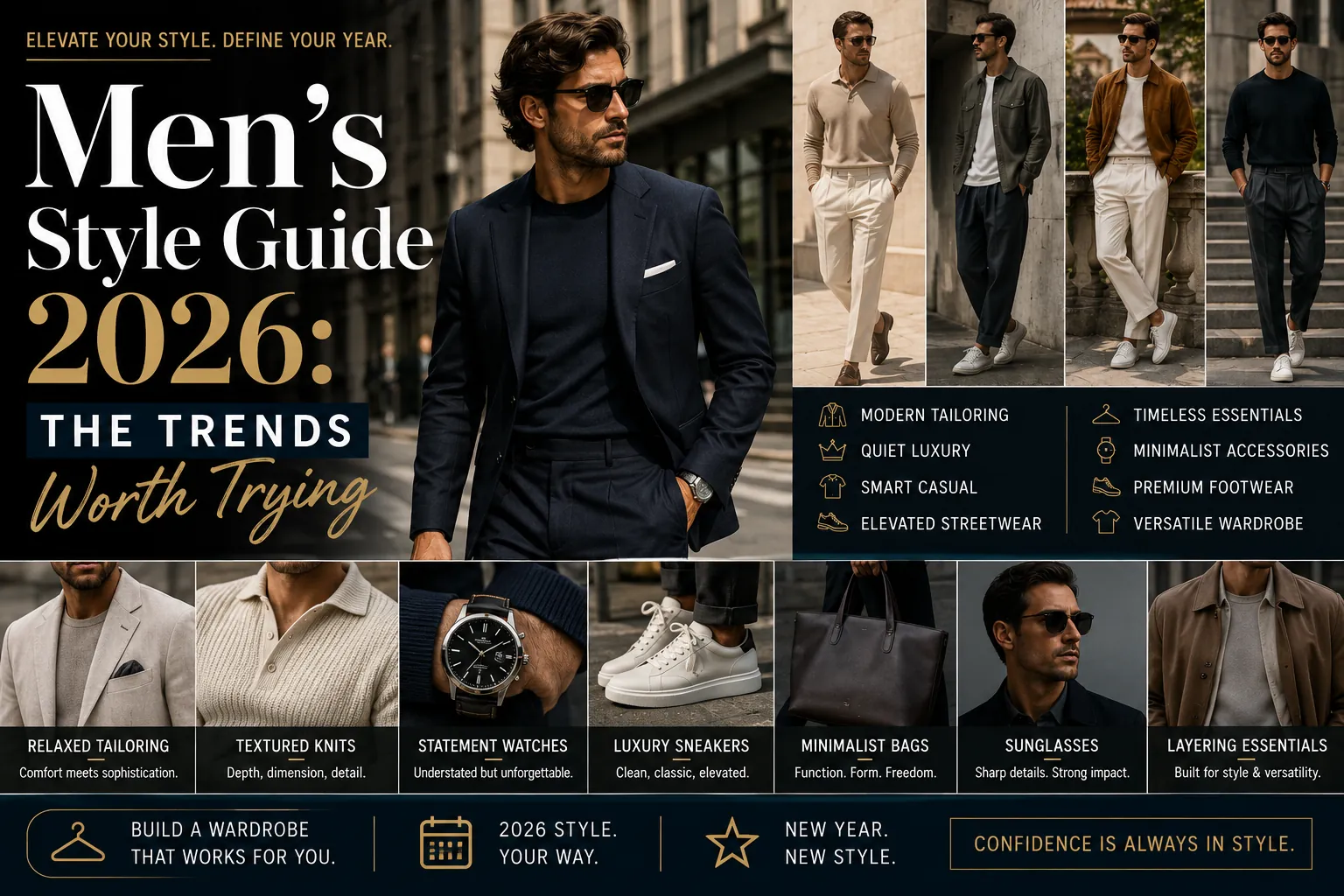
Men’s fashion in 2026 is moving in two directions simultaneously: back toward considered tailoring and forward into expressive casualwear. The common thread is intentionality. The era of athleisure as default is ending. The era of wearing clothes that look like you chose them is well underway.
Men’s style in 2026 benefits from a market that has genuinely improved its understanding of fit, quality, and versatility over the past five years. The widespread conversation about capsule wardrobes, investment pieces, and cost-per-wear has shifted buying habits for a significant portion of male consumers from fast fashion toward fewer, better pieces.
The Dominant Trends in Men’s Style for 2026
Quiet Luxury: Premium Without the Logo
Quiet luxury, which dominated womenswear from 2022 onwards, has fully crossed into menswear in 2026. The aesthetic prioritises quality materials, precise tailoring, and restrained palette over brand logos and statement pieces. A perfectly fitted cashmere rollneck in charcoal grey, well-cut trousers, and leather shoes is the visual territory.
The practical implication: invest in fabric quality and fit rather than brand name. A well-made pair of woollen trousers from a mid-tier brand that fits correctly looks more expensive than a prestigious brand’s poorly fitting equivalent. Quiet luxury is about what the garment says about its wearer’s discernment, not what the label says about their budget.
Workwear Revival
Workwear in the fashion sense refers to utility-influenced clothing inspired by industrial and outdoor workers: heavyweight denim, canvas, Carhartt-style jackets, and military-influenced details. This is not office wear. It is relaxed casualwear with heritage references and durability credibility.
The 2026 iteration has become more polished than the raw workwear of previous cycles. Pieces are cut slightly slimmer, fabrics are better quality, and the styling is mixed with cleaner elements rather than head-to-toe utility. A heavy canvas jacket over a fitted rollneck and slim dark jeans is a current example of the genre done well.
Tailored Casual
The office dress code has become genuinely flexible at most workplaces. The gap between formal suiting and purely casual clothing has created a category that is growing strongly: tailored casual. Think pleated wide-leg trousers worn with a relaxed knit or a well-cut polo shirt; a softly structured sports coat over a good t-shirt; linen shirt tucked into tailored shorts.
The key element of tailored casual is intentional fit. Relaxed silhouettes are appropriate but formless or ill-fitting is not. Wide-leg trousers work when they are the right length and sit at the natural waist. They do not work when they are hemmed too long or sit too low.
Earth Tones and Neutral Palettes
The dominant colour story in men’s fashion for 2026 continues toward earth tones: terracotta, burnt orange, deep olive, tobacco brown, slate grey, and warm beige alongside classic navy and black. These tones combine naturally with each other and with neutrals, making wardrobe building significantly easier than trend-driven seasonal palettes.
A practical men’s wardrobe in 2026 built around these tones produces versatile combinations without the risk of purchases that become difficult to wear together after a season.
The Wardrobe Pieces Worth Investing In
A quality overcoat in camel or charcoal: One good overcoat transforms the appearance of whatever you wear under it. A camel or charcoal wool overcoat in a single-breasted style works for smart and casual contexts. Buy the best quality you can access and expect it to last 10 to 15 years.
Well-cut dark trousers (tailored casual): Pleated or flat-front trousers in a dark navy, charcoal, or olive that can be worn with a t-shirt on a casual weekend and a shirt for work. The pleated trouser has fully rehabilitated in 2026 and is the more flattering cut for most men.
A heavyweight knit in a neutral: A 100 percent merino wool or cashmere-blend crew or rollneck in oatmeal, stone, or dark navy. This single piece works under a blazer, alone, or layered under a coat. It is the most versatile mid-layer available.
Quality leather shoes or boots (not trainers): One pair of genuinely good leather shoes or chelsea boots has a transformative effect on how a casual outfit reads. The quality of footwear is one of the most widely noted elements of a man’s appearance. This is where spending at the premium tier pays proportionally the largest dividend.
A structured bag: A leather or canvas tote, a slim briefcase, or a quality messenger bag replaces the backpack for adult professional contexts. This is a small but consistent visual upgrade that many men delay unnecessarily.
Fit Remains the Non-Negotiable
Every trend in men’s fashion in 2026 is mediated by fit. Quiet luxury requires precise tailoring. Workwear revival requires proportional balance between loose and fitted pieces. Tailored casual only reads as intentional when the tailored elements actually fit.
Budget spent on a tailor to alter off-the-rack clothing produces better results than an equivalent budget spent on more expensive clothes in the wrong size. Trouser hemming, shirt sleeve shortening, and jacket suppression at the waist cost $30 to $80 per garment and transform how each piece wears.
What are the biggest men’s fashion trends in 2026?
Quiet luxury (premium fabrics and precise tailoring over logos), the workwear revival (utility-influenced heavyweight casualwear), tailored casual (relaxed silhouettes with intentional fit), and earth tone palettes are the dominant men’s style trends in 2026.
How do you build a versatile men’s wardrobe in 2026?
Build around neutral and earth tone foundation pieces: dark trousers, quality knitwear, a good overcoat, and leather shoes. These combine across virtually every outfit context. Add trend pieces selectively in accessories rather than major purchases to allow seasonal variation without unnecessary spending.
What is quiet luxury in men’s fashion?
Quiet luxury prioritises quality materials, precise fit, and restrained design over brand logos and statement pieces. The aesthetic communicates through fabric quality and tailoring rather than visible branding. It typically involves a neutral palette of camel, charcoal, navy, and stone in high-quality natural fabrics.
Should men invest in tailoring for off-the-rack clothing?
Yes, for any garment you wear regularly. Trouser hemming, sleeve shortening, and waist suppression cost $30 to $80 per item and produce a significant visual improvement. Well-fitted mid-price clothing consistently outperforms expensive clothing in the wrong size.
What colour palette works best for men’s wardrobes in 2026?
Earth tones (terracotta, olive, tobacco brown, burnt orange) combined with classic neutrals (navy, charcoal, stone, black) produce versatile combinations. These tones work naturally together and allow building a wardrobe where most pieces combine without active colour coordination.
Are wide-leg trousers still in style for men in 2026?
Yes. Wide-leg and pleated trousers are a strong 2026 trend in men’s tailored casual. The key is fit: they should sit at the natural waist, be hemmed to the correct length (breaking very slightly on the shoe), and be worn with a fitted upper to balance proportions.
Choose Quality Over Volume
The clearest men’s style shift of 2026 is away from large wardrobes of mediocre pieces and toward smaller collections of genuinely good ones. Ten well-chosen items that fit correctly and combine naturally with each other are more useful than a wardrobe of 50 pieces that rarely feel quite right.
Invest in fit first, fabric second, and trend interest a distant third. Everything else follows from those two foundations being right.