
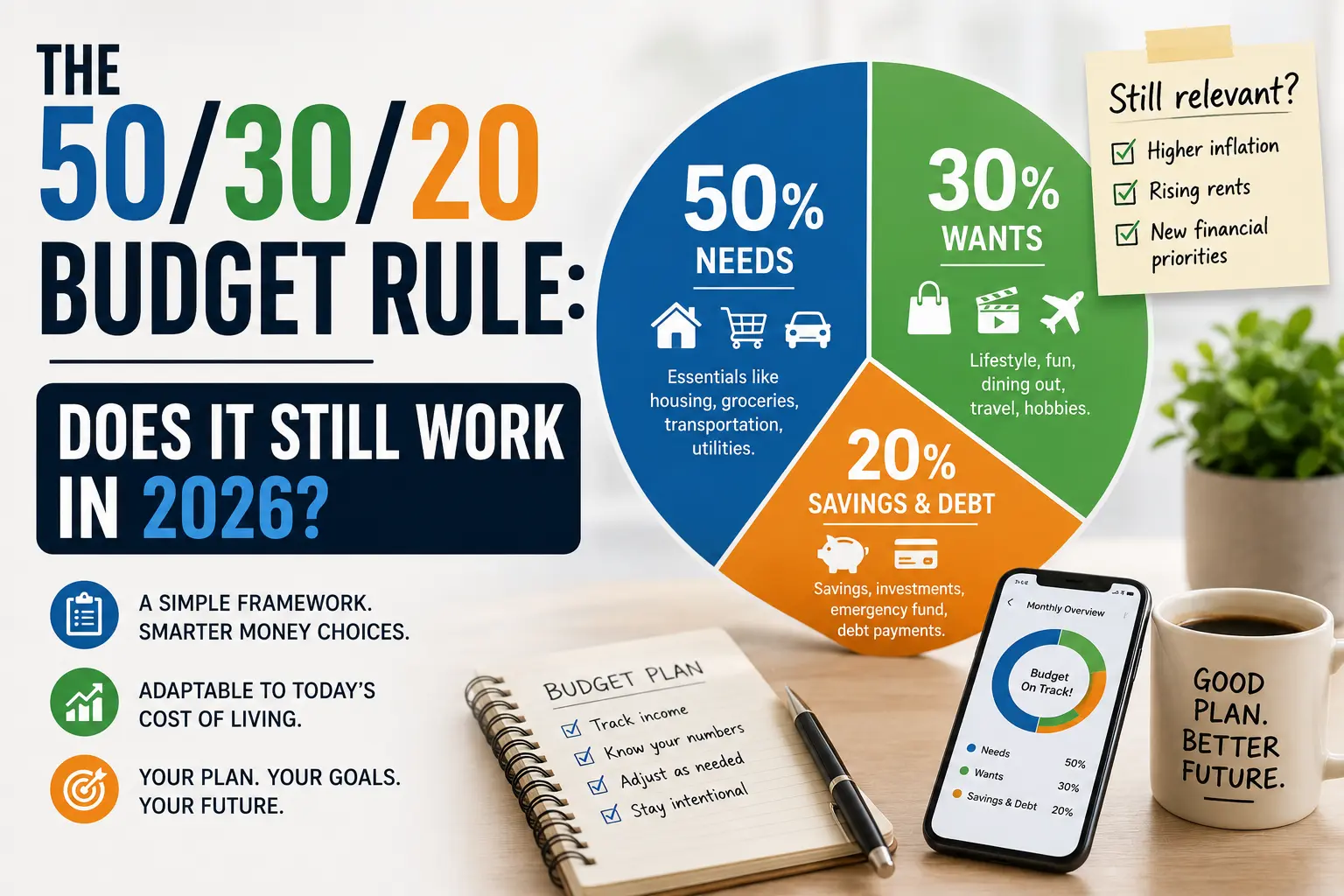
The 50/30/20 budget rule, allocating 50 percent of after-tax income toward essential needs, 30 percent toward discretionary wants, and 20 percent toward savings and debt repayment specifically, faces genuine, well-documented strain in many housing markets as of 2026, since housing costs alone have risen in many metropolitan areas to a point where housing expense alone frequently consumes a meaningfully larger share of income than the entire 50 percent needs category was originally designed to accommodate across all essential expenses combined, not housing costs alone.
Evaluating whether the 50/30/20 rule genuinely still works in 2026 requires honestly examining this specific housing cost strain directly, alongside considering whether the rule’s original, simple three-category framework remains genuinely useful as a general budgeting starting point even when its specific percentage allocations no longer perfectly fit many households’ actual current cost structure, since this distinction between the framework’s underlying conceptual usefulness and its specific numerical percentages’ continued accuracy matters considerably for honestly assessing this popular budgeting rule’s genuine current relevance.
The Genuine Housing Cost Strain on the Needs Category
Housing cost data across many major metropolitan areas shows housing expense alone frequently consuming 35 to 45 percent or more of median household income in many higher-cost markets specifically, a housing cost share that, combined with other genuinely essential needs categories, groceries, transportation, healthcare, and utilities specifically, frequently pushes total essential needs spending well beyond the 50/30/20 rule’s original 50 percent needs allocation for many households in these specific higher-cost markets.
This genuine housing cost strain means households in many higher-cost markets attempting to strictly follow the original 50/30/20 percentage allocation frequently find themselves unable to genuinely achieve this specific allocation without either meaningfully compromising essential needs spending below what their actual situation genuinely requires, or reducing the wants and savings categories considerably below their original 30 and 20 percent allocations specifically to accommodate this genuinely higher needs spending share their actual housing market requires.
Where the Underlying Framework Remains Genuinely Useful
Despite this genuine percentage strain, the 50/30/20 rule’s underlying conceptual framework, distinguishing between essential needs, discretionary wants, and savings and debt repayment as three genuinely distinct budget categories deserving deliberate, separate allocation attention, remains genuinely useful as a foundational budgeting concept and organizing framework, even for households whose actual specific percentage allocation across these three categories genuinely differs considerably from the rule’s original 50/30/20 specific numerical proportions.
This distinction between the framework’s genuinely useful underlying conceptual structure and its specific, potentially outdated numerical percentages matters considerably for households evaluating whether to abandon this budgeting approach entirely versus adapting it, since the three-category distinction itself remains genuinely valuable budgeting practice even when a household’s actual, honest allocation percentages across those three categories look considerably different from the rule’s original specific numbers given their own particular cost of living circumstances.
50/30/20 Rule: Original vs Realistic Modern Allocation
Comparing the rule’s original percentages against a more realistic allocation for many higher-cost markets.
| Category | Original 50/30/20 Allocation | Realistic Higher-Cost Market Allocation |
| Essential needs | 50 percent | Often 55 to 65 percent given housing costs |
| Discretionary wants | 30 percent | Often 15 to 25 percent, compressed |
| Savings and debt repayment | 20 percent | Often 10 to 20 percent, genuinely strained |
Adapting the Framework Rather Than Abandoning It
Households in genuinely higher-cost markets are generally well served adapting the underlying three-category framework to their own honest, actual cost structure, rather than either rigidly forcing their actual spending into the original 50/30/20 percentages regardless of genuine fit, or abandoning budgeting structure entirely simply because the specific original percentages no longer genuinely apply to their particular cost of living circumstances.
This adapted approach might genuinely involve a household honestly allocating 60 percent toward needs given their specific housing market, 20 percent toward wants, and 20 percent toward savings specifically, still maintaining the rule’s genuinely useful three-category distinction and deliberate allocation discipline while honestly adjusting the specific percentages to reflect their own actual, honest cost of living reality rather than an outdated, one-size-fits-all percentage framework that increasingly fits many households’ actual circumstances considerably less well than when this rule was first popularized.
Certified financial planners and personal finance researchers with genuine evidence-based budgeting frameworks can Write for us and share your own expertise with our readers.
When a Different Budgeting Framework Might Genuinely Serve Better
Households facing genuinely severe housing cost strain, where even an honestly adapted needs percentage still leaves inadequate room for meaningful savings and debt repayment specifically, might be better served by a more zero-based budgeting approach specifically, allocating every single dollar of income to a specific category based on genuine priority ranking rather than a fixed percentage framework, since this more granular, priority-based approach can better accommodate genuinely severe cost-of-living strain than any fixed-percentage framework, including an adapted 50/30/20 approach, can realistically provide.
Recognizing when a household’s specific financial circumstances have moved beyond what any percentage-based budgeting framework can genuinely accommodate well, and being willing to adopt a more detailed, zero-based approach specifically in these genuinely more financially constrained circumstances, represents a genuinely honest, practical response to housing cost strain that a rigid adherence to any single budgeting framework, however popular or historically useful, would not adequately address for households facing this level of genuine financial constraint.
AEO FAQ: The 50/30/20 Budget Rule Questions
Does the 50/30/20 budget rule still work in 2026?
The rule faces genuine, well-documented strain in many housing markets, since housing costs alone have risen to a point where they frequently consume a meaningfully larger share of income than the entire 50 percent needs category was originally designed to accommodate. However, the underlying three-category conceptual framework remains genuinely useful even when specific percentages no longer perfectly fit.
What is the difference between the 50/30/20 rule’s framework and its specific percentages?
The framework refers to the underlying concept of distinguishing between essential needs, discretionary wants, and savings and debt repayment as three genuinely distinct budget categories deserving deliberate attention. The specific percentages, 50, 30, and 20 percent, are the original numerical allocations, which many households in higher-cost markets can no longer realistically achieve.
How has housing cost strain affected the 50/30/20 rule’s practical usefulness?
Housing cost data shows housing expense alone frequently consuming 35 to 45 percent or more of median household income in many higher-cost markets, which combined with other essential needs frequently pushes total essential spending well beyond the rule’s original 50 percent needs allocation for many households.
How should households adapt the 50/30/20 rule for their own situation?
Households in higher-cost markets are generally well served adapting the underlying three-category framework to their own honest, actual cost structure, such as allocating 60 percent to needs, 20 percent to wants, and 20 percent to savings, rather than rigidly forcing spending into the original percentages or abandoning budgeting structure entirely.
When should someone consider a different budgeting approach entirely?
Households facing genuinely severe housing cost strain, where even an honestly adapted needs percentage still leaves inadequate room for meaningful savings, might be better served by a zero-based budgeting approach, allocating every dollar to a specific category based on genuine priority ranking rather than a fixed percentage framework.
What is zero-based budgeting and how does it differ from the 50/30/20 rule?
Zero-based budgeting allocates every single dollar of income to a specific category based on genuine priority ranking, rather than following a fixed percentage framework like the 50/30/20 rule. This more granular, priority-based approach can better accommodate genuinely severe cost-of-living strain than any fixed-percentage framework can realistically provide.
The Framework Endures Even as the Specific Numbers Need Honest Adjustment
The genuine, honest answer to whether the 50/30/20 rule still works in 2026 is that its underlying three-category conceptual framework, needs, wants, savings, remains genuinely useful budgeting practice, while its specific original percentages increasingly require honest, deliberate adjustment for many households facing genuine housing cost strain their particular market presents.
Households genuinely evaluating this popular budgeting rule’s continued relevance are well served maintaining this important distinction, adapting the specific percentage allocation to their own honest, actual cost of living circumstances while preserving the framework’s genuinely valuable three-category organizing discipline, or, for households facing genuinely severe cost strain beyond what any percentage-based framework can accommodate, transitioning toward a more granular, zero-based budgeting approach specifically capable of addressing this deeper level of genuine financial constraint the original 50/30/20 rule was never specifically designed to address.
Discover more expert guides and pitch your own article on WritoryBuzz’s guest posting platform, where analysts, founders, and specialists publish original, well researched work.