
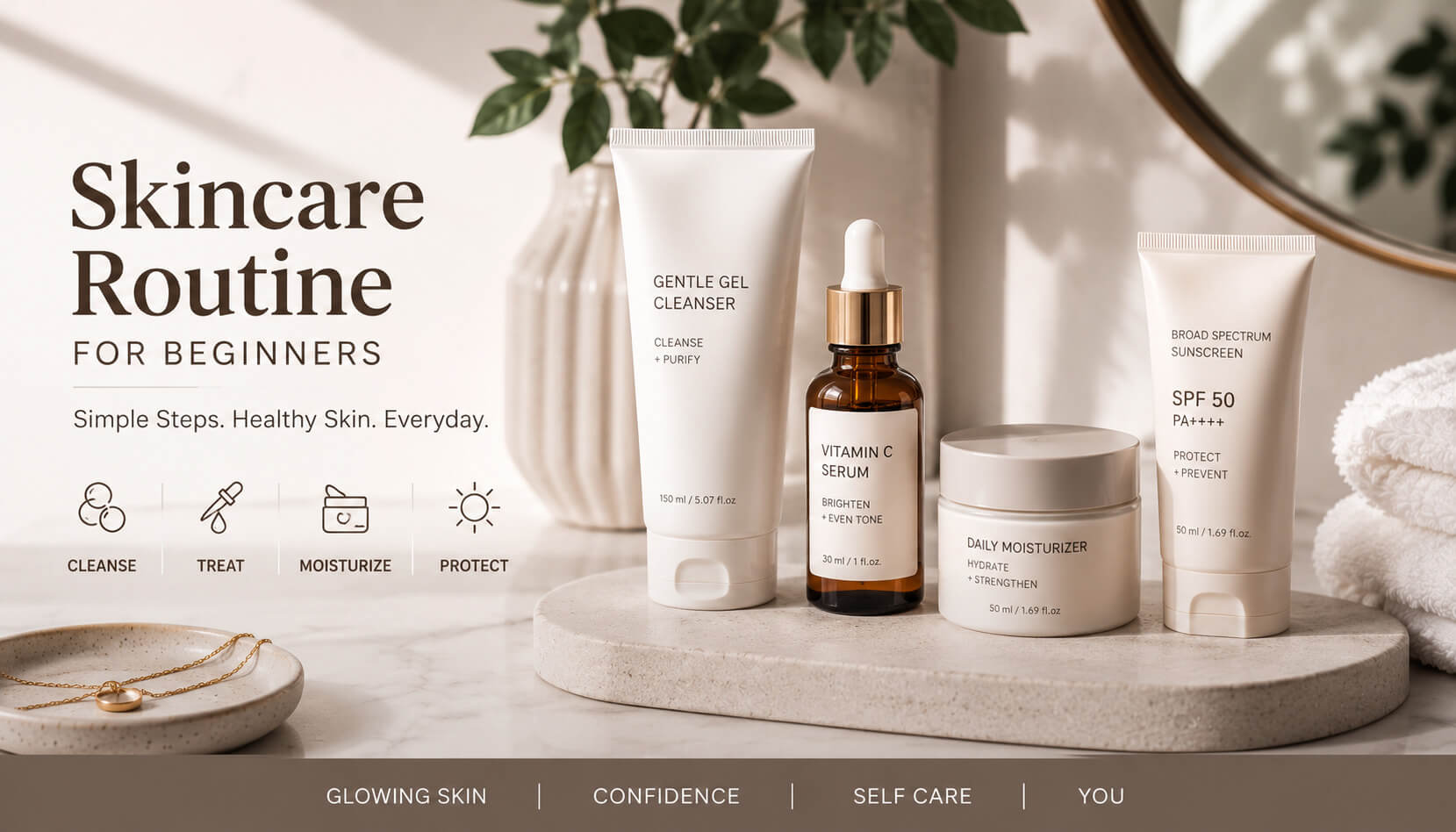
The skincare industry would prefer you to believe you need 12 products. You do not. A functional skincare routine that genuinely improves skin health over time can be done with four products in the morning and four in the evening.
This guide cuts through the noise and gives you the minimum effective routine: what to use, in what order, and why each step matters.
How Many Products Do You Actually Need?
The honest answer is: a cleanser, a moisturiser, and an SPF. Those three products, used consistently, will improve most people’s skin health more than a 10-step routine used inconsistently.
The expanded beginner routine in this guide adds a vitamin C serum in the morning and a retinol product at night. These two additions make a measurable difference to skin over time. Everything beyond these five products is incremental improvement, not foundation.
The Morning Routine
Step 1: Cleanser
A gentle, non-stripping cleanser removes overnight sebum and sweat without disrupting the skin barrier. For most skin types, a mild gel or foam cleanser works well. If your skin feels tight and dry after cleansing, the cleanser is too harsh. Switch to something more gentle.
If your skin is dry or sensitive, a simple water rinse in the morning (saving cleanser for evenings) is a legitimate approach. Overwashing removes natural oils that your skin needs.
Step 2: Vitamin C Serum
Vitamin C is an antioxidant that protects against UV damage (works alongside SPF, not instead of it), brightens skin tone over time, and stimulates collagen production. Applied in the morning, it works with sunlight exposure rather than against it.
L-ascorbic acid is the most studied form of vitamin C, effective at concentrations of 10 to 20 percent. It is also the most unstable and the most likely to cause irritation for sensitive skin. For beginners, a product in the 10 to 15 percent range with a low pH is a reasonable starting point. The product should be kept away from light and heat to maintain potency.
Step 3: Moisturiser
Moisturiser keeps the skin barrier intact and hydrated. Even oily skin needs moisturiser — the idea that oily skin should skip moisturiser is incorrect. Skipping it often triggers more sebum production as the skin tries to compensate.
For oily or acne-prone skin, a lightweight gel moisturiser works well. For dry or normal skin, a richer cream is more appropriate. Look for products with ingredients like hyaluronic acid (draws water into the skin) or ceramides (supports the skin barrier).
Step 4: SPF (Non-Negotiable)
Sunscreen is the single most evidence-backed skincare product available. It prevents UV damage, which is the primary driver of visible skin ageing, pigmentation, and skin cancer risk. It should be the last step in your morning routine.
SPF 30 blocks 97 percent of UVB rays. SPF 50 blocks 98 percent. The difference is small. SPF 30 applied generously every day is more protective than SPF 50 applied occasionally. Chemical and mineral sunscreens are both effective — choose based on skin type and texture preference.
The Evening Routine
Step 1: Cleanser (More Thorough Than Morning)
The evening cleanse has a different job: removing makeup, SPF residue, pollution particles, and the day’s sebum buildup. If you wear makeup or SPF (you should be), a double cleanse is worthwhile. First, an oil-based cleanser or micellar water to dissolve the product layer, then your regular cleanser.
Step 2: Toner or Essence (Optional but Useful)
A hydrating toner or essence prepares skin to absorb subsequent products more effectively. This step is optional but particularly valuable for dry or dehydrated skin. Look for products with hyaluronic acid, niacinamide, or panthenol. Skip anything alcohol-heavy — it strips rather than prepares.
Step 3: Retinol (The Most Impactful Evening Ingredient)
Retinol (a form of vitamin A) is the most research-backed ingredient for long-term skin improvement. It accelerates cell turnover, stimulates collagen production, reduces fine lines, and improves skin texture over time.
Beginners should start with a low concentration: 0.025 to 0.1 percent. Apply two or three nights per week, not every night at first. Skin typically needs four to six weeks to adjust before increasing frequency. Redness and mild peeling in the first few weeks is normal. If these are severe or persistent, reduce frequency further.
Retinol increases photosensitivity, which is why it belongs exclusively in the evening routine and why your morning SPF becomes more important, not less, when using retinol.
Step 4: Night Moisturiser
A slightly richer moisturiser at night takes advantage of the skin’s overnight repair cycle. Barrier-supporting ingredients (ceramides, peptides, shea butter) work well in night moisturisers. The skin loses more moisture overnight when we are not drinking water, so a more occlusive product keeps that moisture in.
Where to Spend More vs Where to Save
| Product | Worth Spending More On? | Why |
| Cleanser | No | Rinses off; active ingredients don’t stay on skin |
| Vitamin C serum | Yes | L-ascorbic acid stability is hard to achieve at low price points |
| Moisturiser | No for basics | Cheaper options with hyaluronic acid and ceramides work well |
| SPF | No | Effective SPF 30–50 is available at all price points |
| Retinol | Moderate | Mid-range options are fine; very cheap products often lower concentration |
Building Your Routine on a Budget
- CeraVe, La Roche-Posay, and Neutrogena cover the cleanser and moisturiser categories effectively at drugstore prices.
- The Ordinary makes a well-regarded 10% L-ascorbic acid vitamin C suspension at a fraction of premium brand prices.
- Retinol products from Differin (adapalene 0.1%), Paula’s Choice, or Olay Regenerist are effective at accessible prices.
- Any SPF 30+ broad-spectrum sunscreen works. Korean and Japanese brands (Biore UV, Anessa) are widely praised for texture and finish.
Common Mistakes
- Skipping SPF because you’re not going outside. Windows let in UV. Screens do not emit significant UV but outdoor light through windows does. SPF daily, regardless of plans.
- Using retinol too much too fast. The goal is a long-term habit, not maximum strength immediately. Irritation that forces you to stop is worse than a slower start.
- Mixing vitamin C and retinol. These work best at different pH levels. Use vitamin C in the morning, retinol in the evening. Do not layer them in the same routine.
- Changing products too frequently. Most skincare ingredients need 8 to 12 weeks of consistent use before results are visible. Switching products every few weeks makes it impossible to know what is working.
FAQ
What is the correct order to apply skincare products?
As a general rule, apply products from thinnest to thickest consistency. Water-based serums go before moisturiser. Moisturiser goes before SPF. In the morning: cleanser, vitamin C serum, moisturiser, SPF. In the evening: cleanser, (toner/essence), retinol, night moisturiser.
Can I use retinol every night as a beginner?
No. Start with two to three nights per week at a low concentration (0.025–0.1%). Your skin needs time to build tolerance. Most people can progress to nightly use after four to eight weeks if no significant irritation occurs.
Start With Just Three Products
Cleanser, moisturiser, SPF. Use them consistently every morning for four weeks. Add the evening cleanser and a basic moisturiser for nights. Build from there at your own pace.
Consistency for three months with basic products produces better results than the most expensive routine used inconsistently. Start simple. Stay consistent.
Readers connect with content that feels practical, clear, and genuinely helpful. WritoryBuzz creates engaging beauty and wellness content designed to build trust, improve visibility, and keep audiences coming back.