
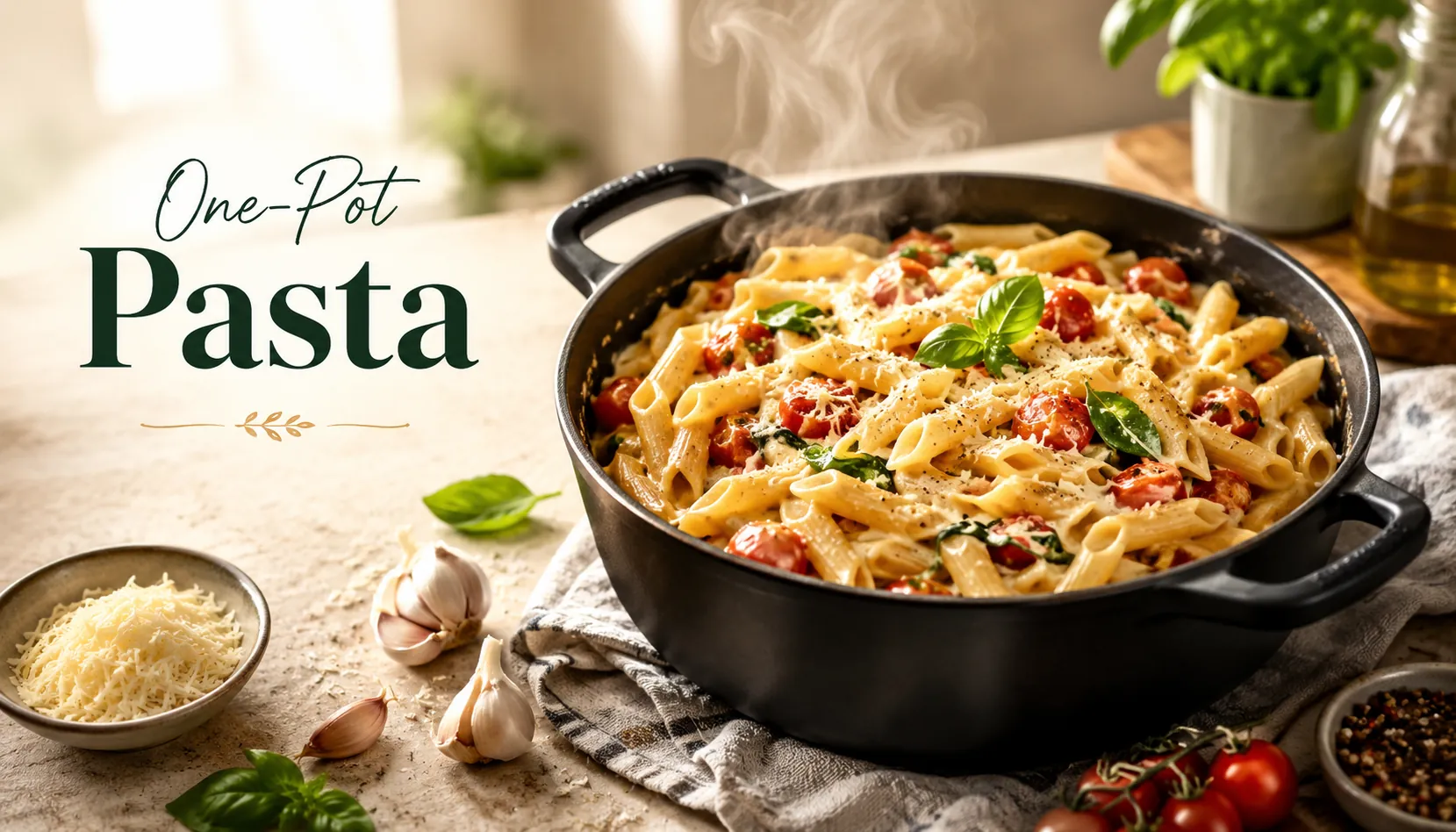
One pot, one stove, twenty minutes. No colander, no second pan, no pile of dishes at the end.
One-pot pasta is not a compromise. The starchy cooking liquid that stays in the pan becomes the sauce. The result is often richer and more cohesive than pasta drained and tossed separately.
Here are five recipes that work reliably on any weeknight, with the technique explained so you understand why it works, not just what to do.
Why One-Pot Pasta Works (The Science, Briefly)
Pasta releases starch as it cooks. In a colander approach, that starchy water goes down the drain. In one-pot cooking, it stays in the pan and emulsifies with oil and any liquid you add, creating a natural, clingy sauce.
The ratio matters: too little liquid and pasta sticks and burns, too much and the sauce is thin. A good starting point is just enough liquid to cover the pasta by about half an inch.
The 5 Recipes
1. Creamy Garlic Parmesan Pasta
This one uses the pasta water directly as the sauce base. Saute minced garlic in butter for one minute, add pasta and chicken stock to just cover, cook uncovered on medium-high, stirring occasionally. When pasta is al dente and liquid is mostly absorbed, remove from heat, add cream and parmesan, stir until silky.
Ready in 18 minutes. Serves 2 to 3. The sauce clings because of the starch, not the cream.
| Ingredient | Amount | Note |
| Pasta (short) | 200g | Penne or rigatoni work well |
| Chicken stock | 600ml | Use low-sodium to control salt |
| Garlic | 4 cloves, minced | Fresh makes a real difference |
| Butter | 2 tbsp | Adds richness at saute stage |
| Double cream | 3 tbsp | Added off heat only |
| Parmesan | 40g, grated | Stir in with cream |
2. Tomato, Spinach, and White Bean Pasta
Saute onion and garlic, add canned tomatoes, a cup of stock, and pasta. Cover and cook until pasta is just tender. Add white beans and a large handful of spinach, stir through until wilted. Finish with a squeeze of lemon.
Ready in 20 minutes. Serves 4. Works as a complete meal with protein from the beans.
3. Spicy Sausage and Pepper Pasta
Brown sliced Italian sausage in the pot, remove and set aside. Add sliced peppers and onion, cook two minutes. Return sausage, add stock and tomato paste, add pasta and cook until liquid is absorbed. Top with fresh basil.
Ready in 20 minutes. Serves 3 to 4. The sausage fat becomes part of the cooking liquid and flavors the whole dish.
4. Lemon Chicken Orzo
Orzo cooks fast and absorbs flavor well. Saute chicken pieces until golden, add orzo, stock, lemon zest, and thyme. Cover and cook 12 minutes, stirring twice. Finish with lemon juice and a handful of peas.
Ready in 18 minutes. Serves 3. Orzo has a smaller window between undercooked and mushy, so taste at 11 minutes.
5. Mushroom and Thyme Pasta
The simplest. Saute sliced mushrooms until golden (do not rush this step, it takes 5 minutes). Add pasta, stock, and thyme. Cook uncovered until pasta is tender and liquid is absorbed. Finish with butter and black pepper.
Ready in 20 minutes. Serves 2. The key is caramelizing the mushrooms fully before adding liquid.
3 Common Mistakes to Avoid
- Adding too much liquid: you want just enough to cover the pasta, not a soup. Start with less than you think you need.
- Walking away: one-pot pasta needs occasional stirring to prevent sticking, especially in the last 3 minutes
- Adding parmesan to a boiling pot: always remove from heat first or the cheese seizes instead of melting smoothly
Which Pasta Shapes Work Best
| Shape Type | Best For |
| Penne, rigatoni, farfalle | Best for creamy or tomato-based sauces. Hold up well to stirring. |
| Orzo, ditalini | Best for brothier preparations and when you want faster cook times |
| Fettuccine, linguine | Can work but need more careful stirring to prevent clumping |
| Avoid fresh pasta | Cooks too fast and turns mushy before sauce develops |
FAQ
Can you cook pasta in the same water as the sauce?
Yes, that is exactly the point. The starchy liquid that pasta releases as it cooks becomes the sauce binding agent. Using a separate pot and draining it removes the natural emulsifier.
How do you stop one-pot pasta from sticking?
Stir every 2 to 3 minutes, especially in the final 5 minutes when most liquid has absorbed. If it sticks before pasta is done, add a small splash of stock or water.
Does one-pot pasta taste as good as traditional pasta?
For weeknight dinners, yes and often better because the sauce integrates with the pasta rather than sitting on top. For very delicate sauces where you want precise control, traditional method gives more control.