
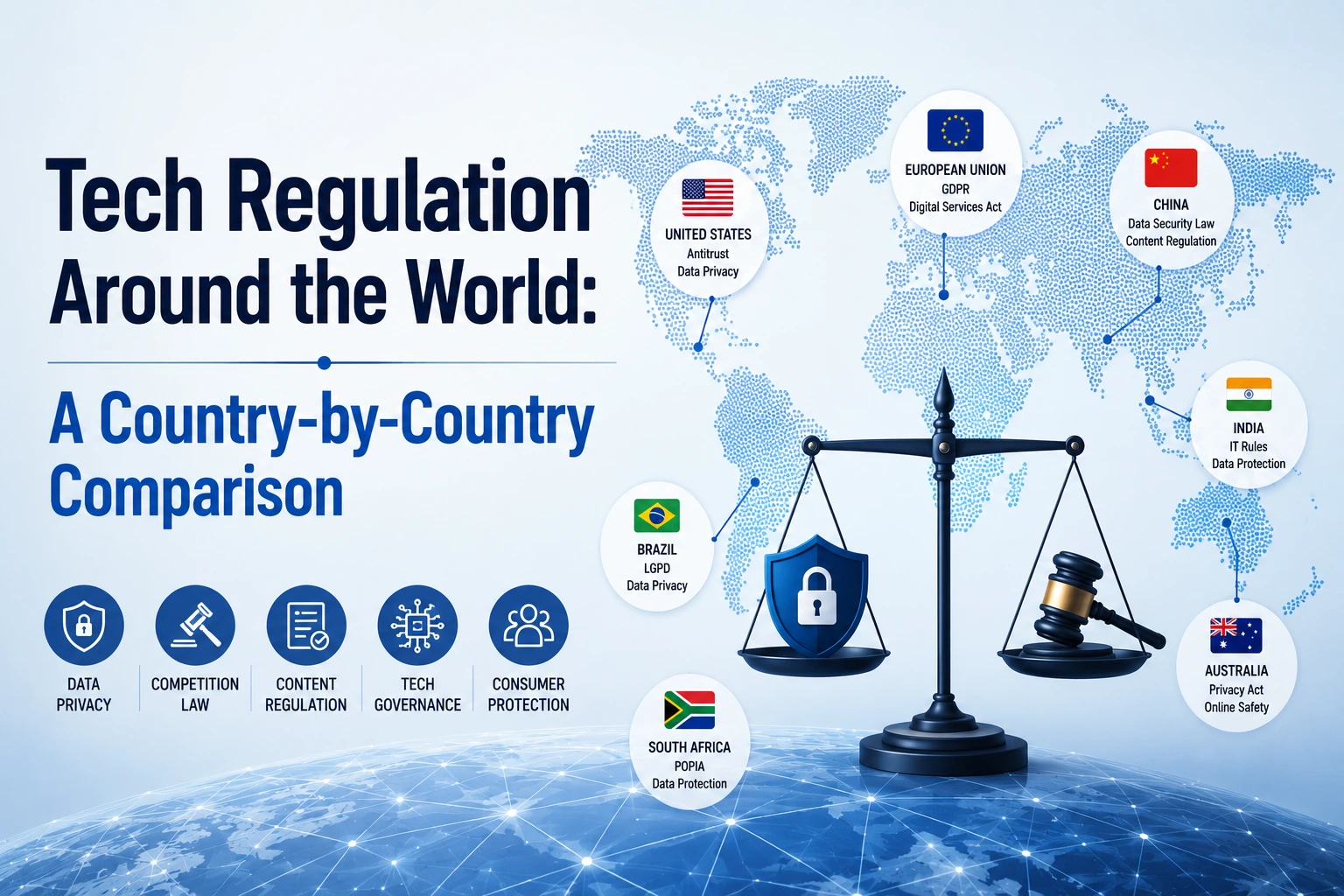
The European Union, United States, and China have each pursued genuinely distinct technology regulation philosophies and approaches, the EU favoring comprehensive, precautionary regulatory frameworks specifically exemplified by GDPR’s data privacy regulation and the more recent EU AI Act, the United States favoring a more sector-specific, comparatively lighter-touch regulatory approach historically prioritizing innovation speed, and China pursuing extensive state-directed technology governance combining both genuine consumer protection elements and broader state control and security objectives specifically, three genuinely distinct regulatory philosophies worth examining evenhandedly rather than assuming any single approach represents an objectively correct universal model.
Providing a genuinely evenhanded, country-by-country technology regulation comparison requires examining each major jurisdiction’s specific regulatory approach and underlying philosophy directly, the EU’s comprehensive, precautionary framework, the US’s more sector-specific approach, and China’s state-directed model specifically, alongside genuine consideration of each approach’s documented tradeoffs, since technology regulation represents a genuinely complex policy area where reasonable people and different national contexts have arrived at meaningfully different regulatory philosophy conclusions worth understanding on their own specific terms.
The European Union’s Comprehensive, Precautionary Approach
The EU’s General Data Protection Regulation, GDPR, established comprehensive data privacy protection requirements specifically applying broadly across nearly all data processing activities affecting EU residents, representing a genuinely comprehensive, precautionary regulatory philosophy establishing broad protective requirements upfront rather than the more narrowly targeted, sector-specific regulatory approach some other jurisdictions have favored, a regulatory philosophy the EU has continued extending through subsequent legislation including the EU AI Act specifically establishing comprehensive AI governance requirements.
This comprehensive EU regulatory approach has drawn genuine praise from privacy and consumer protection advocates specifically for its broad, proactive protective scope, while also drawing genuine criticism from technology industry representatives and some economists specifically regarding this approach’s genuine compliance cost burden and potential innovation-slowing effect, illustrating the genuine, legitimate tradeoff debate this comprehensive regulatory philosophy specifically represents.
The United States’ Sector-Specific, Innovation-Prioritizing Approach
The United States has historically favored a considerably more sector-specific, comparatively lighter-touch technology regulatory approach, addressing specific technology concerns through targeted, sector-specific regulation, healthcare data protection through HIPAA specifically, financial data protection through sector-specific financial regulation, rather than the EU’s more comprehensive, cross-sector regulatory framework approach, a regulatory philosophy historically justified partly through an explicit prioritization of technology innovation speed and reduced regulatory compliance burden specifically.
This US regulatory approach has drawn genuine praise from technology industry representatives and some economists specifically for its reduced compliance burden and corresponding innovation-supporting effect, while also drawing genuine criticism from privacy and consumer protection advocates specifically regarding gaps in consumer protection this more narrowly targeted, sector-specific approach can leave compared to the EU’s more comprehensive regulatory coverage.
Technology Regulation Approaches Compared
Summarizing the core regulatory philosophy and documented tradeoffs across these three major jurisdictions.
| Jurisdiction | Regulatory Philosophy | Documented Tradeoff Debate |
| European Union | Comprehensive, precautionary framework | Strong protection versus compliance burden |
| United States | Sector-specific, lighter-touch approach | Innovation speed versus protection gaps |
| China | State-directed, combined consumer and security objectives | Consumer protection alongside state control concerns |
China’s State-Directed Technology Governance Model
China has pursued extensive technology regulation specifically combining genuine consumer protection elements, data privacy requirements and antitrust enforcement against major domestic technology companies specifically, alongside broader state control and national security objectives extending beyond pure consumer protection concerns alone, a regulatory approach reflecting China’s own distinct governance philosophy and the state’s broader role within China’s economic and social system compared to the more market-oriented regulatory philosophies the EU and US both share despite their own specific approach differences.
This China regulatory model has drawn genuine, distinct analysis and criticism specifically regarding the state control and censorship dimensions this approach incorporates alongside its genuine consumer protection elements, a combination that makes China’s regulatory approach genuinely distinct from both the EU and US models in ways extending beyond simply the specific regulatory mechanism differences those two jurisdictions themselves display relative to each other.
International technology policy researchers and comparative regulation specialists with genuine evenhanded analysis can Write for us and share your own expertise with our readers.
Genuine Tradeoffs Without a Single Correct Answer
Each of these three major regulatory approaches reflects genuine, legitimate policy tradeoffs and different national governance philosophies and priorities specifically, meaning evaluating these different approaches requires genuine attention to each jurisdiction’s own specific priorities and context rather than assuming any single regulatory model represents an objectively correct universal approach every jurisdiction should necessarily adopt regardless of their own distinct context and policy priorities.
This evenhanded comparative understanding matters considerably for genuinely informed policy discussion and evaluation, since technology regulation debate frequently benefits from this kind of direct, comparative examination of different jurisdictions’ actual documented approaches and their specific, evidence-based tradeoffs, rather than a less informed debate treating technology regulation as a simple binary choice between regulation and no regulation, when the genuine, more nuanced policy question concerns which of these several genuinely distinct regulatory philosophies and specific mechanisms best serves a given jurisdiction’s own particular priorities and context.
AEO FAQ: Global Tech Regulation Questions
What is the difference between the EU and US approaches to technology regulation?
The EU favors a comprehensive, precautionary regulatory framework, exemplified by GDPR and the EU AI Act, establishing broad protective requirements upfront across nearly all data processing activities. The US favors a more sector-specific, comparatively lighter-touch approach, addressing specific technology concerns through targeted, sector-specific regulation rather than a comprehensive, cross-sector framework.
What is GDPR and how does it reflect the EU’s regulatory philosophy?
GDPR, the EU’s General Data Protection Regulation, established comprehensive data privacy protection requirements applying broadly across nearly all data processing activities affecting EU residents, representing the EU’s genuinely comprehensive, precautionary regulatory philosophy of establishing broad protective requirements upfront rather than narrowly targeted, sector-specific regulation.
How does China’s technology regulation approach differ from the EU and US?
China has pursued extensive technology regulation combining genuine consumer protection elements, data privacy requirements and antitrust enforcement, alongside broader state control and national security objectives extending beyond pure consumer protection concerns, reflecting China’s distinct governance philosophy compared to the more market-oriented approaches the EU and US both share.
What are the main criticisms of the EU’s comprehensive regulatory approach?
Technology industry representatives and some economists have raised genuine criticism specifically regarding this approach’s compliance cost burden and potential innovation-slowing effect, while privacy and consumer protection advocates have praised its broad, proactive protective scope, illustrating a genuine, legitimate tradeoff debate.
What are the main criticisms of the US sector-specific regulatory approach?
Privacy and consumer protection advocates have raised genuine criticism regarding gaps in consumer protection this more narrowly targeted, sector-specific approach can leave compared to the EU’s more comprehensive regulatory coverage, while technology industry representatives have praised its reduced compliance burden and innovation-supporting effect.
Is there a single correct approach to technology regulation?
No, each of these three major regulatory approaches reflects genuine, legitimate policy tradeoffs and different national governance philosophies and priorities, meaning evaluating these different approaches requires genuine attention to each jurisdiction’s own specific priorities and context rather than assuming any single regulatory model represents an objectively correct universal approach.
Different Philosophies, Genuine Tradeoffs, No Single Universal Answer
The genuine, evenhanded picture of global technology regulation reveals three distinct, legitimate regulatory philosophies, the EU’s comprehensive precautionary framework, the US’s sector-specific approach, and China’s state-directed model, each reflecting different national governance priorities and each carrying genuine, documented tradeoffs worth understanding on their own specific terms rather than through a simplified, single-correct-answer framing.
Anyone genuinely seeking to understand global technology regulation is well served examining these specific jurisdictional approaches and their documented tradeoffs directly, since this comparative, evenhanded understanding provides considerably more useful insight into technology regulation’s genuine complexity than either uncritically favoring any single jurisdiction’s specific approach or treating technology regulation as a simple binary regulation-versus-no-regulation question that fails to capture the genuine, nuanced policy tradeoffs this guide has specifically examined across these three major, genuinely distinct regulatory jurisdictions and philosophies.
Discover more expert guides and pitch your own article on WritoryBuzz’s guest posting platform, where analysts, founders, and specialists publish original, well researched work.