
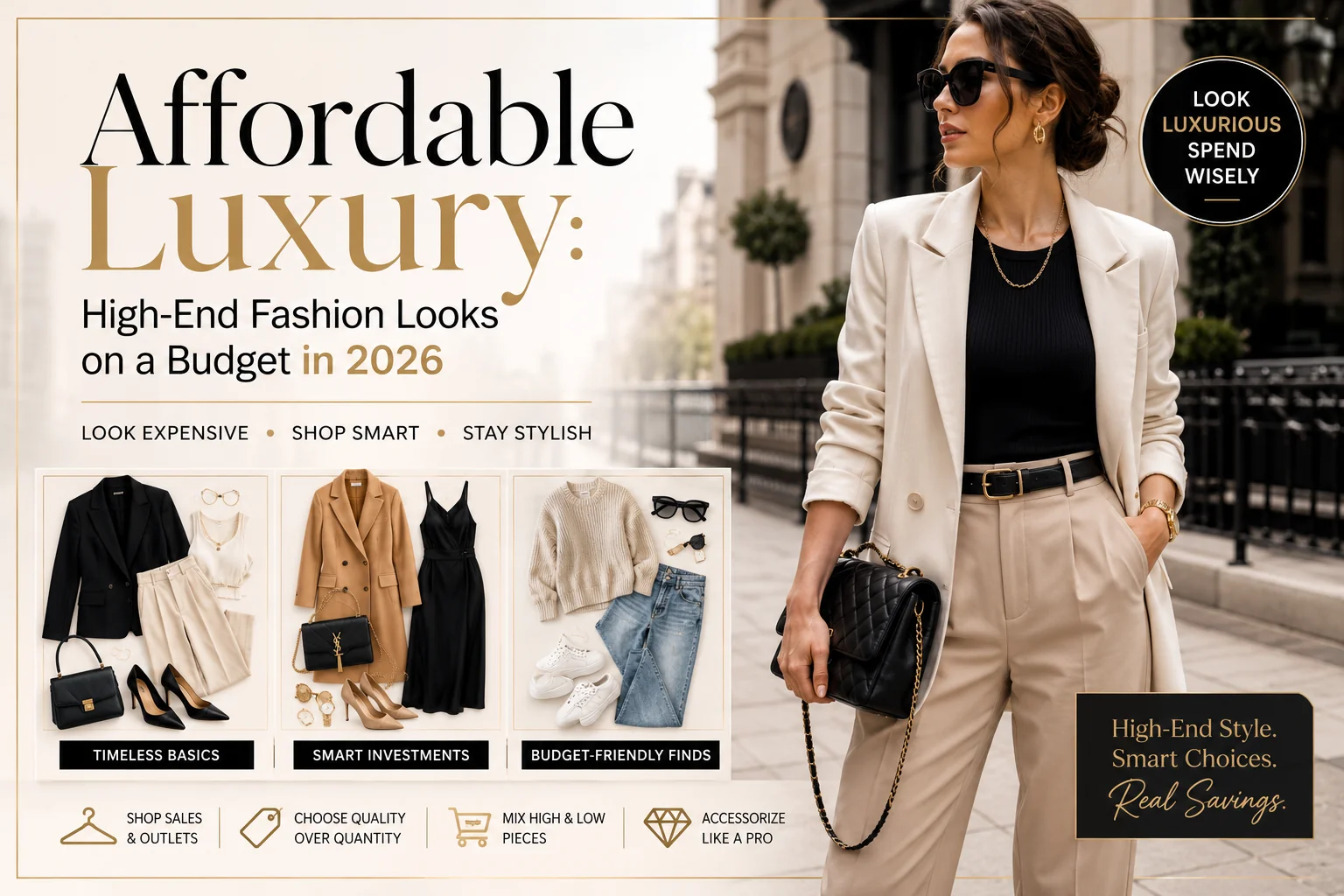
The gap between looking expensive and spending expensively is wider than the fashion industry wants you to believe. Understanding what actually creates a high-end appearance, and what does not, lets you allocate a clothing budget strategically rather than aspirationally.
The principles that drive this are not secret. They are the same ones that stylists and fashion professionals use when they are not spending someone else’s money: fit above everything else, quality in the items that touch the body most, and restraint in everything else.
The One Rule That Outperforms Everything Else: Fit
An expensive item that does not fit well looks worse than an inexpensive item that fits perfectly. This is not an opinion; it is the observation of every professional stylist. The shoulder seam of a jacket should sit at the shoulder. Trousers should break at the right point on the shoe. A shirt should not pull across the chest or hang like a tent at the waist.
Tailoring cheap clothing to fit well costs £10 to £30 per item for most common alterations: taking in a waist, hemming trousers, adjusting sleeve length. A £40 blazer that has been taken in at the waist and hemmed to the right length reads as far more expensive than a £150 blazer worn off the rack in the wrong size.
Find a good local alterations tailor and build a relationship. The investment pays back every time you buy a well-made but ill-fitting item.
Where to Invest and Where to Save
| Invest Here | Why It Shows | Save Here | Why It Does Not Show |
|---|---|---|---|
| Leather shoes and boots | Quality leather ages beautifully; cheap leather does not | T-shirts and basics | No one reads a T-shirt as luxury |
| A winter coat | Worn constantly for months; quality construction visible | Casual trousers | Fit matters more than brand |
| A well-cut blazer | Elevates every outfit it touches | Belts for casual use | Hidden when wearing a jacket |
| A leather bag | Used daily, quality shows in texture and structure | Socks and underwear | Invisible; function over form |
| Knitwear from natural fibres | Cashmere and merino drape differently to acrylic | Casual summer items | Worn briefly and infrequently |
The Pre-Loved Market in 2026: Better Than It Has Ever Been
The secondary market for fashion has matured significantly. Platforms including Vestiaire Collective, Depop, eBay, Vinted, and The RealReal have made buying pre-loved designer and quality clothing more accessible, more reliable, and more searchable than at any previous point.
The smart strategy is searching for quality basics from good brands rather than searching for current-season pieces. A five-year-old cashmere jumper from a quality brand, well-maintained, is the same garment as a new one at a fraction of the price. Luxury fashion’s quality advantage is in materials and construction, not in seasonality.
The categories that offer the best value pre-loved are: cashmere knitwear (which lasts decades with proper care), leather shoes and boots (which improve with age and can be resoled), tailored jackets and coats (quality construction remains intact regardless of age), and accessories including scarves and bags.
Reading Quality When You Cannot Read Labels
The texture test tells you more than a brand name. Run your hand across a fabric. Quality fabrics have weight, structure, and a consistent feel. Low-quality fabrics feel lightweight in a way that reads as cheap to the touch and to the eye.
Check the stitching at stress points: armholes, crotch seams, shoulder seams, and button attachments. Quality construction uses more stitches per inch, reinforces stress points, and uses materials that match the garment. A shirt with plastic buttons that do not match the fabric is a signal the manufacturer cut costs throughout.
Lining quality tells you about overall construction standards. A jacket with a cheap, thin polyester lining is likely to have other construction compromises. Full linings in natural fabrics, silk or cupro, signal quality construction even in mid-range garments.
Building a Capsule That Reads Expensive
A capsule wardrobe of 20 to 30 well-chosen items that all work together reads as significantly more intentional, and therefore more expensive, than a wardrobe of 80 items that do not coordinate. The visual clarity of wearing a few things that clearly go together creates an impression of considered style that volume cannot replicate.
The colour palette is the foundation of this. Restrict your wardrobe to a primary neutral (navy, charcoal, camel, or black) plus one or two accent colours that work with it. Everything you own coordinates, which means getting dressed produces coherent outfits without effort.
Avoid trend-driven statement pieces unless you are certain you will wear them for years. Trend-forward items date quickly and the fashion cycle is now fast enough that something from two seasons ago reads as conspicuously dated rather than classic.
Specific Brands Worth Knowing at Each Price Point
Quality at Lower Price Points
Uniqlo’s Merino and Cashmere ranges, their HEATTECH base layers, and their Oxford shirt category consistently over-deliver on quality relative to price. Their collaborations with designers frequently produce well-made pieces at accessible prices.
Marks and Spencer’s tailoring and knitwear have improved significantly and represent strong value at the mid-market. Their Autograph range uses quality fabrics and traditional construction methods at prices that are genuinely reasonable for the quality of the output.
The Smart Mid-Range
Reiss, COS, and Arket produce well-constructed minimalist pieces at mid-range prices. Their design philosophy, quiet and well-fitted rather than trend-driven, means pieces remain wearable for multiple seasons. The quality is consistent enough that pre-loved Reiss or COS pieces hold up well.
FAQs
Is fast fashion ever worth buying?
For trend items that you expect to wear a limited number of times, fast fashion serves a function. The problem is buying fast fashion for roles that require durability: a fast fashion coat worn daily for five years is not a good investment. Match the quality level to the expected use frequency and duration.
How do I care for quality clothing to make it last?
Wash less frequently. Most clothing does not need washing after a single wear; spot cleaning and airing extends the time between washes significantly. Use cold water for almost everything. Use mesh bags for delicates. Store knitwear folded rather than hung to prevent stretch. Re-sole leather shoes before the sole wears through, not after.
Are luxury brand basics worth the premium over mid-range equivalents?
For iconic pieces where craftsmanship is genuinely different, yes. A Burberry trench coat is better made than a mid-range equivalent. For basics, the quality gap between luxury brand and a well-chosen mid-range equivalent is often not proportional to the price difference. The premium for basics frequently pays for the label more than the garment.
The Long View on Fashion Spending
The cost per wear calculation disciplines clothing spending more effectively than any budget rule. A £250 coat worn 100 times costs £2.50 per wear. A £40 coat worn five times before it falls apart costs £8 per wear. Buying better items less frequently is almost always better value than buying more items at lower prices.
The sustainable fashion argument and the financial argument point in the same direction: buy less, buy better, take care of what you own. That approach produces a wardrobe that looks more expensive, lasts longer, and costs less over any five-year period than the alternative.
For fashion and style guides, brand analysis, and wardrobe-building strategies throughout 2026, WritoryBuzz covers personal style with practical rather than aspirational framing.