
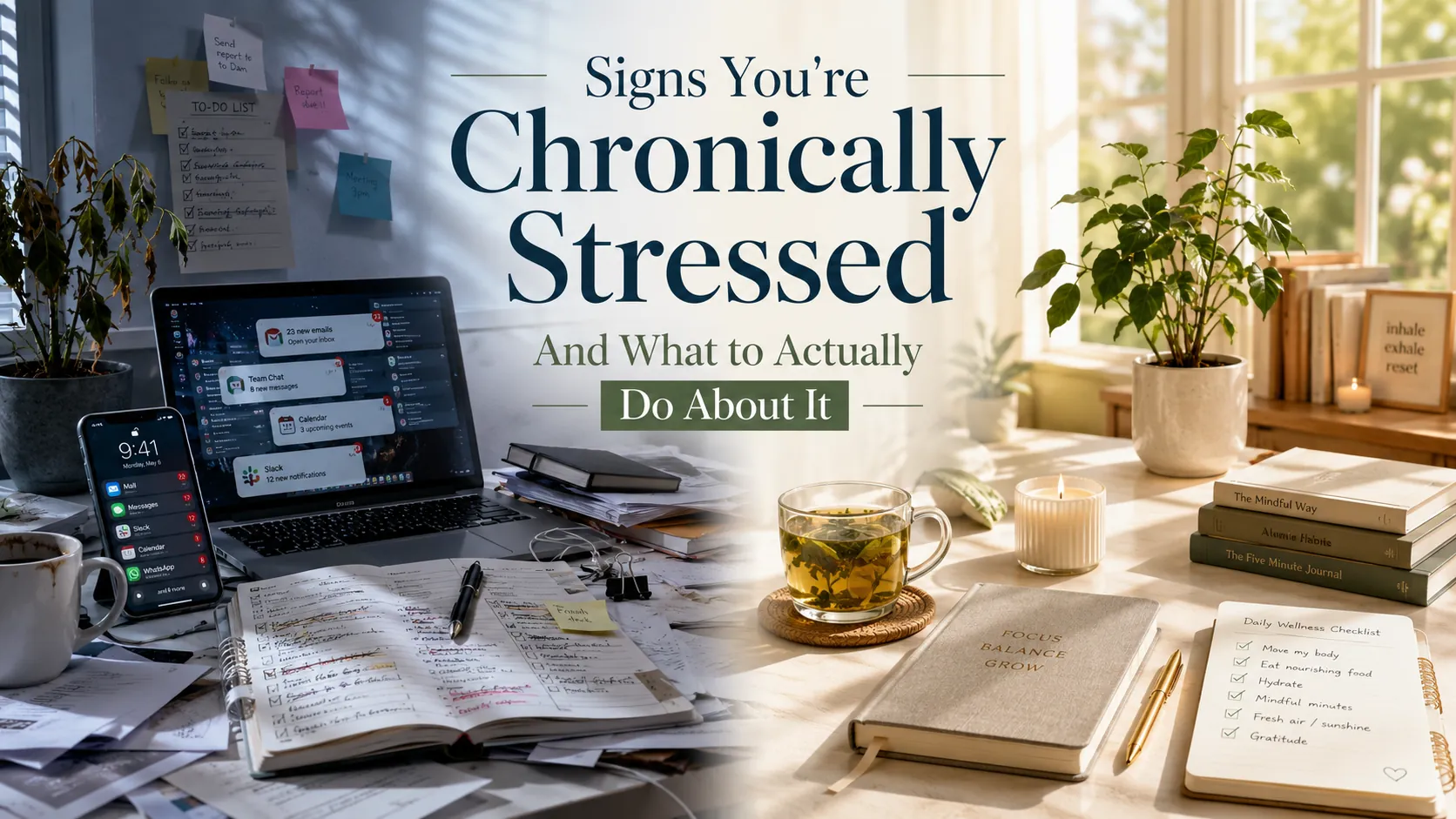
Chronic stress is different from feeling stressed. It is a physiological state where the body’s alarm system runs persistently, damaging health in ways that develop slowly and are easy to miss until they are hard to reverse.
The body’s stress response the HPA axis activating cortisol and adrenaline is designed for short-term threats. Sprint from the predator, survive, return to baseline. When this system runs continuously for months or years, the sustained presence of stress hormones causes measurable wear and tear across nearly every organ system.
The challenge with chronic stress is that it normalises. You stop noticing how tired you are. You assume the headaches are just part of life. You call the digestive problems a sensitive stomach. The symptoms listed below can all be caused by other conditions but when several appear together persistently, chronic stress is a serious possibility worth addressing.
The Physical Signs Most People Dismiss
Persistent fatigue that sleep doesn’t fix. Chronic cortisol elevation disrupts the sleep architecture needed for restoration. You may sleep adequate hours and still wake up unrefreshed. If this pattern persists for weeks rather than days, it is a significant signal.
Frequent headaches or muscle tension. The most common physical manifestation of chronic stress. Sustained muscle tension, particularly in the neck, shoulders, and jaw (teeth grinding during sleep is a common stress indicator), reflects the body’s continuous state of physical alertness.
Digestive problems. The gut-brain axis means stress directly affects digestive function. Chronic stress commonly causes changes in appetite, nausea, stomach discomfort, bloating, and altered bowel patterns. The gut has its own nervous system (the enteric nervous system) that is acutely sensitive to stress hormone levels.
Getting sick frequently. Cortisol suppresses immune function when elevated chronically. If you notice more frequent colds, slower recovery from illness, or recurrent infections, your immune system may be running on deficit due to sustained stress load.
Changes in weight or appetite. Chronic stress can drive both overeating (comfort eating, cortisol-triggered appetite for high-calorie foods) and undereating (appetite suppression). Unexplained weight changes alongside other stress symptoms are worth noting.
The Cognitive and Emotional Signs
Difficulty concentrating or making decisions. Chronic stress impairs prefrontal cortex function — the part of the brain responsible for executive function, decision-making, and focus. If simple decisions feel harder than they used to and sustained concentration requires unusual effort, this is a cognitive stress signal.
Irritability or short fuse. The amygdala, which processes threat responses, becomes hyperactivated under chronic stress. This lowers the threshold for emotional reactivity. If you find yourself reacting disproportionately to small frustrations, it is often the stress response activating where it is not needed.
Feeling overwhelmed by normal tasks. Tasks that previously felt manageable begin to feel daunting. This is not a failure of character. It is the cognitive and emotional resource depletion that chronic stress produces.
Social withdrawal. Chronically stressed people often reduce social interaction because it feels like one more demand on an already depleted system. This becomes self-reinforcing because social connection is one of the most effective stress buffers.
Chronic Stress vs Burnout: The Difference Matters
Burnout is a specific syndrome resulting from prolonged workplace stress, characterised by emotional exhaustion, depersonalisation (feeling detached from your work and the people you serve), and reduced sense of professional accomplishment. It is distinguished from general chronic stress by its occupational specificity and by the depersonalisation component.
Chronic stress can affect every area of life, not just work. Burnout is a specific endpoint that can develop from chronic occupational stress. Both require intervention, but the interventions have different emphases.
What the Evidence Says About Reducing Chronic Stress
Regular Physical Exercise: The Highest-Return Intervention
Exercise is the most consistently evidence-backed stress reduction intervention available. It reduces cortisol levels, increases BDNF (supporting brain resilience), improves sleep quality, and provides a hormetic stress that builds physiological resilience. The minimum dose for measurable benefit is approximately 150 minutes of moderate-intensity exercise per week. Higher doses produce larger benefits up to a point.
Social Connection
Oxytocin, released through positive social interaction, directly counteracts cortisol. Research consistently shows that people with strong social support networks are more physiologically resilient to stress. The mechanism is not just psychological it is hormonal. This makes deliberately maintaining social relationships a stress management strategy, not just a lifestyle preference.
Cognitive Behavioural Approaches
CBT-based stress management teaches the identification of cognitive patterns (catastrophising, overgeneralising, all-or-nothing thinking) that amplify the stress response beyond what the actual situation requires. The most rigorously evidence-backed psychological intervention for chronic stress is not relaxation techniques alone but changing the thought patterns that generate and maintain the stress response.
Sleep as Both Symptom and Solution
Chronic stress damages sleep quality. Poor sleep amplifies the stress response the next day. Breaking this cycle is essential. Prioritising sleep hygiene consistent sleep timing, cool and dark environment, no screens in the hour before bed — reduces the cortisol load from inadequate sleep, which in turn makes the original stressors more manageable.
What to Do When Self-Management Is Not Enough
When chronic stress has persisted for three or more months and is interfering with daily functioning, professional support is appropriate. A GP or primary care physician can assess whether physiological consequences (elevated blood pressure, immune function, hormonal changes) require medical attention. A therapist or psychologist can provide structured CBT or stress management support that goes beyond self-help approaches.
| When to Seek Help Promptly
Chest pain, heart palpitations, or shortness of breath associated with stress require immediate medical attention to rule out cardiac causes. Do not attribute chest symptoms to stress without medical evaluation. Similarly, if stress has produced persistent symptoms of depression or anxiety that are interfering with daily life, professional mental health support is appropriate rather than optional. |
What is the difference between stress and chronic stress?
Acute stress is the short-term response to a specific challenge it resolves when the challenge does and is often adaptive. Chronic stress is a persistent state where the stress response runs for weeks, months, or years without adequate recovery. The physiological consequences are fundamentally different: chronic cortisol elevation damages cardiovascular, immune, digestive, and cognitive function in ways that acute stress does not.
Can chronic stress cause physical illness?
Yes, with well-established mechanisms. Chronic stress is associated with elevated blood pressure, impaired immune function, increased risk of cardiovascular disease, disrupted digestive function, and worsening of inflammatory conditions. Yale Medicine links chronic stress to hypertension, metabolic syndrome, type II diabetes, and arthritis as comorbid conditions. These are not psychological correlations they reflect the physiological impact of sustained cortisol and inflammatory marker elevation.
The Most Important Step Is Recognising It
Chronic stress is remarkably good at hiding in plain sight. The symptoms are individually unremarkable. Fatigue is normal. Headaches happen. Digestion is variable. The pattern across multiple symptoms over time is the signal.
If several items in this article resonated, that recognition is the starting point. Not self-diagnosis, not panic, but an honest assessment of whether your current lifestyle is sustainable and if not, which intervention you are willing to actually make.
Chronic stress affects physical health, mental wellbeing, productivity, and long-term quality of life. Building awareness is the first step toward meaningful change. WritoryBuzz helps health brands, wellness businesses, mental health professionals, fitness companies, and lifestyle websites expand their reach through high-authority guest posting opportunities on trusted health, wellness, and business publications.
Earn quality backlinks, improve search visibility, and build lasting authority with strategic guest posting campaigns designed for sustainable organic growth and brand credibility.