
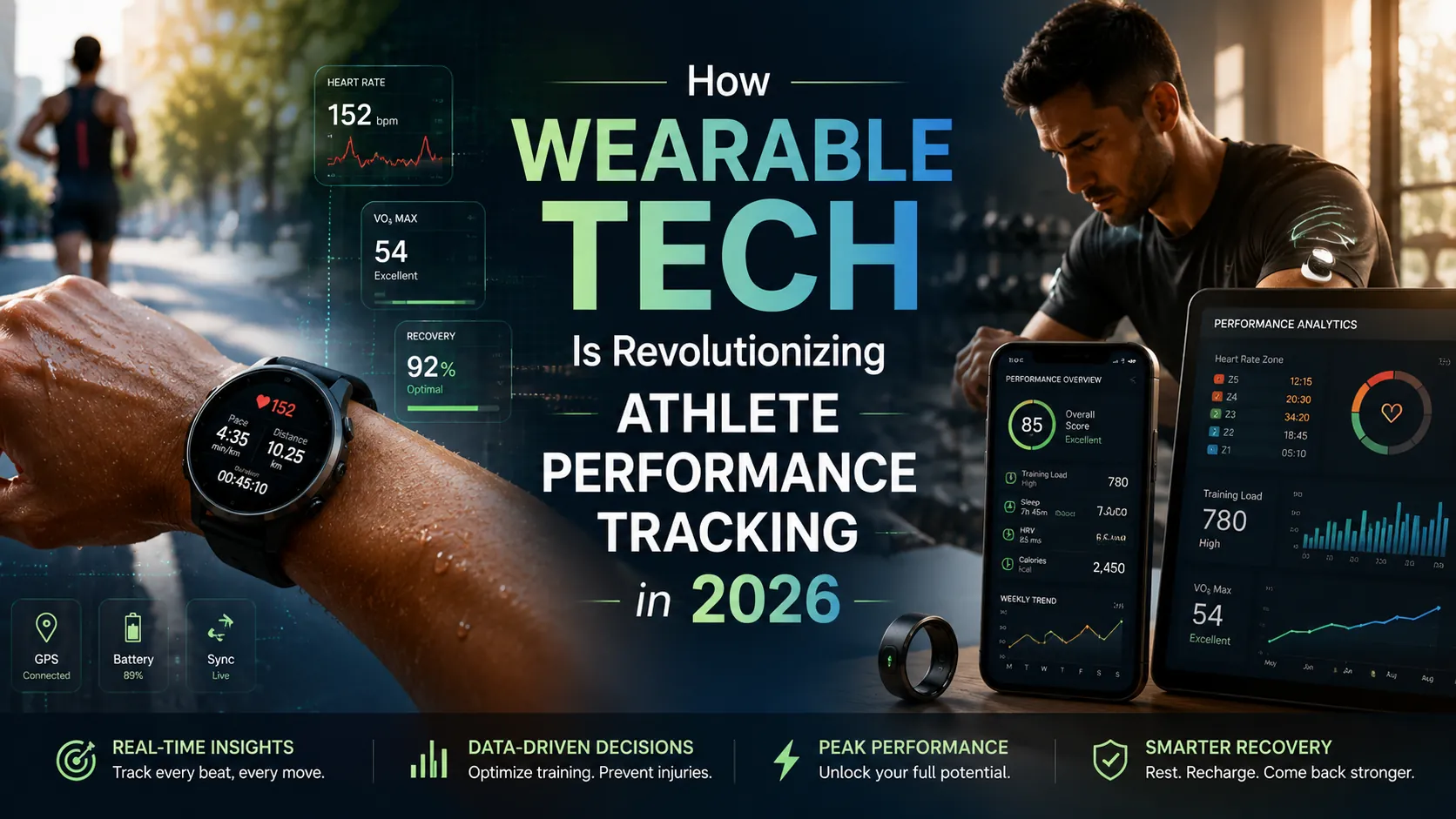
Elite athletes are not training harder in 2026. They are training smarter using biometric data that used to require a laboratory to live on their wrist. Here is what the technology actually tells them, and what it does not.
Whoop raised $575 million in March 2026 at a $10 billion valuation. Garmin filed a trademark for CIRQA, a recovery-focused band competing directly with Whoop. The market has moved from tracking what you do to measuring how your body responds to what you do. The shift matters because the most common training mistake at every level is not doing too little it is failing to recover adequately from what you have already done.
What Wearables Actually Measure
Heart Rate Variability (HRV)
HRV measures the variation in time between consecutive heartbeats. Higher variability indicates better recovery the nervous system is responsive and balanced. Low HRV signals that the body is under stress from training load, illness, poor sleep, or life stressors. Athletes who train based on HRV reducing intensity on low-HRV days and pushing on high-HRV days show better performance outcomes and lower injury rates in sports science research.
Training Load and Cardiovascular Strain
Garmin’s Training Load and Whoop’s Strain Score both quantify how much cardiovascular stress an activity produces, enabling athletes to balance acute and chronic load over training cycles. Whoop’s Strain Score measures load across the entire day not just workouts giving a more accurate picture for athletes with physically demanding jobs.
Sleep Quality and Staging
Sleep stage accuracy in wearables has improved significantly in 2025 and 2026. Whoop 5’s sleep tracking is now validated against polysomnography data. Actionable sleep data specific sleep debt, recommended sleep time, quality scores changes how seriously athletes treat sleep as a performance variable.
The Main Players in 2026
Whoop 5: Best for Recovery-Focused Athletes
Continuous 24/7 monitoring including during sleep. Recovery Score integrates HRV, resting heart rate, sleep performance, and respiratory rate into a daily readiness indicator. Subscription model ($30/month Peak tier). No screen, no GPS. Ideal for serious athletes working with coaches on structured plans who want physiological feedback, not GPS mapping.
Garmin Forerunner/Fenix: Best for Multisport Athletes
Multi-band GNSS GPS gives accurate pace, distance, and route data across running, cycling, hiking, and open water swimming. Fenix 8 has 40-plus day battery life with solar. Training Readiness and Body Battery have matured into genuinely useful recovery indicators. Less sophisticated than Whoop’s recovery scoring specifically, but GPS plus recovery in one device is unmatched.
Oura Ring: Best for Sleep Tracking
The most accurate wrist-worn sleep tracker available. Generation 4 sleep stage accuracy is superior to watch-form alternatives. For athletes who prioritise sleep data above all other metrics, nothing currently competes. Limitation: no GPS, basic activity tracking.
COROS Vertix 2S: Best for Ultra-Endurance
Up to 140 hours of GPS tracking on a single charge. For multi-day races, nothing else matches it. Critical for ultra-marathoners, mountaineers, and long-distance cyclists where battery is the primary constraint.
| Device | Best For | Key Strength | Price |
| Whoop 5 | Recovery monitoring | 24/7 HRV, sleep coaching | $30/mo subscription |
| Garmin Forerunner | Multisport GPS | GPS accuracy, battery life | $250–$500 |
| Garmin Fenix 8 | Outdoor, endurance | 40+ day battery, mapping | $700–$900 |
| Oura Ring 4 | Sleep tracking | Most accurate sleep staging | $350 + $6/mo |
| COROS Vertix 2S | Ultra-endurance | 140hr GPS battery | $700 |
Honest Limitations
HRV accuracy varies by measurement method. Wrist optical sensors are significantly less accurate than chest strap ECG. Most platforms measure overnight HRV which improves reliability. Do not make major training decisions based on single unusual readings.
Data can create harmful anxiety. Athletes focused excessively on hitting specific recovery scores sometimes develop an unhealthy relationship with data. The data informs decisions — it does not dictate them.
Requires 30 days of baseline. Raw HRV numbers mean little without personal baseline. Most platforms build individual baselines over 2 to 4 weeks. New users should not make major training changes until baseline data is established.
Which wearable is best for athletes in 2026?
Depends on need. Whoop 5 for recovery monitoring. Garmin Forerunner for GPS multisport. Oura Ring for sleep quality. COROS for ultra-endurance battery life. Many serious athletes use Garmin for training sessions and Whoop or Oura for overnight recovery monitoring.
What is HRV and why do athletes monitor it?
Heart Rate Variability measures variation between heartbeats. Higher morning HRV indicates the autonomic nervous system is well-recovered and balanced. Low HRV suggests the body is still under stress. Athletes use it to decide when to push hard and when to reduce training intensity.
Train Informed by Your Own Data
The best use of athlete wearables is building self-awareness over time. Two months of HRV, sleep, and training load data reveal patterns about what actually affects your recovery not what the internet says should affect it, but what does in your specific physiology. Start with one metric and learn it before adding more.