
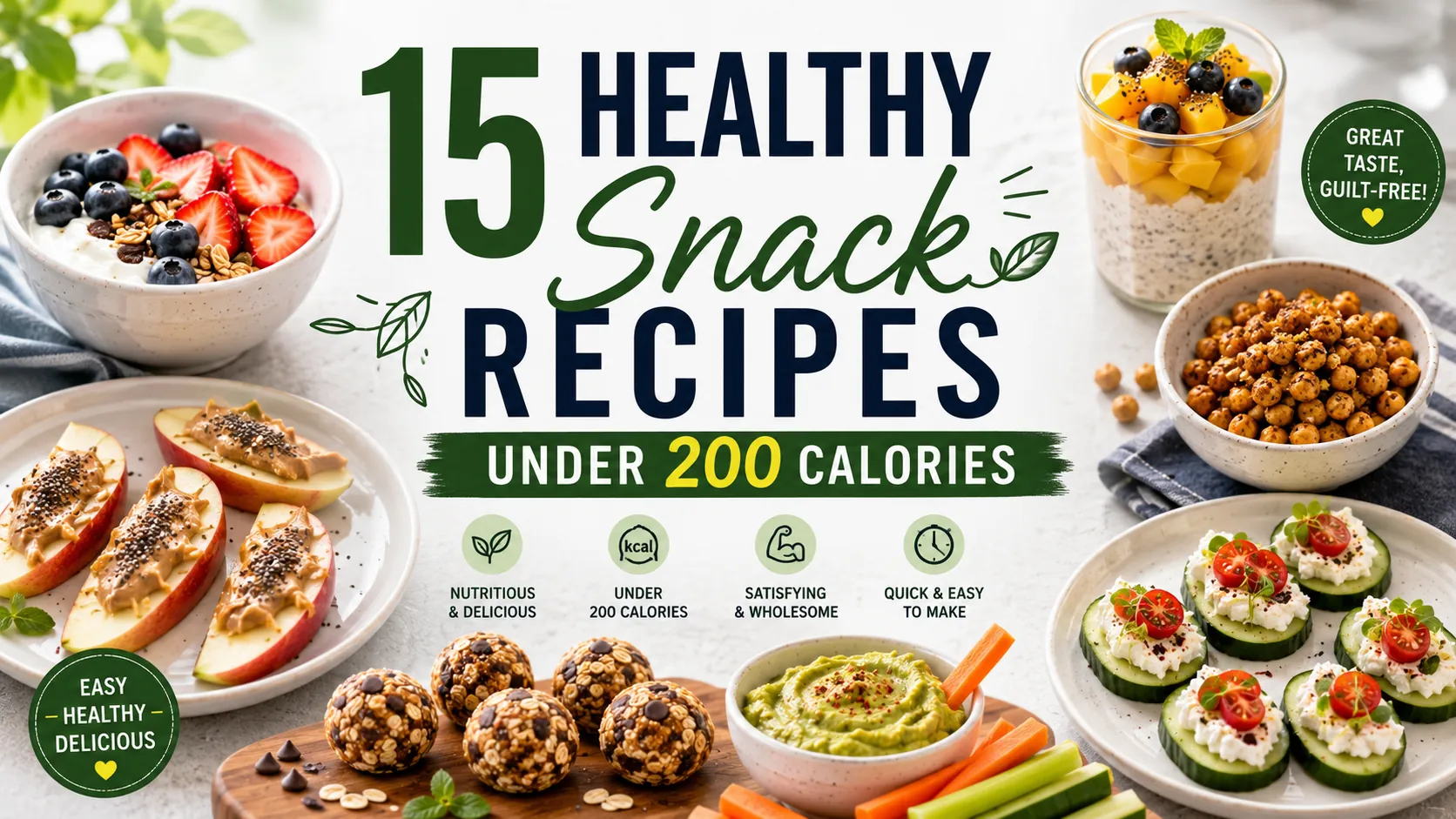
The best low-calorie snacks solve the same problem: staying full between meals without undoing the rest of your day. These 15 recipes are high in protein, fibre, or both the two nutrients that actually manage hunger.
Most snack advice misses the practical point. A snack that is 100 calories but leaves you hungrier 20 minutes later is worse than a 180-calorie snack that keeps hunger managed for two hours. Calorie count matters. Satiety value matters more. These recipes are chosen because they deliver both.
The Science of Satisfying Low-Calorie Snacks
Two nutrients dominate the satiety research: protein and dietary fibre. Protein triggers the release of satiety hormones (GLP-1, PYY, CCK) that signal fullness to the brain. Fibre slows gastric emptying and ferments in the gut to produce short-chain fatty acids that further suppress appetite. A snack that combines both provides roughly twice the satiety per calorie of a snack with neither.
Volume also matters psychologically. A large-volume snack with fewer calories (like a large salad) triggers visual satiety cues that a small dense snack does not, even at the same calorie count.
15 Snacks Under 200 Calories
Protein-First Snacks
- Greek Yoghurt with Berries (~130 calories) 120g of plain non-fat Greek yoghurt (100 cals, 17g protein) with 50g mixed berries (25 cals). The protein from the yoghurt is genuinely substantial. Use non-fat plain rather than flavoured — flavoured versions can exceed 200 calories with added sugar.
- Two Hard-Boiled Eggs (~140 calories) 12g of protein, B vitamins, choline. One of the most portable and convenient high-protein snacks available. The fat and protein combination drives satiety for 2 to 3 hours.
- Cottage Cheese with Cucumber (~120 calories) 100g of low-fat cottage cheese (80 cals, 13g protein) with sliced cucumber (15 cals). Add a pinch of black pepper and a few fresh herbs. Cottage cheese is exceptionally high in casein protein, which digests slowly and sustains satiety longer than whey.
- Tuna on Rye Crackers (~180 calories) 50g of canned tuna in water (55 cals, 13g protein) on two rye crackers (80 cals) with a teaspoon of light mayo and sliced cucumber.
- Edamame with Sea Salt (~155 calories) 125g of frozen edamame, steamed and salted. 11g protein, 5g fibre. One of the highest protein-to-calorie ratios in any plant-based snack and genuinely satisfying due to the combination of protein and fibre.
Fibre and Volume Snacks
- Apple with Almond Butter (~195 calories) One medium apple (80 cals, 4g fibre) with one tablespoon of almond butter (100 cals, 3g protein, 1g fibre). The combination of fruit fibre and nut butter fat drives satiety well beyond what either alone provides.
- Carrot Sticks with Hummus (~150 calories) 150g carrot sticks (55 cals, 4g fibre) with 3 tablespoons of hummus (90 cals, 4g protein, 3g fibre). The hummus protein and chickpea fibre make this genuinely filling at under 150 calories.
- Air-Popped Popcorn (~125 calories) 30g of air-popped popcorn provides roughly 4g of fibre at only 125 calories. The volume is substantial — 30g is a generous bowl of popcorn. Season with smoked paprika, nutritional yeast, or cinnamon rather than butter.
- Celery with Peanut Butter (~150 calories) Four celery sticks (15 cals, 1g fibre) with 2 tablespoons of natural peanut butter (190 cals — note: use 1.5 tablespoons to keep under 200). Add raisins optionally. The crunchy texture and nut butter fat combination is particularly satisfying.
Quick Assembly Snacks
- Ricotta and Cherry Tomatoes on Toast (~190 calories) One slice wholegrain toast (80 cals, 3g fibre) with 50g of ricotta (90 cals, 7g protein) and 5 halved cherry tomatoes (15 cals). Add fresh basil and black pepper. This feels like a proper mini-meal for under 200 calories.
- Turkey and Avocado Roll (~170 calories) Two slices of lean turkey (50 cals, 12g protein) with a quarter of an avocado (80 cals, 3g fibre) and a leaf of romaine. Roll together. No bread needed. The fat from avocado and protein from turkey is a very effective satiety combination.
- Miso Soup with Silken Tofu (~80 calories) One sachet of miso paste dissolved in hot water with 50g of crumbled silken tofu. Genuinely warming, savoury, and surprisingly filling at under 100 calories due to the umami satisfaction and small protein contribution.
Sweet Snacks That Don’t Spike Blood Sugar
- Banana with Cinnamon Greek Yoghurt (~180 calories) Half a banana (50 cals) with 100g of Greek yoghurt (100 cals) mixed with a half teaspoon of cinnamon. Research suggests cinnamon may modestly slow glucose absorption, making this a smarter sweet snack than most. The protein prevents the blood sugar crash a banana alone would produce.
- Dark Chocolate and Almonds (~180 calories) Two squares of 70% dark chocolate (70 cals) with 15g of almonds (90 cals, 4g protein). The flavonoids in dark chocolate have documented effects on satiety signalling. The fat and protein in almonds prevent the energy spike and crash of chocolate alone.
- Chia Seed Pudding (~150 calories) Mix 2 tablespoons of chia seeds (100 cals, 5g fibre, 3g protein) in 150ml of unsweetened almond milk overnight. Top with a few berries. Chia seeds expand dramatically in liquid, creating a high-volume snack with exceptional fibre content.
| Snack | Calories | Protein | Fibre | Satiety Level |
| Greek Yoghurt + Berries | ~130 | 17g | 2g | High |
| Edamame | ~155 | 11g | 5g | High |
| Apple + Almond Butter | ~195 | 3g | 5g | High |
| Carrot + Hummus | ~150 | 4g | 7g | High |
| Turkey + Avocado Roll | ~170 | 12g | 3g | Very high |
| Chia Seed Pudding | ~150 | 3g | 10g | Very high |
Making Low-Calorie Snacking Sustainable
The single biggest reason healthy snack intentions fail is not lack of willpower. It is lack of preparation. Snacks that require 10 minutes of assembly when you are already hungry tend not to happen. The high-protein, high-fibre options above all take under 2 minutes to prepare if the ingredients are already in the house.
Keep hard-boiled eggs batch-prepared in the fridge. Buy pre-washed carrot sticks rather than whole carrots. Keep individual portioned packets of nuts. The 60 seconds of prep when you are not hungry prevents the poor decision you will make when you are.
What makes a snack actually filling at under 200 calories?
Protein and fibre are the two nutrients most directly linked to satiety at low calorie counts. Snacks combining both — edamame, Greek yoghurt, cottage cheese, hummus with vegetables — keep hunger managed for significantly longer than calorie-equivalent snacks high in refined carbohydrates or simple sugars.
Are 200-calorie snacks enough to stay full between meals?
For most people between meals 3 to 4 hours apart, a snack with at least 10g of protein or 5g of fibre (ideally both) will manage hunger adequately. If you are very active or going 5 or more hours between meals, a snack at the higher end of this calorie range with strong satiety nutrients is appropriate.
Stock Your Kitchen, Not Your Willpower
Healthy snacking is a preparation problem, not a motivation problem. If the right ingredients are in your kitchen and the quick assembly options are clear, you will make the right choice. If they are not, you will make whatever is available.
Healthy eating starts with simple, sustainable choices that fit into everyday life. WritoryBuzz helps food bloggers, nutrition brands, wellness companies, health websites, and lifestyle businesses grow their online authority through high-quality guest posting opportunities on trusted food, health, and lifestyle publications.
Earn powerful backlinks, improve search visibility, and reach new audiences with strategic guest posting campaigns designed for long-term organic growth and brand credibility.