
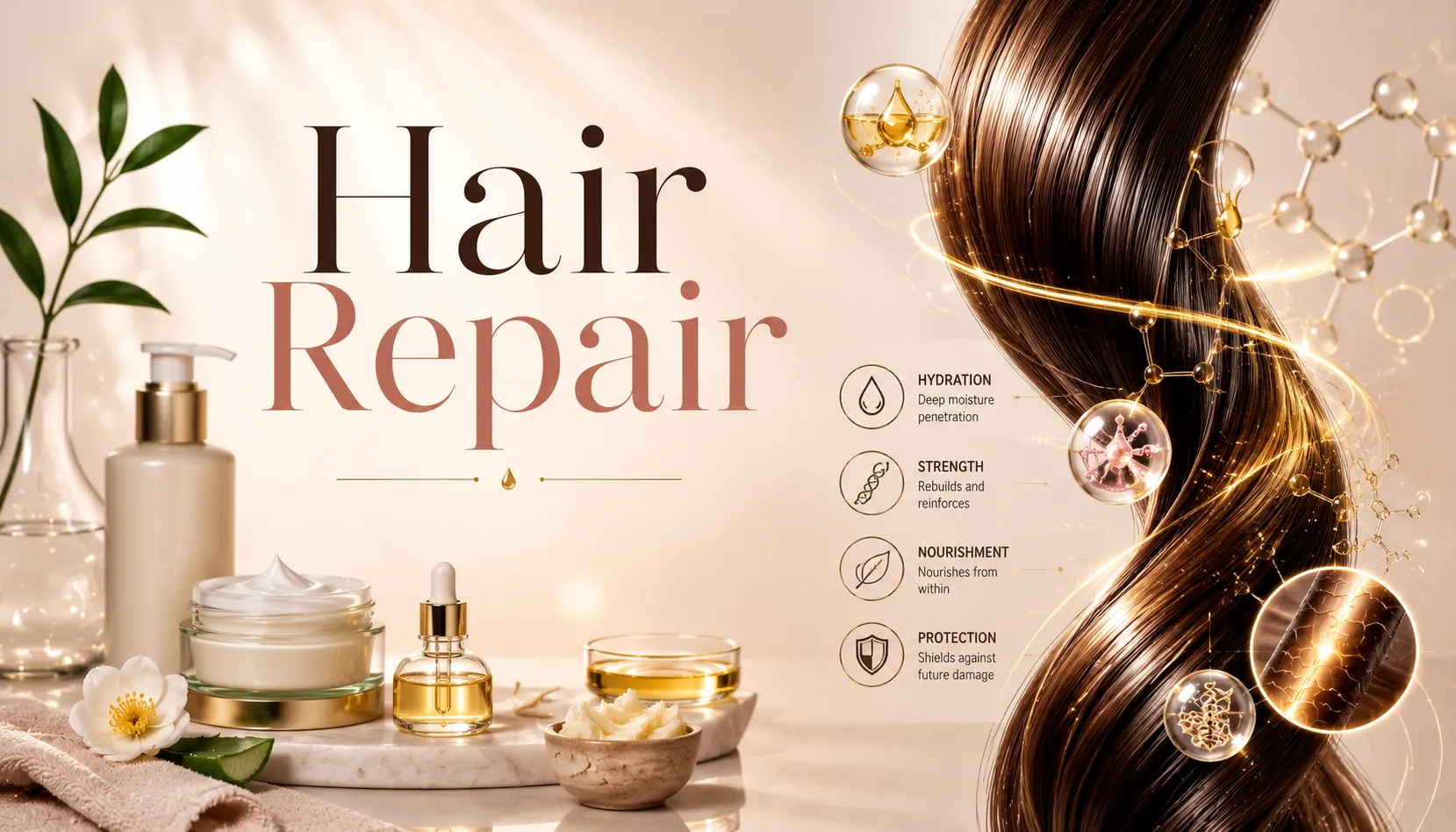
There is an important distinction to start with: the split ends and breakage you already have cannot be repaired. Once the hair shaft is mechanically or chemically broken, no product reverses that damage.
What a proper routine does is: stop further damage, strengthen the hair shaft to prevent breakage going forward, restore moisture and elasticity, and make the hair you have look and feel significantly better while new growth comes in.
That is not a lesser outcome. It is what damaged hair care actually achieves, and it works well when the approach is correct.
Understanding Why Hair Gets Damaged
Hair damage falls into two categories: protein damage and moisture damage. Both look similar (dullness, breakage, rough texture) but require different solutions. Treating moisture-damaged hair with heavy protein can make it worse. Treating protein-damaged hair with more moisture leaves it limp and weak.
| Damage Type | Signs |
| Moisture damage | Dull, dry, frizzy, tangles easily, lacks elasticity |
| Protein damage | Brittle, snaps easily, stiff and rough texture, no stretch before breaking |
| Both | All of the above |
The stretch test: take a single wet strand and pull gently. Hair with good protein/moisture balance should stretch 30 to 50% before snapping and then return. If it snaps immediately with no stretch, it needs protein. If it stretches dramatically and does not return, it needs protein.
The Core Routine Principles
1. Reduce Sources of Further Damage First
No repair routine works if you are continuing to damage the hair at the same rate. Before adding treatments, assess: how hot is your styling temperature? Most people use tools 20 to 50 degrees higher than necessary. For fine to medium hair, 160 to 180C is sufficient. For thick or coarse hair, 180 to 200C. Going above 230C causes measurable protein breakdown in the hair shaft.
Always apply a heat protectant. The silicones and film-forming polymers in heat protectants genuinely reduce thermal damage. This is not marketing language. It is basic chemistry.
2. Shampoo Less Frequently
Every shampoo strips the cuticle of natural oils. For damaged hair, washing two to three times per week maximum is more protective than daily washing. On non-wash days, dry shampoo at the roots only keeps hair feeling fresh without the damage of frequent wetting and drying.
Switch to a sulfate-free shampoo. Sulfates (sodium lauryl sulfate, sodium laureth sulfate) are effective cleansers but harsh on damaged hair. Sulfate-free formulations clean adequately while being significantly gentler on the cuticle.
3. Deep Condition Weekly
A deep conditioning mask applied after shampooing, left on for 20 to 30 minutes under heat (shower cap, warm towel, or hooded dryer), provides substantially more restoration than a standard rinse-out conditioner. The heat opens the cuticle and allows the conditioning agents to penetrate the cortex.
Budget option: coconut oil or olive oil as a pre-shampoo treatment works genuinely well for moisture. Apply to dry hair 30 to 60 minutes before washing.
4. Alternate Protein and Moisture Treatments
For most chemically processed or heat-damaged hair, a weekly routine alternates: one week a protein treatment (strengthens the hair shaft, fills gaps in the cuticle), the following week a moisture-focused deep condition (restores flexibility and shine). Listen to your hair: if it feels stiff and straw-like after a protein treatment, you need more moisture. If it feels limp and stretchy, you need more protein.
5. Handle Wet Hair Carefully
Hair is at its most vulnerable when wet. The cuticle swells with water and the shaft becomes elastic and prone to mechanical damage. Never brush wet hair. Use a wide-tooth comb or Denman brush starting from the ends and working up. Microfiber towels or a cotton T-shirt for drying cause far less friction than a regular terry towel.
The Honest Timeline
Hair grows roughly 1 to 1.5 cm per month. If your damage is concentrated in the ends (the oldest part of your hair), you will see gradual improvement in overall hair health as new growth comes in and you trim the worst damage regularly. The hair you are treating today will look and feel noticeably better within 4 to 8 weeks of a consistent routine.
For chemically processed hair where the damage extends throughout the length: expect 6 to 12 months of consistent care before the overall condition meaningfully changes. There is no shortcut to growing healthy hair from the root.
Products Worth Spending On vs Where to Save
| Category | Guidance |
| Worth investing in | Shampoo and conditioner: you use these every wash and they have cumulative impact |
| Worth investing in | Heat protectant: daily use makes this category matter for damage prevention |
| Can save money | Deep conditioning masks: budget options (even kitchen ingredients) work well for moisture |
| Can save money | Hair oils for sealing: any light natural oil (argan, jojoba, sweet almond) works at any price point |
FAQ
Can damaged hair actually be repaired?
Existing splits and breakage cannot be undone. What repairs mean in hair care: preventing further damage, strengthening the remaining hair shaft, restoring moisture and elasticity, and supporting healthy new growth. The visible and textural improvement from a proper routine is significant even though the physical damage to existing strands cannot be reversed.
What is the difference between moisture and protein for hair?
Protein rebuilds and strengthens the hair shaft, filling gaps in the cuticle. Moisture (from conditioners and humectants) restores flexibility and prevents brittleness. Both are needed. Too much protein without moisture makes hair stiff and brittle. Too much moisture without protein leaves hair limp and prone to stretching and breaking. The stretch test helps identify which your hair needs.
How long does it take to see results from a damaged hair routine?
Within 4 to 8 weeks of consistent care, you should notice improved texture, less breakage, and more manageability in the hair you are treating. Full restoration depends on how long your hair is and where the damage is concentrated. New healthy growth is visible at around 1 to 1.5 cm per month from the scalp.
Strong, healthy hair is built through daily habits, not quick fixes. WritoryBuzz creates practical beauty and wellness content that helps readers make smarter choices and achieve long-term results.