
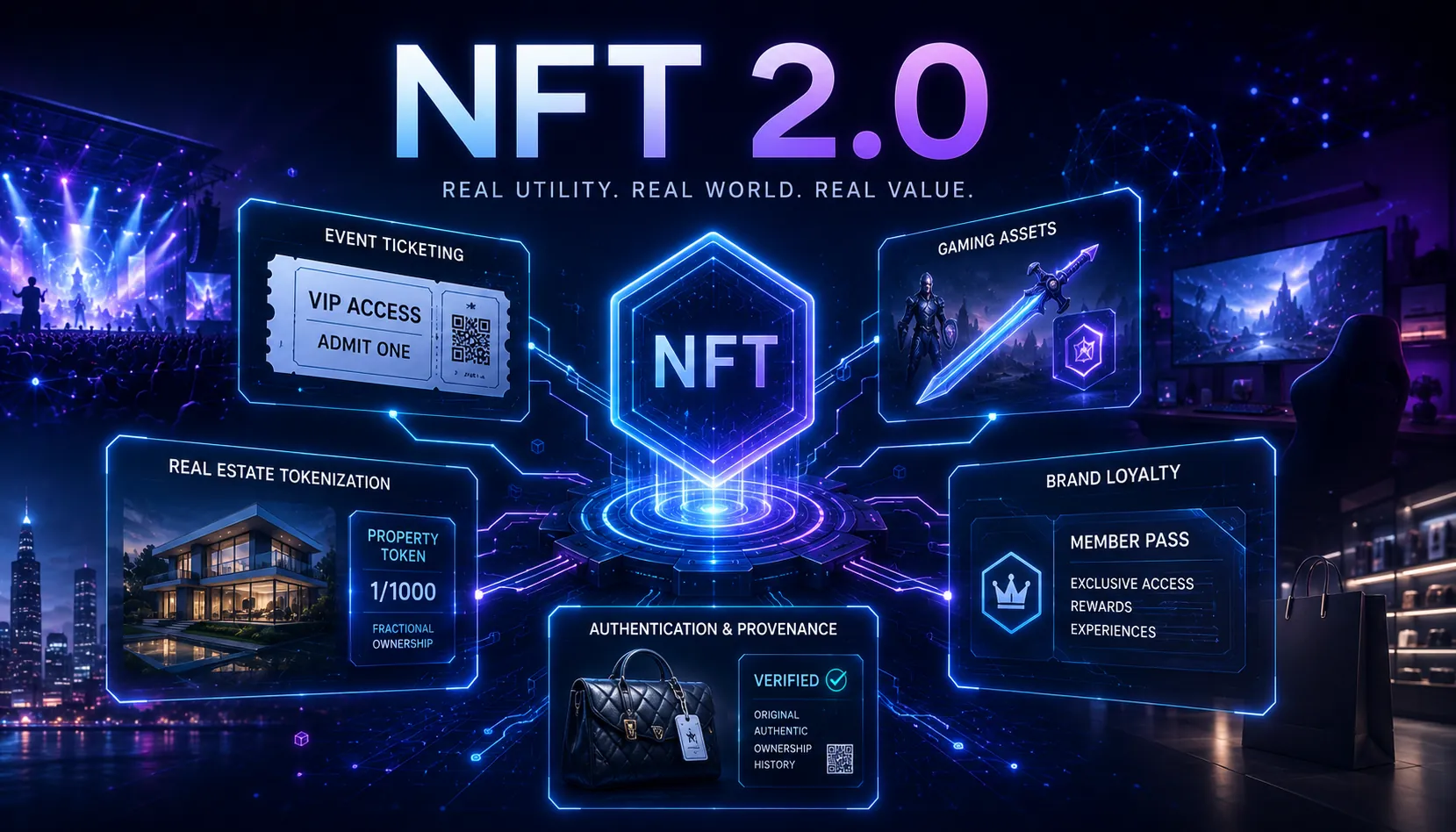
The JPEG era of NFTs is largely over. The utility era is just beginning.
After the speculative collapse of 2022 and 2023, the NFT market is staging a structured comeback. In April 2026, the market is on track toward a valuation above $60 billion, driven not by profile picture speculation but by practical applications: gaming assets, event ticketing, real estate tokenization, and brand loyalty programs.
DappRadar described the sector as moving ‘beyond JPEGs’ in late 2025, with momentum returning through use cases that deliver actual value rather than hype cycles. Here is what that shift looks like in practice.
What Changed: From Speculation to Function
The original NFT wave was about ownership of digital art and collectibles. The value was almost entirely speculative: this JPEG is worth something because other people believe it is worth something.
Utility NFTs are different. They do something. An NFT ticket gets you into an event. An NFT in-game item gives you a weapon that works in the game and can be sold to another player. An NFT representing a property share pays you a fraction of rental income.
The shift matters because utility creates intrinsic value independent of speculation. A ticket NFT is worth something even if no one else wants to trade it, because it gets you into the concert.
The 5 Use Cases With Real Traction in 2026
1. Event Ticketing
NFT ticketing is one of the cleanest real-world applications because it solves problems the industry already hates: counterfeiting, scalping, and zero post-event relationship between artist and fan.
NFT-based tickets reduce fraud by up to 90% through blockchain verification. They allow organizers to program resale royalties directly into the ticket, earning revenue from secondary market sales. After the event, the ticket becomes a collectible or unlocks exclusive content.
Ticketmaster has supported NFT-based access and ticketing at scale. Sports organizations and concerts have distributed millions of on-chain tickets and proof-of-attendance tokens across recent seasons.
2. Gaming Assets
Players have spent billions on in-game skins, weapons, and characters that they do not actually own. If the game shuts down or the developer changes policy, the assets disappear. NFTs change this by giving players genuine ownership of their items.
Ubisoft returned to NFT gaming with Champions Tactics on Immutable’s zkEVM infrastructure, building tradeable seasonal items and figurines that players genuinely own. The model ties value to gameplay rather than pure speculation. Play-and-own, not play-to-earn.
3. Real-World Asset Tokenization
Real estate is one of the most illiquid asset classes on the planet. Tokenizing property via NFTs introduces fractional ownership: a $500,000 property can be split into 1,000 tokens at $500 each, allowing global investors to participate.
Real estate NFTs with fractional ownership are projecting annual yields of 8 to 12% through automated rental distribution. The technology does not require a buyer to purchase an entire property, dramatically lowering the entry point for real estate investment.
4. Dynamic NFTs
Static NFTs have fixed metadata. Dynamic NFTs update based on external inputs: user behavior, real-world events, or AI inputs. An athlete’s NFT trading card can update its stats after each game. An NFT degree credential can unlock after course completion. A fitness NFT can evolve as you hit milestones.
These applications are early but represent the most technically interesting direction for the NFT format in 2026.
5. Brand Loyalty and Product Authentication
Nike’s .SWOOSH program and luxury fashion houses have used NFTs for digital collectibles tied to product access and physical redemptions. The more durable version of this is product authentication: an NFT acting as a digital passport for a physical item, verifying provenance and ownership history.
Supply chain authentication and anti-counterfeiting are potentially the largest long-term NFT market, though they grow more quietly than consumer-facing applications.
What Still Does Not Work
| What Still Has Problems | Why |
| Pure collectible speculation | No intrinsic value; returns depend entirely on finding a buyer at a higher price |
| Interoperability between games | Most gaming NFTs are still siloed within one ecosystem despite promises of cross-game portability |
| Mainstream consumer wallet UX | Wallet setup remains too complex for non-crypto users; limits mass adoption |
| Clear regulation | Most markets lack clear NFT legal frameworks, creating uncertainty for businesses building on the technology |
FAQ
Are NFTs still relevant in 2026?
Yes, but in a different form. Speculative art and collectible NFTs have largely deflated. Utility NFTs in ticketing, gaming, real estate, and authentication are growing with genuine business applications backing them.
What is the difference between a utility NFT and a collectible NFT?
A collectible NFT derives value from scarcity and perceived desirability, like digital art. A utility NFT has built-in function: it grants access, represents ownership, enables gameplay, or distributes revenue. Utility creates value independent of market sentiment.
How are brands using NFTs practically in 2026?
Primarily through loyalty programs (token-gated content and experiences for holders), product authentication (digital passports for physical goods), and event access (NFT tickets with programmable resale rules and post-event perks).
The most impactful innovations solve real problems, not just generate hype. WritoryBuzz helps brands create insightful technology content that educates audiences, builds credibility, and drives long-term engagement.