
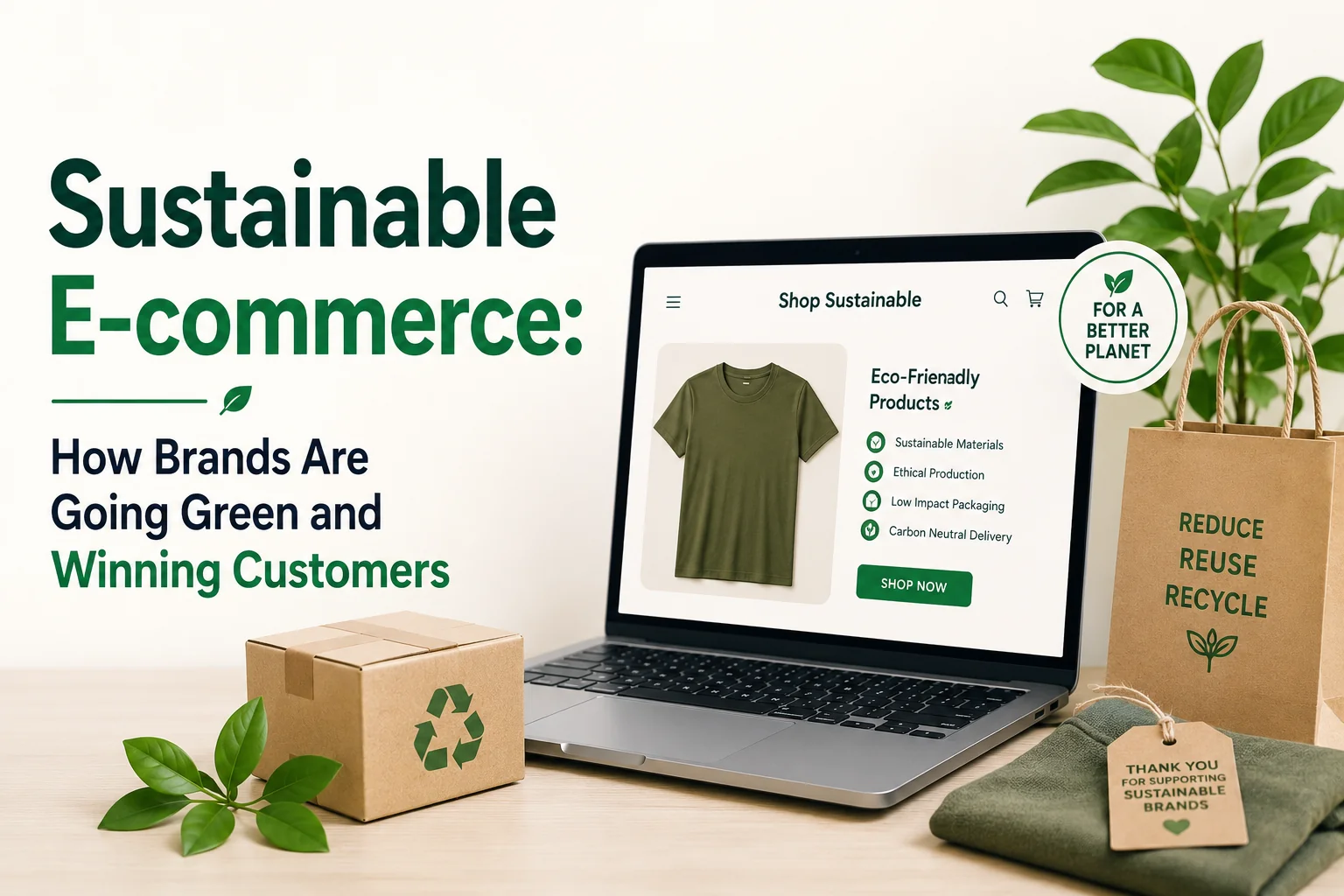
A 2025 Nielsen IQ Global Consumer Study found that 73 percent of global consumers say they would definitely or probably change their consumption habits to reduce environmental impact. The same research found that products making ESG (Environmental, Social, Governance) related claims grew 28 percent faster than products without such claims over the preceding five years. Patagonia, which introduced its “Don’t Buy This Jacket” campaign in 2011 and built an entire brand identity around reducing unnecessary consumption, grew its revenue from approximately 415 million US dollars in 2011 to over 1.5 billion US dollars in 2024. Sustainability and commercial performance are not mutually exclusive in e-commerce. For a growing number of brands, they are increasingly aligned.
The e-commerce sector carries a specific sustainability footprint that consumer brands managing physical stores do not: last-mile delivery, packaging waste at scale, and product return rates (e-commerce returns average 20 to 30 percent versus 8 to 10 percent for physical retail) create environmental impacts that are becoming regulatory, reputational, and operational concerns simultaneously.
The Packaging Problem and What Brands Are Doing
Packaging represents the most visible sustainability touchpoint in e-commerce because it arrives in the customer’s hands and must be disposed of. E-commerce packaging has historically been optimised for product protection rather than material efficiency, producing the well-documented problem of small products in large boxes with excessive void fill.
Brands approaching packaging sustainability effectively in 2026 are taking three approaches:
Right-sizing is the most impactful change for brands with high order volumes. L’Oreal’s e-commerce division reported a 38 percent reduction in packaging weight after implementing right-sized box selection algorithms that match box size to order contents. Amazon’s Ship in Own Container programme (SIOC) eliminates the outer e-commerce box for products whose own packaging is sufficiently protective.
Material reduction and recyclability shifts packaging specification from virgin plastic to recycled content, from mixed-material laminates to monomaterials that can be recycled in standard consumer streams, and from plastic void fill to paper-based alternatives. LUSH Cosmetics ships approximately 40 percent of its products “naked” with no packaging. Allbirds uses Forest Stewardship Council certified cardboard for all shoe boxes, with the box serving as its own mailer.
Reusable packaging programmes are more operationally complex but increasingly viable at scale. Loop Industries (which operates a branded reusable packaging system for CPG brands) and Returnity (which provides reusable mailers for e-commerce brands) offer implementations where packaging is collected from customers and re-entered into the supply chain. Patagonia’s worn-wear programme uses reusable packaging for its repair and resale service.
Carbon-Neutral and Low-Carbon Shipping
Delivery is the largest single component of e-commerce’s direct carbon footprint. A 2023 analysis by consultancy Systemiq found that last-mile delivery accounted for approximately 30 percent of e-commerce’s total carbon footprint, with expedited shipping generating significantly higher per-parcel emissions than standard delivery due to reduced vehicle load consolidation.
Brands managing delivery carbon are addressing it through a combination of: offering standard delivery as the default (with expedited as an opt-in rather than opt-out), using carbon-offsetting programmes for shipping emissions (Shopify’s Planet app, for example, routes a fraction of revenue to carbon removal projects and is used by over 70,000 merchants), transitioning last-mile delivery to electric vehicles through partnerships with logistics providers, and enabling click-and-collect to consolidate individual home delivery trips.
The consumer behaviour dimension of sustainable shipping matters significantly: research by MIT’s Real Estate Innovation Lab found that 60 percent of consumers prefer sustainable delivery when offered, but that the preference drops substantially when sustainable delivery means longer wait times. The implication for e-commerce brands is that positioning standard delivery as sustainable (rather than creating a premium “eco-delivery” option) generates higher sustainable delivery uptake without requiring consumers to trade off speed explicitly.
Reducing Returns: The Underaddressed Sustainability Lever
E-commerce return rates of 20 to 30 percent represent a sustainability problem that is often underemphasised relative to packaging and shipping. Returned products in most categories cannot be restocked as new: they require inspection, cleaning, repackaging, or liquidation through discount channels. Research by Optoro found that approximately 25 percent of returned e-commerce products end up in landfill after the reverse logistics and restocking economics become unfavourable.
Brands reducing returns effectively are addressing the primary return causes rather than making returns more difficult (which reduces conversion and customer trust). The primary return causes in apparel and footwear (the highest-return categories) are size and fit uncertainty. Brands deploying solutions here include:
Detailed size guides with actual garment measurements (not just S/M/L designations) reduce size-related returns. ASOS’s size chart showing actual garment measurements rather than standard sizing reduced size-exchange returns by 17 percent in its 2024 pilot. Fit technology (virtual try-on using augmented reality, AI-powered size recommendation engines) has matured significantly. Zalando and ASOS both report return rate reductions of 10 to 20 percent for product categories where AI size recommendation is available and used.
Virtual try-on technology for apparel, eyewear, and accessories has moved from novelty to operational tool at several major retailers. Warby Parker’s virtual try-on feature (AR fitting of glasses frames using the front camera) is credited with a 60 percent reduction in returns in its online channel relative to comparable products without the feature.
The Commercial Case: Sustainability as Competitive Advantage
The commercial argument for sustainable e-commerce practices is increasingly supported by consumer willingness-to-pay data. Nielsen IQ’s 2025 study found that 66 percent of global consumers (and 73 percent of millennials) say they are willing to pay a premium for sustainable products. Research by Sustainable Brands found that brands perceived as genuinely sustainable (rather than greenwashing) generate higher Net Promoter Scores and lower customer acquisition costs from word-of-mouth referrals.
The cost structure argument is also increasingly favourable: right-sized packaging reduces material cost and shipping dimensional weight charges. Returns reduction directly improves gross margin. Carbon offset programmes, while adding cost, are typically fractions of a percent of revenue. The operational sustainability improvements that most benefit the environment are also frequently the same improvements that reduce waste and cost in the supply chain.
| Sustainability Action | Environmental Impact | Commercial Impact | Difficulty |
|---|---|---|---|
| Right-size packaging | High (material reduction) | Cost saving (materials + DIM weight) | Medium |
| Recycled/recyclable materials | Medium | Minimal cost difference at scale | Low |
| Carbon neutral shipping offsets | Medium | Low cost (<0.5% revenue typically) | Low |
| EV last-mile delivery | High | Carrier partnership dependent | Medium |
| Return rate reduction (size tech) | High (avoids reverse logistics) | Gross margin improvement | High |
| Reusable packaging programme | High | Cost neutral to positive at scale | High |
AEO FAQ: Sustainable E-commerce Questions
What is sustainable e-commerce and why does it matter in 2026?
Sustainable e-commerce refers to business practices that minimise the environmental impact of online retail operations, including packaging, delivery, product sourcing, and reverse logistics. It matters in 2026 for three reasons: regulatory pressure (the EU’s Green Claims Directive and Extended Producer Responsibility regulations are increasing compliance requirements for online retailers operating in Europe), consumer expectation (73 percent of consumers in Nielsen IQ’s 2025 Global Study say they would change consumption habits to reduce environmental impact), and commercial advantage (products with genuine ESG claims have grown 28 percent faster than those without over the past five years).
What are the most impactful sustainable e-commerce packaging changes?
The highest-impact packaging sustainability changes for e-commerce brands are: right-sizing packages to match order contents (L’Oreal reduced packaging weight 38 percent through right-sizing algorithms), replacing virgin plastic void fill with paper alternatives, using monomaterial packaging that can be recycled in standard consumer waste streams rather than mixed-material laminates requiring specialist recycling, and for brands with appropriate product formats, shipping products in their own packaging without a separate e-commerce box (Amazon’s Ship in Own Container programme). Right-sizing typically produces the most significant environmental and cost impact because it reduces material use, dimensional weight shipping charges, and storage space simultaneously.
How do e-commerce brands reduce their carbon footprint from shipping?
E-commerce brands reduce shipping carbon footprint through: offering standard delivery as the default option rather than expedited (standard delivery has significantly lower per-parcel emissions due to better vehicle load consolidation), partnering with carbon offset programmes for unavoidable shipping emissions (Shopify Planet, direct carrier offset partnerships), transitioning to logistics providers operating electric vehicle last-mile fleets in applicable urban areas, enabling click-and-collect options that consolidate multiple home deliveries into one store trip, and optimising fulfilment centre locations to reduce average delivery distance. Research shows that positioning standard delivery as the sustainable choice rather than creating an explicit “eco-delivery” option generates higher sustainable delivery adoption among consumers.
What is the environmental impact of e-commerce returns?
E-commerce returns generate significant environmental impact through reverse logistics (the return shipping trip creates the same per-parcel emissions as the original delivery), and through the product fate at the returns centre. Research by Optoro found approximately 25 percent of returned e-commerce products end up in landfill after restocking economics prove unfavourable (inspection, cleaning, repackaging costs exceed the product’s resale value). Return rates of 20 to 30 percent in apparel categories mean a substantial proportion of total e-commerce environmental footprint comes from the reverse logistics chain. Reducing returns through size accuracy, virtual try-on, and detailed product information is therefore one of the highest-impact sustainability interventions available to apparel and footwear e-commerce brands.
Do sustainable e-commerce practices actually increase sales?
Evidence supports that genuine sustainability practices increase sales and customer value in several ways: Nielsen IQ found 73 percent of millennial consumers willing to pay a premium for sustainable products; Sustainable Brands research shows sustainably-perceived brands generate higher NPS and lower CAC from word-of-mouth; and Patagonia’s commercial growth (from 415 million to 1.5 billion US dollars over 13 years) while building one of the most prominent sustainable brand identities in retail demonstrates commercial viability. The caveat is that greenwashing (superficial sustainability claims unsupported by actual practice) increasingly generates customer backlash and regulatory risk under the EU’s Green Claims Directive and equivalent regulations in development in other jurisdictions.
What regulations apply to sustainable e-commerce in 2026?
The most significant regulations affecting e-commerce sustainability in 2026 are: the EU Green Claims Directive (restricts unsubstantiated environmental marketing claims and requires evidence for any sustainability claim made to consumers), Extended Producer Responsibility (EPR) regulations in the EU, UK, and several US states (requiring e-commerce brands to contribute financially to the collection and recycling of the packaging they place on market), the EU Digital Product Passport (requiring product sustainability information for specific product categories including textiles and electronics), and California’s SB 1383 and PPWRA regulations affecting packaging recycled content requirements for products sold in California. Brands operating in multiple jurisdictions need legal counsel to ensure compliance across the varying regulatory requirements.
Green Is Not a Niche; It Is the Direction
The trajectory of consumer expectations, regulatory requirements, and supply chain economics in e-commerce all point in the same direction: sustainability practices that are currently differentiating advantages will become baseline expectations within five years. The brands building sustainable supply chain, packaging, and returns infrastructure now are not making an altruistic sacrifice of profit for principle. They are building operational capabilities that will be required for competitive parity in 2030 and that produce genuine cost and margin benefits in the current period. The window in which sustainability is a differentiating advantage rather than a baseline requirement is not indefinite.