
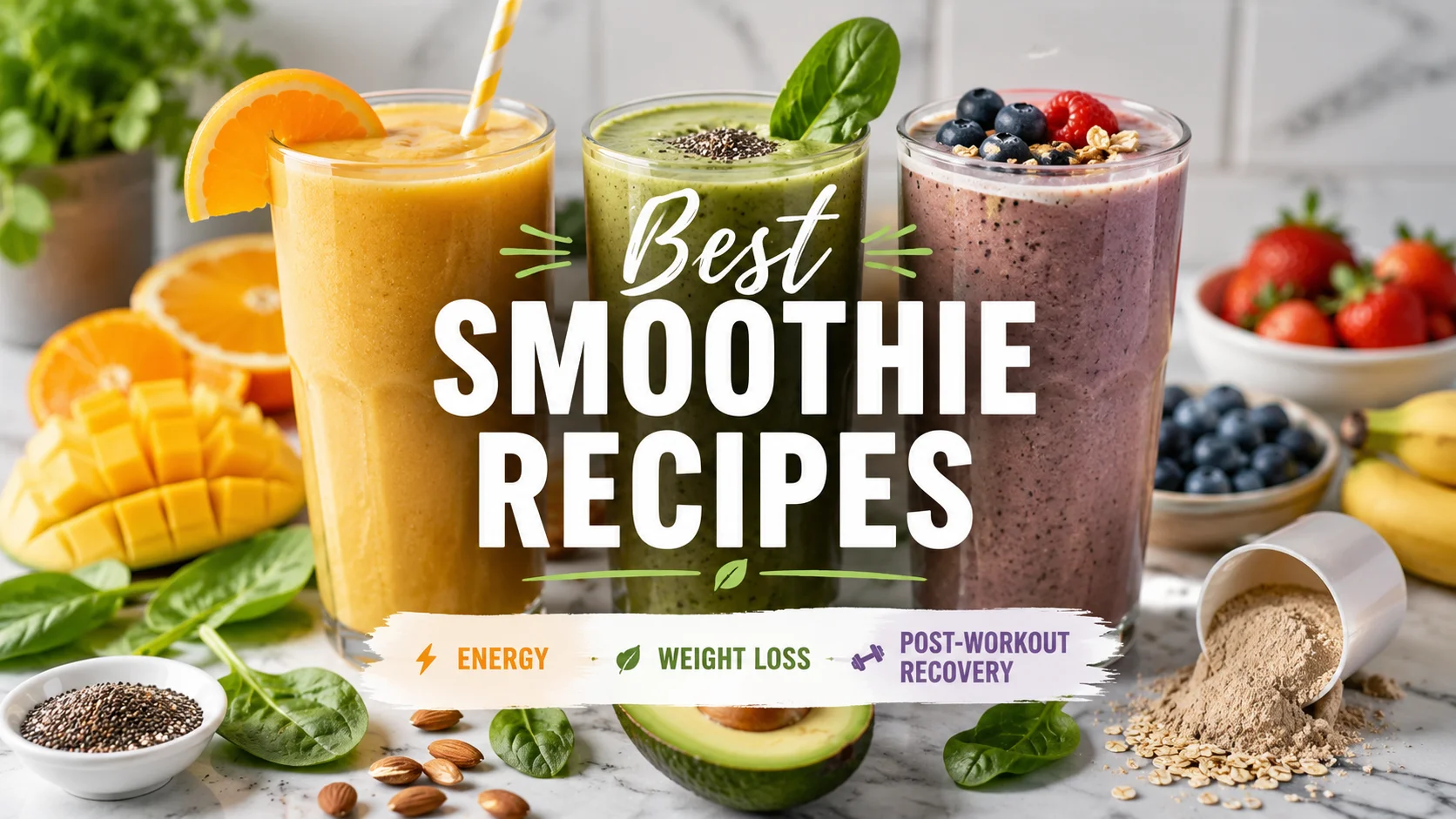
The difference between a smoothie that works and one that is just sweet fruit liquid comes down to what goes in it. Most commercially available smoothies are high in sugar and short on protein, fibre, and the specific nutrients that make a difference for energy, body composition, or recovery.
These twelve recipes are organised by goal. Each one has a short explanation of why the ingredients do what they do, so you can adapt them to what you have available rather than treating the recipe as a rigid formula.
Section 1: Energy Smoothies
Energy smoothies work through two mechanisms: providing sustained fuel through fibre and complex carbohydrates, and supplying micronutrients (iron, B vitamins, magnesium) that the body uses in energy metabolism. High-sugar smoothies give a spike and a crash. These are designed for steady output.
Green Power Morning Blend
Blend 2 large handfuls of baby spinach, 1 frozen banana, 1 tablespoon of almond butter, 250ml of oat milk, 1 teaspoon of matcha powder, and a thumb of fresh ginger. The spinach adds iron and folate without flavour. The matcha provides clean caffeine plus L-theanine, which smooths the stimulant effect. Ginger reduces the blood sugar spike from the banana.
Beetroot and Berry Focus Smoothie
Blend 80g of cooked, cooled beetroot (not pickled), 100g of frozen mixed berries, 200ml of coconut water, 1 tablespoon of ground flaxseed, and a squeeze of lemon juice. Beetroot contains dietary nitrates that improve blood flow and oxygen efficiency. The flaxseed adds omega-3 fatty acids that support cognitive function. This one runs a deep purple colour that is visually striking.
Mango and Turmeric Anti-Fatigue Blend
Blend 150g of frozen mango, 200ml of coconut milk (carton, not can), 1 teaspoon of turmeric powder, a pinch of black pepper (activates turmeric absorption significantly), 1 tablespoon of chia seeds, and half a teaspoon of cinnamon. Mango provides vitamin C and natural sugars with moderate fibre. Turmeric reduces chronic low-grade inflammation that contributes to persistent fatigue.
Section 2: Weight Management Smoothies
Weight management smoothies prioritise satiety, not calorie density. A 300-calorie smoothie that keeps you full for three hours serves weight management far better than a 200-calorie smoothie that leaves you hungry within an hour.
| Satiety Factor | Key Ingredients | Why It Helps |
|---|---|---|
| Protein | Greek yoghurt, protein powder, hemp seeds | Slows gastric emptying, reduces hunger hormones |
| Fibre | Oats, flaxseed, chia seeds, spinach | Expands in stomach, delays hunger signals |
| Healthy fat | Almond butter, avocado, coconut | Slows digestion, maintains blood sugar stability |
| Volume | Frozen vegetables, ice, cucumber | Physical fullness without calorie load |
Green Satiety Smoothie
Blend 2 handfuls of baby spinach, half an avocado, 1 small cucumber (roughly chopped), 200ml of unsweetened almond milk, 1 tablespoon of hemp seeds, half a green apple, and a squeeze of lime. Under 350 calories. High in fibre and healthy fat. Stays filling for three to four hours when used as a meal replacement.
Cinnamon Apple Oat Smoothie
Blend 3 tablespoons of rolled oats, 200ml of skimmed milk, 1 small apple (peeled and chopped), 1 teaspoon of cinnamon, 1 tablespoon of Greek yoghurt, and 4 ice cubes. The oats bulk out the smoothie significantly and add beta-glucan fibre, the same compound found in oat porridge that is associated with improved satiety and cholesterol management.
Chocolate Protein Weight Loss Smoothie
Blend 1 scoop of chocolate protein powder, 200ml of unsweetened almond milk, 1 frozen banana, 1 tablespoon of unsweetened cocoa powder, 1 tablespoon of peanut butter, and a handful of ice. Around 350 calories. High protein and fat content make this one of the most filling options in the list. The banana provides potassium that most weight management diets run low on.
Section 3: Post-Workout Recovery Smoothies
Post-workout recovery smoothies have two jobs: replenish glycogen (depleted during exercise) and provide amino acids for muscle repair. The 30 to 60 minute window after intense exercise is when the body absorbs these nutrients most efficiently.
Banana and Whey Classic Recovery Shake
Blend 1 large frozen banana, 1 scoop of vanilla whey protein, 250ml of whole milk, 1 tablespoon of honey, and 5 ice cubes. The banana provides fast-absorbing carbohydrates to replenish glycogen. The whey provides complete amino acids for muscle protein synthesis. The honey adds glucose for glycogen restoration without waiting for complex carbohydrates to break down.
Tart Cherry and Beetroot Recovery Blend
Blend 100ml of tart cherry juice (not cordial), 80g of cooked beetroot, 1 scoop of vanilla protein powder, 150ml of almond milk, and a tablespoon of rolled oats. Tart cherry has been studied specifically for post-exercise recovery. Multiple peer-reviewed studies show reduced muscle soreness and faster strength recovery in athletes who consumed it post-workout. Beetroot supports the vascular recovery that follows intense cardio.
Tropical Collagen Recovery Smoothie
Blend 150g of frozen mango, 80g of frozen pineapple, 200ml of coconut water, 1 scoop of unflavoured collagen peptides, and half a teaspoon of turmeric. Coconut water provides electrolytes lost through sweat, particularly potassium and sodium. Collagen peptides support connective tissue recovery, joints and tendons particularly, which is relevant for high-impact or heavy resistance training.
Tips for Better Smoothies Across All Categories
Freeze ripe bananas rather than using fresh. Frozen banana creates a thick, creamy base that fresh banana does not. Peel them before freezing and store in a bag with individual pieces to prevent clumping.
Use frozen vegetables without hesitation. Frozen spinach, kale, and cauliflower are nutritionally equivalent to fresh and blend to smooth texture more easily than fresh leaves in most blenders.
Add liquid in stages. Start with less liquid than the recipe calls for and add more to adjust consistency. Once over-blended with too much liquid, a smoothie cannot be thickened easily.
FAQs
Are smoothies better than whole fruit and vegetables?
Not necessarily. Blending breaks down cell walls and releases sugars more rapidly than chewing, which can increase blood sugar response. Smoothies that include fibre-rich ingredients (seeds, oats, avocado) moderate this effect. Smoothies are not a nutritional downgrade from whole foods, but they are not automatically better either.
When is the best time to drink a protein smoothie?
Post-workout, the 30 to 60 minute window is most supported by research for muscle recovery. As a meal replacement, breakfast or lunch works well for smoothies with high protein and fibre. Avoid high-calorie smoothies late in the evening if weight management is a goal.
Can smoothies replace a full meal?
Smoothies designed as meal replacements can provide equivalent macro nutrition to a meal. They typically fall short on the satiety of solid food because liquid calories empty the stomach faster than solid calories. Adding oats, seeds, or nut butter partially compensates for this.
A Note on Blenders
A high-powered blender, Vitamix or Blendtec being the benchmark, makes a meaningful difference for green smoothies. It fully breaks down leafy greens and fibrous vegetables into smooth liquid where a standard blender leaves texture. If you blend green smoothies daily, the investment pays off in a year or two of daily use.
For food-focused content, recipe science, and nutrition guidance without supplement-industry bias, follow WritoryBuzz’s food and health sections throughout 2026.