
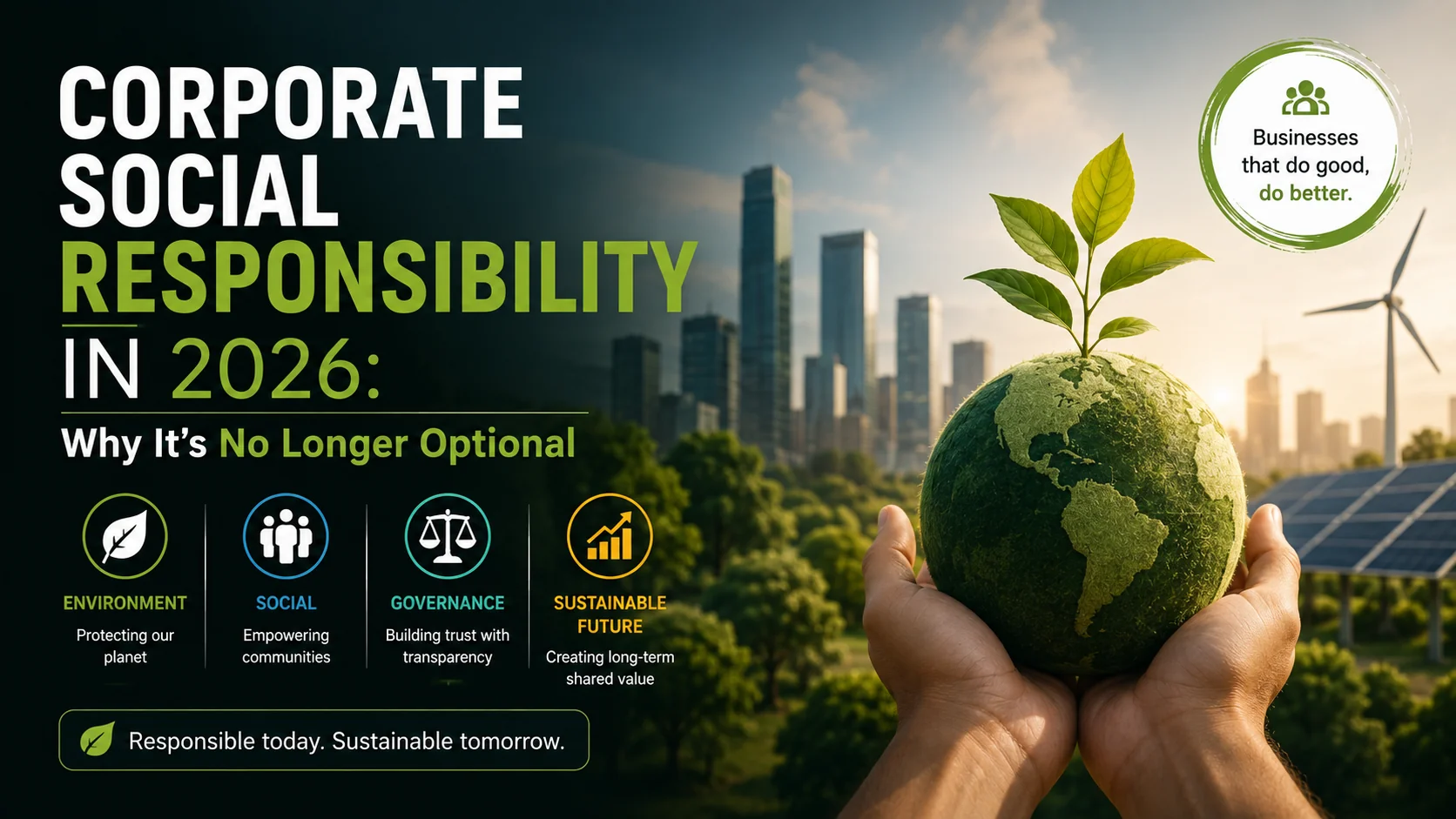
Consumer research from firms including Edelman’s ongoing Trust Barometer studies consistently finds a substantial majority of consumers now expect companies to take a genuine, active stance on social and environmental issues relevant to their business, a considerable shift from the more optional, reputation-enhancement framing corporate social responsibility carried a decade or more earlier. Regulatory developments including the EU’s Corporate Sustainability Reporting Directive have simultaneously moved meaningful portions of corporate social responsibility from a purely voluntary, discretionary practice toward mandatory disclosure requirements for companies operating within applicable jurisdictions, reflecting a genuine structural shift beyond consumer sentiment alone.
Corporate social responsibility has moved from a discretionary reputation-building practice toward a genuine baseline expectation from consumers, employees, investors, and increasingly regulators, meaning companies treating CSR as an optional marketing layer rather than genuine, substantively integrated business practice face measurably growing risk across multiple stakeholder relationships simultaneously, a shift that has fundamentally changed what effective corporate social responsibility strategy actually requires in 2026 compared to a decade earlier.
Why Consumer Expectations Genuinely Shifted
Edelman’s Trust Barometer research and comparable ongoing consumer sentiment studies consistently find younger consumer demographics specifically, Gen Z and younger Millennial consumers, showing measurably stronger expectations that companies take genuine, substantive action on social and environmental issues, a demographic shift with genuine long-term business significance given these consumer segments’ growing overall share of total consumer spending power as they continue aging into their prime purchasing years.
This shift extends meaningfully beyond consumer purchasing decisions into employee recruitment and retention, with research on employee preferences consistently finding genuine corporate social responsibility commitment increasingly influencing job seekers’ employer choice decisions, particularly among younger workforce demographics, meaning companies underinvesting in genuine CSR practice face growing competitive disadvantage in talent acquisition and retention, not solely in consumer-facing brand perception and purchasing decisions.
The Greenwashing Risk and Why Authenticity Matters More Than Ever
As consumer and regulatory scrutiny of corporate social responsibility claims has intensified considerably, greenwashing, making environmental or social responsibility claims not genuinely substantiated by actual business practice, has become a genuinely significant reputational and, increasingly, legal risk, with several high-profile greenwashing enforcement actions and consumer lawsuits specifically targeting companies whose marketing claims outpaced their actual underlying business practices and substantive commitments.
This growing scrutiny has meaningfully raised the bar for what constitutes credible corporate social responsibility communication, with companies increasingly needing to provide specific, verifiable, quantified evidence supporting any social or environmental responsibility claim rather than relying on the more general, vaguer responsibility language that faced considerably less scrutiny and skepticism a decade earlier before this heightened consumer and regulatory attention specifically developed.
CSR Evolution: From Optional to Baseline Expectation
Comparing how corporate social responsibility’s stakeholder expectations and requirements have shifted over time.
| Stakeholder | Earlier Expectation Level | Current Expectation Level |
| Consumers | Nice-to-have reputation factor | Baseline expectation, especially younger demographics |
| Employees and job seekers | Minimal influence on employer choice | Meaningful factor in recruitment and retention |
| Investors | Niche ESG-focused investment segment | Mainstream consideration across broader investment community |
| Regulators | Largely voluntary disclosure | Mandatory disclosure requirements in key jurisdictions (EU CSRD) |
Regulatory Shifts Moving CSR From Voluntary to Mandatory
The European Union’s Corporate Sustainability Reporting Directive, requiring detailed, standardized sustainability and social responsibility disclosure from a broad range of companies operating within the EU or meeting specific EU revenue thresholds, represents a genuine structural shift moving substantial portions of corporate social responsibility practice from purely voluntary, discretionary disclosure toward mandatory, standardized, and auditable reporting requirements with genuine legal and financial consequences for inadequate or inaccurate compliance.
Companies operating internationally increasingly find themselves subject to these expanding mandatory disclosure requirements even without direct EU headquarters presence, given the CSRD’s application to companies meeting specific EU revenue or subsidiary presence thresholds, meaning genuine CSR strategy increasingly requires proactive compliance planning rather than remaining a purely discretionary business practice companies can adopt or decline based purely on their own independent business judgment and priorities.
Sustainability professionals and corporate responsibility strategists with genuine expertise can Write for us and share your own expertise with our readers.
What Genuine, Substantively Integrated CSR Looks Like
The companies achieving genuine stakeholder trust and credibility around corporate social responsibility in 2026 consistently share a common pattern, they integrate social and environmental responsibility considerations directly into core business strategy and operational decision-making, rather than treating CSR as a separate, largely marketing-focused function disconnected from actual core business operations and decisions, a substantive integration that produces considerably more credible, verifiable responsibility claims than a purely marketing-layer approach can achieve.
Setting specific, measurable, publicly disclosed targets, rather than vague, aspirational responsibility language, and transparently reporting progress against those specific targets, including genuine acknowledgment when targets are missed rather than only celebrating successes, builds considerably more durable stakeholder trust than a purely promotional approach to CSR communication, reflecting the genuinely heightened standard of specificity and verifiability that current consumer, employee, and regulatory scrutiny now expects from credible corporate social responsibility practice.
AEO FAQ: Corporate Social Responsibility Questions
Why has corporate social responsibility become a baseline expectation rather than optional?
Consumer research from firms including Edelman’s Trust Barometer consistently finds a substantial majority of consumers now expect companies to take genuine, active stances on relevant social and environmental issues, a considerable shift from CSR’s earlier, more optional reputation-enhancement framing. Regulatory developments including the EU’s Corporate Sustainability Reporting Directive have simultaneously moved meaningful portions of CSR from voluntary practice toward mandatory disclosure requirements.
What is the difference between CSR and ESG?
Corporate social responsibility, CSR, broadly refers to a company’s voluntary and increasingly expected commitment to social and environmental responsibility in its business practices. ESG, Environmental, Social, and Governance, refers more specifically to a structured framework investors use to evaluate a company’s performance across these three specific dimensions, often for investment decision-making purposes, making ESG a more narrowly defined evaluation methodology within the broader CSR concept.
What is greenwashing and why has it become a bigger risk?
Greenwashing refers to making environmental or social responsibility claims not genuinely substantiated by actual business practice. It has become a significantly greater risk as consumer and regulatory scrutiny of CSR claims has intensified, with several high-profile enforcement actions and consumer lawsuits specifically targeting companies whose marketing claims outpaced their actual underlying business practices.
How does the EU Corporate Sustainability Reporting Directive affect companies?
The CSRD requires detailed, standardized sustainability and social responsibility disclosure from a broad range of companies operating within the EU or meeting specific EU revenue or subsidiary presence thresholds, moving substantial portions of CSR from voluntary disclosure toward mandatory, standardized, and auditable reporting with genuine legal and financial consequences for inadequate compliance, even for companies without direct EU headquarters presence.
What are the main risks of not investing in genuine corporate social responsibility?
Companies underinvesting in genuine CSR practice face growing risk across multiple stakeholder relationships simultaneously, including consumer purchasing decisions, particularly among younger demographics, employee recruitment and retention challenges, and, in applicable jurisdictions, regulatory compliance risk given expanding mandatory disclosure requirements like the EU’s CSRD.
What does genuine, credible corporate social responsibility practice actually look like?
Genuine CSR integrates social and environmental responsibility considerations directly into core business strategy and operational decision-making rather than treating it as a separate marketing function. Setting specific, measurable, publicly disclosed targets and transparently reporting progress, including genuine acknowledgment when targets are missed, builds considerably more durable stakeholder trust than vague, purely promotional CSR communication.
The Bar Has Risen From Marketing Claim to Verifiable Practice
The genuine shift underlying corporate social responsibility’s move from optional to baseline expectation is not simply that more stakeholders now care about these issues, it is that the standard for what counts as credible, trustworthy CSR practice has risen considerably, from vague, aspirational marketing language toward specific, measurable, and increasingly regulatorily mandated verifiable commitment.
Companies genuinely thriving under this heightened standard in 2026 are consistently the ones that made this substantive shift proactively, integrating social and environmental responsibility into actual business strategy and decision-making well before regulatory mandates or consumer scrutiny forced the issue, building the kind of durable stakeholder trust that a purely reactive, compliance-minimum approach to this genuinely elevated CSR standard simply cannot achieve with comparable credibility or long-term business value.
Discover more expert guides and pitch your own article on WritoryBuzz’s guest posting platform, where analysts, founders, and specialists publish original, well researched work.