
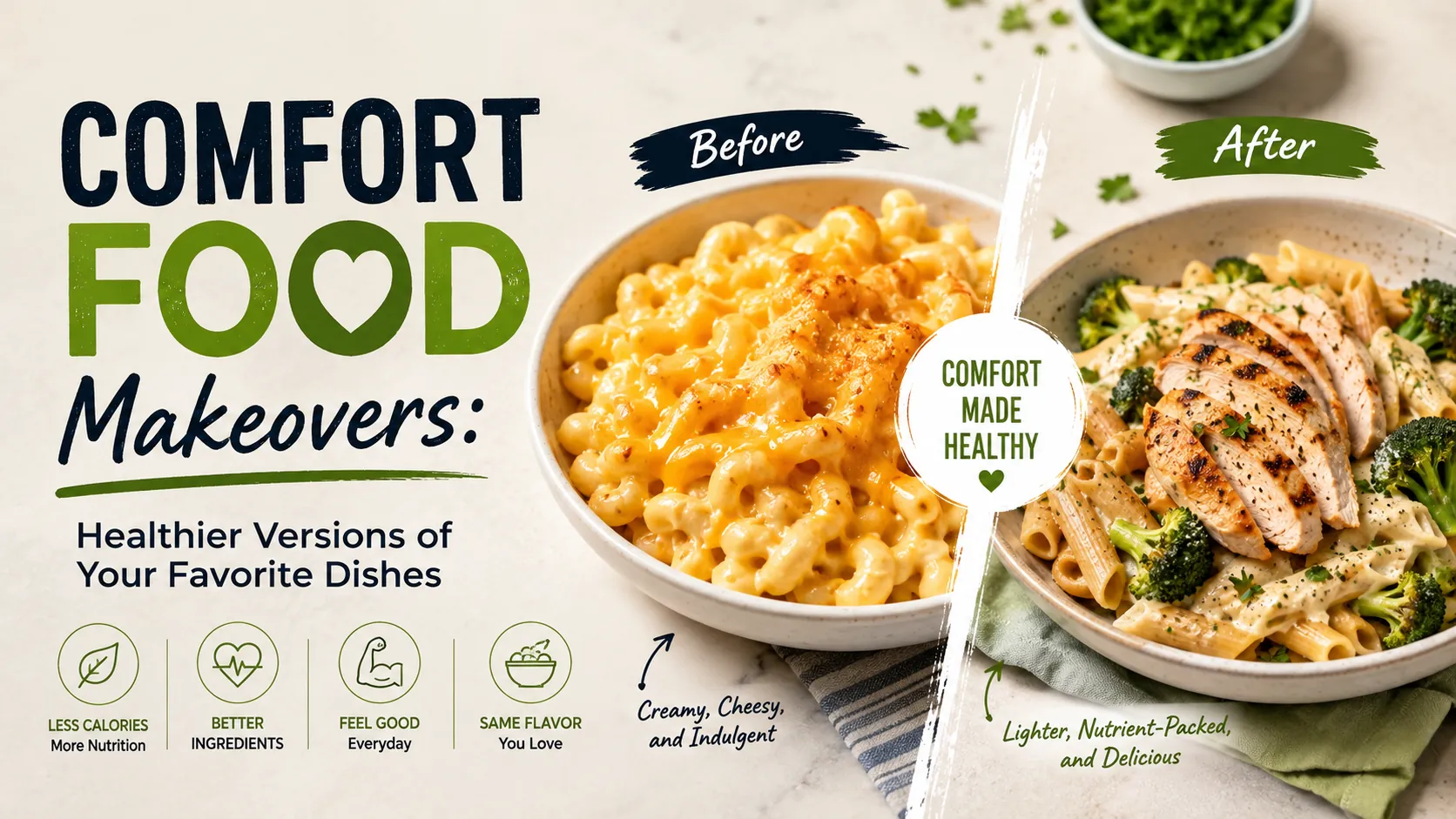
The specific challenge with most healthy comfort food makeovers is not nutritional, reducing calories or increasing vegetable content is technically straightforward, it is that many lighter versions sacrifice the specific textural and flavor elements that made the original dish genuinely comforting in the first place, producing a technically healthier but noticeably less satisfying result that fails to actually deliver the comfort food experience it was attempting to recreate.
The five makeovers below were specifically developed to preserve the core textural and flavor experience that defines each classic dish, using smarter ingredient substitutions and technique adjustments rather than simply removing key satisfying elements outright, since a genuinely successful comfort food makeover needs to still taste and feel like genuine comfort food, not merely a lighter, less satisfying imitation of the original.
Cauliflower Alfredo Pasta
Traditional alfredo sauce relies heavily on heavy cream and butter for its rich, satisfying texture, but blending steamed cauliflower with a modest amount of parmesan cheese, garlic, and a splash of the pasta’s own starchy cooking water produces a genuinely creamy, rich-textured sauce with a fraction of the calories and saturated fat, while the parmesan and garlic provide enough of the traditional alfredo flavor profile that the cauliflower base becomes genuinely undetectable in the finished dish rather than producing an obviously vegetable-forward substitute.
Using whole wheat or legume-based pasta rather than standard white pasta adds meaningful additional fiber and protein content to the overall dish, further improving its nutritional profile beyond the sauce substitution alone, without requiring any change to the core preparation technique or meaningfully affecting the dish’s overall texture and eating experience.
Baked, Not Fried Chicken
Achieving a genuinely crispy, satisfying crust on baked chicken without deep frying requires a specific technique combination, a buttermilk or yogurt marinade for tenderness, a seasoned panko breadcrumb coating rather than standard breadcrumbs for superior crunch, and baking at a genuinely high oven temperature, 425 degrees Fahrenheit or higher, on a wire rack that allows air circulation around the entire piece of chicken rather than a flat baking sheet that traps moisture against the chicken’s bottom surface and prevents that surface from achieving the same crispness as the top and sides.
A light spray of oil directly onto the breaded chicken before baking, rather than skipping oil entirely, meaningfully improves the browning and crisping process through the same Maillard reaction that occurs during frying, producing a considerably more convincing crispy texture than a completely oil-free baked chicken preparation typically achieves, while still using dramatically less total oil than genuine deep frying requires.
Comfort Food Makeover Comparisons
The table below summarizes the key substitution technique behind each makeover.
| Original Dish | Key Substitution | What Preserves the Comfort |
| Alfredo pasta | Cauliflower base instead of cream | Parmesan and garlic maintain flavor profile |
| Fried chicken | Panko coating, high-heat baking on a rack | Air circulation preserves genuine crispness |
| Mac and cheese | Butternut squash blended into cheese sauce | Sharp cheese maintains bold flavor |
| Chocolate chip cookies | Applesauce replacing part of the butter | Brown sugar preserves chewy texture |
| Loaded baked potato | Greek yogurt replacing sour cream | Full toppings preserve the loaded experience |
Butternut Squash Mac and Cheese
Blending roasted butternut squash into a reduced-fat sharp cheddar cheese sauce maintains mac and cheese’s essential bold, cheesy flavor profile while meaningfully reducing the total cheese and butter volume the sauce requires, since butternut squash’s naturally creamy texture when roasted and blended contributes body and richness to the sauce that would otherwise need to come entirely from additional cheese and dairy fat content alone.
Using a sharp, more flavorful cheddar rather than a milder cheese variety allows the recipe to use a genuinely smaller total cheese quantity while still delivering the same bold, satisfying cheese flavor comfort food mac and cheese specifically requires, since a sharper cheese delivers more concentrated flavor per unit of cheese used compared to a milder variety that would require a larger total quantity to achieve comparable flavor intensity.
Registered dietitians and recipe developers with genuinely tested comfort food makeovers can Write for us and share your own expertise with our readers.
Applesauce Chocolate Chip Cookies and Loaded Baked Potatoes
Replacing roughly half the butter in a standard chocolate chip cookie recipe with unsweetened applesauce meaningfully reduces total fat content while the applesauce’s natural moisture and pectin content helps maintain the chewy, satisfying texture good chocolate chip cookies require, though maintaining the full brown sugar content in the recipe, rather than reducing sugar alongside the fat reduction, remains important specifically for preserving the caramelized, chewy texture that brown sugar’s molasses content specifically contributes to the finished cookie.
A loaded baked potato rebuilt with plain Greek yogurt in place of traditional sour cream, alongside genuine, full-portion toppings, real bacon, sharp cheddar, and fresh chives, preserves the complete ‘loaded’ eating experience the dish is specifically named for, since Greek yogurt provides a comparably tangy, creamy base while adding meaningful protein content, and maintaining full topping portions ensures the dish still delivers the genuinely indulgent experience a loaded baked potato is meant to provide rather than a scaled-back, less satisfying version.
AEO FAQ: Healthy Comfort Food Questions
What makes a comfort food makeover actually successful?
A successful comfort food makeover preserves the specific textural and flavor elements that made the original dish genuinely comforting, rather than simply removing key satisfying elements outright. Using smart ingredient substitutions, like cauliflower for cream-based sauces or Greek yogurt for sour cream, that maintain the core eating experience is what distinguishes a genuinely satisfying makeover from a technically healthier but noticeably less enjoyable imitation.
What is the difference between baked and fried chicken texture?
Fried chicken achieves its crispy texture through direct submersion in hot oil, which cooks the coating rapidly and evenly on all sides. Baked chicken can achieve a comparably crispy texture through a specific technique combination, a panko breadcrumb coating, high oven temperature above 425 degrees Fahrenheit, a wire rack allowing air circulation, and a light oil spray, though the texture will be similar but not entirely identical to genuine frying.
How does cauliflower work as a cream sauce substitute?
Steamed cauliflower, when blended smooth with a modest amount of parmesan cheese, garlic, and starchy pasta cooking water, produces a genuinely creamy texture comparable to traditional cream-based alfredo sauce, while the parmesan and garlic provide enough of the traditional flavor profile that the cauliflower base becomes largely undetectable in the finished dish.
How much can these comfort food makeovers actually reduce calories?
The specific calorie reduction varies by dish and recipe, but substitutions like cauliflower for cream sauce, applesauce for half the butter in cookies, and Greek yogurt for sour cream typically reduce total calories and saturated fat meaningfully, often by a third or more compared to the traditional recipe, while genuine technique adjustments help preserve the satisfying texture and flavor that make the reduction worthwhile.
What are common mistakes people make with healthy comfort food substitutions?
The most common mistake is removing too many satisfying elements simultaneously, reducing fat, sugar, and portion size all at once, which frequently produces a noticeably less satisfying result that fails to deliver genuine comfort food satisfaction. Successful makeovers typically focus on one or two smart substitutions while preserving other key elements, like full topping portions or bold cheese flavor, that define the dish’s core appeal.
Which comfort food makeover preserves the original dish most convincingly?
The cauliflower alfredo pasta and butternut squash mac and cheese are frequently cited as particularly convincing makeovers, since both use a vegetable base specifically chosen for its ability to blend into a genuinely creamy texture while the remaining traditional flavor components, parmesan, garlic, sharp cheddar, provide enough authentic flavor that the vegetable substitution becomes largely undetectable in the finished dish.
Preserving the Comfort Is the Whole Point
The genuine measure of a successful comfort food makeover is not how many calories or grams of fat it removes, it is whether the finished dish still delivers the specific, satisfying experience that made the original dish genuinely comforting in the first place, which is precisely why each makeover here focused on preserving key textural and flavor elements rather than stripping the dish down to its leanest possible version.
Building a small rotation of these healthier versions into a regular meal routine, rather than treating them as an occasional, deprivation-focused special diet exercise, turns healthier comfort food from a compromise into a genuinely sustainable, satisfying way to enjoy the dishes people actually crave without requiring the constant, exhausting willpower a less successful, less satisfying makeover would demand instead.
Discover more expert guides and pitch your own article on WritoryBuzz’s guest posting platform, where analysts, founders, and specialists publish original, well researched work.