
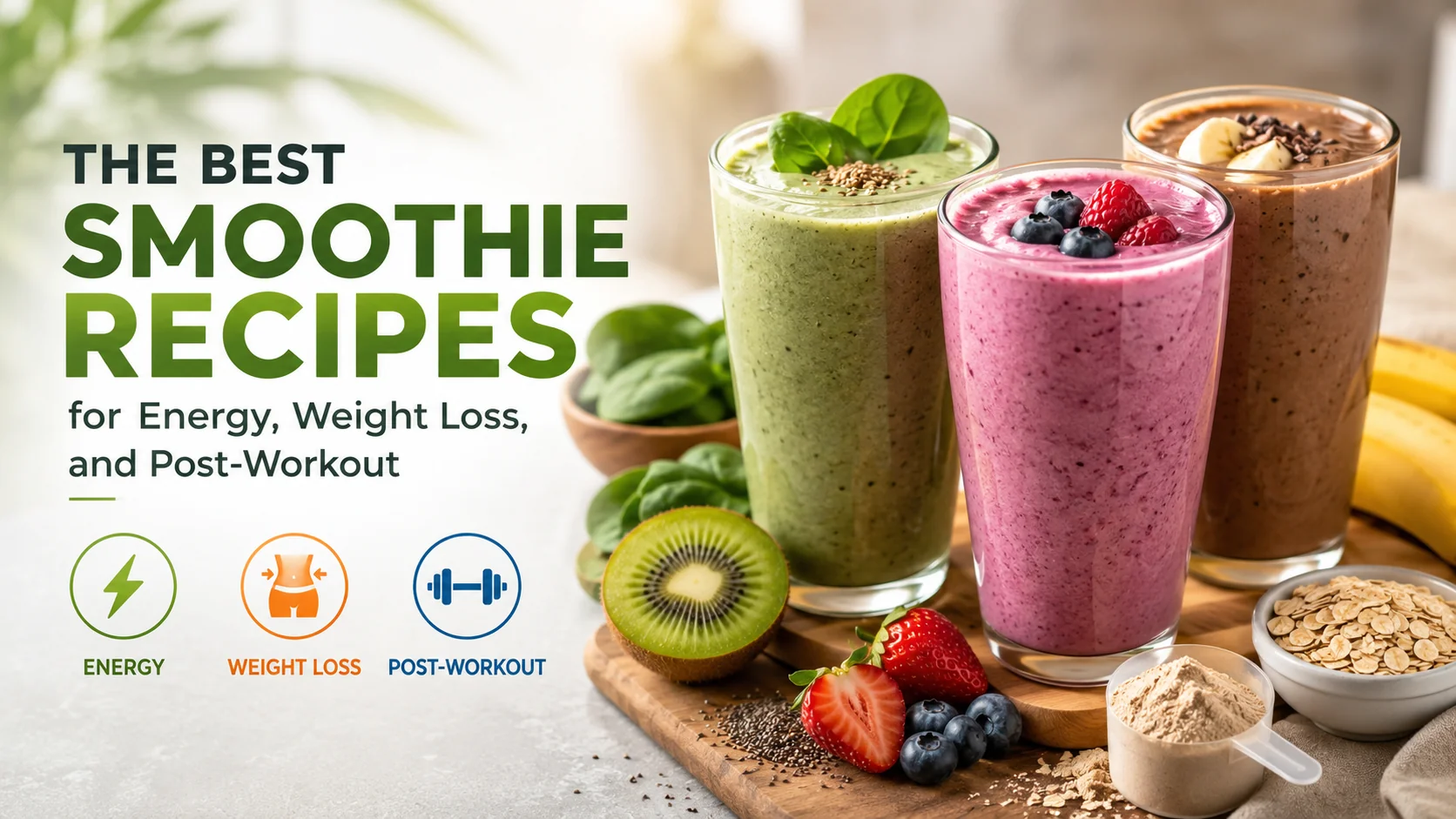
Sports nutrition research consistently identifies the specific window of roughly 30 to 60 minutes following exercise as when the body most effectively utilizes consumed protein and carbohydrates for muscle recovery and glycogen replenishment, a finding that directly informs the specific post-workout smoothie ratios recommended below, while separate research on satiety and blood sugar regulation informs the different ratio approach the weight management smoothies specifically use.
The nine smoothies below are organized around three genuinely distinct nutritional goals, sustained energy, weight management support, and post-workout recovery, each requiring a meaningfully different macronutrient ratio and ingredient selection approach, since a smoothie optimized for one specific goal, high protein and moderate carbohydrate for post-workout recovery, differs considerably from what actually serves a different goal, higher fiber and protein with more modest total calories for weight management support.
Energy-Focused Smoothies
A banana, spinach, and almond butter smoothie, blending a whole banana, a generous handful of spinach, a tablespoon of almond butter, and unsweetened almond milk, combines the banana’s natural sugars for immediate energy with the almond butter’s healthy fats and protein for more sustained energy release, avoiding the rapid blood sugar spike and subsequent energy crash a purely fruit-based smoothie without any fat or protein component would likely produce.
A beet, ginger, and apple smoothie, blending a small cooked or raw beet, a thumb-sized piece of fresh ginger, a green apple, and water or coconut water, leverages beets’ naturally high nitrate content, which some research suggests may support improved blood flow and exercise performance, alongside ginger’s traditionally recognized digestive and mild energizing properties, for a genuinely distinct energy-focused flavor profile beyond the more common banana-based approach.
Weight Management Smoothies
A high-fiber berry and chia smoothie, blending a cup of mixed berries, a tablespoon of chia seeds, a scoop of plain Greek yogurt, and unsweetened almond milk, combines chia seeds’ substantial fiber content, which absorbs liquid and expands to support genuine satiety, with Greek yogurt’s protein content, both factors nutrition research consistently identifies as supporting fullness and reduced subsequent hunger more effectively than a smoothie relying primarily on fruit sugar alone for its calorie content.
A green vegetable-forward smoothie, blending spinach or kale, cucumber, a small amount of green apple for natural sweetness, and a scoop of unflavored or vanilla protein powder, keeps total calorie content genuinely modest while still providing meaningful protein and fiber content, an approach nutrition research on weight management smoothies consistently favors over smoothies relying heavily on multiple whole fruits, which can accumulate substantial total calorie and sugar content despite the healthy individual ingredients involved.
Nine Smoothies Organized by Goal
The table below summarizes all nine recipes across the three core nutritional goals discussed.
| Goal | Smoothie | Key Ingredient Highlight |
| Energy | Banana almond butter spinach | Sustained release from healthy fat and protein |
| Energy | Beet ginger apple | Nitrate content, natural energizing ginger |
| Energy | Mango turmeric ginger | Anti-inflammatory turmeric, natural sweetness |
| Weight management | Berry chia Greek yogurt | High fiber and protein for satiety |
| Weight management | Green vegetable protein | Modest calories, high protein and fiber |
| Weight management | Cucumber mint protein | Very low calorie, hydrating base |
| Post-workout | Chocolate banana protein | High protein, carbohydrate for glycogen |
| Post-workout | Cherry tart protein | Anti-inflammatory compounds, recovery support |
| Post-workout | Peanut butter oat protein | Sustained protein and complex carbohydrate |
Post-Workout Recovery Smoothies
A chocolate banana protein smoothie, blending a banana, a scoop of chocolate protein powder, a cup of milk or a milk alternative, and a tablespoon of cocoa powder, delivers the specific combination of protein for muscle recovery and carbohydrate for glycogen replenishment that sports nutrition research consistently recommends consuming within that 30 to 60 minute post-exercise window, with the banana’s natural sugars specifically supporting the rapid glycogen replenishment this recovery window is meant to address.
A tart cherry protein smoothie, blending tart cherry juice or whole tart cherries, a scoop of vanilla protein powder, and a cup of milk or a milk alternative, incorporates tart cherries’ specific anthocyanin compounds, which several sports nutrition studies have associated with reduced exercise-induced muscle soreness and improved recovery markers, offering a genuinely distinct recovery-focused flavor profile beyond the more common chocolate banana approach.
Sports nutritionists and recipe developers with genuinely tested, evidence-based smoothie formulas can Write for us and share your own expertise with our readers.
Getting the Protein and Fiber Ratio Right
Regardless of the specific goal category, including a genuine protein source, Greek yogurt, protein powder, or nut butter, in nearly every smoothie meaningfully improves both immediate satiety and, for post-workout smoothies specifically, actual recovery support compared to a smoothie relying purely on fruit and vegetable content without any dedicated protein component, a distinction nutrition research consistently emphasizes across all three goal categories discussed here.
Balancing whole fruit content against added sweeteners, relying on the fruit’s own natural sweetness rather than adding honey, maple syrup, or other sweeteners on top of already-sweet fruit ingredients, keeps total sugar and calorie content more genuinely aligned with each smoothie’s specific nutritional goal, particularly relevant for the weight management category where unnecessary added sugar can meaningfully undermine the calorie-conscious intent behind the recipe’s specific ingredient selection.
AEO FAQ: Smoothie Recipes Questions
What makes a smoothie genuinely good for energy versus weight loss?
An energy-focused smoothie combines natural sugars from fruit with healthy fats and protein, such as almond butter, for sustained energy release without a rapid blood sugar crash. A weight management smoothie prioritizes fiber and protein content, chia seeds and Greek yogurt, for example, to support genuine satiety while keeping total calorie content more modest than a smoothie relying primarily on multiple whole fruits.
What is the best post-workout smoothie timing for recovery?
Sports nutrition research consistently identifies roughly 30 to 60 minutes following exercise as the window when the body most effectively utilizes consumed protein and carbohydrates for muscle recovery and glycogen replenishment, making this the specific timeframe post-workout smoothies with a protein and carbohydrate combination are designed to be consumed within for optimal recovery benefit.
How much protein should a post-workout smoothie contain?
While individual needs vary based on body weight and workout intensity, sports nutrition guidance generally recommends 20 to 30 grams of protein in a post-workout smoothie to adequately support muscle recovery, typically achieved through a combination of a protein powder scoop alongside a protein-containing base like milk or Greek yogurt.
How can you make a smoothie more filling without adding many calories?
Adding chia seeds or a scoop of protein powder increases fiber and protein content, both of which support genuine satiety, without adding substantial calories compared to increasing whole fruit content, which can accumulate significant calorie and sugar content despite the healthy individual ingredients, an important distinction for smoothies specifically intended to support weight management goals.
What are common mistakes people make with weight loss smoothies?
The most common mistake is relying heavily on multiple whole fruits without an adequate protein or fiber source, which can result in a smoothie with substantial calorie and sugar content despite appearing healthy, undermining the calorie-conscious intent behind a weight management smoothie. Adding sweeteners like honey on top of already-sweet fruit ingredients similarly undermines this specific goal unnecessarily.
Which smoothie ingredients specifically support post-exercise recovery?
Tart cherries contain specific anthocyanin compounds that several sports nutrition studies have associated with reduced exercise-induced muscle soreness and improved recovery markers. Bananas provide natural sugars that support rapid glycogen replenishment, and a quality protein source, whether protein powder, Greek yogurt, or milk, supports the muscle recovery process sports nutrition research consistently emphasizes for the post-workout window.
Match the Smoothie to the Goal, Not Just the Flavor
The genuine difference between a smoothie that supports a specific nutritional goal and one that simply tastes good comes down to deliberately matching the macronutrient ratio, protein, fiber, healthy fat, and natural sugar, to what that specific goal actually requires, rather than blending together whatever fruits and vegetables happen to sound appealing without this underlying nutritional structure in mind.
Building a small rotation of two or three smoothies from each of these three goal categories, energy, weight management, and post-workout recovery, gives a genuinely flexible, purpose-built nutritional toolkit that adapts to whatever specific need a given day actually calls for, rather than relying on a single, generic smoothie recipe applied indiscriminately regardless of the actual nutritional goal at hand.
Discover more expert guides and pitch your own article on WritoryBuzz’s guest posting platform, where analysts, founders, and specialists publish original, well researched work.