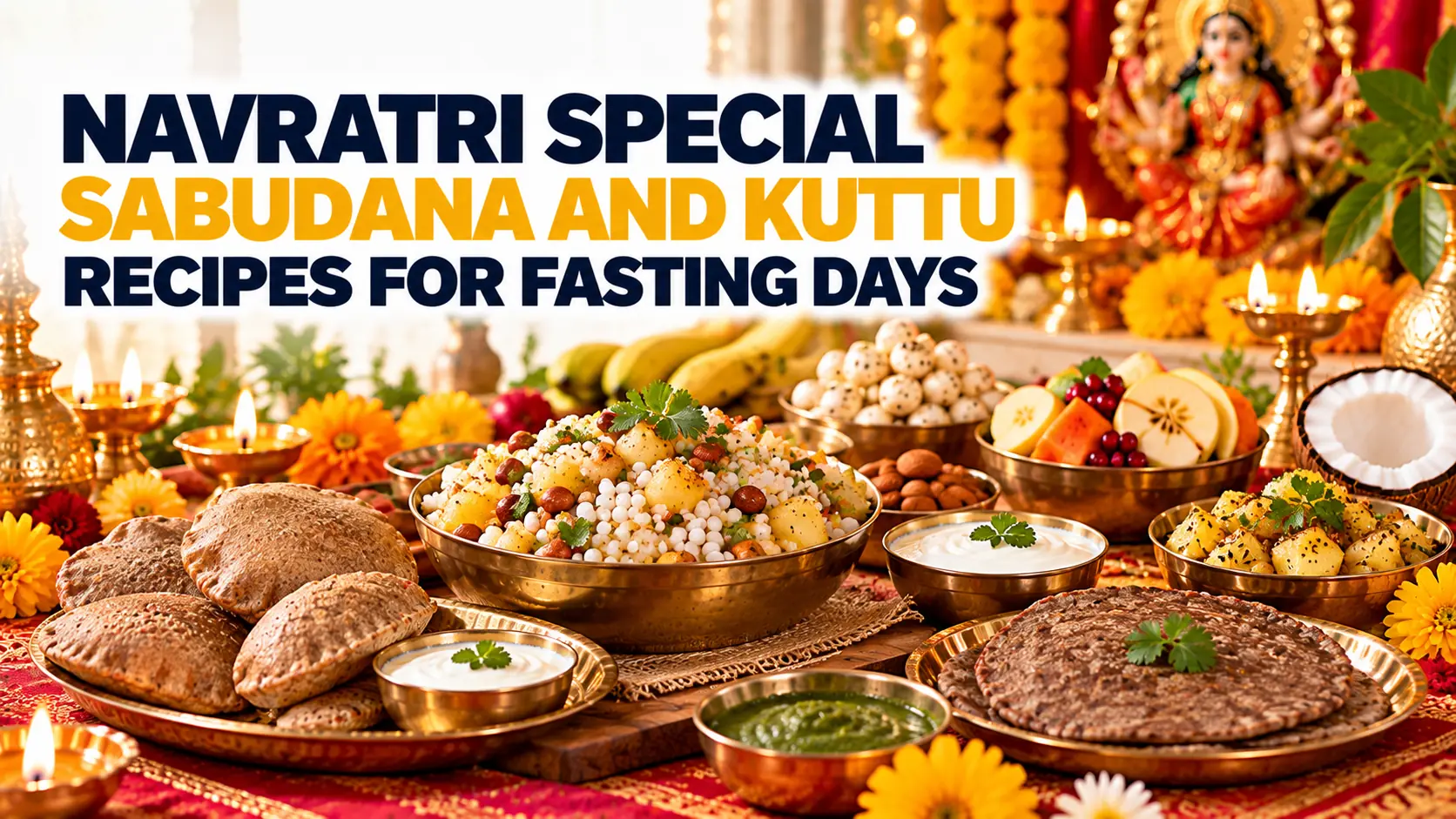
Sabudana provides 351 kilocalories and 87 grams of carbohydrate per 100 grams, with only 0.2 grams of protein, according to PharmEasy. Kuttu atta has a shelf life of about three months, according to Policy Circle, and contaminated buckwheat flour sent roughly 150 to 200 people to hospital in north-west Delhi on September 24, 2025, as reported by The Tribune. The two ingredients dominate the Navratri kitchen, and each needs more care than most cooks give them.
Sharad Navratri 2026 runs from October 11 to October 19. This guide goes beyond the basic khichdi and cheela with eight recipes built on sabudana and kuttu: vada, kheer, thalipeeth, papad, puri, pakora, dosa, and halwa. It also covers the technique that decides success (soaking and dough handling), how to cut oil, and how to buy and store kuttu flour safely.
Eight Recipes at a Glance
| Recipe | Base | Method | Active Time | Protein Boost |
|---|---|---|---|---|
| Sabudana vada | Sabudana, potato, peanuts | Air-fry or shallow-fry | 25 min | Peanuts, curd chutney |
| Sabudana kheer | Sabudana, milk | Simmer | 25 min | Milk, nuts |
| Sabudana thalipeeth | Sabudana, potato, peanuts | Pan-cook | 20 min | Peanut powder |
| Sabudana papad | Soaked sabudana, cumin | Steam, sun-dry | Prep ahead | Serve with curd |
| Kuttu puri | Kuttu flour, potato | Shallow-fry | 20 min | Curd or paneer sabzi |
| Kuttu pakora | Kuttu flour, vegetables | Air-fry | 20 min | Curd dip |
| Kuttu dosa | Kuttu flour, curd | Pan-cook | 15 min | Curd, peanut chutney |
| Kuttu halwa | Kuttu flour, ghee, milk | Roast, simmer | 20 min | Milk, nuts |
Sabudana Basics: Soaking, Draining, and Types
Sabudana, or tapioca pearls, comes in small and large sizes. Small pearls soak faster and work in khichdi and kheer, while large pearls suit vada and thalipeeth. Rinse until the water runs clear, soak with just enough water to cover for 4 to 6 hours, and drain thoroughly. Rest the drained pearls for 20 minutes. If they are still hard in the centre, sprinkle a few drops of water and rest again. Over-soaking creates a mushy mass that cannot hold shape.
PharmEasy cautions that sabudana should be soaked and cooked properly and that people with thyroid concerns should be careful, because it contains compounds that may affect iodine use. It is also low in protein, fibre, calcium, and iron, so it works best as part of a meal that includes peanuts, curd, vegetables, or paneer. For more fasting ideas, our vegetarian recipes guide has protein-forward dishes that can be adapted.
Sabudana Recipes
Sabudana vada
Mix 1 cup of soaked sabudana with 2 boiled and mashed potatoes, a handful of crushed roasted peanuts, chopped green chilli, cumin, sendha namak, and coriander. Shape into small patties. Brush with a little ghee and air-fry at 180 degrees Celsius for about 12 minutes, turning once, or shallow-fry in ghee for 3 minutes each side. If the mixture is loose, add a spoon of singhara flour to bind it. Serve with curd and coriander chutney. Air-frying gives the crunch with far less oil, and our air fryer recipes guide explains how to adjust timing.
Sabudana kheer
Rinse and soak 1/4 cup of small sabudana for 2 hours. Boil 2 cups of milk, add the drained pearls, and simmer on low heat, stirring often, for about 15 minutes until the pearls turn translucent. Add sugar or jaggery, cardamom, and chopped nuts. Cool slightly before serving, since the kheer thickens as it stands. It is a calorie-dense sweet, so keep portions small if you are watching weight.
Sabudana thalipeeth
Combine soaked sabudana, boiled potato, crushed peanuts, green chilli, cumin, and sendha namak into a soft dough. Pat into flat discs on an oiled sheet or banana leaf, make a small hole in the centre, and cook on a hot pan with ghee until golden on both sides. It is a Maharashtrian classic and works well as a tiffin dish.
Sabudana papad
Cook 1/2 cup of sabudana with 3 cups of water until translucent, add cumin and rock salt, and spoon small circles onto a plastic sheet. Dry in strong sun for a day or two. Fry or roast before eating. It takes planning, so make it before Navratri begins and store it in an airtight jar.
Kuttu Basics: Fresh Flour, Binding, and Rolling
Kuttu flour is made from buckwheat and contains no gluten, so dough does not stretch the way wheat dough does. Bind it with boiled and mashed potato (about one potato per cup of flour), or a little curd, and add sendha namak. Knead gently into a soft dough, rest for 10 minutes, and roll between two oiled sheets or on a lightly floured surface using kuttu flour for dusting. Cook on a hot tawa and press lightly to puff.
Buy and store it safely
Policy Circle notes that kuttu flour has a shelf life of barely three months and that retailers sometimes mix stale flour with fresh. After the Delhi incident, authorities urged residents to buy from reliable stores and check labelling, as The Tribune reported. Buy small packs with a clear packing date from a store with high turnover, smell the flour before use (it should smell mildly nutty, not sour or musty), store it in a cool, dry, airtight container, and use it within a week or two. Stop eating and seek medical help if vomiting or stomach pain follows a kuttu meal.
Kuttu Recipes
Kuttu puri
Mix 1 cup of kuttu flour with 1 boiled and mashed potato, sendha namak, and a little carom seed if your tradition allows. Knead into a soft dough, roll small circles between oiled sheets, and fry in hot oil or ghee for about 30 seconds per side until puffed. Serve with a pumpkin or potato sabzi and curd. To cut oil, drain on paper towels.
Kuttu pakora
Make a thick batter with kuttu flour, water, sendha namak, green chilli, ginger, and chopped vegetables such as lauki or potato slices. Spoon into an air-fryer basket brushed with ghee and cook at 180 degrees Celsius for 12 to 15 minutes, turning once. Serve with a curd dip.
Kuttu dosa
Whisk 1 cup of kuttu flour with 1/2 cup of curd and enough water to make a pouring batter. Add rock salt and cumin, rest for 10 minutes, and pour onto a hot greased pan. Spread thin and cook until crisp. Fill with spiced mashed potato or serve with peanut chutney.
Kuttu halwa
Roast 1/4 cup of kuttu flour in 3 tablespoons of ghee on low heat for about 8 minutes until it smells nutty. Add 1 cup of warm milk or water slowly while stirring, then sweeten with sugar or jaggery and add cardamom and chopped almonds. Cook until thick. Serve warm in small portions.
Cut Oil and Add Protein
Manipal Cigna’s Navratri guide warns that fried foods such as sabudana vada and pakoras cause weight gain and recommends baking, grilling, or air-frying instead, and pairing sabudana with protein or fibre. Practical changes include using a non-stick pan with a teaspoon of ghee, air-frying vada and pakoras, adding crushed peanuts and curd to every sabudana dish, and keeping fried items to one a day. If you are planning meals for the full nine days, our weekly meal planning guide shows how to batch prep ingredients without wasting food.
Serving Ideas and Meal Planning
Pair a starch dish with a protein and a fibre source. Kuttu puri with pumpkin sabzi and curd makes a full meal. Sabudana vada with a cucumber raita and fruit works for dinner. Kuttu dosa with peanut chutney suits breakfast. Sabudana kheer or kuttu halwa can finish the meal, or be saved for Ashtami or Navami. Spread rich dishes across the nine days and balance them with fruit, coconut water, and buttermilk.