
Sharad Navratri 2026 begins on Sunday, October 11, and runs for nine nights to October 19, with Dussehra following on Tuesday, October 20. Millions of devotees will fast for some or all of those days, and thousands will do it for the first time. The most common first-timer mistakes are not religious. They are practical: skipping water, living on fried snacks, and buying kuttu flour from an unreliable source.
On September 24, 2025, around 150 to 200 people in north-west Delhi fell ill after eating kuttu atta during the Navratri fast, according to reports by The Tribune. This guide explains Navratri fasting rules in plain language: what the fast is, what you can and cannot eat, how to build a day of meals that keeps you energised, who should not fast, and how to break the fast safely.
What Navratri Fasting Means
Navratri, or nine nights, honours the goddess Durga in her nine forms. Fasting during these days is an act of devotion, discipline, and purification. It is not compulsory and its form is personal: some families fast for all nine days, others on the first and last days, and many only on Ashtami and Navami. The common thread is satvik eating, which means simple, freshly cooked vegetarian food without onion, garlic, grains, and heavy spices.
Because customs differ widely, treat any rulebook as a starting point. Gujarati households may eat sabudana and sweet potatoes, Maharashtrian homes may eat varai (barnyard millet), and Bengali families observe Durga Puja with a different rhythm. When in doubt, follow your family’s practice, and check with an elder or priest if you are unsure.
Types of Navratri Fast
| Type | What You Eat | Who It Suits | Risk |
|---|---|---|---|
| Nirjala | No food or water | Rare, experienced devotees only | Dehydration, dizziness; not recommended without medical advice |
| Phalahar | Fruit, milk, nuts, and fasting-friendly foods | Most beginners | Low if balanced |
| Ekahar (single meal) | One satvik meal plus fruit and milk | Working adults with stable health | Low energy if meal is carb-heavy |
| Satvik diet (no strict fast) | Regular vegetarian meals without onion, garlic, and grains | Elders, patients, students | Minimal |
If this is your first Navratri fast, start with phalahar or a satvik diet. You can always increase strictness in later years once you know how your body responds.
Foods You Can Eat During Navratri
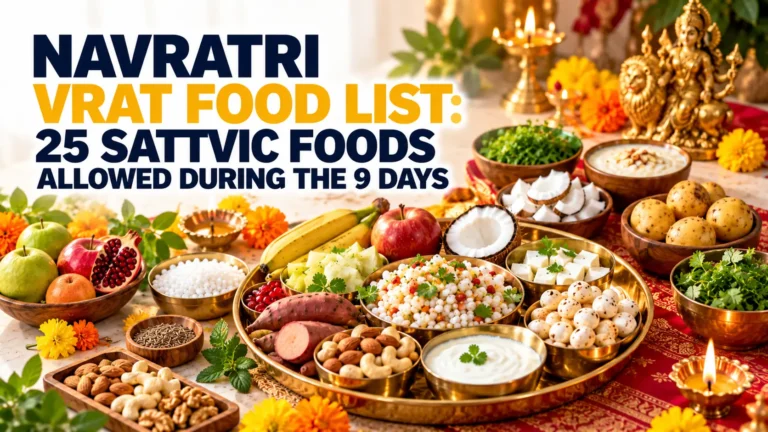
The satvik navratri diet is built around four groups: fruits and vegetables, dairy, fasting flours and starches, and nuts and seeds. Apollo Hospitals’ fasting guidance lists fruits such as banana, apple, papaya, and grapes, juices such as lauki, amla, and coconut water, and permitted items including fasting rice, buckwheat roti, yogurt, pumpkin, sweet potatoes, and water chestnut flour. For more detail on the full allowed list, see our guide to the Navratri vrat food list, and for practical meals see easy Navratri vrat recipes.
| Food Group | Commonly Allowed | Notes |
|---|---|---|
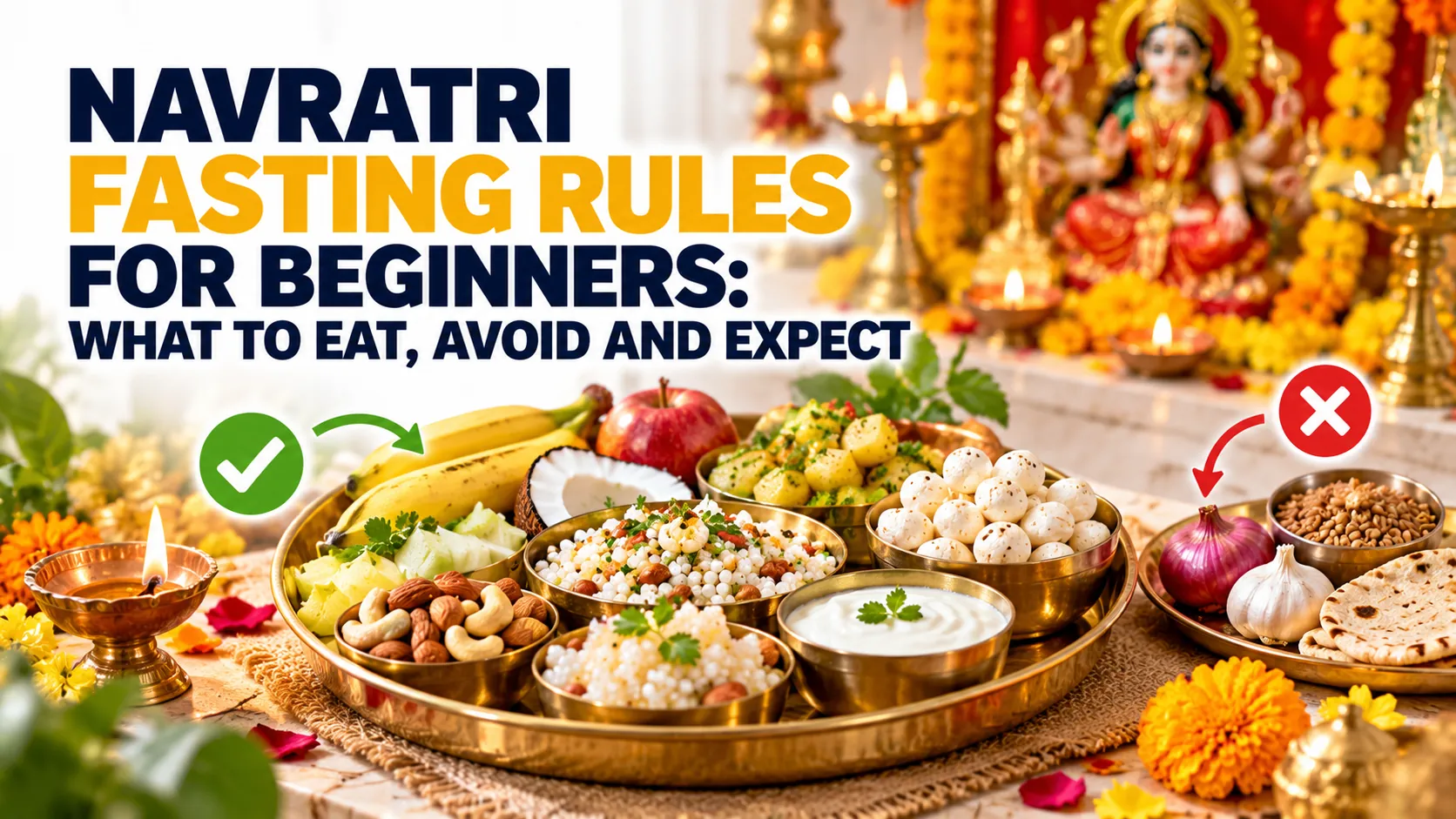
| Fruits and vegetables | Banana, apple, papaya, pomegranate, potato, sweet potato, pumpkin, lauki, cucumber | Fresh and seasonal; avoid onion and garlic |
| Dairy | Milk, curd, paneer, buttermilk, ghee | Useful for protein and satiety |
| Flours and starches | Kuttu (buckwheat), singhara (water chestnut), rajgira (amaranth), sabudana (tapioca pearls), samak rice (barnyard millet) | Buy from trusted sources and check freshness |
| Nuts and seeds | Almonds, peanuts, makhana, walnuts, raisins, watermelon seeds | Good energy and protein |
| Seasoning | Sendha namak (rock salt), cumin, black pepper, green chilli, ginger, coriander | Regular salt is avoided in most households |
Foods to Avoid During Navratri
The usual list of foods avoided includes wheat, rice, and other cereals, pulses, onion, garlic, meat, fish, eggs, alcohol, and ordinary table salt. Packaged items with unclear ingredients or refined flour are best skipped. Many households also avoid tea and coffee on strict days, though practices vary.
Apollo Hospitals’ guidance adds a health caution. Heavy fried foods, large portions, and too much potato should be limited, and boiled, steamed, or air-fried options are better. The danger of a fasting-day diet made of fried kuttu pakoras, aloo chips, and sweets is that it delivers many calories and little protein, leaving you tired and bloated by day four.
A Sample Beginner Day
A balanced day for a first-time phalahar faster might begin with warm water and a handful of soaked almonds, then a glass of milk or a banana. At midday, eat a bowl of curd with cucumber and roasted makhana, followed by a small kuttu or singhara roti with a pumpkin or lauki sabzi. In the afternoon, have fruit, coconut water, or a handful of nuts. Dinner can be sabudana khichdi made with peanuts, or samak rice with curd and a vegetable. Drink water, lemon water, or buttermilk between meals. For light between-meal options, browse these healthy snack recipes, and use a weekly meal plan to avoid last-minute fried food.
Apollo’s phased approach is useful for readers who want a gentler structure: fruits and light juices on days 1 to 3, one traditional Navratri meal plus milk, buttermilk, and juices on days 4 to 6, and the full traditional diet on days 7 to 9. This ramps the digestive system up and down rather than shocking it.
Kuttu Flour Safety: A Rule Beginners Rarely Hear
Kuttu atta spoils quickly. A Policy Circle analysis notes it has a shelf life of barely three months, and that retailers sometimes mix stale flour with fresh. The Delhi outbreak of September 2025 sent roughly 150 to 200 people to hospital, according to The Tribune, and authorities urged residents to buy from reliable stores and check labelling. Uttarakhand’s food regulator also raided about 1,500 shops over suspected buckwheat flour adulteration in 2025, as reported by The Week.
To reduce risk, buy small quantities from a store with high turnover, check the packaging date, smell the flour for any sourness, and use it within a few days. Discard flour with a musty smell or off colour, and stop eating immediately and seek medical advice if vomiting or stomach pain appears after a kuttu meal.
Who Should Not Fast, or Should Ask a Doctor First
Fasting is inappropriate or risky for some people. Anyone with diabetes, high blood pressure, heart or kidney disease, a history of eating disorders, or who takes regular medication should consult a physician before fasting, as Apollo Hospitals advises for diabetes and hypertension. Pregnant and breastfeeding women, children, teenagers, and older adults also need medical guidance. If you feel dizzy, faint, shaky, or confused, eat and drink something and seek help. Devotion does not require harm, and most traditions explicitly allow adjustment for health.
Our overview of intermittent fasting benefits explains the general science of fasting, which differs from religious fasting in important ways, including timing and the foods allowed.
How to Break the Fast Safely
A large, oily meal after hours of eating little is hard on digestion, a topic our explainer on the gut and digestion link covers well. Apollo advises starting with light, easily digestible food in small portions. Begin with water or coconut water, add fruit or curd, and then move to a regular meal. On Dussehra, October 20, the fast ends with a regular meal, and many families prepare a festive menu. Ease into it, particularly after nine days of restricted eating.