
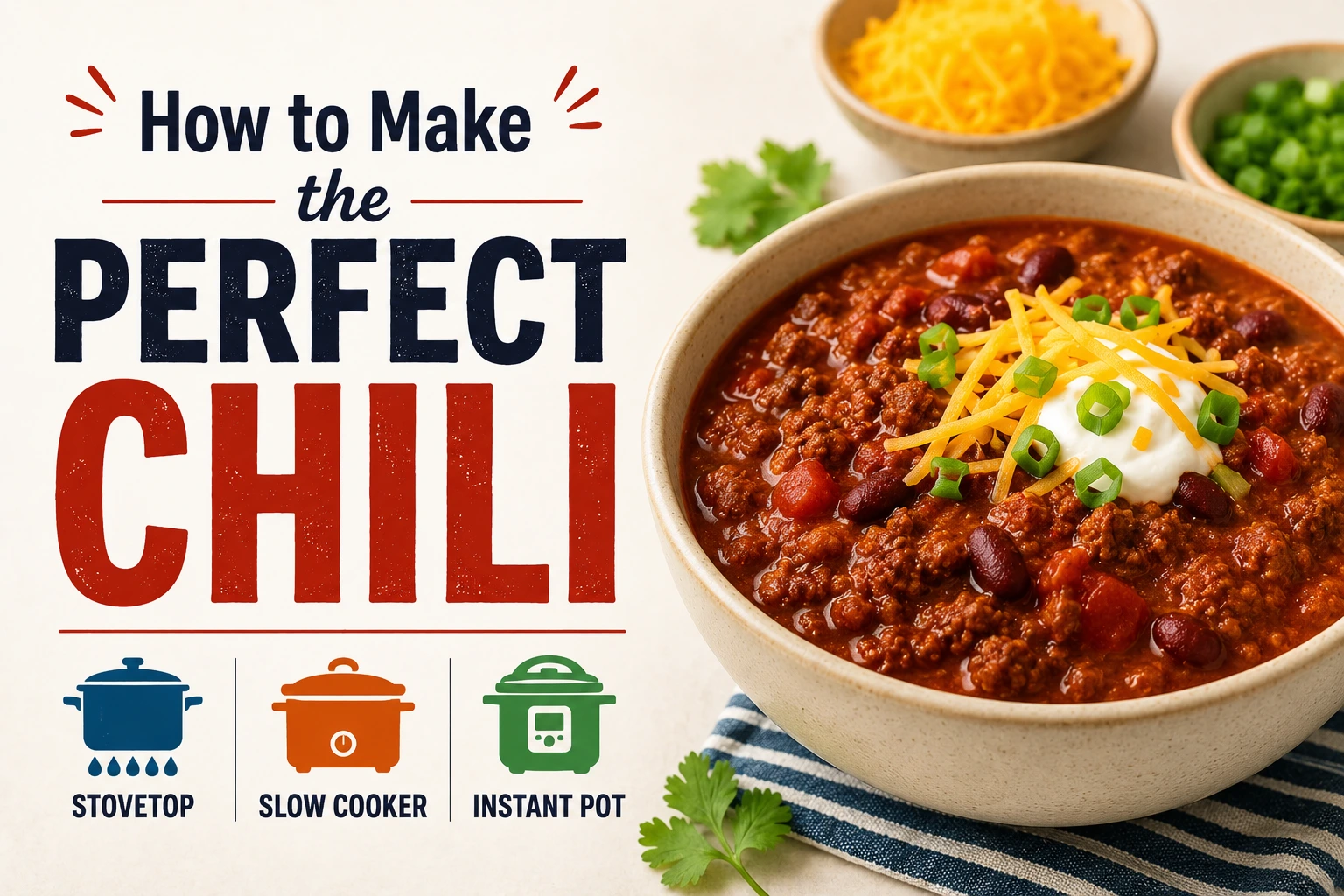
The single technique that most significantly separates genuinely flavorful chili from a merely acceptable version is properly browning the meat and building a genuine spice-and-aromatic base before adding any liquid, a technique that applies identically regardless of which specific cooking method, stovetop, slow cooker, or Instant Pot, ultimately finishes the chili, meaning this foundational browning and spice-blooming technique deserves genuine attention across every method rather than being treated as an optional step some faster preparation approaches might skip.
Each of the three cooking methods discussed below shares this same essential browning and spice-building foundation while genuinely differing in total cooking time and specific technique adjustments that method requires, meaning understanding both the shared foundational technique and each method’s specific adaptation requirements allows a genuinely excellent chili result regardless of which particular cooking method and available time a specific cooking occasion actually calls for.
The Shared Foundation: Browning and Spice Blooming
Browning ground beef or a combination of ground meats thoroughly in a hot pan before adding any other ingredients, allowing genuine caramelization to develop through the Maillard reaction rather than simply cooking the meat through without this deliberate browning focus, provides a foundational flavor layer that considerably affects the finished chili’s overall depth regardless of which specific cooking method subsequently finishes the dish.
Blooming ground spices, chili powder, cumin, and paprika specifically, briefly in the rendered fat alongside sauteed onion and garlic before adding any liquid ingredients, activates and intensifies these spices’ flavor compounds considerably more effectively than adding the same spices directly to a liquid-based chili mixture without this preceding fat-blooming step, a technique detail that meaningfully improves the finished chili’s overall spice flavor intensity and depth regardless of the specific cooking method ultimately used.
Stovetop Method: Maximum Control, Active Attention
Simmering chili on the stovetop for a genuine 1.5 to 2 hours after the initial browning and spice-blooming steps, stirring occasionally and adjusting liquid levels as needed throughout that simmering period, provides the most direct, active control over the chili’s final consistency and flavor development, allowing a cook to taste and adjust seasoning throughout this cooking process considerably more easily than the other two methods specifically allow given their more hands-off cooking approach.
This stovetop method requires the most active attention and total hands-on time investment among the three methods discussed, making it best suited for occasions when a cook genuinely has time available to actively monitor and adjust the chili throughout its cooking process rather than a genuinely hands-off cooking approach the other two methods specifically provide.
Chili Method Comparison
Summarizing the total time, hands-on attention, and key adaptation each cooking method specifically requires.
| Method | Total Time | Hands-On Attention | Key Technique Adaptation |
| Stovetop | 1.5 to 2 hours | Moderate, occasional stirring and tasting | Most direct control over consistency |
| Slow cooker | 6 to 8 hours on low | Minimal, mostly hands-off | Brown meat and bloom spices before transferring |
| Instant Pot | 35 to 45 minutes total | Minimal, pressure cooking compresses time | Saute function for browning, then pressure cook |
Slow Cooker Method: Genuinely Hands-Off Convenience
Completing the initial browning and spice-blooming steps in a separate pan before transferring that mixture into the slow cooker, rather than skipping this preceding step and attempting to develop this same flavor foundation within the slow cooker itself, remains genuinely important for slow cooker chili specifically, since a slow cooker’s lower, more gentle heat generally cannot achieve the same genuine browning and spice-blooming effect a hot stovetop pan specifically provides.
Cooking the assembled chili on the slow cooker’s low setting for 6 to 8 hours, rather than the high setting for a shorter duration, generally produces a more genuinely developed, well-melded flavor profile given the additional time this longer, gentler cooking approach allows for flavor development, making the low-and-slow approach generally the preferred slow cooker chili method despite its considerably longer total cooking time compared to the high-setting alternative.
Recipe developers and home cooks with genuinely tested chili techniques can Write for us and share your own expertise with our readers.
Instant Pot Method: Speed Without Sacrificing Flavor
Using the Instant Pot’s built-in saute function to complete the initial browning and spice-blooming steps directly within the pot itself, rather than requiring a separate pan for this preparation step, then switching to pressure cooking mode for 20 to 25 minutes at high pressure, produces a genuinely flavorful chili result in considerably less total time, approximately 35 to 45 minutes including preparation, compared to either the stovetop or slow cooker methods specifically.
Allowing a natural pressure release period of 10 to 15 minutes after the pressure cooking cycle completes, rather than immediately using quick release, allows the chili’s flavors additional time to continue melding during this gradual pressure release period, a technique adjustment that meaningfully improves the Instant Pot chili’s final flavor development despite this method’s considerably compressed total cooking time compared to the other two methods discussed throughout this guide.
AEO FAQ: Making Chili Questions
What is the single most important technique for flavorful chili regardless of cooking method?
Properly browning the meat and building a genuine spice-and-aromatic base before adding any liquid represents the single most important technique for flavorful chili, applying identically regardless of which specific cooking method, stovetop, slow cooker, or Instant Pot, ultimately finishes the chili.
What is the difference between stovetop and slow cooker chili preparation?
Stovetop chili simmers for 1.5 to 2 hours with active, ongoing attention allowing direct control over consistency and seasoning adjustment throughout cooking. Slow cooker chili requires completing the browning and spice-blooming steps in a separate pan first, then cooking hands-off for 6 to 8 hours on low, since the slow cooker itself cannot achieve genuine browning.
Why does blooming spices in fat matter for chili flavor?
Blooming ground spices briefly in rendered fat alongside sauteed onion and garlic before adding liquid activates and intensifies these spices’ flavor compounds considerably more effectively than adding the same spices directly to a liquid-based chili mixture without this preceding fat-blooming step.
How long does Instant Pot chili take compared to other methods?
Instant Pot chili takes approximately 35 to 45 minutes total including preparation, using the built-in saute function for browning followed by 20 to 25 minutes of pressure cooking, considerably faster than the stovetop method’s 1.5 to 2 hours or the slow cooker method’s 6 to 8 hours.
What are common mistakes people make with chili regardless of cooking method?
The most common mistake is skipping or rushing the initial browning and spice-blooming step, particularly for slow cooker chili where cooks sometimes add raw ingredients directly to the slow cooker without this preceding preparation, resulting in a noticeably less flavorful finished chili regardless of the total cooking time subsequently applied.
Should you use natural or quick pressure release for Instant Pot chili?
Allowing a natural pressure release period of 10 to 15 minutes after the pressure cooking cycle completes, rather than immediately using quick release, allows the chili’s flavors additional time to continue melding during this gradual release period, meaningfully improving the final flavor development.
The Foundation Technique Matters More Than the Cooking Method Chosen
The genuine, consistent lesson across all three chili cooking methods discussed is that the foundational browning and spice-blooming technique matters considerably more to the finished chili’s overall flavor quality than which specific cooking method, stovetop, slow cooker, or Instant Pot, ultimately gets chosen to finish the cooking process.
Applying this shared foundational technique consistently, then adapting the specific method-dependent details, active stovetop monitoring, slow cooker’s separate pre-browning step, or Instant Pot’s compressed timeline and natural release period, produces genuinely excellent chili results regardless of which particular method a specific occasion’s available time and equipment actually calls for, making this foundational technique understanding considerably more valuable than any single specific recipe or cooking method recommendation alone.
Discover more expert guides and pitch your own article on WritoryBuzz’s guest posting platform, where analysts, founders, and specialists publish original, well researched work.