

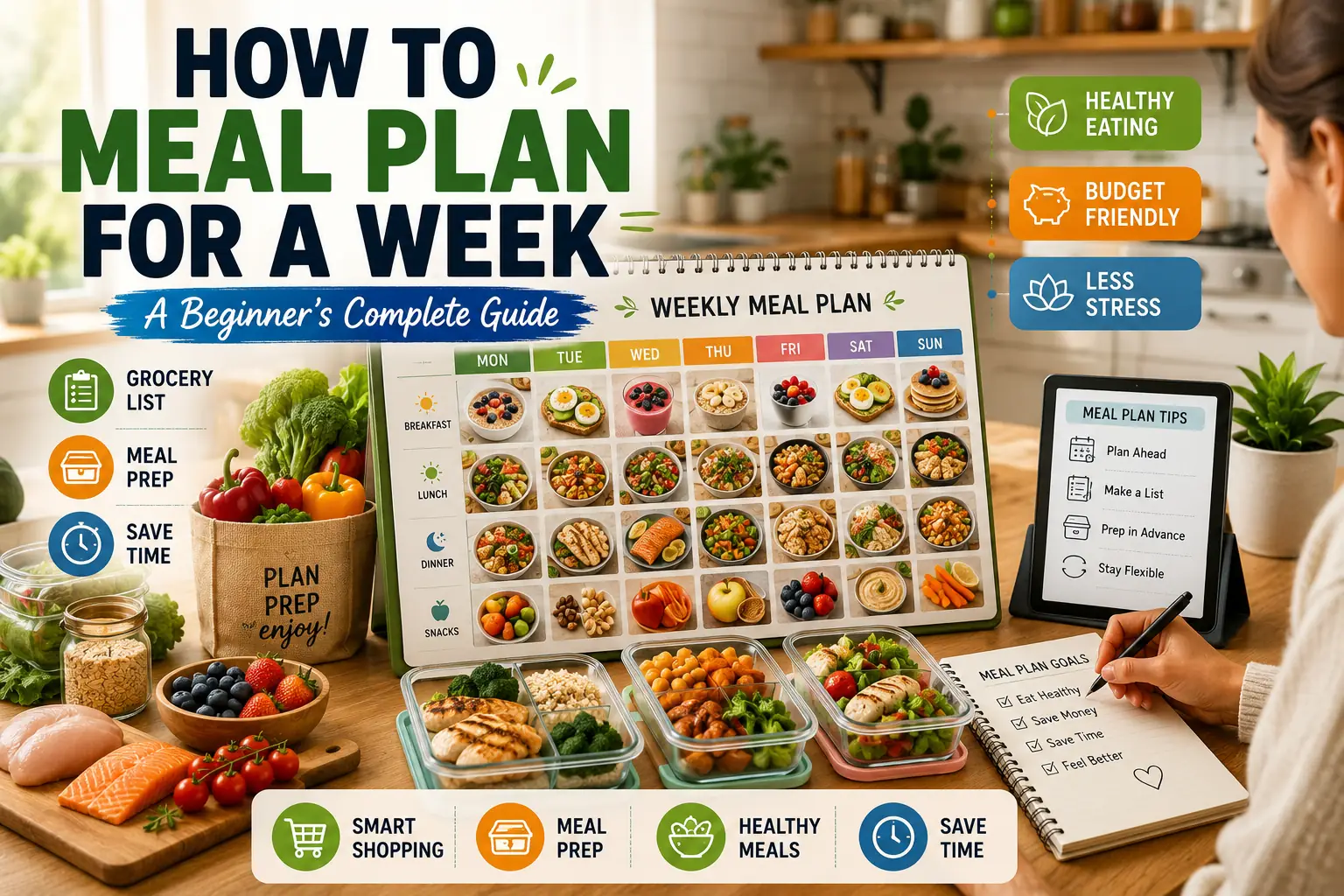
The average household in the UK throws away roughly £800 worth of food per year. The average person makes over 200 food decisions per day. Most daily stress around meals comes not from cooking itself but from the repeated decision of what to cook when time and energy are already depleted.
Weekly meal planning addresses all three problems simultaneously: it reduces food waste by buying what you will use, it collapses two hundred daily decisions into one weekly planning session, and it reduces the decision fatigue that makes takeaway the default at the end of a long day.
This guide is built for people who have never systematically planned meals before. It covers how to set up a structure that works for your household, how to build your first weekly plan, and how to prep in a way that actually saves time rather than creating more work.
Step 1: Decide What You Actually Need to Plan
Not every meal needs to be planned. Most households only need dinner planned reliably; breakfasts and lunches are either habitual (the same things most days) or flexible enough to handle themselves. Start with dinner planning only and add other meals if the system works and you want more structure.
Decide how many home-cooked dinners per week is realistic. If your household typically eats out twice a week and has one night of leftovers, you need five planned dinners. Planning seven and consistently not achieving it builds failure into the system. Start with a number that is achievable without the plan running perfectly.
Step 2: Build a Recipe Bank Before You Plan
The hardest part of meal planning for beginners is not having enough recipes you know how to cook reliably. Before your first planning session, write down 20 dinners your household enjoys and you can make competently. This does not need to be ambitious cooking; it needs to be meals that actually happen.
Organise the list loosely by cooking time: quick meals (under 30 minutes), standard meals (30 to 60 minutes), and weekend meals (over an hour, or more complex). Your weeknight plan should draw mostly from the quick and standard categories. The weekend is for the longer recipes.
Step 3: Plan Around Your Week’s Reality
A meal plan that ignores the actual shape of your week fails by Wednesday. Map the week before planning: which nights are late, which nights have energy for cooking, which nights have activities that mean dinner needs to be at an unusual time.
Late workday nights get the quickest meals. Evenings with children’s activities get something that can be made in 20 minutes or prepared ahead. The one evening a week with time and energy gets the more involved recipe you actually want to cook.
| Night Type | Recipe Category | Examples |
|---|---|---|
| Late / low energy | Under 20 minutes | Pasta aglio e olio, fried rice, beans on toast, omelette |
| Standard evening | 30 to 45 minutes | Stir fry, chicken tray bake, dal, soup with bread |
| Weekend / relaxed | 45 minutes or more | Roast chicken, slow cooker curry, homemade pizza, risotto |
| Leftovers night | Planned reuse of previous meal | Roast chicken becomes chicken fried rice next day |
Step 4: Write a Shopping List That Actually Works
The most common shopping list mistake is writing ingredients by meal rather than by category. Walking a supermarket by meal means zigzagging between sections repeatedly. Write your list organised by supermarket section: produce, meat and fish, dairy, dry goods, tinned goods, frozen. This cuts shopping time by 30 to 40%.
Check what you already have before writing the list. The assumption that you are out of something you actually have is one of the main drivers of food waste. A two-minute fridge and cupboard check before writing the list pays for itself every week.
Add a small buffer category: two or three ingredients that allow for a quick flexible meal (pasta, tinned tomatoes, eggs, bread) for the night when the plan does not survive contact with the actual week. This is not failure; it is contingency planning.
Step 5: The Sunday Prep Session
Batch preparation on one day, typically Sunday, is what turns meal planning from theoretical to practical. The prep session does not need to be long. Ninety minutes of focused prep on Sunday makes every weeknight evening faster.
The highest-return prep tasks are: washing and chopping vegetables for the first two or three nights, marinating any proteins that benefit from overnight resting, cooking a large batch of grains (rice, lentils, quinoa) that can be used across multiple meals, and making a sauce or base that goes into two different meals.
One batch cook strategy that experienced meal planners use consistently: cook a large protein (a whole chicken, a kilo of mince, a big batch of chickpeas) on Sunday and plan three meals that use it in different forms across the week. One cook, three meals. The time investment is front-loaded once.
Dealing With the Week When the Plan Fails
The plan will fail some weeks. Someone stays late at work, children are ill, plans change. The response to a failed week determines whether meal planning becomes a habit or a source of guilt.
Treat a disrupted week as data rather than failure. Which nights are consistently hard to stick to the plan? That tells you something about the plan structure, not your character. Adjust the plan rather than trying harder.
One rule that prevents most mid-week abandonment: always plan at least two meals that require almost no effort. If the week goes wrong and Wednesday’s planned meal does not happen, those two easy backup meals mean you still have home-cooked food available without needing the plan to be perfect.
Reducing Food Waste Through Planning
The ingredients most commonly wasted are fresh herbs, half-used vegetables, and dairy products bought for one recipe. The planning solution: buy herbs in pots rather than cut, plan two meals in the same week that use the same vegetable, and plan meals for early in the week that use the most perishable ingredients.
The use-it-up meal at the end of the week is one of the most useful planning habits. Plan a flexible Friday or Sunday meal that uses whatever is left in the fridge: a frittata, a fried rice, a soup, a stir fry. This meal is not on the plan until Wednesday, when you look at what needs using. The skill develops quickly and consistently prevents waste.