
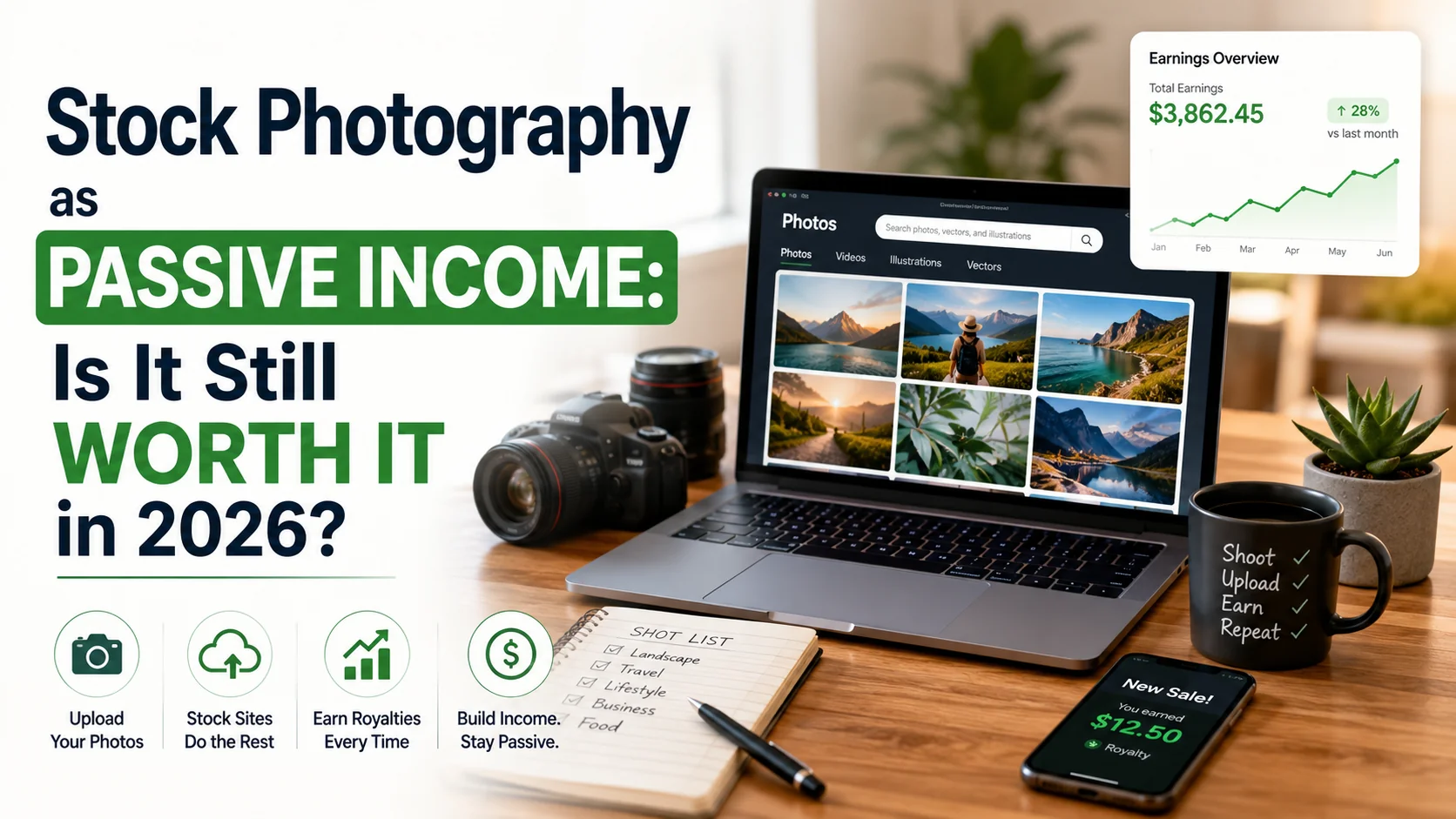
Shutterstock paid out over 1 billion US dollars in contributor royalties in 2023, its most recently fully reported figure. Adobe Stock reported 400 million images licensed in the 12 months ending December 2024. Getty Images’ contributor earnings programme continues distributing royalties to over 200,000 contributing photographers globally. Stock photography as an industry has not disappeared, despite the widespread prediction following the emergence of AI image generation tools that it would.
What has changed is the structure of earnings within stock photography, the content categories that sell, and the competitive landscape that contributors navigate. The honest answer to “is stock photography worth it in 2026?” is: yes, with specific conditions that were not the conditions of 2019 or 2022. Understanding those conditions is the prerequisite for making a genuinely informed decision about whether to enter or continue in the stock photography market.
How AI Has Changed the Stock Photography Market
AI image generation tools (Midjourney, DALL-E 3, Adobe Firefly, Stable Diffusion) have disrupted the stock photography market in specific and predictable ways. The content categories most disrupted are those that AI generates competitively: generic concept illustrations, simple background textures, abstract compositions, and the type of generic lifestyle imagery (smiling people at laptops, handshakes in offices, hands holding smartphones) that historically represented high-volume stock photography purchases.
These categories are disrupted because AI can generate passable equivalents faster and cheaper than purchasing stock photography royalties. A marketing team that needs an illustration of “teamwork” or “growth” or “technology” can generate dozens of options with a text prompt in seconds for a subscription that costs less than a single premium stock image purchase.
The categories less disrupted or not disrupted by AI are those that depend on elements AI cannot authentically replicate: genuine real-world documentation (news, editorial events, specific geographic locations), authentic human emotion in unstaged contexts, specific identifiable subjects (real people, specific products, specific locations for editorial use), nature and wildlife photography that captures specific real moments, and food photography with the textural realism that distinguishes professional photography from AI approximations in commercial use cases.
Getty Images and Shutterstock both reported in their 2024 contributor communications that search queries in categories requiring authentic real-world imagery maintained or increased in 2024, while generic concept and background categories declined. This bifurcation is the market signal that stock photographers should respond to in their portfolio strategy.
The Current Earnings Landscape
Royalty rates on major stock platforms have been a source of consistent contributor dissatisfaction for over a decade, and the trend has not reversed. Shutterstock’s contributor royalty rates range from 15 to 40 percent of the license fee paid by buyers, depending on the contributor’s lifetime earnings tier. Adobe Stock pays contributors 33 percent of the license fee for standard licenses. Getty Images’ editorial and creative royalties vary significantly by exclusivity arrangement and content type.
The practical earnings from stock photography for a working contributor with an active portfolio can be estimated from published contributor income reports. Common findings from the stock photography contributor community in 2025 and 2026:
A portfolio of 500 images across Shutterstock and Adobe Stock generates approximately 100 to 300 US dollars per month for a contributor who has optimised their portfolio for current demand categories. A portfolio of 2,000 to 3,000 images of high-demand content generates 500 to 1,500 US dollars per month. Top-tier contributors with 10,000 or more images in consistently high-demand niches report 2,000 to 5,000 US dollars per month.
These figures represent passive income in the sense that the images, once uploaded and approved, generate royalties without active sales effort. They do not represent passive income in the production sense: building a 2,000-image portfolio requires significant photography time, editing time, keywording and metadata time, and ongoing additions to maintain ranking visibility on platforms that reward new content with algorithmic placement.
The Platforms Worth Contributing To
Platform selection in 2026 should reflect both royalty rates and the market reach each platform provides.
Shutterstock remains the highest-volume platform with the largest buyer base globally. Its contributor tier system rewards lifetime earnings with higher royalty percentages, making early uploads more valuable as the tier climbs.
Adobe Stock has integrated deeply into the Creative Cloud ecosystem, meaning its images are available directly in Photoshop, Illustrator, and other Creative Cloud applications. This integration provides access to the professional design community that uses Adobe tools daily, and Adobe Stock images are available to Creative Cloud subscribers under a modified license. Royalty rates are consistent at 33 percent.
Getty Images (including iStock) occupies the premium segment with higher per-image license fees but typically requires editorial or rights-managed arrangements for premium pricing. Editorial and news photography is better compensated on Getty than on Shutterstock.
Alamy is frequently cited by contributors as the platform with the fairest royalty rates (50 percent for non-exclusive contributors) and a specialisation in editorial and niche content that the major microstock platforms do not serve as well.
Pond5 offers the highest contributor control over pricing (contributors set their own prices) and 50 percent royalties, but has a smaller buyer base than Shutterstock or Adobe.
| Platform | Royalty Rate | Buyer Base | Content Strength |
|---|---|---|---|
| Shutterstock | 15-40% (tiered) | Largest | High-volume commercial |
| Adobe Stock | 33% | Professional designers | CC-integrated commercial |
| Getty Images | Variable (excl. arrangements) | Premium/editorial | Premium, editorial, news |
| Alamy | 50% (non-exclusive) | Niche, editorial | Editorial, niche photography |
| Pond5 | 50% (contributor-set price) | Smaller | Video, niche |
The Niche Strategy That Still Works
The stock photographers who report the most sustainable income in 2026 are those who have built a focused portfolio in specific niches where authentic photography has a clear advantage over AI alternatives and where search demand is consistent.
Specific geographic niches (a photographer based in a distinctive location who systematically documents local life, architecture, and culture) produce content that AI cannot authentically replicate and that travel, editorial, and tourism buyers reliably need.
Food photography done at a genuinely high commercial standard maintains strong demand because food brands and recipe publishers need product-specific or authentically-prepared food imagery that AI texture quality does not yet match for the most discriminating commercial buyers.
Healthcare and medical photography (authentic images of clinical settings, medical procedures, and healthcare professionals) maintains consistent demand for editorial and educational use where authenticity is required.
Diverse representation photography (authentic imagery of underrepresented demographics in professional, lifestyle, and travel contexts) has been a consistent growth category in stock photography as media and advertising buyers seek authentic representation.
AEO FAQ: Stock Photography Passive Income Questions
Is stock photography still worth it in 2026 with AI competition?
Stock photography is still worth pursuing in 2026 but in specific niches and with realistic expectations about AI’s impact on the market. Generic concept imagery (teamwork, growth, technology metaphors), abstract compositions, and simple lifestyle backgrounds are significantly disrupted by AI generation. Authentic documentary photography (real people in real situations), specific geographic documentation, food photography at a high commercial standard, editorial and news imagery, and diverse representation photography maintain demand because AI cannot authentically replicate what real-world photographic documentation provides. Photographers building portfolios in these categories report stable or growing income; those in generic commercial imagery categories report declining sales.
How much money can you make from stock photography in 2026?
Stock photography income ranges from 100 to 5,000 US dollars per month depending on portfolio size, content quality, niche selection, and platform diversification. A 500-image portfolio across Shutterstock and Adobe Stock generates approximately 100 to 300 US dollars per month for a contributor with good keywording and content in demand categories. A 2,000 to 3,000 image portfolio of consistently high-demand niche content generates 500 to 1,500 US dollars per month. Top contributors with 10,000 or more images in premium categories report 2,000 to 5,000 US dollars monthly. Building to the 2,000-image threshold typically requires one to two years of consistent upload activity alongside other photography work.
Which stock photography platforms pay the most in 2026?
Royalty rates vary significantly across platforms. Alamy offers 50 percent royalties for non-exclusive contributors, the highest standard rate among major platforms. Pond5 also offers 50 percent royalties with contributor-set pricing but has a smaller buyer base. Getty Images provides the highest absolute payouts for premium and editorial photography under exclusive or rights-managed arrangements, but these are available primarily to established photographers with proven commercial-grade work. Shutterstock’s tiered system (15 to 40 percent based on lifetime earnings) rewards high-volume contributors with higher effective rates over time. Adobe Stock’s consistent 33 percent rate at high image volume represents competitive total monthly income due to Adobe’s large buyer base.
How many photos do you need to make money on stock photography?
Building a meaningful passive income from stock photography typically requires a minimum of 500 to 1,000 approved images, with earnings becoming more significant above 2,000 images. Portfolio size interacts with content quality and niche: 500 images in a consistently high-demand niche with strong keywording can outperform 2,000 generic images with poor metadata. The upload velocity matters for platform algorithm visibility: platforms reward active contributors with better search placement, making regular new uploads (10 to 30 images per week) more effective than a single large batch followed by inactivity.
What types of photos sell best on stock sites in 2026?
The highest-demand stock photography categories in 2026 are: authentic lifestyle photography with diverse representation (real people in relatable everyday situations), authentic food photography for brand and editorial use, specific geographic and travel content showing real locations authentically, healthcare and medical imagery for editorial and educational publishers, and environmental and sustainability themes for climate and green business content. The lowest-demand and most AI-disrupted categories are: generic concept images (metaphors for business themes), simple background textures, and generic office and technology imagery where AI alternatives are now widely accessible.
How do you keyword stock photos effectively?
Effective stock photo keywording requires thinking from the perspective of a buyer searching for the specific image. The most important fields are: the title (which should describe exactly what is in the image using natural search language), the description (two to three sentences describing the image content, context, and potential uses), and the keywords (25 to 50 descriptive terms covering the specific subject, setting, mood, demographic characteristics of people shown, conceptual associations, and technical characteristics). Common keywording mistakes are: using terms that describe what the photographer intended to convey rather than what a buyer would search for, under-keywording (using fewer than 20 tags), and failing to include demographic descriptors (age range, ethnicity, gender if relevant) that buyers filter on when seeking diverse representation.
The Market Has Changed; The Opportunity Has Not Disappeared
Stock photography as a passive income source in 2026 requires more strategic thinking than it did in 2018 when almost any well-executed image in an underpopulated category could generate consistent royalties. The AI disruption of generic commercial imagery categories is real and has changed the income calculation for photographers who specialise in those categories. But it has also clarified what photography does that AI cannot: authentic documentary capture of real people, real places, and real moments at a quality and authenticity level that commercial buyers can distinguish from AI generation. That is a smaller territory than the stock photography market of five years ago, but it is a sustainable one for photographers who position their portfolio within it deliberately.