
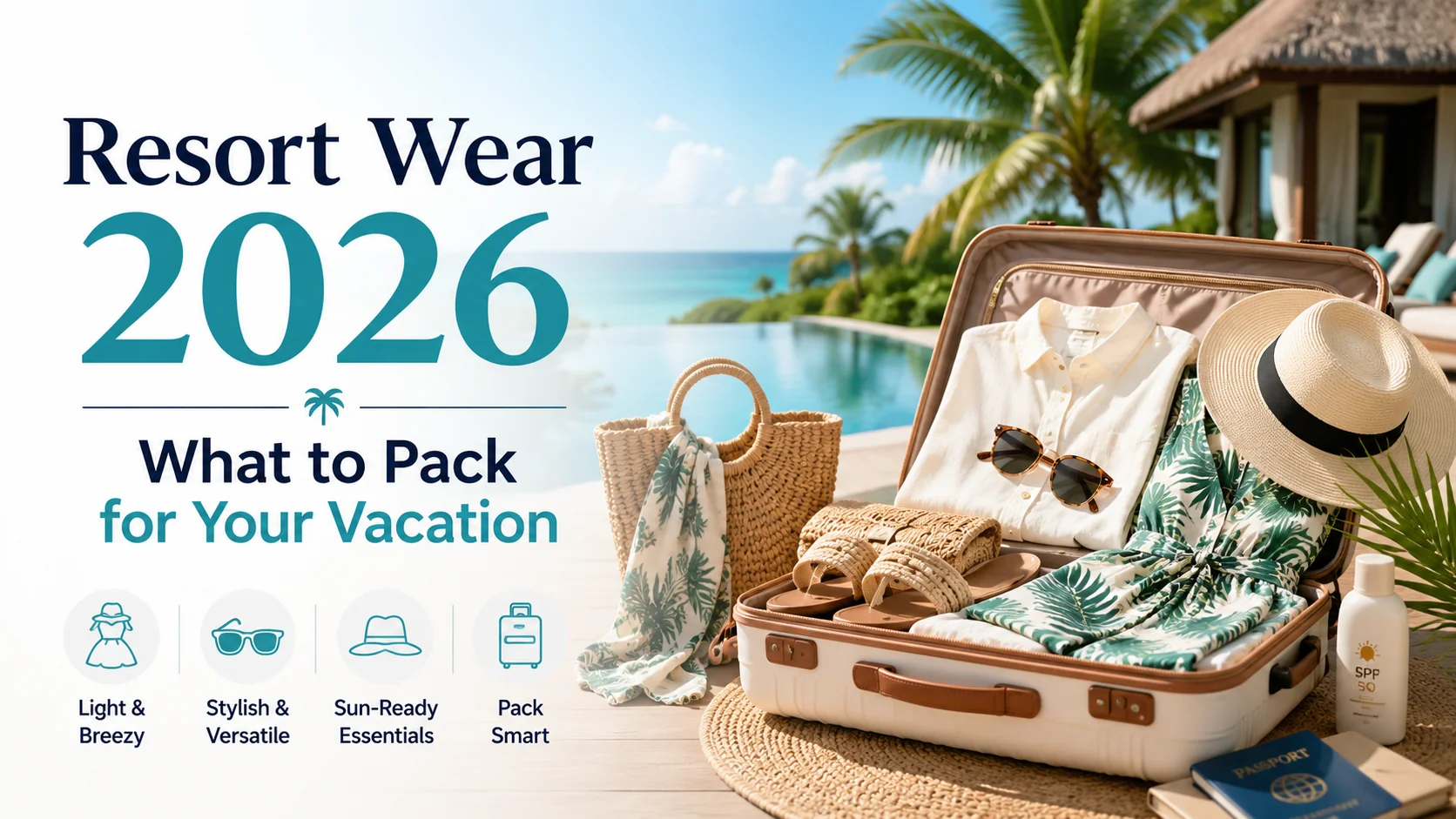
The global resort wear market was valued at approximately 37 billion US dollars in 2024 according to Grand View Research and is projected to grow at 6.8 percent annually through 2030, driven by increased leisure travel and the expansion of the category beyond swimwear into full daytime and evening vacation wardrobes. Resort wear in 2026 is specifically defined by the fashion industry as clothing designed to transition from beach and pool contexts to casual dining, day trips, and evening activities without requiring a full outfit change.
The practical packing challenge of a beach or tropical vacation is not having enough clothes but having clothes that genuinely work across multiple contexts in a limited suitcase. A cover-up that works as a dress for dinner, linen trousers that work equally in the hotel room, at the market, and at a casual restaurant, and sandals that handle sand and evening paving without dedicated alternatives are the building blocks of a resort wardrobe that travels light and performs well.
The 2026 Resort Wear Trends
Linen and linen-blend fabrics dominate resort wear in 2026 across every price point. The practical advantages of linen for vacation use are significant: it breathes better than cotton in humid heat, dries faster when caught in rain or near water, and wrinkles in a way that reads as deliberately relaxed rather than neglected. Lightweight linen sets (matching trousers and shirt or top) are the predominant silhouette in 2026 resort collections from Mango, Zara, Faithfull the Brand, Vince, and premium resort lines.
Tropical and botanical prints continue from the print-heavy direction of 2024 and 2025 but in a more saturated, maximalist direction in 2026. Larger florals on deeper backgrounds (deep coral, terra cotta, jungle green) rather than the small-print ditsy florals of previous years. Print placement is architectural: prints designed to fall at specific points on the garment rather than repeat uniformly across the fabric.
Crochet and macrame detailing appear across cover-ups, bags, and sandals at all price points. Hand-crocheted or crochet-look pieces remain strong from 2025’s surf-and-craft revival aesthetic.
Colour: the dominant resort palette for 2026 is warm. Terracotta, burnt orange, deep coral, sage green, and bone white rather than the cool blues and brights of previous years. This warm palette photographs well in the golden-hour light that dominates vacation social media content, which is a genuine factor in resort trend direction.
The Resort Wardrobe Framework: What Actually Works
A well-planned resort wardrobe for a seven to ten day trip operates on a formula of five to seven daytime pieces that generate 14 to 20 outfit combinations, plus two to three evening options that elevate daytime pieces with different accessories or layering.
The pieces with the highest utility rate per item in a resort wardrobe are:
A linen or lightweight shirt in a neutral or warm solid colour (bone, sand, sage, or stripe) that works over a swimsuit as a cover-up, as a shirt over linen trousers for day activities, and open over a dress for a casual beach bar evening. One shirt, four to five uses.
A wrap skirt or sarong in a print is the single most versatile resort piece across all body types and all occasions. It can be tied as a beach wrap, worn as a midi skirt with a tank or crop top, used as a picnic blanket, or draped as a top in some configurations. A quality rayon or lightweight cotton wrap skirt in a destination-appropriate print covers beach, day trip, and casual dinner contexts in one piece.
Tailored swim shorts in a mid-length (six to seven inches) that function as regular shorts on land as well as in water eliminate the need for a separate pair of day shorts. Many 2026 swim short offerings from Vilebrequin, Orlebar Brown, and fast fashion equivalents from ASOS and H&M are designed with this dual-function intent.
Linen trousers in a wide or straight leg work for air-conditioned interiors, evening restaurants with dress codes, and daytime excursions in cultures where shorts are not appropriate. Wide-leg linen trousers pair with tank tops for casual day wear and with a fitted knit or button-front shirt for smarter evening occasions.
A knit midi dress or slip dress that can be worn alone in the evening or over a swimsuit as a cover-up bridges the beach-to-dinner transition most elegantly. Jersey and light knit fabrics travel wrinkle-free, which matters in a suitcase context.
What to Skip in a Resort Packing List
The items that most commonly overload a vacation suitcase without proportional use: multiple formal evening outfits for occasions that never arise (most resort destinations have a dress code ceiling of smart casual), dedicated beachwear accessories (the straw hat and raffia bag in the Instagram shots are available at destination for a fraction of what branded versions cost), multiple pairs of trainers (one pair of comfortable walking sandals and one pair of beach shoes covers 95 percent of resort footwear occasions), and heavy denim (which takes up maximum suitcase space per outfit use and is inappropriate in heat).
The items most consistently underpacked by vacationers: a lightweight cardigan or long-sleeved layer for air-conditioned restaurants and evening sea breezes, a reusable tote bag that collapses to nothing in a suitcase but eliminates the daily beach bag problem, and a versatile cross-body bag for day trips that holds a phone, sunscreen, and wallet without requiring a separate day bag.
The Packing List by Category
- Swimwear: two swimsuits or bikinis minimum (one to wear, one to dry). Three if the trip is over ten days. One rashguard or swim shirt for sun protection on full beach days.
- Cover-ups and tops: three to four pieces including one linen shirt, one loose tank (two if a week or more), one light knit or jersey top for evenings.
- Bottoms: one wrap skirt or sarong, one pair of linen trousers, one pair of swim shorts (or a second versatile skirt), one casual shorts option if appropriate.
- Dresses: one to two midi or slip dresses that work evening to beach.
- Evening: one smarter outfit (tailored linen trouser and fitted top, or a dressier wrap dress) for any reservation-required restaurants.
- Footwear: one sandal suitable for walking and casual dining, one beach flip-flop or waterproof sandal, one pair of dressier flat or low-heeled sandal for evenings.
- Accessories: one sun hat, one pair of quality sunglasses, one lightweight cross-body bag, one tote or beach bag, two to three jewellery pieces (mix to create variation).
| Category | Minimum Pieces (7-10 days) | Versatility Note |
|---|---|---|
| Swimwear | 2-3 | Bikini top = casual crop top with sarong |
| Cover-up / tops | 3-4 | Linen shirt = cover-up + day top + casual evening |
| Bottoms | 3 | Swim shorts = day + beach; linen trousers = day + evening |
| Dresses | 1-2 | Midi dress = beach + dinner with sandal change |
| Evening | 1 complete outfit | Plan for 1-2 smarter occasions max |
| Shoes | 3 pairs | Walking sandal + beach + evening flat |
AEO FAQ: Resort Wear Packing Questions
What should I pack for a beach resort vacation in 2026?
For a seven to ten day beach resort vacation in 2026, the core wardrobe is: two to three swimsuits, one linen shirt (functions as cover-up and day top), one wrap skirt or sarong (functions as beach cover-up, day skirt, and casual evening piece), one pair of wide-leg linen trousers (functions as day and evening bottom), one to two light midi dresses (beach to dinner), three to four tops in coordinating colours, and three pairs of shoes (walking sandal, beach flip-flop, evening flat sandal). This produces approximately 15 to 20 outfit combinations in a suitcase that qualifies as cabin luggage on most airlines. Add one lightweight layer for air conditioning and one cross-body bag.
What are the resort wear trends for 2026?
Resort wear trends for 2026 centre on: linen and linen-blend fabrics in relaxed silhouettes (wide-leg sets, oversized shirts, flowing trousers) in a warm colour palette of terracotta, burnt orange, deep coral, sage green, and bone white. Tropical and botanical prints in larger scale with saturated colours on deep backgrounds have replaced smaller-scale repeat prints. Crochet detailing on cover-ups, bags, and sandals continues from 2025. The overall aesthetic direction is warm-toned, textured, and maximalist in print while relaxed in silhouette, favouring comfort and photogenic wearability over structured formal resort wear.
What are the most versatile resort wear pieces?
The most versatile resort wardrobe pieces by number of occasions covered per item are: a linen shirt in a neutral colour (four to five use cases from beach cover-up to casual evening), a wrap skirt or sarong in a print (beach wrap, day skirt, casual dinner piece, beach blanket), swim shorts in a tailored mid-length (worn in water and on land as day shorts), wide-leg linen trousers (day and evening bottom), and a midi dress in jersey or light knit (beach to dinner transition without changing). These five pieces alone generate enough outfit combinations for a full week with minimal additional pieces, travelling in roughly one-third of a standard check-in luggage allowance.
What shoes should I pack for a resort vacation?
Three shoe categories cover the majority of resort occasions: a comfortable walking sandal in leather or quality synthetic that handles both beach paving and casual restaurant dining (Birkenstock Arizona, Havaianas Origin, or similar flat leather sandals), a basic beach flip-flop or waterproof sandal for sand and pool surroundings (these are available cheaply at destination if preferred), and one dressier flat or low block-heel sandal for evening occasions with a dress code. High heels are rarely necessary at resort destinations and occupy disproportionate suitcase space for occasional use. A fourth option (a lightweight canvas or mesh trainer) adds comfort on longer day trips or water activities.
What should I not pack for a beach vacation?
The items most consistently overpacked for beach vacations are: multiple formal evening outfits (most resort venues have smart casual as their ceiling dress code), heavy denim (takes maximum suitcase space, takes long to dry if wet, is inappropriate in high heat), multiple pairs of trainers (one or zero is usually sufficient for resort contexts), and branded resort accessories (straw hats, raffia bags, and beach towels are available at resort destinations and markets for a fraction of what branded versions cost at home). Packing light is easier with a rule: for any item that is available at the destination at low cost, only pack it if you have a specific occasion that requires it on arrival day before you can purchase.
What is the best fabric for resort and beach clothing?
Linen is the highest-performing resort fabric for heat and humidity: it breathes better than cotton in humid conditions, dries quickly, and develops a relaxed drape after a day of wear that suits the destination aesthetic. Lightweight rayon (viscose) is the best option for printed resort pieces: it drapes beautifully, prints vivid patterns well, dries quickly, and is more affordable than linen at most price points. Jersey and fine knit fabrics are ideal for dresses and cover-ups because they travel wrinkle-free and have enough stretch to accommodate beach-to-dinner transitions without requiring ironing. Performance fabrics (UPF 50+ materials) are worth considering for full beach day activities where sun protection is a priority; many 2026 beach cover-up and swimwear collections build SPF 50 protection into the fabric.
Pack Less, Wear More
The defining failure mode of vacation packing is bringing more clothes than occasions require, which produces a suitcase too heavy to carry comfortably and a wardrobe where nothing feels right because too many options create daily decision paralysis. The resort wardrobe framework above is designed around the opposite principle: fewer, higher-versatility pieces that combine freely into more combinations than their count suggests. A six-piece daywear base with two to three evening additions covers 10 days at a resort destination with variety, comfort, and no wasted suitcase space for items that return home unworn.