
US household debt outside mortgages, credit cards, auto loans, personal loans, and student loans combined, topped 5 trillion US dollars in 2026, according to Federal Reserve consumer credit data. The strategies that clear this debt fastest are rarely the ones most guides lead with: Wells Fargo’s own debt payoff guide, for instance, lists the standard snowball and avalanche methods but gives no numeric payoff examples, no mention of 0 percent balance transfer windows, and nothing on using extra income or automated payment escalation to speed things up. WritoryBuzz’s guide to paying off credit card debt fast covers the credit-card-specific version of this question in detail; this guide widens the lens to every debt type, with the real math most guides skip.
The 8 Strategies, Ranked by Actual Impact
1. Increase the Payment Before Changing the Method
Raising the total monthly payment above the minimum has a larger effect on payoff speed than choosing snowball over avalanche or vice versa, since both methods converge toward similar timelines once the extra payment amount is held constant. Deciding the extra payment amount first, then picking a method to apply it, produces faster results than debating methodology before committing real money.
2. Pick Avalanche or Snowball Based on Rate Spread
Targeting the highest-rate balance first (avalanche) saves more in pure interest when rates differ significantly, a credit card at 22 percent APR next to a student loan at 6 percent, for example, while clearing the smallest balance first (snowball) barely changes the total cost when rates are similar but meaningfully improves follow-through.
3. Build Automatic Escalation Into Whichever Method Is Chosen
Both methods converge toward similar total costs once the extra payment amount and its automatic escalation are fixed, which is why the method choice matters less to overall speed than most guides imply.
4. Consolidate Only When the New Rate Is Genuinely Lower
A debt consolidation loan helps only when its interest rate is meaningfully below the weighted average rate of the debts it replaces, and when the new term is not stretched out so far that total interest paid increases despite the lower rate. Wells Fargo’s own guidance flags this risk directly: consolidation that extends the repayment term can increase lifetime interest even at a lower rate.
5. Add a Specific, Time-Limited Income Source
Dedicating a specific side income stream, freelance work, overtime, or selling unused items, entirely to debt payoff for a defined window accelerates payoff timelines more than any method change alone, since it increases the extra payment amount that both snowball and avalanche depend on.
6. Automate Payment Escalation
Setting up an automatic increase to the debt payment every time a raise, bonus, or windfall arrives, rather than letting that money absorb into general spending, compounds payoff speed over a multi-year timeline without requiring an active monthly decision.
7. Negotiate Rates Directly With Lenders
A direct call to a lender requesting a lower rate, citing a competing offer or a strong payment history, works for credit cards and sometimes personal loans, though it is far less common for auto loans or federally serviced student loans.
8. Build a Small Buffer Before Going All-In on Payoff
Keeping a modest emergency buffer, even 500 to 1,000 dollars, before directing every spare dollar to debt prevents a single unexpected expense from becoming new high-interest debt, which would undo months of payoff progress in one event.
For the full side-by-side breakdown of these two methods on a sample debt load, including which one finishes faster under specific balance and rate combinations, see WritoryBuzz’s dedicated debt snowball vs. debt avalanche comparison, which is not repeated in depth here.
How Much Faster the Extra Payment Actually Gets You Out of Debt
Most debt payoff guides describe the methods without showing what a specific extra payment actually does to the timeline, a gap worth closing with real numbers on a representative combined-debt scenario.
| Extra Monthly Payment | Payoff Time (15,000 dollar combined debt, 14 percent avg APR) | Total Interest Paid |
|---|---|---|
| Minimum payments only | Over 11 years | Over 9,000 dollars |
| 200 dollars extra | 48 months | 4,100 dollars |
| 400 dollars extra | 30 months | 2,350 dollars |
| 600 dollars extra | 22 months | 1,600 dollars |
The jump from minimum payments to even a modest 200 dollar extra payment cuts the payoff timeline by more than half and the total interest paid by over 5,000 dollars, which is why finding that extra payment amount matters more than optimizing which method applies it.
Finding the Extra Payment Without a Second Job
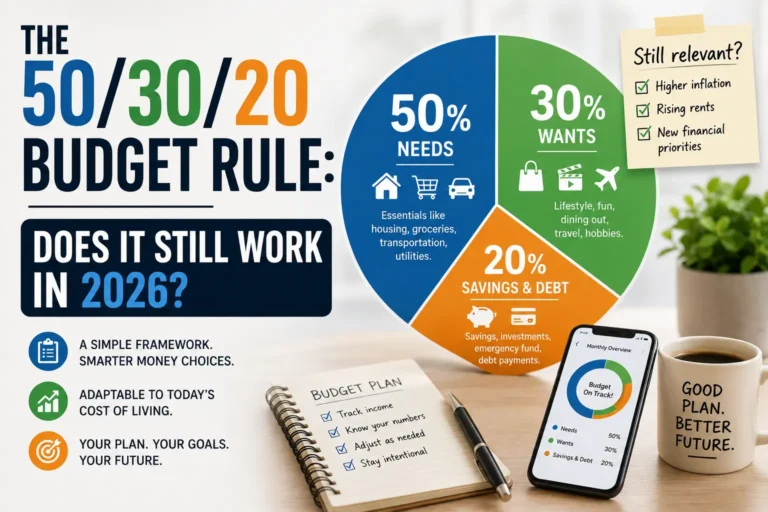
WritoryBuzz’s guide to saving $10,000 in 6 months and guide to saving $20,000 in a year both break down specific expense cuts and income levers that translate directly into a larger debt payment when the goal is payoff instead of savings. The same 200 to 600 dollar monthly gap those guides close for a savings goal works identically as an extra debt payment, since both are ultimately a question of freeing up cash flow and directing it somewhere specific and automatic. Applying a structured framework like the 50/30/20 budget rule makes it easier to see exactly where that 200 to 600 dollar gap is hiding before assuming it has to come from a second job, and WritoryBuzz’s roundup of passive income ideas covers lower-effort ways to generate the side income several of the strategies above depend on.