

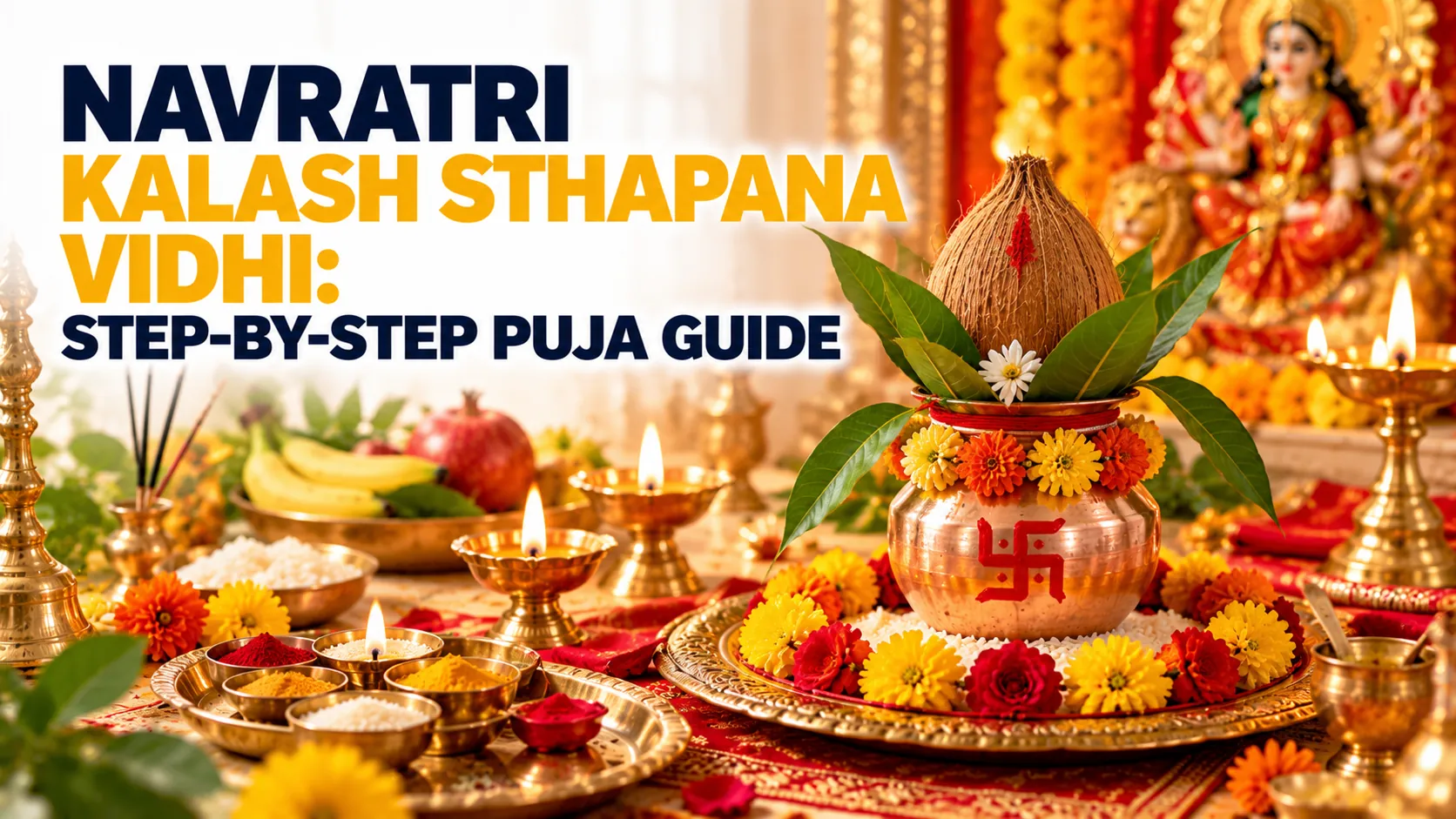
Ghatasthapana on Sunday, October 11, 2026, opens Sharad Navratri, and the kalash is installed in a window that is only a few hours long. For Delhi that window runs from 6:19 am to 10:11 am, according to Dekho Panchang, while in Mumbai it runs from 6:31 am to 10:27 am and in Kolkata from 5:31 am to 9:25 am. Missing the window is the most common anxiety first-time hosts report.
Kalash sthapana, also called ghatasthapana, is the ritual of installing a sacred pot that represents the goddess for the nine nights of Navratri. This guide lists the 2026 muhurat by city, the samagri you need, the step-by-step vidhi, common mistakes, and a simplified version for apartments. Customs differ by family and region, so treat this as a general guide and consult your family priest where a specific practice applies.
Ghatasthapana 2026: Date and City-Wise Muhurat
Ghatasthapana takes place on the first day, Pratipada, of Ashwina Shukla, which is Sunday, October 11, 2026. The ritual is performed during the morning window, following the rule of udaya tithi, when the tithi is present at sunrise. Dekho Panchang lists the following windows for October 11.
| City | Muhurat Window (Oct 11, 2026) |
|---|---|
| Kolkata | 5:31 am to 9:25 am |
| Chennai | 5:58 am to 9:56 am |
| Bangalore | 6:09 am to 10:07 am |
| Delhi | 6:19 am to 10:11 am |
| Pune | 6:27 am to 10:23 am |
| Mumbai | 6:31 am to 10:27 am |
If your city is not listed, use a local panchang or ask your temple priest, because sunrise and tithi timings shift with location. Check whether your tradition also specifies an Abhijit muhurat as an alternative, since families differ.
Samagri: What You Need for Kalash Sthapana
Gather the materials the day before so that the morning is calm. The common list includes a kalash made of copper, brass, silver, or clay, clean water with a few drops of Ganga jal if available, mango or ashoka leaves, a whole coconut with the husk, red cloth or a red chunri, a shallow tray or earthen pot for soil, clean soil, and barley or other seeds. You will also need akshat (unbroken rice), roli or kumkum, supari, a coin, flowers, incense, ghee, a diya, and an image or idol of the goddess. Some families add a sacred thread (mauli) tied around the kalash.
Dekho Panchang describes the vidhi as starting the same way: clean the puja area, spread a red cloth on the platform, fill a copper or brass kalash with water, and place mango leaves around the rim. The detailed order below follows the common practice, with regional variations noted.
Kalash Sthapana Vidhi: Step by Step
Step 1: Prepare the space
Wake early, bathe, and wear clean clothes. Clean the puja area, preferably in the north-east of the home. Spread a red cloth on a raised platform and place the image or idol of the goddess on it. Keep the area free of footwear and clutter.
Step 2: Prepare the soil bed
Place a shallow tray or earthen pot on the platform and spread clean soil in it. Sprinkle barley or other seeds and cover lightly with more soil. Sprinkle a little water. These seeds will sprout over nine days and the green shoots are considered a sign of prosperity.
Step 3: Fill and decorate the kalash
Fill the kalash with clean water, adding a few drops of Ganga jal, a little akshat, a coin, and a supari. Tie mauli around the neck of the kalash. Arrange five or seven mango leaves around the rim so the tips point outward.
Step 4: Place the coconut
Wrap the coconut in red cloth, tie it with mauli, and set it on the mango leaves with the pointed end facing up. Place the kalash on the soil bed in the centre of the tray.
Step 5: Light the lamp and invoke the goddess
Light a diya with ghee, offer flowers, incense, roli, and akshat, and recite the sankalp and the Durga mantras or the Durga Chalisa according to your tradition. Pray for peace and protection for the household and conclude with an aarti.
Step 6: Daily care for nine nights
Light a lamp morning and evening, sprinkle a little water on the seeds each day, offer fresh flowers, and keep the area clean. Tying the ritual to a fixed time helps, and the approach in how to build good habits explains why a set time makes the routine stick. Those observing fasting should read our Navratri fasting rules for beginners and plan meals from the Navratri vrat food list. The nine days are also associated with nine colours, which you can follow using our Navratri 9 colours guide.
Akhand Jyot and Other Variations
Some families keep an akhand jyot, a lamp that burns continuously for nine days, installed on the first day. It requires someone to monitor the oil and wick, and it is best avoided if the home will be empty. Regional customs differ: Bengal observes Durga Puja with idol worship rather than a kalash, Gujarat centres on garba around a lamp or garbo, and South India often combines the kalash with a Golu display. Follow your family tradition, and consult an elder if unsure.
Common Mistakes to Avoid
The most common mistakes are practical. People start too late and run past the muhurat, use a chipped or unclean kalash, forget to prepare the soil bed in advance, or let the seeds dry out by day three. Others leave an unattended flame near fabric or curtains. Place the lamp in a stable holder away from flammable items, and never leave a burning lamp alone in an empty home.
Another mistake is treating the ritual as a performance. The purpose is devotion and focus, and a small, sincere setup is as valid as an elaborate one. Where tradition specifies something you cannot do, such as an exact timing or an item you cannot find, ask an elder or priest for an accepted substitute.
A Simple Version for Apartments and Small Spaces
If you live in an apartment or a shared space, use a small kalash, a shallow tray with a handful of soil and seeds, and a diya in a metal holder or an electric lamp. Place the setup on a sturdy shelf or stool and keep it away from curtains. Use a smaller coconut, and keep the area tidy. You can also do a digital puja along with family joining from different cities, then perform the physical ritual at your home. The accepted principle is that intention and cleanliness matter more than size.
After Navratri: Visarjan and Dussehra
On the ninth or tenth day, many families perform a closing puja, offer prayers of thanks, and immerse or respectfully dispose of the sprouted seeds and the contents of the kalash. Dussehra, or Vijayadashami, falls on Tuesday, October 20, 2026. Use a clean flowing water source or a garden, and avoid dumping puja materials in public water bodies where local rules prohibit it. Many families also distribute prasad and share a festive meal on this day.