

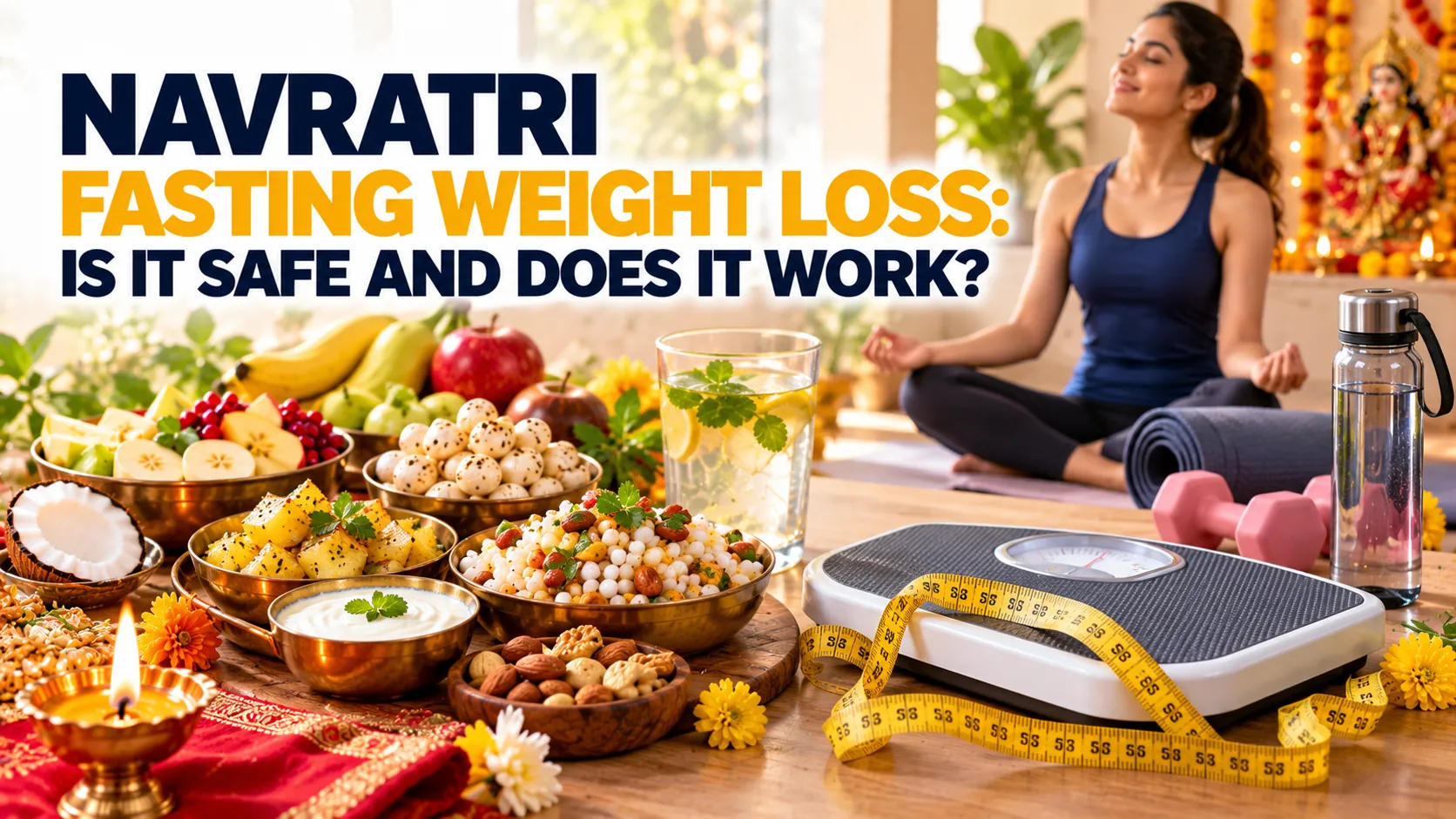
A systematic review of 35 studies, published in Public Health Nutrition, found that fasting during Ramadan produced an average weight loss of 1.24 kilograms, and that most of it was regained within a few weeks, leaving a net loss of only 0.27 kilograms. Navratri is a different fast, but the pattern it points to is the one most people recognise: a quick drop on the scale, followed by a rebound.
Sharad Navratri 2026 runs from October 11 to October 19, and Diwali follows on November 8. Many people see the nine days as a natural weight-loss window. This guide explains what to expect, why vrat food can add calories, how to fast in a way that is safe, and who should not try to lose weight this way.
Does Navratri Fasting Actually Cause Weight Loss?
The honest answer is: sometimes, and not as much as people expect. The most useful evidence comes from Ramadan, the best-studied religious fast. The meta-analysis in Public Health Nutrition pooled 35 studies and found an average loss of 1.24 kilograms during the fasting month, and concluded that most of the weight lost was regained within a few weeks of the fast ending, leaving a marginal net decrease of 0.27 kilograms. Ramadan and Navratri are not the same, but both change meal timing and food choices over a short period and then end, which is why similar patterns are likely.
The mechanism is straightforward. When you eat fewer calories and less carbohydrate, your body uses stored glycogen, and each gram of glycogen is stored with water, so early weight loss is largely water. Fat loss requires a sustained calorie deficit, which is hard to maintain if vrat meals are heavy on sabudana, potato, and fried snacks. Nine days is also short for lasting change, which is why the habits you build matter more than the scale.
Why Vrat Food Can Add Calories
Fasting foods are not automatically light. PharmEasy reports that 100 grams of dry sabudana has 351 kilocalories, 87 grams of carbohydrate, and only 0.2 grams of protein. A 150-gram portion of dry sabudana therefore carries about 527 kilocalories before ghee, peanuts, and potato are added. Manipal Cigna’s Navratri diet guide warns that fried foods such as sabudana vada and pakoras cause weight gain, that traditional vrat sweets are calorie-dense, and that eating sabudana without protein or fibre is a mistake.
| Vrat Food | Weight-Loss Impact | How to Improve It |
|---|---|---|
| Sabudana vada, pakoras, fried puris | High calorie, low protein | Air-fry or shallow-fry, and cut portion size |
| Sabudana khichdi | Moderate to high, mostly carbohydrate | Add peanuts, vegetables, and curd |
| Kuttu or singhara roti | Moderate, filling | Use little ghee and pair with curd |
| Fruit and fruit chaat | Low to moderate | Choose whole fruit over juice |
| Curd, buttermilk, paneer | Moderate, high in protein | Use plain, low-fat versions |
| Makhana and nuts | Moderate, portion-sensitive | Measure a small handful |
| Vrat mithai (kheer, halwa, laddoo) | High calorie | Keep to a small portion once a day |
How to Fast for Weight Management Safely
Eat small, regular meals
Manipal Cigna recommends smaller, frequent meals to keep metabolism active, and Apollo Hospitals suggests a phased approach: fruit and light juices on days 1 to 3, one traditional Navratri meal plus milk, buttermilk, and juices on days 4 to 6, and the full traditional diet on days 7 to 9. Either structure avoids long gaps that lead to binge eating at night.
Build every meal around protein and fibre
Low-fat curd, paneer, almonds, and walnuts help maintain muscle mass during fasting, according to Manipal Cigna. Pair starches such as sabudana, potato, and sweet potato with these foods and with vegetables like lauki and pumpkin. For ideas, see our easy Navratri vrat recipes and the full Navratri vrat food list.
Cook with less oil
Bake, grill, or air-fry in place of deep-frying, as Manipal Cigna advises. Our air fryer recipes guide has timings that adapt to fasting-friendly ingredients.
Hydrate on purpose
Both Apollo and Manipal Cigna recommend plenty of water, coconut water, lemon water, herbal tea, or buttermilk. Warm lemon water first thing in the morning is a common habit. Thirst is easily mistaken for hunger, so sip through the day.
Do not sleep right after eating, and keep moving
Manipal Cigna warns that sleeping immediately after meals impairs digestion. A 15 to 20 minute walk after meals supports digestion and blood sugar control. Light yoga or walking is usually enough during a fast, and heavy workouts should be reduced.
Who Should Not Fast for Weight Loss
Anyone with diabetes, high blood pressure, heart or kidney disease, or on regular medication should consult a doctor before fasting, as both Apollo and Manipal Cigna advise. Sabudana also carries a caution for people with thyroid concerns, according to PharmEasy. Pregnant and breastfeeding women, children, teenagers, older adults, and anyone with a history of eating disorders should avoid fasting for weight loss. If you feel dizzy, weak, or faint, break your fast and eat. Weight loss is never a reason to ignore warning signs.
Readers curious about the wider science of fasting can read our overview of intermittent fasting benefits, which also covers who it does not suit. For nutrition planning around exercise, see our sports nutrition guide.
The Post-Navratri Rebound Problem
Dussehra falls on October 20, and Diwali follows on November 8, with weeks of sweets, snacks, and gatherings in between. This is when the rebound described in the Ramadan meta-analysis tends to happen. Break your fast with light food, return to regular meals instead of overeating, and keep the habits that worked: protein at each meal, fewer fried snacks, and daily walks. Weigh yourself no more than once a week, or track waist measurement instead, since daily scale readings fluctuate with water and salt intake.
For snack ideas that fit a weight-management plan, our healthy snack recipes are a practical starting point, and healthy Navratri snacks for office covers desk-friendly options during the fast itself.