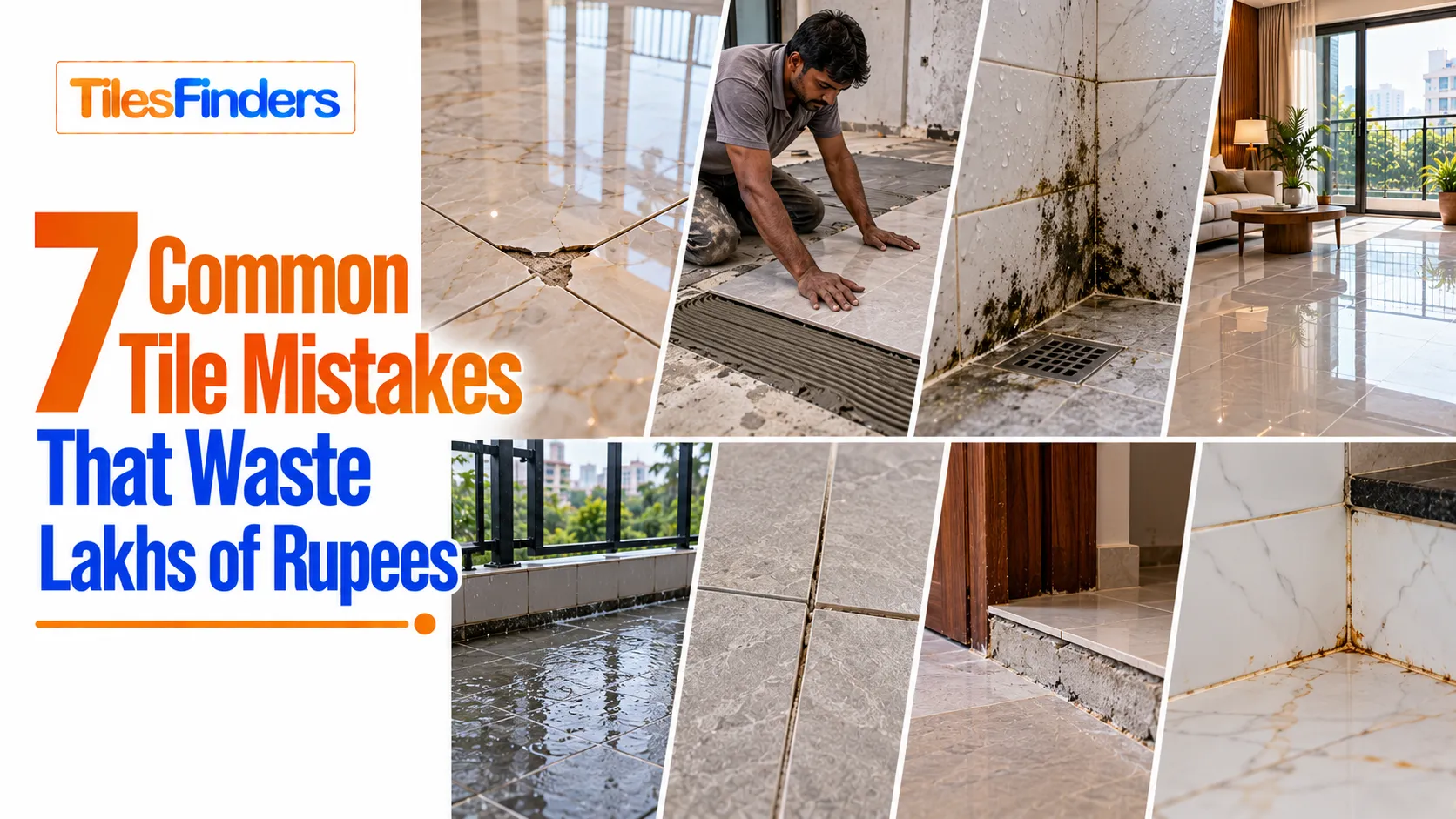
The seven tile mistakes that cost Indian homeowners the most are mixed batches, buying too little, a slippery finish in wet areas, wall tiles on floors, cement grout in wet walls, hollow fitting and skipping a spare box. Each one is cheap to prevent at the shop and very costly to fix once the tiles are on the wall.
Redoing the floor tiles of a 1,000 sq ft flat costs about Rs. 1.5 lakh, before you add the cost of breaking the old floor. A single bad choice in a washroom, such as the wrong finish for bathroom floor tiles, can also lead to a fall and a medical bill that no tile saving will cover.
This guide explains each mistake in plain words, shows what it costs in Rs., and gives the fix that dealers and fitters often skip. It comes from the TilesFinders content team, which works every day with Morbi manufacturers and dealers across 200+ Indian cities.
What Tile Mistakes Cost: A Quick Table Before the Detail
To see the stakes, take a 100 sq ft room tiled at Rs. 80 per sq ft. The tiles with 10 per cent extra cost Rs. 8,800, labour at about Rs. 45 per sq ft costs Rs. 4,500, and adhesive and grout add around Rs. 1,000 to Rs. 1,500. A full redo of that one room therefore costs roughly Rs. 15,000, and breaking out the old tiles comes on top of that.
| Mistake | What it can cost | The one fix |
| 1. Mixed tile batches | A room redone, about Rs. 15,000 per 100 sq ft | Buy every box in one go |
| 2. Ordering too little | A new batch that never matches | Order 10 per cent extra |
| 3. Glossy finish on wet floors | A fall, and a floor redone | Matte anti-skid, COF 0.6 or higher |
| 4. Wall tiles on the floor | Chipped glaze under foot traffic | Use floor-rated tiles on floors |
| 5. Cement grout in wet walls | Stained and cracked joints | Epoxy grout and waterproofing |
| 6. Hollow fitting | Cracked tiles, row by row | Full adhesive cover, levelling clips |
| 7. No spare box, no stock check | Unmatched replacements later | Keep one spare box from the same batch |
Why These Tile Mistakes Keep Happening in Indian Homes
Tiles are bought once in a decade, so most owners have no earlier experience to lean on. The decision is often made in one rushed afternoon, with a salesperson talking about the shine and the price, and nobody mentioning the batch, the wet floor rating or the grout.
The work is also split between three people who rarely talk to one another: the dealer who sells, the contractor who supervises and the fitter who fixes. A mistake falls between them, and the owner pays for it. Knowing the seven points below puts you in charge of that conversation.
Now, each mistake in order, with the reason it happens and the fix.
1. Mixed Tile Batches Cause Shade Differences
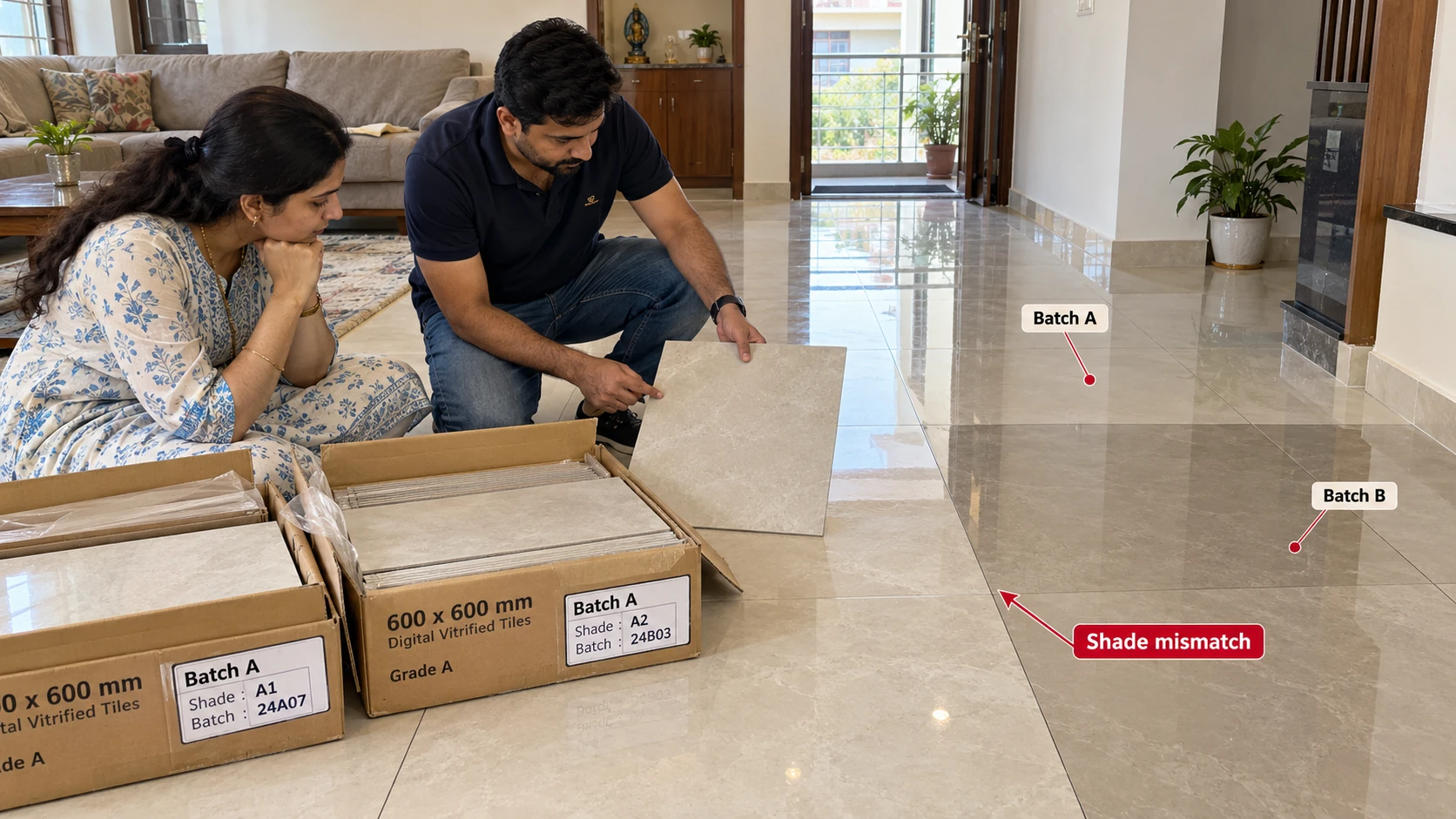
Different tile batches can create uneven flooring shades.
This is the most common complaint dealers hear. You buy 8 boxes today and 3 boxes next week, and the second lot looks slightly darker or a few millimetres different in size. On a wall or floor, the join between the two lots looks like a stain.
How to Read the Batch Number on Tile Boxes
Every box carries a batch or shade code, often printed near the size and the grade. Ask the dealer to show you the code on every box before payment, and have the same code written on the invoice. Two boxes with different codes are two batches, even if the design name is the same.
Dealers can help by setting aside the full quantity from one batch before the customer pays. Builders who fit many flats should place the whole order up front, because a second order months later rarely comes from the same batch.
If a mismatch has already happened, do not fix it by mixing the lots in one room. Use the second lot in a separate room or behind a doorway threshold, where the change in shade looks like a design choice. Before you accept delivery of any extra boxes, open one and compare it with a tile already on the wall, in daylight.
2. Ordering Too Few Tiles and Ignoring Wastage
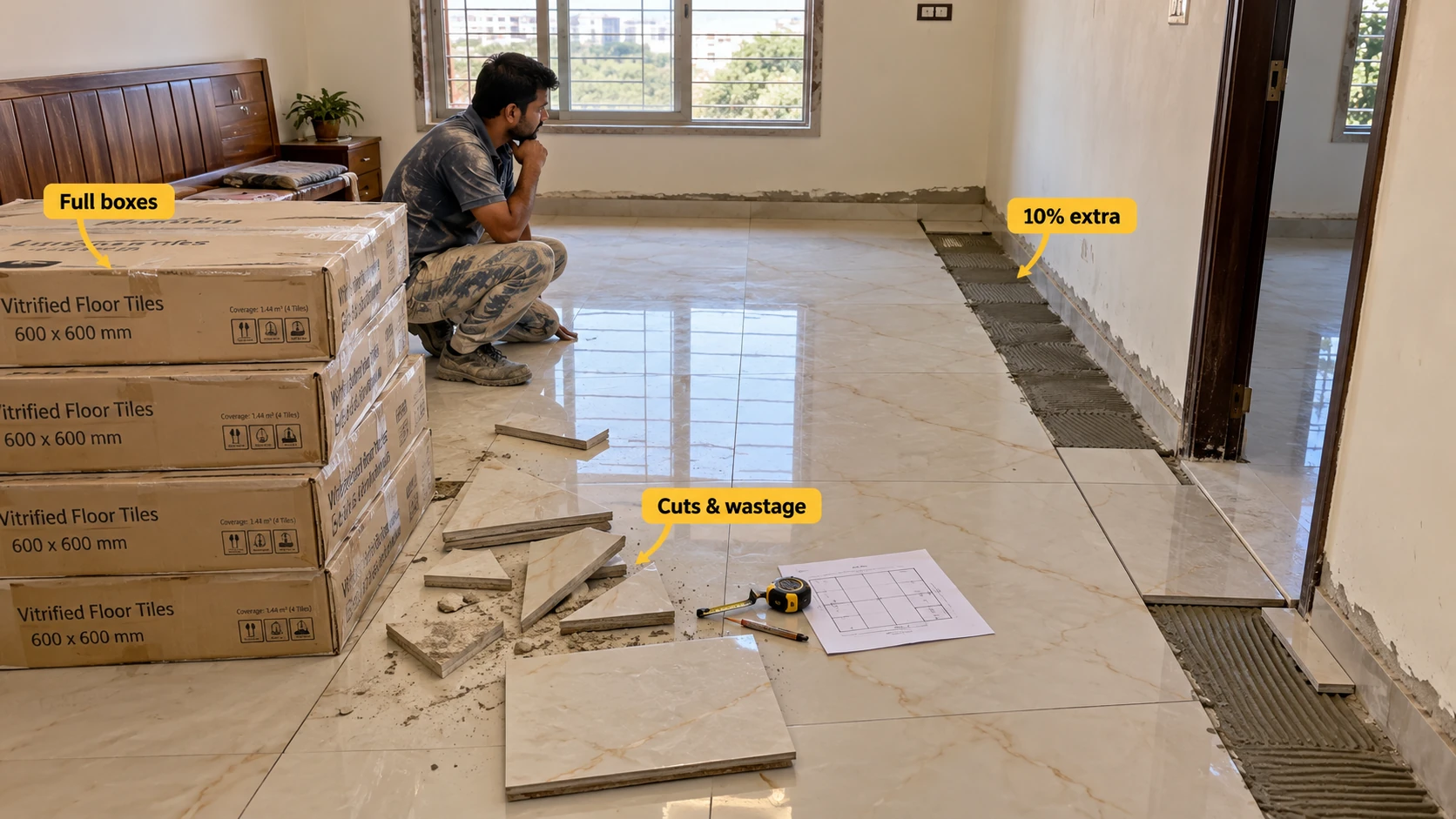
Allow spare tiles for cuts, corners and damage during fitting.
Tiles are cut at walls, corners and doorways, and some always break in transit or on site. If you order the exact area, the last row stays unfinished, and the fitter asks for “just two more boxes”, which then come from a new batch.
How Much Extra Tile to Order for Each Layout
A simple straight layout needs 10 per cent extra. Diagonal and patterned layouts need 15 per cent, and large tiles of 800x1600mm need around 12 per cent because every cut wastes a large piece. A 12×16 feet room (3.7×4.9 metres) is 192 sq ft, so a straight layout means ordering about 211 sq ft.
Keep the extra boxes sealed and stored upright and dry, especially in the monsoon, when damp cardboard weakens and tiles can slip out. Unopened boxes can often be returned, so ask the dealer about the return policy before you buy.
Tiles are sold in full boxes, and a box covers a fixed area, such as 15.5 sq ft for a 600x600mm pack of four. Always round up to the next full box, and check the coverage printed on the box, because it differs between sizes and brands. Ask the fitter to count the cuts from the layout drawing before you place the order, since a room with many niches and pillars wastes more.
3. Glossy Tiles on Wet Floors Raise the Risk of Falls
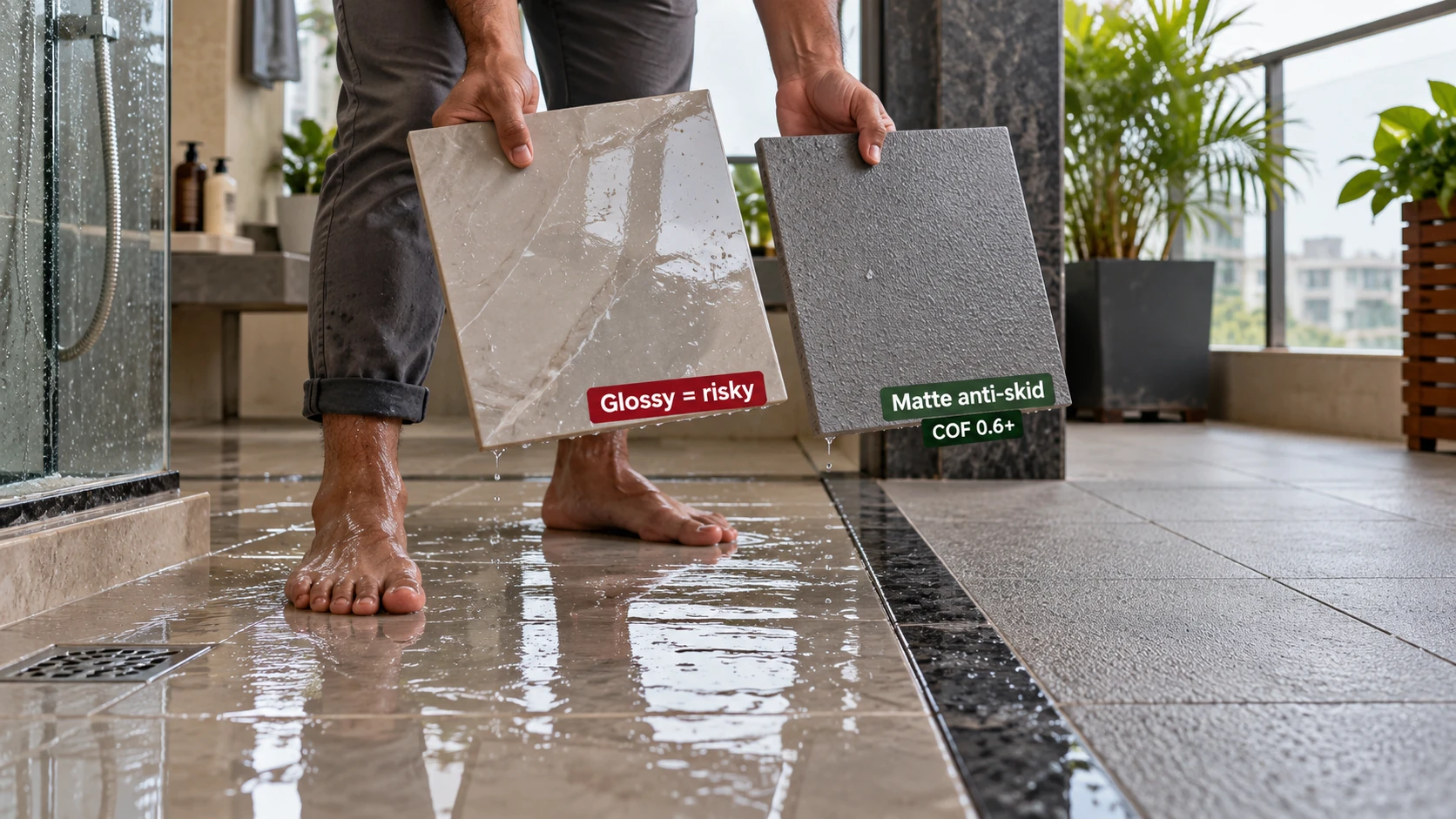
A wet glossy surface is riskier than a textured anti-skid tile.
A polished, mirror shine looks wonderful in a showroom. On a wet bathroom floor, it behaves like a sheet of ice, especially for children and older family members.
Safety note: for bathrooms, balconies, and other wet floors, use only a matte anti-skid tile with a COF (coefficient of friction) rating of 0.6 or higher. Ask the dealer for the rating in writing, not a verbal promise. Keep glossy tiles for dry walls, and never use a satin finish on a wet floor.
Slip Rating and Texture for Bathroom and Balcony Tiles
A good wet floor tile has a fine texture you can feel with a wet palm. Run your hand over the sample after splashing it with water, since it should feel gripping, not smooth. Architects can write the required COF value on the specification sheet so the site team does not substitute a cheaper glossy tile.
The same care applies to the kitchen floor, where oil and water spills are routine, and to the entrance, where wet footwear comes in during the monsoon. If a glossy tile is already fitted in a wet area, the safest answer is to replace it. Surface treatments that add grip exist, but they wear off with cleaning, so ask the dealer for honest advice and do not treat them as a permanent fix.
4. Wall Tiles Fitted on the Floor
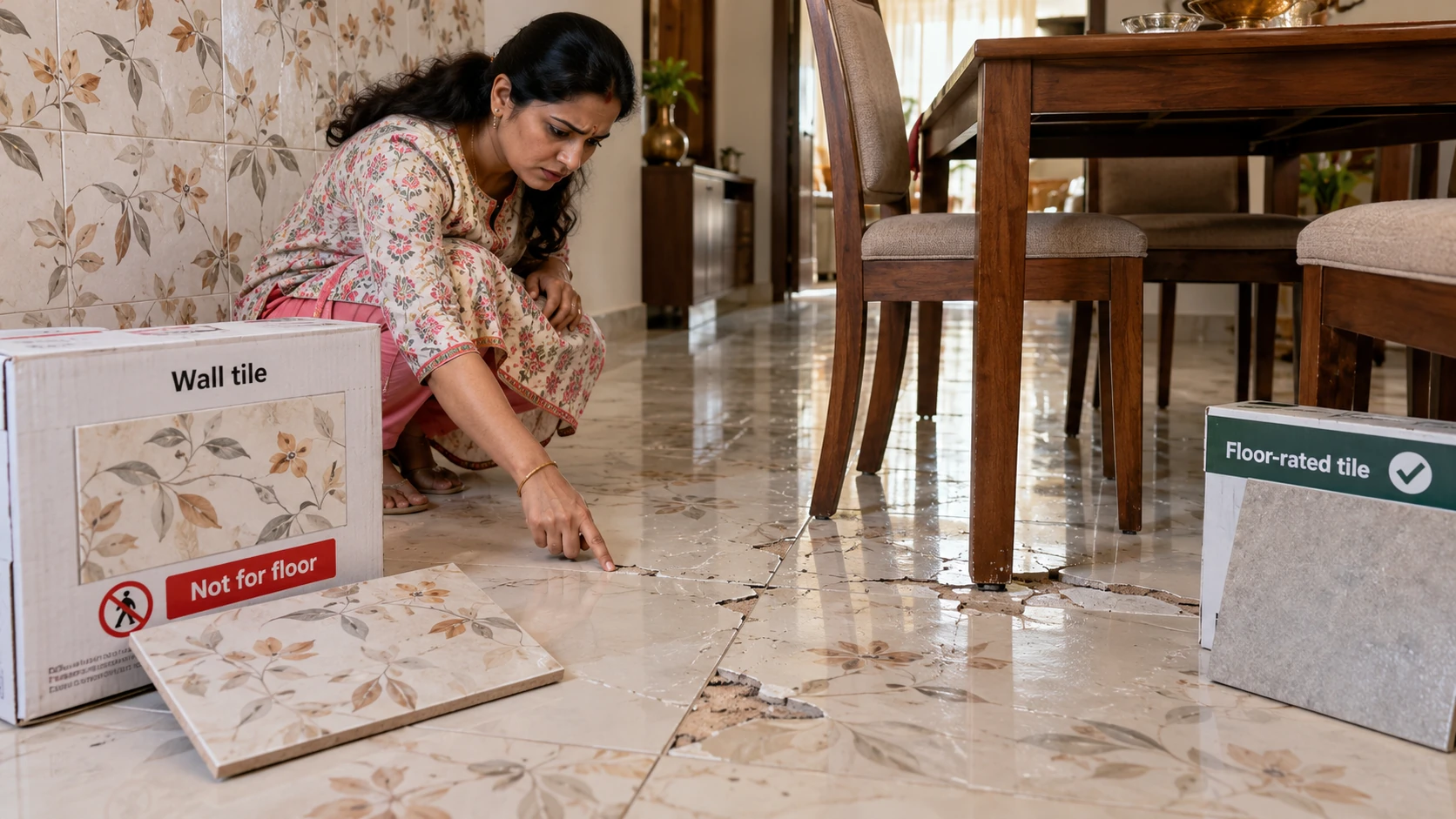
Wall tiles can chip or crack when installed on floors.
Wall tiles are cheaper, and the designs are often prettier, so many owners use them on floors to save money. The glaze on a ceramic wall tile is thinner, and the body is weaker, so footsteps and furniture chip it within one or two years.
As a rule, ceramic tiles belong on walls. The only common exception is a 12×12 inch (300x300mm) ceramic tile on a dry floor that sees light use. For living rooms, kitchens and passages, choose a tile made for floors, such as vitrified or porcelain, and check that the box says floor on it.
Wall tiles still have a place, and a good one: kitchen splashbacks, bathroom walls and feature walls. A floral or pattern wall tile looks far better on a wall, where nothing walks across it. Spend the savings from wall tiles on the wall, and keep the floor budget for a proper floor-rated tile.
Standards and Test Reports for Floor Rated Tiles
Ask for the test report against IS 15622:2006, the Indian standard for pressed ceramic tiles, which covers water absorption limits. Breaking strength and surface strength are tested by the methods in IS 13630, so ask which lab tested the batch and keep the report with your bills.
5. Cement Grout and No Waterproofing in Wet Walls
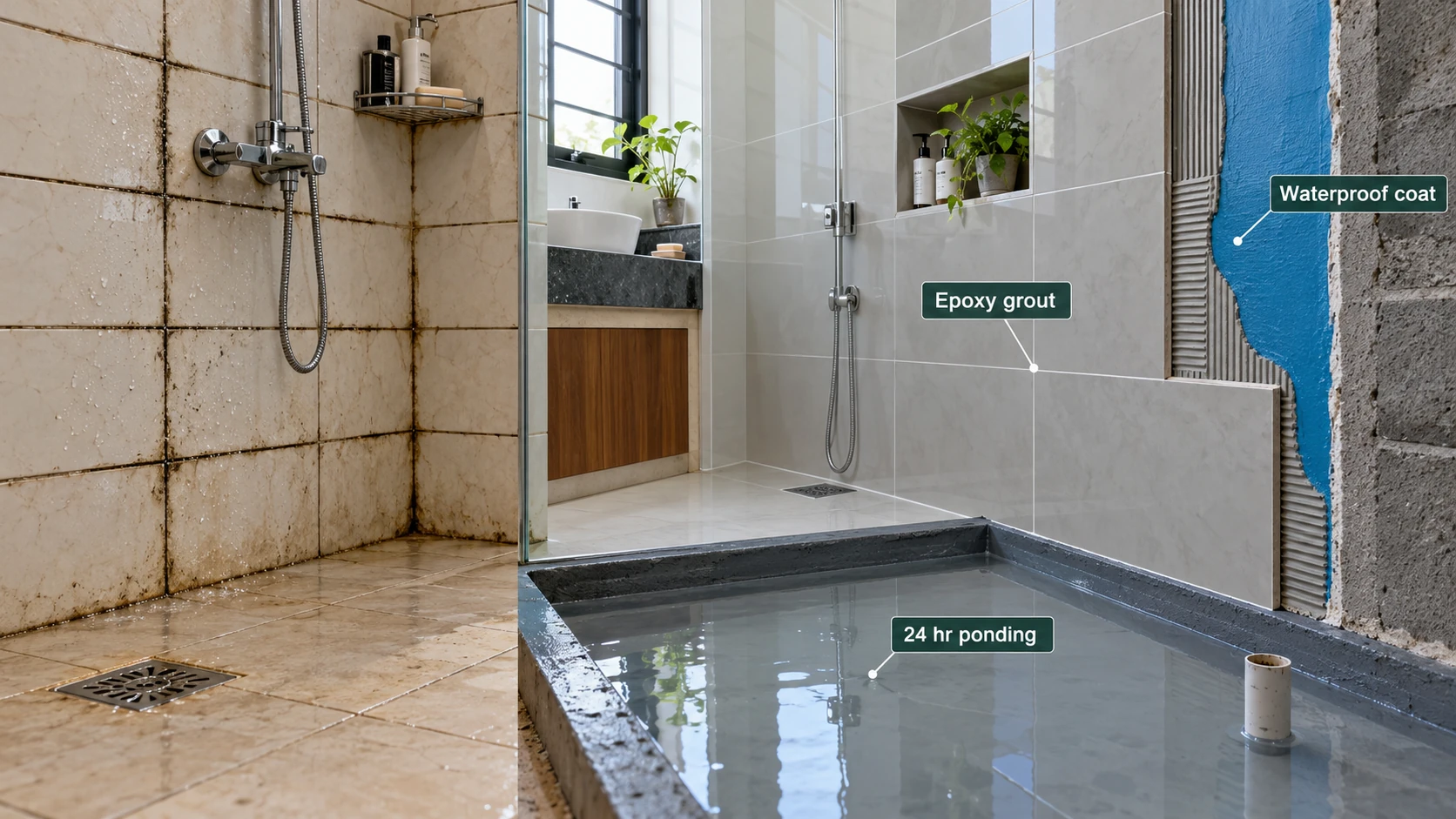
Epoxy grout and waterproofing help protect wet bathroom surfaces.
Grout is the part of the wall you rarely think about, until it turns grey or black. In kitchens, turmeric, oil and tea soak into ordinary cement grout and leave stains that no cleaner removes. In bathrooms, damp air and soap film do the same.
Epoxy Grout for Kitchen and Bathroom Wall Tiles
Epoxy grout costs more than cement grout, but it does not absorb water or stain. In coastal cities such as Mumbai, Kochi and Chennai, where washroom walls stay damp for days in the monsoon, it is the only grout that keeps its colour for years. Use it at least on the splashback behind the hob and inside the shower area.
Joint width matters too. Keep joints between 2mm and 3mm on rectified tiles, and about 3mm on standard edges, so the grout can be filled fully and does not leave gaps. Wipe off grout haze the same day with a soft cloth, because dried haze leaves a dull patch that looks like a shade difference.
Waterproofing Before Tiling in Wet Areas
Tiles are not waterproof on their own, since water enters through the joints. Before tiling a bathroom, the fitter should apply a waterproofing coat on the floor, on the walls up to shower height and inside the niche. Ask for the coat to be tested by ponding water for 24 hours before the first tile goes down. A leak found after tiling means breaking the new work.
6. Hollow Fitting and Uneven Large Format Tiles
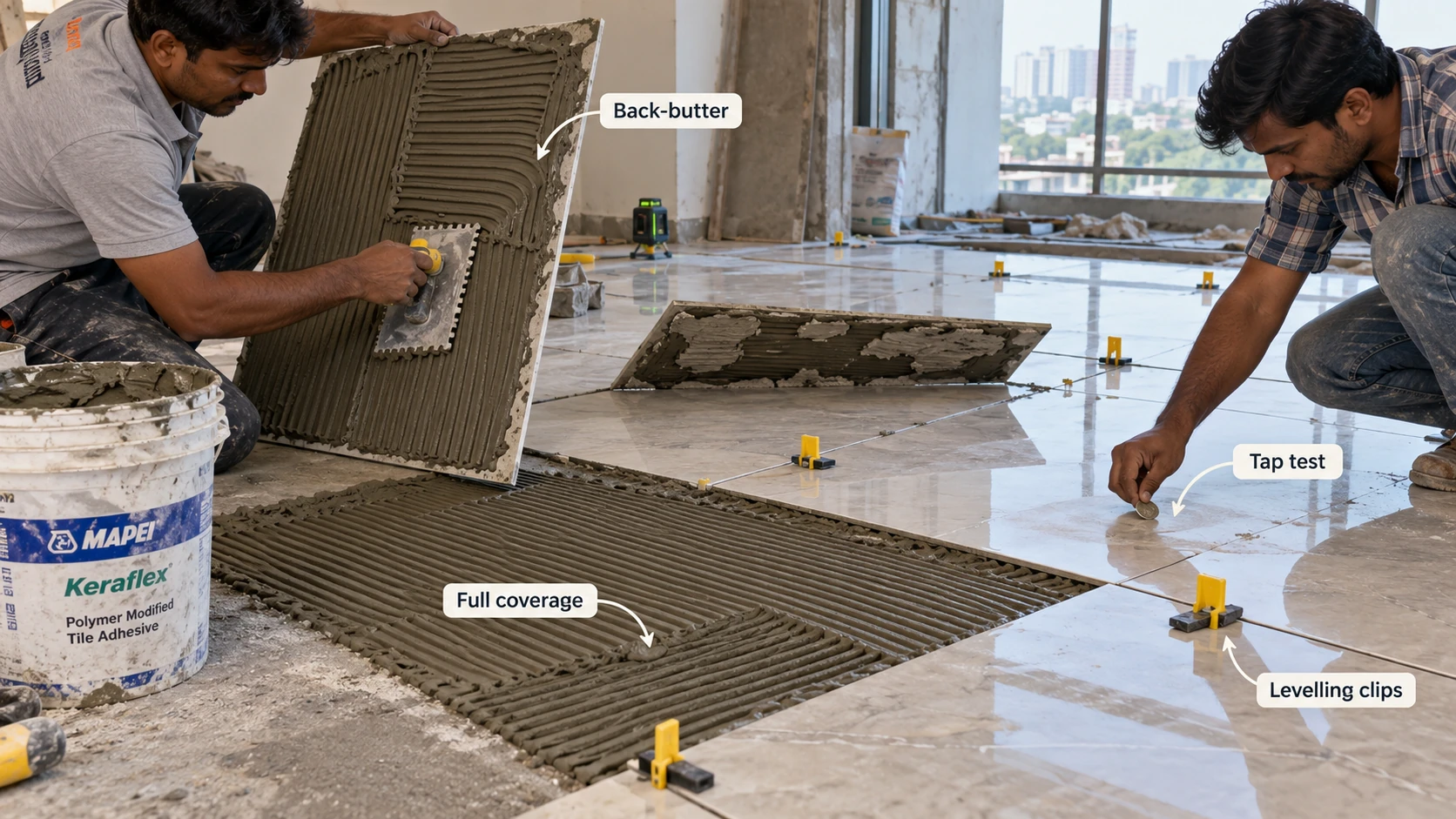
Full adhesive coverage and levelling clips improve tile installation.
A tile that sounds hollow when you tap it has no adhesive under part of its back. It looks fine on day one, then cracks when a heavy foot or a dropped utensil lands on the empty spot. This is more common when the fitter spreads adhesive in a few dabs, or only on the floor and not on the back of the tile.
Adhesive Coverage and Levelling for Floor Tiles
For tiles bigger than 600x600mm, ask for adhesive on both the floor and the back of the tile, and a notched trowel to spread it in even lines. Use levelling clips on every joint so the edges sit at the same height. Without clips, a 1mm step between two tiles shows up as a shadow line and a place to trip.
The base must also be flat. A floor that is uneven by more than about 3mm over a 3 metre straight edge needs levelling before the tiles go down. Builders should ask the fitter to check this before the first box is opened.
The material under the tile matters as well. A thick bed of plain cement and sand is still common, but it dries unevenly and holds large tiles poorly. A polymer-modified tile adhesive costs a little more per sq ft and grips the back of the tile far better, so ask your fitter which one is in the quote.
Tap Test and Fitter Brief for Tiled Floors
Tap every tile with a coin or a knuckle within a few hours of fixing it. A dull, hollow sound means a hollow spot, and the tile can be lifted and refixed while the adhesive is still workable. Brief your fitter on this on the first day, and pay in stages, not all in advance.
7. No Spare Tile Box and No Stock Check Before Buying
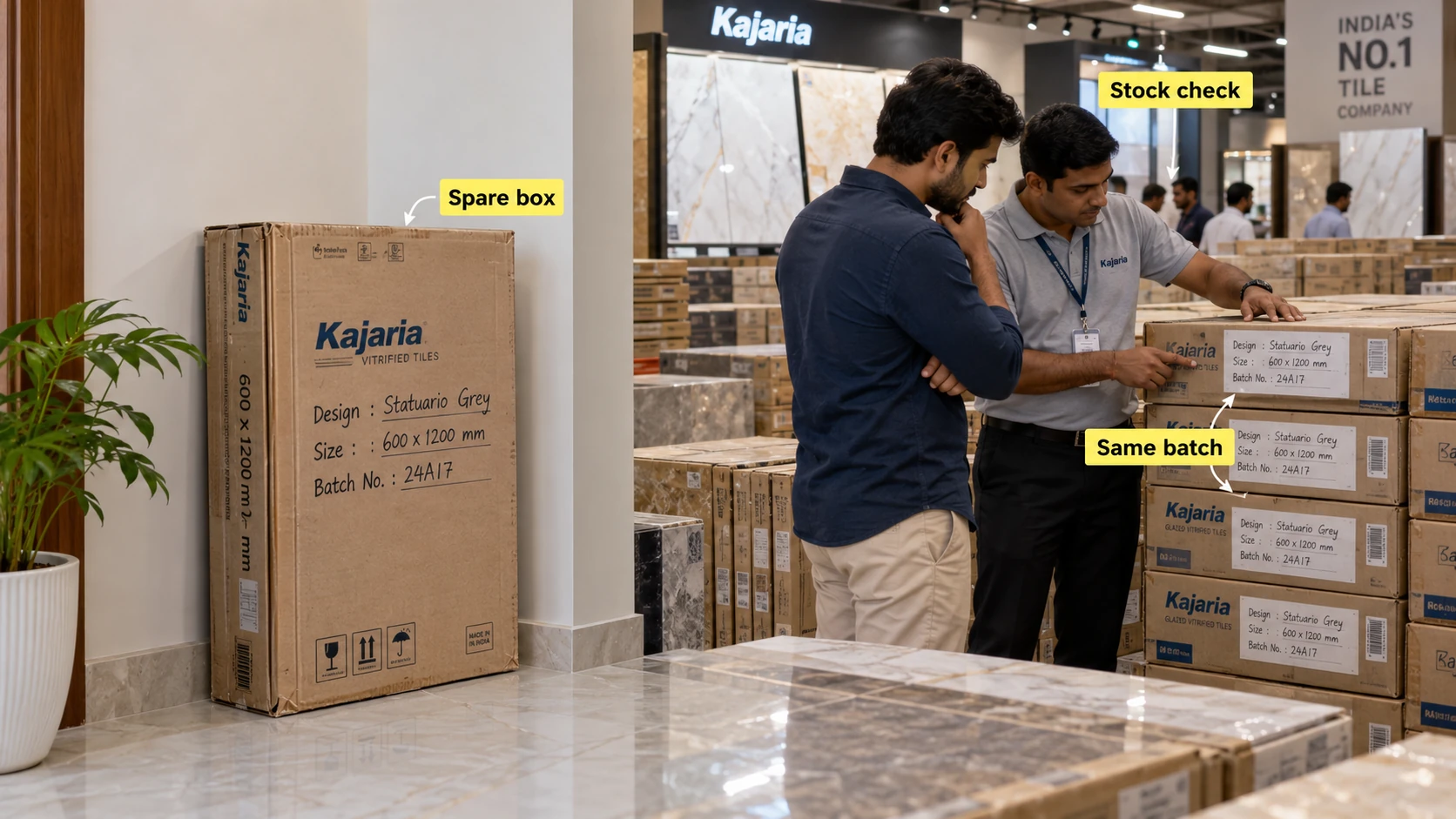
Keep spare matching tile boxes and confirm available stock before ordering.
A tile that looked ordinary when you bought it can be discontinued by the time a corner is chipped three years later. Without a spare box, you are left matching the shade from a different batch, or tiling a patch that never looks right.
Keep one full spare box of every tile used, and store it dry and upright. Write the design name, size and batch number on the box with a marker. This single box has saved many owners from redoing a whole room for one cracked tile.
Checking Tile Stock and Dealer Availability First
Before you fall in love with a design, confirm that the full quantity is available near you. Most tiles come from Morbi in Gujarat, and freight over long distances adds days and risk of breakage. If the dealer says a fresh order is needed, ask when the next production batch is due, because that new lot may not match the tile you saw.
On TilesFinders, the designs shown for your pincode are the ones that dealers nearby actually hold, so you compare tiles you can buy, not tiles that exist only in a catalogue.
Fixing Tile Mistakes That Have Already Happened
If your tiles are already down, not every problem needs a full redo. Match the fix to the fault, and get a quote for each option before you decide.
Replacing Cracked or Hollow Tiles Without Redoing the Floor
A single cracked or hollow tile can be cut out and replaced. The fitter breaks the old tile carefully, cleans out the old adhesive and fixes a spare tile in its place, which is why a spare box from the same batch matters so much. A job of this kind usually costs a few hundred rupees per tile, much less than a new floor.
Renewing Stained Grout on Kitchen and Bathroom Tiles
Stained cement grout can be raked out and refilled with epoxy grout, so the tiles themselves stay in place. This is the cheapest way to freshen a kitchen wall or a washroom, and it works best when done before water has reached the wall behind the tile.
Living With a Shade Mismatch Between Tile Batches
If two batches are already side by side, a clean border or a door threshold between them hides the change. Where that is not possible, an interior designer can add a feature band of a different tile to break up the line. The mismatch will not disappear, but it will stop looking like a mistake.
Tile Buying Checklist to Carry to the Dealer
Put these eight questions on your phone before you walk into the shop. Is the full quantity in stock from one batch? Is the batch code the same on every box? Does the box say floor or wall? What is the COF rating for wet areas? How much does one box cover, and how many boxes do I need with 10 per cent extra? Which test reports are available? What is the return policy for unopened boxes? Will the dealer hold the boxes until my fitter is ready?
Then ask your contractor three more: which adhesive is in the quote, whether waterproofing is included for wet areas, and whether the quote covers levelling clips. A fitter who answers these without hesitation has done the work before. A fitter who says it will be fine is a fitter to question, so ask for the answers in the written quote and keep a copy of it.
Finally, collect the paperwork. Keep the bill with the batch number, the test reports and the box labels in one folder, and hand it to your builder or interior designer. When a problem shows up two years later, this folder decides whether the dealer or the manufacturer takes responsibility.
Never Pay Twice for the Same Tiles: Check Stock Near You
Most of the lakhs lost in tiling do not come from big decisions. They come from small choices made in a hurry in a showroom, one box short, one batch apart, one glossy sample too many. Now that you know where the money leaks, the next step is to buy in a way that closes those gaps.
Search by your pincode on TilesFinders to see which tile designs dealers around you actually hold, along with the Morbi manufacturer behind each one. Fix the design, reserve the full quantity from a single batch, and you remove the largest causes of regret before the first tile is laid.