
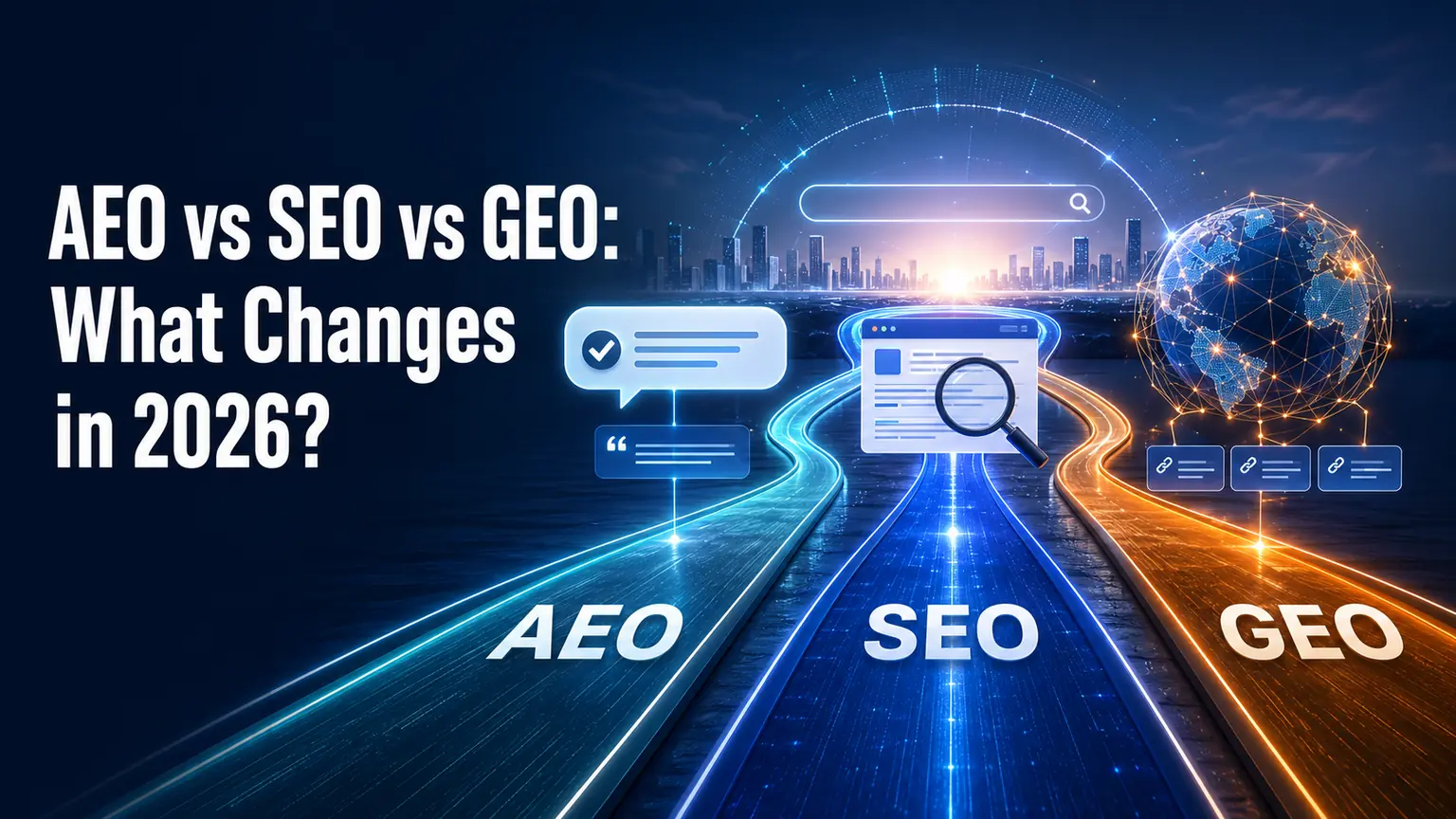
AEO, SEO, and GEO get used almost interchangeably in a lot of current marketing content, which genuinely muddies what each term actually means in practice. This piece draws clear, practical lines between all three, since understanding where they overlap and where they genuinely diverge matters for deciding where to actually spend limited optimization time and budget, starting with a quick baseline reading from a free aeo checker.
SEO: Optimizing for the Traditional Ranked List
Search engine optimization, SEO, refers to the established discipline of optimizing a page to rank as high as possible within a traditional search engine’s ranked list of results, historically Google’s own ten-blue-links format specifically, using signals including keyword relevance, backlink authority, technical site health, and page experience factors that have shaped search ranking algorithms for over two decades.
AEO: Optimizing for Direct AI Citation
Answer Engine Optimization, AEO, refers specifically to optimizing content so an AI system, a chatbot or an AI-generated search overview specifically, can extract, trust, and directly cite that content as the source behind a synthesized answer, rather than optimizing purely for a ranked position within a traditional list of separate result links a user would need to click through themselves.
Checking a specific page’s current AEO readiness with a free aeo checker reveals how well that page is currently structured for this specific citation-focused goal, a genuinely distinct evaluation from a traditional SEO ranking audit even when both audits examine some genuinely overlapping underlying content quality signals.
GEO: Optimizing for Generative Engine Visibility Broadly
Generative Engine Optimization, GEO, is a closely related but slightly broader term some practitioners use to describe optimizing content’s visibility across the full range of generative AI systems, including AI chat assistants, AI-powered search overviews, and AI-driven content recommendation systems more broadly, rather than AEO’s often more narrowly citation-specific focus.
In practice, AEO and GEO overlap considerably, and many practitioners use the terms somewhat interchangeably, though GEO sometimes specifically extends to broader generative AI visibility considerations, brand mention frequency within AI-generated content even without a direct citation link specifically, that a narrower AEO framing might not always explicitly include.
| Discipline | Primary Goal | Key Success Signal |
| SEO | Rank highly in a traditional search results list | Ranking position, organic click-through rate |
| AEO | Get directly cited inside an AI-generated answer | Citation frequency, AI answer inclusion |
| GEO | Achieve broad visibility across generative AI systems | Brand mention frequency, AI answer prominence |
Where All Three Genuinely Overlap
Genuine subject matter expertise, clear content structure, and demonstrated trustworthiness matter across all three disciplines, since both traditional search algorithms and AI answer systems ultimately reward genuinely high-quality, well-organized, credible content rather than favoring fundamentally different underlying quality standards. Running a page through an eeat checker specifically evaluates this shared expertise and trust foundation that meaningfully supports performance across SEO, AEO, and GEO simultaneously rather than benefiting only one specific discipline in isolation.
Where They Genuinely Diverge in Practice
The specific tactical execution differs meaningfully across all three, traditional SEO still rewards strategic keyword placement and backlink building in ways AEO and GEO do not directly reward, while AEO and GEO specifically reward direct-answer content structure and technical signals like a properly configured llms.txt file, generated through a llms.txt generator, that traditional SEO ranking algorithms have historically not directly evaluated or rewarded in the same specific way.
This divergence means a content team cannot simply apply a single, undifferentiated optimization checklist and assume it adequately covers all three disciplines simultaneously, genuine AEO and GEO readiness require the specific, additional structural and technical attention this guide and its related pieces have outlined, layered on top of, rather than instead of, continued traditional SEO practice.
A Practical Way to Think About Prioritization
Treating SEO, AEO, and GEO as three genuinely complementary disciplines sharing a common quality foundation, rather than three competing priorities forcing a strict either-or resource allocation choice, reflects how these three disciplines actually function together in practice. Running priority pages through a free aeo checker alongside continued traditional SEO auditing provides a genuinely practical way to track progress across both dimensions simultaneously rather than treating either discipline in isolation.
Explore WritoryBuzz’s full free SEO and AEO toolkit to evaluate and improve a page’s standing across all three of these genuinely complementary optimization disciplines.