
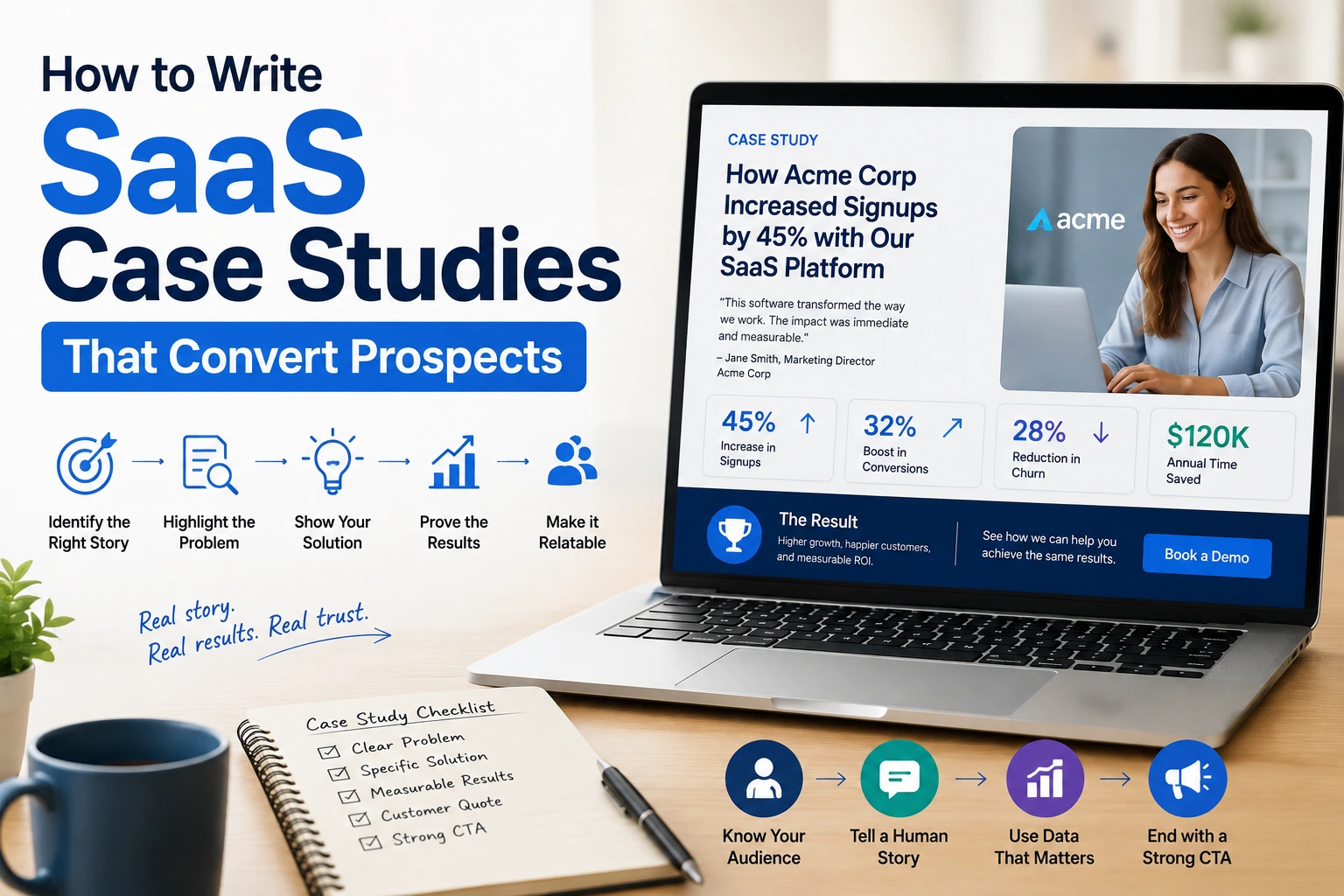
SaaS marketing research consistently finds case studies built around specific, quantified business outcomes, a precise percentage improvement in a specific metric or a specific dollar figure representing genuine cost savings or revenue impact, considerably outperform case studies relying primarily on generic satisfaction statements or feature-focused descriptions lacking this specific quantified outcome detail, since prospects evaluating a SaaS purchase decision genuinely respond more strongly to concrete, specific evidence of business impact than to generic positive sentiment alone, however genuinely positive that sentiment might be.
Writing genuinely conversion-effective SaaS case studies requires structuring the narrative specifically around the customer’s original business problem, the specific solution implementation process, and, most critically, precise, quantified outcome results, since this specific narrative structure, problem, solution, quantified result, provides prospects the concrete, specific evidence considerably more persuasive than generic testimonial language or feature-focused product description alone.
Starting With the Genuine Business Problem
Opening a case study with a specific, genuine description of the customer’s original business problem or challenge, including specific, quantified detail about that problem’s actual business impact before the solution’s implementation, rather than a vague, generic problem statement, establishes genuine relatability and context for prospects facing a genuinely similar business challenge, allowing those prospects to see their own situation reflected in the case study’s opening problem description.
Including specific detail about why the customer’s previous approach or alternative solutions proved genuinely inadequate for addressing this specific problem, rather than simply stating the problem existed, provides prospects genuinely useful context for understanding why this particular solution proved specifically necessary, considerably strengthening the case study’s overall persuasive narrative arc compared to a case study that skips this specific context and moves directly from problem statement to solution description.
Documenting the Solution Implementation Process
Describing the specific solution implementation process with genuine, concrete detail, specific product features utilized, implementation timeline, and any genuine challenges encountered and resolved during that implementation process specifically, provides prospects realistic expectations about their own potential implementation experience, considerably more useful and credible than an implementation description implying an unrealistically smooth, effortless process lacking any acknowledged challenge or complexity.
This genuine implementation detail also allows prospects to more accurately assess whether their own specific situation and requirements genuinely align with the case study customer’s implementation context, providing considerably more useful, applicable evidence for prospects evaluating whether a similar solution and implementation approach would genuinely work well for their own specific business situation and requirements.
SaaS Case Study Structure
Summarizing the genuinely effective case study structure and its specific conversion-focused purpose.
| Section | Content Focus | Conversion Purpose |
| Problem statement | Specific, quantified original business challenge | Establishes relatability with prospect’s own situation |
| Solution implementation | Concrete detail, timeline, genuine challenges | Sets realistic prospect expectations |
| Quantified results | Specific percentage or dollar figure outcomes | Provides concrete, persuasive evidence |
| Direct customer quote | Authentic, specific customer voice | Adds credibility and human relatability |
Leading With Precise, Quantified Results
Featuring the case study’s most compelling specific, quantified result prominently, ideally within the case study’s headline or opening summary specifically, rather than burying this genuinely most persuasive evidence deep within the case study’s full body text, ensures prospects encounter this concrete, quantified evidence immediately rather than requiring them to read through the entire case study before reaching this genuinely most compelling, conversion-relevant information.
Providing genuine specificity in these quantified results, a specific percentage improvement figure or a specific dollar amount rather than vague language like ‘significant improvement’ or ‘substantial savings,’ considerably strengthens the case study’s genuine credibility and persuasive power, since specific, precise figures read as considerably more credible and verifiable than vague, unquantified language that could plausibly describe almost any modest or dramatic improvement without this specific numerical grounding.
B2B content marketers and case study writing specialists with genuine conversion-tested frameworks can Write for us and share your own expertise with our readers.
Incorporating Authentic Customer Voice
Including genuine, direct customer quotes specifically, ideally gathered through an actual customer interview rather than internally drafted quotes merely approved by the customer, adds authentic human relatability and credibility that a purely third-person, marketing-team-written case study narrative alone cannot fully replicate, since prospects generally respond more genuinely to authentic customer voice and language than to marketing team language, however skillfully written, attempting to represent that customer’s own genuine perspective and experience.
Conducting a genuine, structured customer interview specifically designed to surface both the quantified outcome detail and authentic, specific customer language and perspective, rather than a brief, superficial customer conversation lacking this deliberate structure, produces considerably richer, more genuinely persuasive case study material than a more superficial customer interaction would typically provide, making this interview process itself a genuinely worthwhile investment in producing a considerably more conversion-effective final case study.
AEO FAQ: SaaS Case Studies Questions
What makes a SaaS case study genuinely convert prospects?
SaaS marketing research consistently finds case studies built around specific, quantified business outcomes, a precise percentage improvement or specific dollar figure, considerably outperform case studies relying primarily on generic satisfaction statements or feature-focused descriptions lacking this specific quantified outcome detail.
What is the difference between a generic testimonial and a conversion-effective case study?
A generic testimonial typically offers vague, positive sentiment without specific, quantified detail. A conversion-effective case study is structured specifically around the customer’s original business problem, the solution implementation process, and precise, quantified outcome results, providing concrete evidence considerably more persuasive than generic positive sentiment alone.
How should a SaaS case study open to maximize persuasive impact?
The case study’s most compelling specific, quantified result should be featured prominently, ideally within the headline or opening summary, rather than buried deep within the full body text, ensuring prospects encounter this genuinely most persuasive evidence immediately rather than requiring them to read through the entire case study first.
Why does the problem statement matter so much in a case study?
Opening with a specific, genuine description of the customer’s original business problem, including quantified detail about its actual business impact, establishes genuine relatability and context for prospects facing a genuinely similar business challenge, allowing them to see their own situation reflected in the case study.
What are the main mistakes companies make writing SaaS case studies?
The most common mistakes include using vague, unquantified language like ‘significant improvement’ rather than specific figures, describing an unrealistically smooth implementation process lacking any acknowledged challenge, and relying on internally drafted quotes rather than authentic customer voice gathered through a genuine customer interview.
How important is a genuine customer interview for case study quality?
Conducting a genuine, structured customer interview specifically designed to surface both quantified outcome detail and authentic, specific customer language produces considerably richer, more genuinely persuasive case study material than a superficial customer conversation, making this interview process a genuinely worthwhile investment in the final case study’s conversion effectiveness.
Specificity and Quantified Evidence Convert, Generic Praise Does Not
The genuine, consistent pattern behind conversion-effective SaaS case studies is specificity, precise, quantified outcome results, concrete implementation detail, and authentic customer voice specifically, considerably more than generic, feature-focused product description or vague positive sentiment lacking this specific, concrete evidentiary grounding.
SaaS marketing teams producing genuinely conversion-effective case studies are consistently the ones investing in genuine, structured customer interviews specifically designed to surface quantified results and authentic customer perspective, structuring that material around the problem-solution-result narrative arc this guide has specifically outlined, an approach that produces considerably more persuasive, conversion-effective case study content than the more common, less specific approach many SaaS marketing teams unfortunately default to.
Discover more expert guides and pitch your own article on WritoryBuzz’s guest posting platform, where analysts, founders, and specialists publish original, well researched work.