Home
Categories
Free Tools
Write For UsAbout UsContact

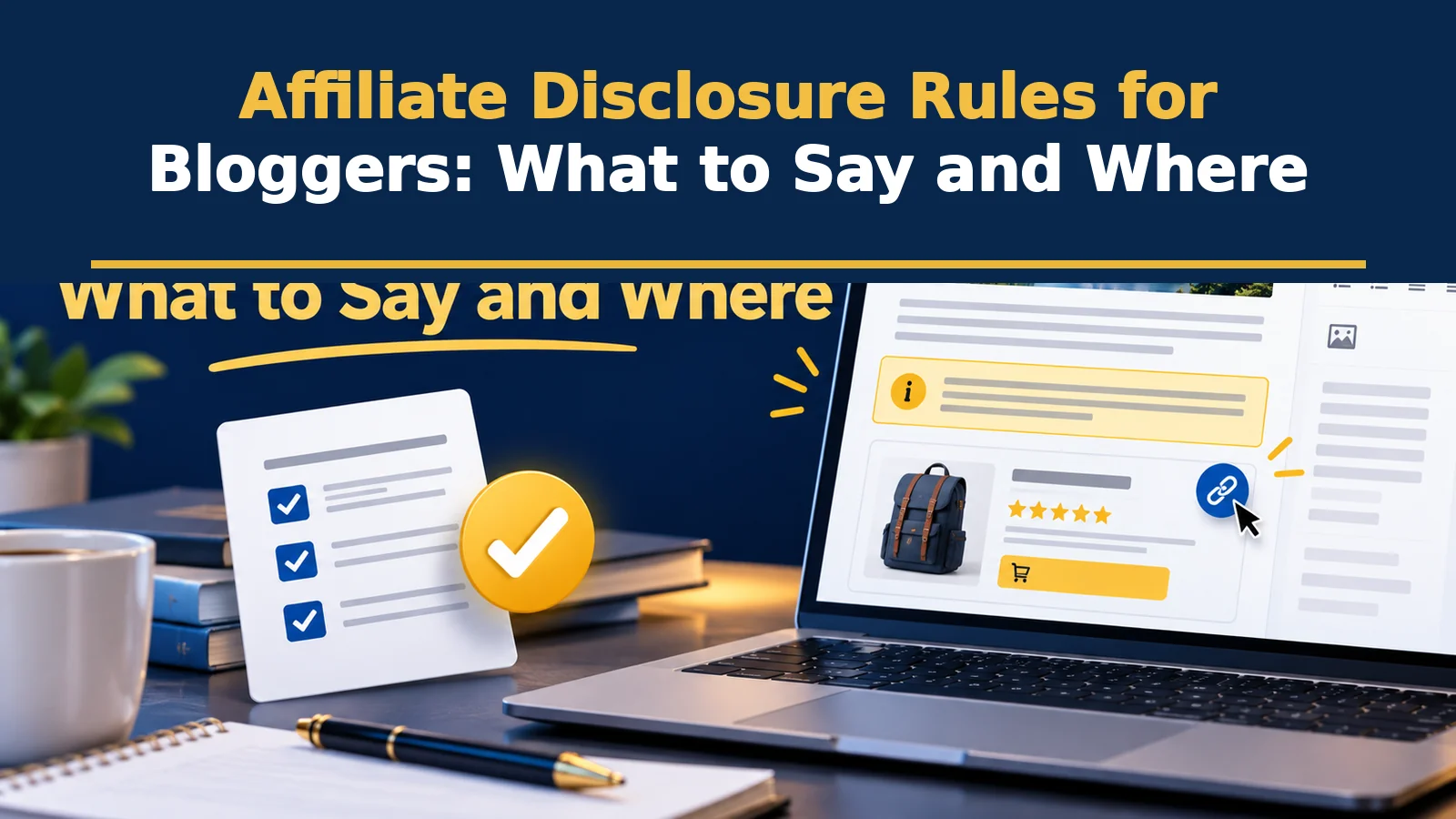
Affiliate Disclosure Rules for Bloggers: What to Say and Where

Affiliate disclosure basics for bloggers: what the FTC and ASCI expect, wording examples, where to place the notice and mistakes to avoid.

October 28, 2026 Updated November 4, 2026 6 min read
Affiliate Disclosure Rules for Bloggers: What to Say and Where

Key takeaways

  • Disclose any material connection, including affiliate commissions, free products, payments and discount codes.
  • Use plain language, such as "I may earn a commission if you buy through my links"; "(affiliate)" alone is vague.
  • Place the disclosure before the first affiliate link and near the top of the post, not only at the end.
  • A single link in the site navigation or footer is not enough; it must work on mobile and be easy to notice.
  • ASCI expects labels such as #Ad, #Sponsored or #Partnership in the first two lines of a caption in India.

The FTC’s guidance is clear that a vague tag such as “(affiliate)” is not enough, and that the notice must appear before the first affiliate link, where readers will actually see it, not buried in the footer.

Affiliate links are an honest way for a blog to earn, but only if readers know about the relationship. In the United States the Federal Trade Commission sets the expectation. In India, the Advertising Standards Council of India (ASCI) published influencer guidelines effective from 15 April 2021. This article summarises the main points from those sources, offers wording you can adapt, and explains where to place your disclosure. It is general information, not legal advice, so check the current rules for your country or ask a qualified adviser.

What Needs to Be Disclosed

The principle is the same across countries: if you have a financial or other material relationship with a brand that could affect how readers see your recommendation, say so. That covers affiliate links, paid posts, free products or services, trips, commissions, discount codes tied to you and sponsored placements.

The FTC’s guidance for endorsers says disclosures should be clear and conspicuous, in the same language as the content, and not hidden behind a click. ASCI’s guidelines treat affiliate links and discount codes as something influencers must disclose, in addition to paid collaborations.

FTC Expectations in Plain Terms

  • Plain language: say that you may receive a commission if someone buys through your link.
  • Before the first link: put the notice above the fold, ahead of the first affiliate link or recommendation.
  • Not only at the end: a note at the bottom is easy to miss.
  • Not only in a menu: a site-wide link such as “Disclosure” in the navigation does not replace an in-content notice.
  • Mobile-friendly: make sure the notice is visible on small screens.
  • Video and audio: disclose within the content itself, spoken and shown, not only in a description.

MarTech’s review of the guidance lists examples where regulators have taken action over unclear or missing disclosures, which shows the rules are not merely theoretical.

ASCI Guidelines for India

According to the summary in BW Marketing World, ASCI’s guidelines for influencer advertising took effect on 15 April 2021. The main points:

AreaWhat ASCI expects
PrincipleDisclose an advertisement as an advertisement, so the audience can recognise it
Labels#Ad, #Collab, #Promo, #Sponsored or #Partnership, or a clear platform tag
PlacementIn the first two lines of a caption, where it is seen without clicking “more”
VideoLabel visible for at least 2 seconds in a 15-second video, and about one-third of the runtime for longer ones
Live streamsDisclosure maintained at intervals, about 5 seconds per minute
Affiliate links and codesTreated as advertising connections that need disclosure

Some commentators question how easily these guidelines can be enforced, but the sensible approach is to follow them regardless, since transparency also protects your readers’ trust.

Wording and Placement That Works

SituationExample wording
Blog post with affiliate linksSome links in this post are affiliate links. If you buy through them, I may earn a commission at no extra cost to you.
Sponsored postThis post is sponsored by [brand]. I received payment, and my opinions are my own.
Free productI received this product free from [brand] for review. I give honest opinions regardless.
Instagram or Reel caption#Ad or #Partnership in the first line, followed by the product mention
YouTube videoSpoken statement near the start, an on-screen label and a note in the description

Placement Checklist

  • Top of the post: a short note before the first affiliate link.
  • Near the link or product box if the post is long.
  • Email and social posts: repeat the disclosure where you share links.
  • A fuller policy page: link to it for details, but never rely on it alone.
  • Keep proof: save agreements and screenshots in case of a query.

Disclosure does not harm trust; it usually builds it. Readers who know you earn a commission but see honest, balanced advice tend to respect the transparency.


Related readCustomer Onboarding Emails for SaaS: A Simple SequenceRead →

Free tools for Digital Marketing

FAQs

Do I have to disclose affiliate links on my blog?

Yes, in most jurisdictions you should. The FTC expects clear disclosure of material connections, including commissions, and ASCI’s guidelines in India treat affiliate links as something to disclose. Use plain language near the top of the post. This is general information, not legal advice, so check the rules that apply to you. Laws and guidelines also change, so review the current official pages for your country now and then, and keep a short disclosure template ready.

Is “(affiliate)” next to a link enough?

Usually not. Guidance cited by MarTech says vague labels such as “(affiliate)” may not be understood by readers. Explain the relationship in plain words, such as “I may earn a commission if you buy through this link”, and place the notice before the first affiliate link where readers will see it. If the term could be misunderstood by a first-time visitor, rewrite it in the plainest words you would use in conversation with a friend.

Can I put the disclosure only in my footer or privacy policy?

That is not enough. A notice that readers must scroll or click to find is easy to miss, and a site-wide link in the navigation does not replace an in-content disclosure. Put a short statement near the top of each relevant post, and link to a fuller policy page if you want to explain more. Put the plain-language notice in the post itself, with the longer policy page as a backup for readers who want more detail.

What does ASCI require for Instagram posts in India?

ASCI’s influencer guidelines, effective from 15 April 2021, ask for a clear label such as #Ad, #Collab, #Promo, #Sponsored or #Partnership, placed in the first two lines of the caption. For videos, the label should stay visible for a minimum duration. Affiliate links and discount codes also count as connections to disclose. Also check each platform’s own branded-content tools, since using the built-in paid-partnership label can help alongside your written disclosure.

Do I need to disclose free products I review?

Yes. A free product, trip or service can influence how you talk about it, so readers should know. Say plainly that you received it from the brand and that your opinions are your own. If the brand also paid you, say that too, so the disclosure covers every material connection. Keep the wording honest and specific, naming the brand when you can, because readers trust clear statements more than boilerplate.

Are disclosures needed for video and audio content?

Yes. The FTC guidance says disclosures in video and audio should appear within the content itself, not only in a description box. Say it aloud and show it on screen near the start, and repeat it if the recommendation appears later. ASCI also sets minimum display times for video labels. Repeat the disclosure when a recommendation appears later in a long video or podcast, so that viewers who skip ahead still hear it.

Say It Early, Say It Plainly

Good disclosure is short, clear and early. Readers do not mind that bloggers earn; they mind finding out later that they were not told.

Open your five most-visited affiliate posts, add a one-line plain-language notice above the first link, and save the wording as a reusable template.

Sources: FTC: Disclosures 101 for Social Media Influencers; MarTech: FTC affiliate disclosure guidance; BW Marketing World: ASCI influencer advertising guidelines; ASCI

Was this guide helpful?
Jenny Edwards
Written by

Jenny Edwards

Jenny Edwards is an SEO and Digital Growth Specialist with 5+ years of experience in Technical SEO, AI SEO, International SEO, and organic growth strategy. She helps businesses improve search visibility through data-driven SEO, content optimization, search experience improvements, and AI-focused search strategies. Her work focuses on helping brands grow through sustainable and future-ready digital marketing.

More from this author

More in Digital Marketing

View all in Digital Marketing →

Keep exploring

Have expertise to share? Write for WritoryBuzz.Read the guidelines and send us your pitch.
Become a contributor
Free tools

63 free tools for writers, SEOs and developers

Open one in your browser and start. Nothing to install, and your text stays on your device.

PrivateInstant resultsNo sign up
Write for us

Have expertise to share?

  • Original, well researched guides
  • Reviewed by our editors
  • 29 categories to publish in
Submit a guest post
© 2026 WritoryBuzz. All rights reserved.Back to top