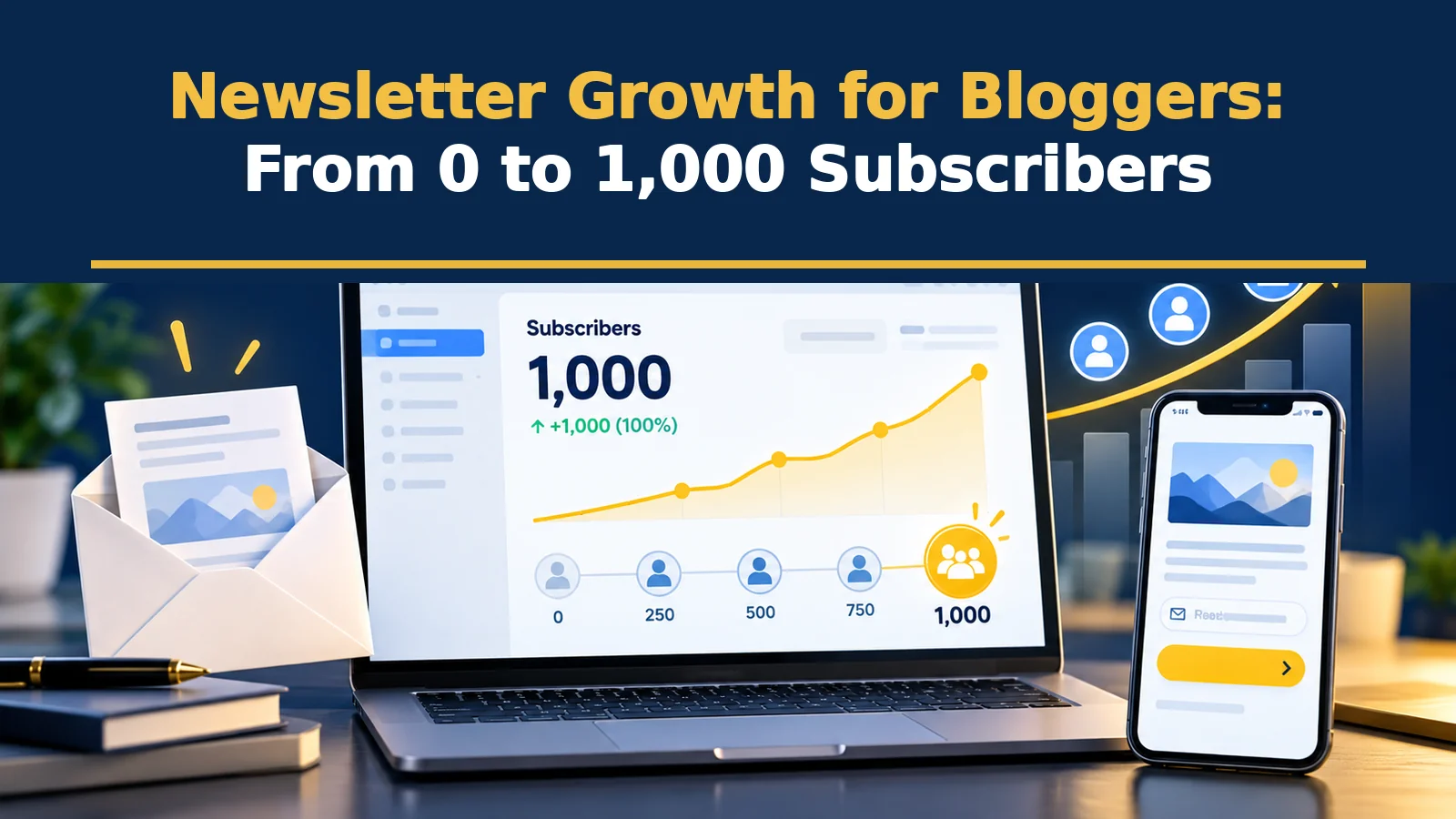
beehiiv’s growth guide breaks newsletter growth into stages: 0 to 100 subscribers comes from your personal network, 100 to 1,000 from lead magnets, repurposing and recommendations, and 1,000 to 5,000 from referrals, webinars, SEO and YouTube.
The staged view matters because the right tactic changes with your size. At zero, you need a handful of real people, not a viral campaign. By a few hundred, you need repeatable systems that bring in readers every week. This guide follows those stages for a blogger who already has some content, shows where to place sign-up forms, explains what to send in your welcome sequence and how to keep the list healthy.
The Staged Plan
| Stage | Main goal | Tactics that fit |
|---|---|---|
| 0 to 100 | Find your first real readers | Tell friends, colleagues and followers; share directly; ask for honest feedback |
| 100 to 1,000 | Build repeatable acquisition | Lead magnets, repurposed posts, sign-up forms on the blog, newsletter recommendations, guest posts |
| 1,000 to 5,000 | Scale what works | Referral programmes, webinars, SEO, YouTube and partnerships |
Notice that paid advertising is not the first step. Early subscribers are usually people who already trust you, so quality and consistency matter more than volume.
Make a Reason to Subscribe
People subscribe for a clear benefit. State it in one line: who it is for, what they will get and how often. “A short weekly email with one SEO fix for small blogs” works better than “Join my newsletter”.
Lead Magnet Ideas
- Checklist or template: a one-page blog post checklist or content calendar sheet.
- Mini-guide: a short PDF that expands on a popular post.
- Email course: three to five short emails that teach one skill.
- Exclusive resource: a curated list, swipe file or tool review for subscribers only.
Pick something that solves one problem quickly, and ensure it fits the topic of your best-performing posts.
Where to Place Sign-Up Forms
| Placement | Why it works |
|---|---|
| Dedicated landing page | A simple page you can link from anywhere |
| Top of post template or header bar | Seen by every visitor, with minimal intrusion |
| Inside the post, after a useful section | Readers are engaged and ready for more |
| End of post | Natural point to continue the relationship |
| Thank-you page after a sign-up or download | A warm moment to ask for a share or referral |
| Web edition of your newsletter | Search visitors can sign up after reading a sample |
Keep forms short, ask only for an email address, and tell readers what happens next. Test one placement change at a time.
Welcome, Habit and Hygiene
The Welcome Email
Send it immediately. Deliver the promised resource, say who you are, tell them what to expect and ask one easy question, such as what they are working on. Replies help deliverability and teach you what readers need.
Early Growth Tactics
- Guest posts and recommendations: beehiiv notes that Lenny Rachitsky’s first two guest posts brought his first 1,000 subscribers; look for newsletters and blogs with a related audience.
- Repurpose posts: turn a popular article into an email series or a social post that points to your sign-up page.
- Ask for forwards: a single line at the end such as “If this helped, forward it to one friend.”
List Health
Segment by interest where you can, and remove subscribers who never open after several months. A smaller engaged list performs better than a large unresponsive one. Always include an easy unsubscribe link, and follow the email rules that apply in your country.