Home
Categories
Free Tools
Write For UsAbout UsContact

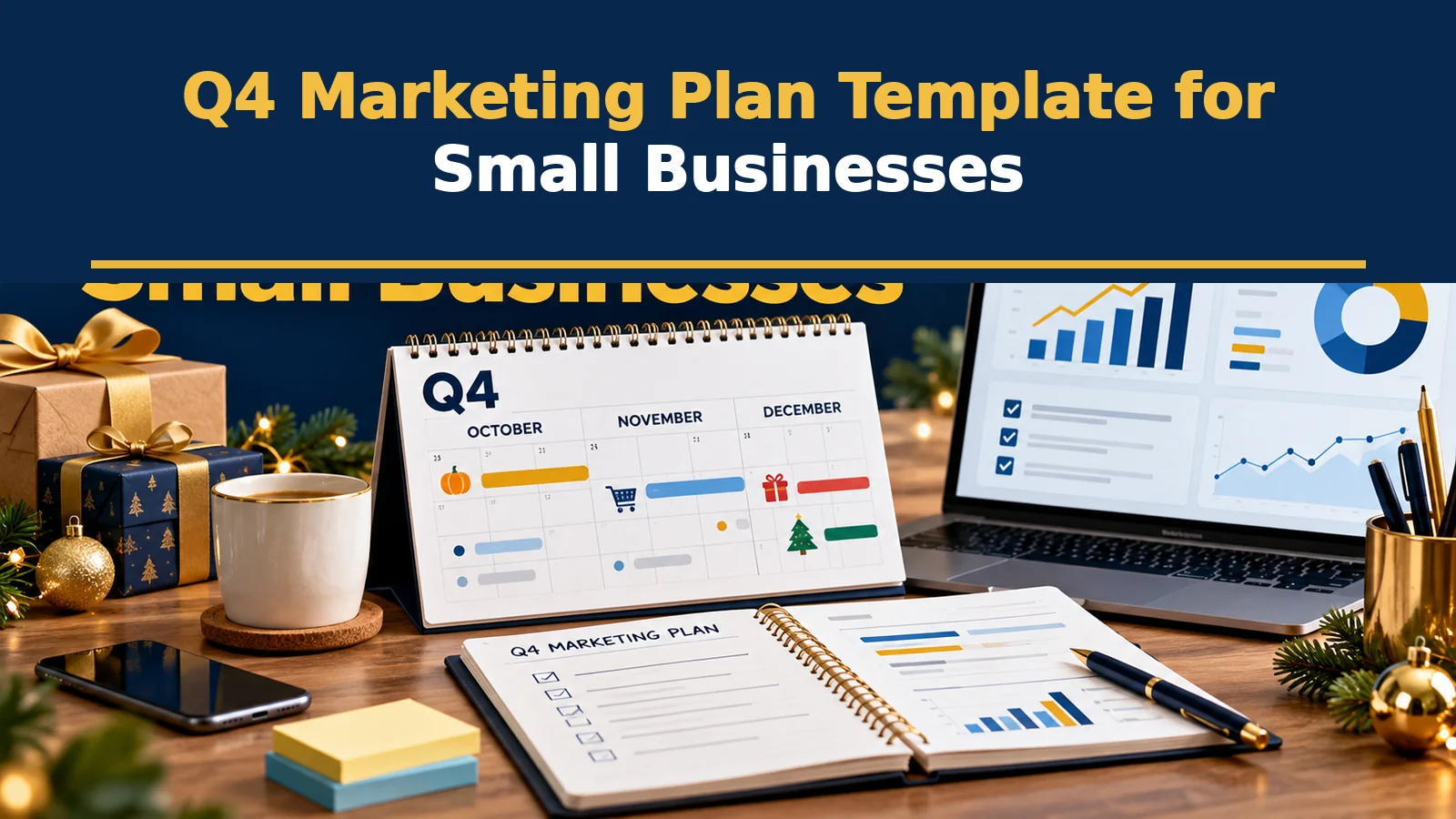
Q4 Marketing Plan Template for Small Businesses

A practical Q4 marketing plan template for small businesses: goals, budget split, channels, a week-by-week timeline from Diwali to year-end, and KPIs.

October 28, 2026 6 min read
Q4 Marketing Plan Template for Small Businesses

Key takeaways

  • Set one primary goal and two or three supporting metrics before choosing channels.
  • Split the budget by channel and by phase: teaser, peak and last-chance.
  • Time promotions around key dates: Dhanteras 6 Nov, Diwali 8 Nov, Bhai Dooj 11 Nov, Black Friday 27 Nov.
  • Surveys suggest most festive shoppers start a week or more ahead, so launch early, not on the day.
  • Review weekly with a simple dashboard and shift spend to what is working.

InMobi’s festive survey reported by Outlook Money found that 77% plan higher festive budgets in 2026, compared with 83% last year, which suggests a more careful but still active season.

As of late October 2026, Q4 is already underway for most small businesses, with Diwali on 8 November and Black Friday on 27 November. The lesson is to plan with the weeks you have left. This template gives you a compact plan you can fill in within an hour: goals, budget, audience, channels, a week-by-week timeline, a KPI table and a review routine. It works for shops, service providers and online sellers, and you can scale each part to your size.

Step 1: Goals and Baseline

Write one primary goal for the quarter. Examples: “Increase online orders by 20% compared with Q3” or “Generate 150 qualified enquiries”. Add two supporting metrics, such as average order value or repeat purchase rate. Record your baseline numbers from the last quarter and the same period last year, so you can see whether results are good.

ItemExampleYour answer
Primary goalIncrease online orders by 20% vs Q3
Supporting metric 1Average order value up by 10%
Supporting metric 2New email subscribers: 300
Baseline (last quarter)Orders, revenue, traffic, leads
BudgetTotal spend and who approves it

Step 2: Know the Season

Two surveys give useful context for India. InMobi’s report, covered by Outlook Money on 25 September 2026, found that about 60% of consumers finish festive shopping within a month before the festival and 29% within the last week. Hansa Research, reported by MediaBrief, found that 61% start at least a week before Diwali and 50% two to four weeks before, that 63% use online channels, and that discounts are the top influence at 60%, ahead of family traditions at 53% and social or influencer content at 48%.

The same Hansa data shows only 39% recall a standout brand from last year, which is a chance for small businesses to stand out with clear offers and good service. Treat these figures as directional and check what your own customers do.

Date (2026)EventMarketing angle
Fri 6 NovDhanterasGold, utensils, electronics, “auspicious buy” offers
Sun 8 NovDiwali / Chhoti DiwaliGifting, decor, sweets, last-minute delivery
Wed 11 NovBhai DoojSibling gifts, family hampers
Fri 27 NovBlack FridayDeals for online and global-shopping audiences
Mon 30 NovCyber MondayOnline offers, tech and subscriptions
Dec 25 and Dec 31Christmas and year-endGifts, parties, clearance sales, resolution content

Step 3: Budget and Channels

Divide your budget in three steps: the channels you will use, the phase of the season and a reserve. A starting split for a small business with limited data might be:

AllocationShare of budgetNotes
Search and shopping ads (if you have them)25 to 30%Capture people who are ready to buy
Social media ads and boosts25 to 30%Festive creatives, retargeting past visitors
Email, WhatsApp and SMS10 to 15%Low cost, high intent; use your own list
Content, offers and creative15 to 20%Videos, images, landing pages, hampers
Local, partnerships and events5 to 10%Collaborations, community, local listings
Reserve10%For what performs best in-season

These percentages are a planning starting point, not a rule. A service business may weight search and referrals more, while a retailer may lean on social and messaging.

Step 4: Weekly Timeline and KPIs

PhaseWeeks (from 26 Oct)Actions
PrepareWeek 1Confirm offers and stock; set up tracking; finish landing pages; schedule content
Teaser and early birdWeeks 1 to 2Announce festive offers; email list first; start ads before Dhanteras
PeakWeeks 2 to 3Daily posts, retargeting, delivery cut-off reminders around Diwali and Bhai Dooj
Black FridayWeeks 4 to 5Short, clear deals; email segments; track inventory
Year-endWeeks 6 to 9Gifting, clearance, review requests, new-year teaser

KPIs to Track Weekly

KPIWhy it matters
Revenue or enquiriesYour main result
Cost per order or leadShows if spend is efficient
Conversion rateReveals problems on the site or in the offer
Average order valueIndicates bundling and upsell success
Email and WhatsApp subscribersBuilds an owned audience for next year
Return on ad spendGuides budget shifts between channels

Hold a 20-minute review each week. Move budget from weak channels to strong ones, fix any broken page or checkout step immediately, and write down lessons for next year’s plan.


Related readCustomer Onboarding Emails for SaaS: A Simple SequenceRead →

Free tools for Digital Marketing

FAQs

What should a Q4 marketing plan include?

A Q4 plan should include a primary goal with supporting metrics, baseline numbers, a calendar of key dates, an audience summary, offers, a budget split by channel and phase, a week-by-week timeline and KPIs. Add a weekly review routine so you can shift spend toward channels and messages that are performing. Add owner names and due dates to each line so the plan becomes a to-do list, not just a document.

When should small businesses start festive marketing?

Earlier than the festival. Hansa Research, reported by MediaBrief, found that 61% of consumers start shopping at least a week before Diwali and 50% two to four weeks before. Announce offers and warm up your email and social audience early, then increase activity as the main dates approach. Test this with your own customers by asking in an email or on social media when they usually begin buying gifts and festival items.

How should I split my Q4 marketing budget?

A common starting point is to divide spend across search or shopping ads, social media, owned channels like email and WhatsApp, content and creative, and local partnerships, with a reserve of about 10% for in-season changes. Adjust the percentages to your business type, previous results and the channels where your customers actually buy. Create value through bundles, free delivery thresholds or gift wrapping, and compare each offer’s margin before you announce it.

Are discounts necessary to compete?

Discounts are an important influence, ranking first at 60% in Hansa Research’s festive survey, but they are not the only lever. Good service, clear delivery dates, gift packaging, bundles and trust can also persuade buyers. Check your margins first, and avoid deep discounts that harm your profit. Keep the tracker simple in a spreadsheet, filled in every Monday, so that the same few numbers are compared week after week.

Which KPIs matter most during Q4?

Track revenue or qualified enquiries, cost per order or lead, conversion rate, average order value, new email and WhatsApp subscribers, and return on ad spend. Review weekly. These numbers show what is working, where the funnel leaks, and which channels deserve more budget before the season ends. Set a clear end date for the campaign and a plan for follow-up emails, so that new buyers hear from you again after the festival.

What if I am starting late?

Use a compressed plan. Pick one goal, two channels you already know and one clear offer. Prepare tracking and landing pages first, email your existing customers, and run a short campaign for the nearest key date. A simple, well-executed plan beats a large plan you cannot finish. Keep a record of what you learn for the same period next year, since the best plan for 2027 starts with this season’s notes.

A Small Plan You Can Finish

A Q4 plan does not have to be long. It has to be specific about the goal, the dates, the budget and the weekly review. Fill in the template once, then keep it visible.

Block one hour today to complete the goal, budget and timeline tables, and schedule your first weekly review for next Monday.

Sources: Outlook Money: InMobi festive marketing survey; MediaBrief: Hansa Research festive insights; Think with Google India

Was this guide helpful?
Jenny Edwards
Written by

Jenny Edwards

Jenny Edwards is an SEO and Digital Growth Specialist with 5+ years of experience in Technical SEO, AI SEO, International SEO, and organic growth strategy. She helps businesses improve search visibility through data-driven SEO, content optimization, search experience improvements, and AI-focused search strategies. Her work focuses on helping brands grow through sustainable and future-ready digital marketing.

More from this author

More in Digital Marketing

View all in Digital Marketing →

Keep exploring

Have expertise to share? Write for WritoryBuzz.Read the guidelines and send us your pitch.
Become a contributor
Free tools

63 free tools for writers, SEOs and developers

Open one in your browser and start. Nothing to install, and your text stays on your device.

PrivateInstant resultsNo sign up
Write for us

Have expertise to share?

  • Original, well researched guides
  • Reviewed by our editors
  • 29 categories to publish in
Submit a guest post
© 2026 WritoryBuzz. All rights reserved.Back to top