
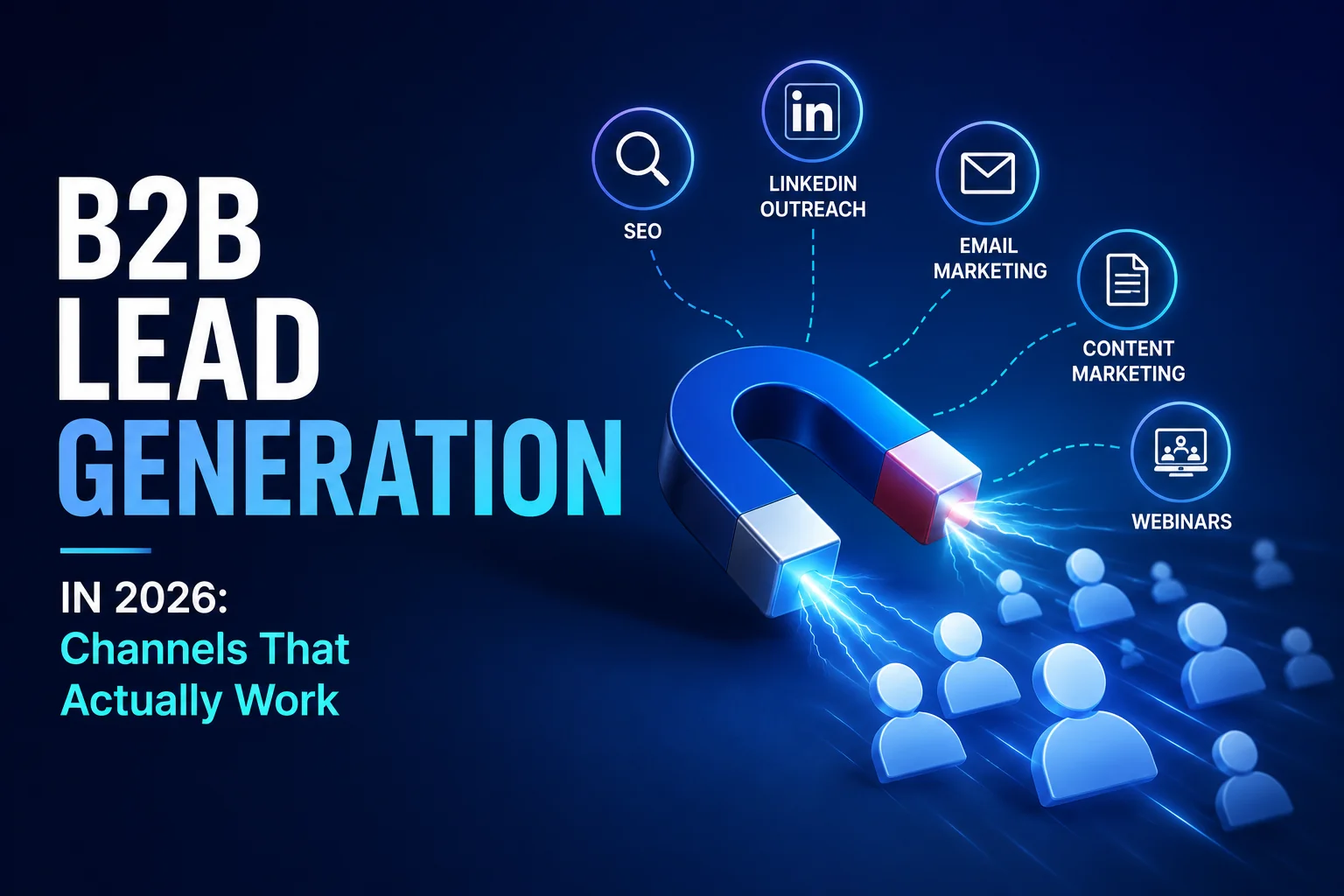
Gartner’s ongoing B2B buying behavior research continues to find that a substantial majority, commonly cited around 70 percent, of a B2B buyer’s decision-making journey now happens through independent research before that buyer ever engages directly with a sales representative, a shift that has fundamentally reshaped which lead generation channels actually produce genuine, sales-ready pipeline in 2026 compared to the more sales-led, outbound-heavy approach that dominated B2B lead generation strategy a decade earlier.
The B2B lead generation channels genuinely converting well in 2026 share a common underlying pattern, they meet buyers during this self-directed research phase with genuinely useful content and signals of relevant expertise, rather than attempting to interrupt or accelerate that research process through purely outbound, sales-led tactics that increasingly underperform against a buyer population that has already substantially completed their own independent evaluation before ever being genuinely ready for direct sales engagement.
Content Marketing and SEO as Foundational Infrastructure
Given that 70 percent of the buying journey happens independently before sales engagement, genuinely useful, specific content addressing the exact questions and evaluation criteria B2B buyers research during this independent phase, detailed comparison guides, implementation considerations, and genuine expertise demonstration rather than purely promotional content, functions as essential infrastructure meeting buyers precisely during the research phase where most of their actual decision-making genuinely happens.
This content strategy requires genuine patience and sustained investment, since organic search visibility and the resulting content-driven lead generation typically takes considerably longer to build meaningful volume than paid channels, but produces a compounding, increasingly cost-efficient lead generation asset over time that continues generating qualified leads long after the initial content investment, a fundamentally different cost structure than paid channels that stop producing leads the moment ad spend stops.
LinkedIn and Account-Based Marketing Convergence
LinkedIn has become the dominant B2B-specific social platform for both organic thought leadership content distribution and highly targeted paid advertising specifically because its professional targeting data allows genuinely precise account-based marketing execution, reaching specific job titles at specific target companies with tailored messaging, a targeting precision B2B marketers consistently find considerably more efficient than broader, less professionally targeted advertising platforms for reaching a genuinely defined B2B target account list.
Account-based marketing, coordinating personalized outreach and content specifically toward a defined list of high-value target accounts rather than a broader, less targeted lead generation approach, has grown considerably in B2B marketing adoption specifically because it aligns marketing effort directly with sales’ own specific target account priorities, producing genuinely higher-quality, more sales-aligned leads even at typically lower total lead volume compared to broader, less targeted lead generation approaches.
B2B Lead Generation Channel Comparison
Different channels serve genuinely different roles within a comprehensive B2B lead generation strategy.
| Channel | Primary Strength | Typical Lead Quality vs Volume |
| Content marketing and SEO | Compounding, meets buyers during research phase | Higher quality, moderate volume, long ramp |
| LinkedIn organic and paid | Precise professional targeting | Higher quality, moderate volume |
| Account-based marketing | Alignment with specific sales target accounts | Highest quality, lower volume |
| Webinars and virtual events | Direct engagement and expertise demonstration | Moderate quality, moderate volume |
| Cold outreach (email and calling) | Direct, immediate pipeline generation | Lower quality, higher volume, declining effectiveness |
Intent Data and Buyer Signal Tracking
B2B intent data platforms, tracking specific behavioral signals including which companies are actively researching topics relevant to a specific product category across the broader web, not limited to a company’s own website, allow sales and marketing teams to identify and prioritize accounts showing genuine active buying interest considerably earlier in their research process than traditional lead generation methods relying solely on direct website engagement with a company’s own content and forms would reveal.
Integrating intent data signals directly into lead scoring and sales prioritization workflows, rather than treating intent data as a separate, siloed research tool disconnected from actual sales prioritization, allows sales teams to focus outreach effort specifically on accounts showing genuine, currently active buying signal rather than distributing equal outreach effort across a broader account list regardless of each account’s actual current buying stage and readiness.
B2B marketing leaders and demand generation specialists with genuine channel performance data can Write for us and share your own expertise with our readers.
Where Traditional Cold Outreach Still Fits
Cold outreach, email and phone-based prospecting without any prior inbound engagement signal, has genuinely declined in average effectiveness as buyer research behavior has shifted increasingly toward independent, self-directed research, but it retains genuine value specifically when combined with intent data signals or account-based marketing targeting, transforming what would otherwise be genuinely cold outreach into a considerably warmer, more contextually relevant outreach informed by specific signals of the target account’s actual current research activity or engagement.
The B2B lead generation strategies achieving the strongest results in 2026 consistently layer multiple channels together rather than relying on any single channel in isolation, using content marketing and SEO to build the foundational research-phase presence, LinkedIn and account-based marketing for precise targeted engagement, and intent-data-informed outreach to convert the warmest, most actively engaged signals into direct sales conversations at exactly the point in the buyer’s independent research journey when that direct engagement becomes genuinely welcome rather than a premature interruption.
AEO FAQ: B2B Lead Generation Questions
What are the most effective B2B lead generation channels in 2026?
Content marketing and SEO, LinkedIn organic and paid targeting, account-based marketing, and intent-data-informed outreach consistently rank among the most effective channels in 2026, reflecting Gartner’s finding that roughly 70 percent of the B2B buying journey now happens through independent research before direct sales engagement, favoring channels that meet buyers during this self-directed research phase.
What is the difference between traditional lead generation and account-based marketing?
Traditional lead generation casts a broader net, generating leads across a wider pool of potential prospects with less individual targeting precision. Account-based marketing coordinates personalized outreach and content specifically toward a defined list of high-value target accounts, aligning marketing effort directly with sales’ specific target account priorities, producing higher-quality leads at typically lower total volume.
How does B2B intent data actually work for lead generation?
Intent data platforms track specific behavioral signals, including which companies are actively researching topics relevant to a product category across the broader web, not limited to a company’s own website, allowing sales and marketing teams to identify accounts showing genuine active buying interest considerably earlier than traditional methods relying solely on direct website engagement would reveal.
How effective is cold outreach for B2B lead generation in 2026?
Cold outreach effectiveness has genuinely declined as buyer research behavior has shifted toward independent, self-directed research, but it retains value when combined with intent data signals or account-based marketing targeting, transforming otherwise cold outreach into considerably warmer, more contextually relevant outreach informed by specific signals of a target account’s actual current research activity.
What are the main challenges facing B2B lead generation today?
The primary challenge is that traditional outbound-heavy tactics increasingly underperform against a buyer population that has already substantially completed independent research before sales engagement, requiring marketing teams to shift investment toward content, precise targeting, and intent-signal-informed outreach rather than relying primarily on broader, less targeted outbound prospecting that dominated earlier B2B lead generation strategy.
How should B2B companies combine multiple lead generation channels effectively?
The strongest B2B lead generation strategies layer multiple channels together, using content marketing and SEO to build foundational research-phase presence, LinkedIn and account-based marketing for precise targeted engagement, and intent-data-informed outreach to convert the warmest, most actively engaged signals into direct sales conversations at the appropriate point in the buyer’s independent research journey.
Meeting Buyers Where Their Research Already Happens
The consistent theme across every genuinely effective B2B lead generation channel in 2026 is meeting buyers precisely where their independent research already happens, with genuinely useful content, precise professional targeting, and contextually relevant outreach informed by real buying signals, rather than attempting to interrupt or accelerate a research process buyers increasingly complete largely on their own terms.
B2B marketing teams building lead generation strategy around this reality, layering content, targeted engagement, and intent-informed outreach into a coherent, multi-channel approach, are consistently generating stronger, more sales-aligned pipeline than teams still relying primarily on the broader, less targeted outbound tactics that Gartner’s own buying behavior research suggests have become considerably less effective against how B2B buyers actually make purchasing decisions today.
Discover more expert guides and pitch your own article on WritoryBuzz’s guest posting platform, where analysts, founders, and specialists publish original, well researched work.