Home
Categories
Free Tools
Write For UsAbout UsContact

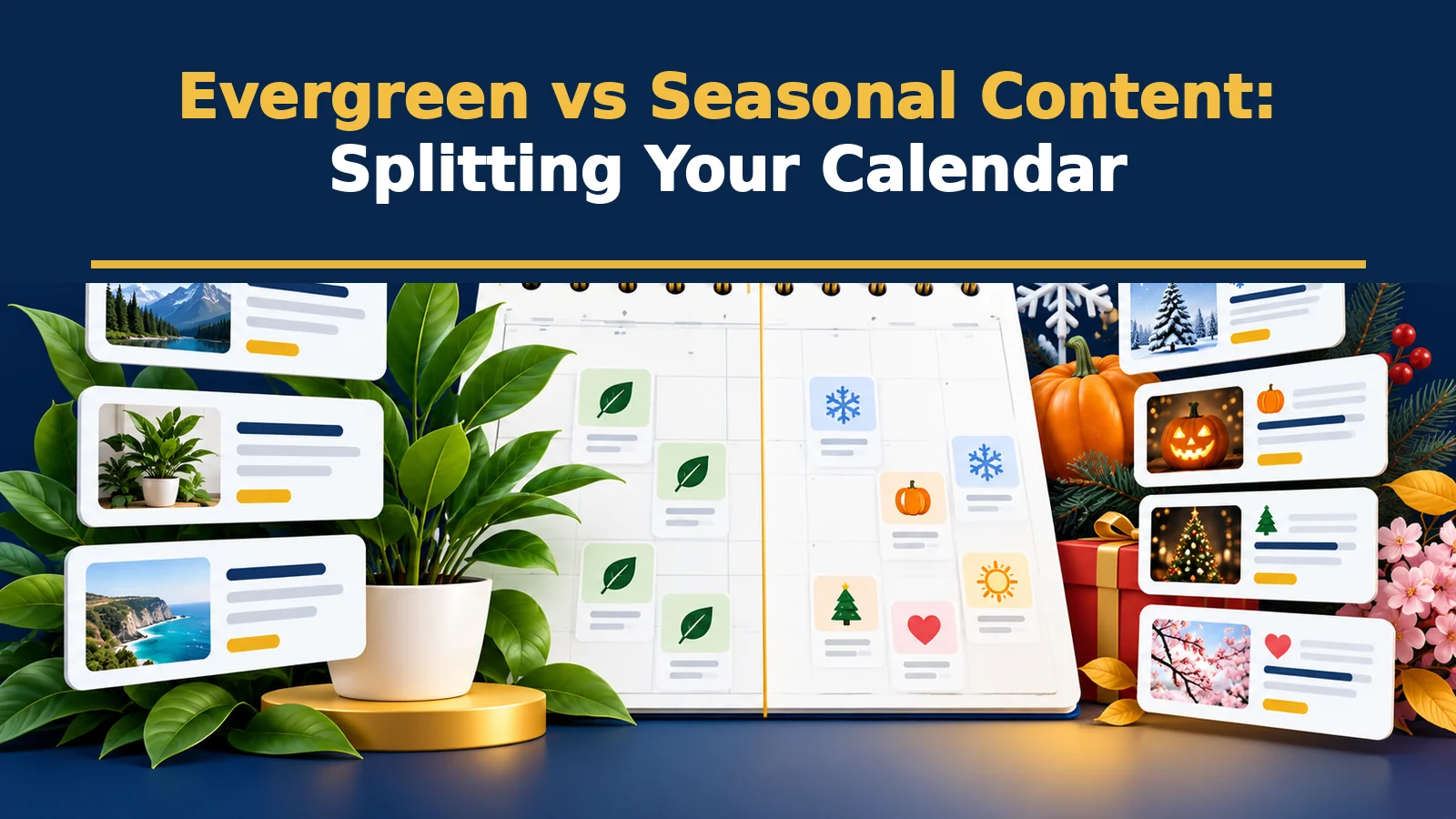
Evergreen vs Seasonal Content: Splitting Your Calendar

How much of your blog calendar should be evergreen and how much seasonal? Use a 70/30 starting split, a 6 to 8 week lead time and a plan for expired posts.

October 28, 2026 6 min read
Evergreen vs Seasonal Content: Splitting Your Calendar

Key takeaways

  • Evergreen content brings steady, compounding traffic; seasonal content brings predictable but short peaks.
  • A 70/30 evergreen-to-seasonal mix is a sensible starting point for B2B; consumer brands may run 60 to 70% seasonal.
  • Plan seasonal posts 6 to 8 weeks before the peak, because search interest builds early.
  • Refresh top evergreen pages at least quarterly; substantive updates outperform date-only changes.
  • For expired seasonal posts, update them yearly on the same URL, redirect to a hub, or leave them.

Arcalea suggests starting with about 70% evergreen and 30% seasonal content for a B2B site, and 60 to 70% seasonal for consumer brands, with seasonal pieces planned 6 to 8 weeks before the peak.

Those ratios are starting points, not laws, but they highlight a real trade-off. Evergreen posts build steady traffic over years. Seasonal posts, such as Diwali guides or tax-filing explainers, can bring large short bursts but expire quickly if you let them. A blog that only chases seasons rebuilds from zero each year, and one that ignores them misses predictable demand. This guide shows how to split your calendar and how to keep seasonal posts working year after year.

Evergreen and Seasonal: What Each Does

TypeExamplesStrengthWeakness
EvergreenHow-to guides, definitions, checklists, templatesSteady traffic, compounds over timeSlow to start; needs refreshing
SeasonalDiwali gift guides, festival dates, tax deadlines, holiday travelPredictable demand, high intent at peakShort window; expires if not maintained
HybridAnnual guides on one URL, such as “Diwali gift ideas” updated each yearBuilds authority across yearsNeeds yearly editing time

The best content plans use all three. Hybrid pages are especially useful because the URL keeps its history, links and ranking while the details change each year.

How to Split Your Calendar

Start from audience behaviour, then adjust. Arcalea’s guidance suggests 70/30 evergreen to seasonal for B2B, and more seasonal weight for consumer brands whose sales cluster around festivals and holidays. A blog about personal finance, for example, can lean evergreen with seasonal peaks around tax time and festive shopping.

  • List your yearly peaks: festivals, exam seasons, tax dates, travel seasons and sale events.
  • Count what you earn from each: use Search Console to see which months bring traffic and clicks.
  • Set a starting ratio: for example 70/30, then adjust quarterly based on results.
  • Reserve time for refreshes, not just new posts.
  • Leave room for news and trends, as we describe in our newsjacking guide.

Timing Seasonal Content

Searchers begin looking weeks before the event. Publish seasonal posts 6 to 8 weeks before the peak so they can be indexed, gain links and rank in time. For a festival like Diwali, that means starting in September, and updating dates and details as the festival approaches. Shopping interest in India tends to peak two to three weeks before Diwali, according to earlier Think with Google research.

Weeks before peakAction
6 to 8 weeksPublish the main guide; submit for indexing; plan supporting posts
4 to 6 weeksAdd internal links, images and FAQs; share on social media
2 to 3 weeksUpdate dates, offers and details; promote in email
Peak weekFix errors; publish a short last-minute version if needed
After the peakAdd results or lessons; schedule next year’s refresh

Keep Evergreen Fresh and Seasonal Alive

Refresh Evergreen Pages

Review your top evergreen pages at least quarterly. Arcalea reports that substantive updates earned about 3.8 times more AI citations than date-only changes, so verify facts, replace outdated examples and improve the answer, not just the timestamp.

What to Do With Expired Seasonal Posts

  • Turn it into an annual resource: update the same URL every year with new dates and details.
  • Redirect with a 301 to a relevant evergreen hub if the topic will not return.
  • Leave it if it still gets visits and is clearly dated, with a note that points to current content.

Avoid creating a new URL every year for the same topic, which splits links and creates the overlap described in our keyword cannibalization guide.


Related readCustomer Onboarding Emails for SaaS: A Simple SequenceRead →

Free tools for Digital Marketing

FAQs

What is the difference between evergreen and seasonal content?

Evergreen content stays relevant for a long time, such as how-to guides and definitions. Seasonal content is tied to a particular time, such as a festival, a tax deadline or a holiday season. Evergreen builds steady traffic; seasonal gives predictable peaks but needs timely publishing and regular maintenance. Hybrid pages, which are updated yearly on the same address, are often the most efficient way to benefit from both types of content.

What ratio of evergreen to seasonal content should I publish?

Arcalea suggests starting around 70% evergreen and 30% seasonal for B2B, and 60 to 70% seasonal for consumer brands with festival-driven sales. Treat these as starting points and adjust using your own Search Console data, audience behaviour and available editing time across the year. Ratios should follow your business: a sweet shop and a tax advisor will both be seasonal, but their peaks fall in very different months.

How early should I publish seasonal content?

Plan seasonal posts 6 to 8 weeks before the peak, so they can be indexed, earn links and rank in time. Update details closer to the event. Earlier Think with Google research found shopping searches in India peak about two to three weeks before Diwali, so the main guide should already be live. Check your own data to see when queries start rising each year, because your audience may begin searching earlier or later than the average.

Should I delete old seasonal posts?

Usually not. Check whether the post still gets traffic or backlinks. If the topic returns every year, update the same URL. If it will not return, redirect it with a 301 to a relevant page. Deleting without a redirect wastes the post’s links and returns an error to visitors. If many sites link to the old post, a redirect or yearly update keeps those links working for you instead of leaving them behind.

How often should evergreen posts be updated?

Review top evergreen pages at least quarterly, and update sooner when facts, tools or rules change. Make real improvements, such as corrected data, better examples and clearer answers. Changing only the date does little for readers, and Arcalea reports that substantive updates earn far more AI citations. Add a short note on the page explaining what changed and when, so readers can trust the information is current.

Can one post be both evergreen and seasonal?

Yes. An annual guide on a stable URL, such as a Diwali gift guide updated each year, is a hybrid. It keeps history and links while the details change. This approach is efficient, but plan time each year for fresh research, dates, images and a clear updated note for readers. To do this, keep the URL free of the year, and put the year in the title and the opening paragraph, where it is simple to edit annually.

Plan the Year, Not Just the Week

A balanced calendar protects you from both extremes: a blog that disappears after each festival and one that misses the moments readers are actively looking. Start with a ratio, measure, and adjust.

Mark your five biggest yearly peaks on a calendar this week and count back eight weeks from each.

Sources: Arcalea: Evergreen vs seasonal content; Think with Google India; Google Search Console Help: Performance report

Was this guide helpful?
Jenny Edwards
Written by

Jenny Edwards

Jenny Edwards is an SEO and Digital Growth Specialist with 5+ years of experience in Technical SEO, AI SEO, International SEO, and organic growth strategy. She helps businesses improve search visibility through data-driven SEO, content optimization, search experience improvements, and AI-focused search strategies. Her work focuses on helping brands grow through sustainable and future-ready digital marketing.

More from this author

More in Digital Marketing

View all in Digital Marketing →

Keep exploring

Have expertise to share? Write for WritoryBuzz.Read the guidelines and send us your pitch.
Become a contributor
Free tools

63 free tools for writers, SEOs and developers

Open one in your browser and start. Nothing to install, and your text stays on your device.

PrivateInstant resultsNo sign up
Write for us

Have expertise to share?

  • Original, well researched guides
  • Reviewed by our editors
  • 29 categories to publish in
Submit a guest post
© 2026 WritoryBuzz. All rights reserved.Back to top