
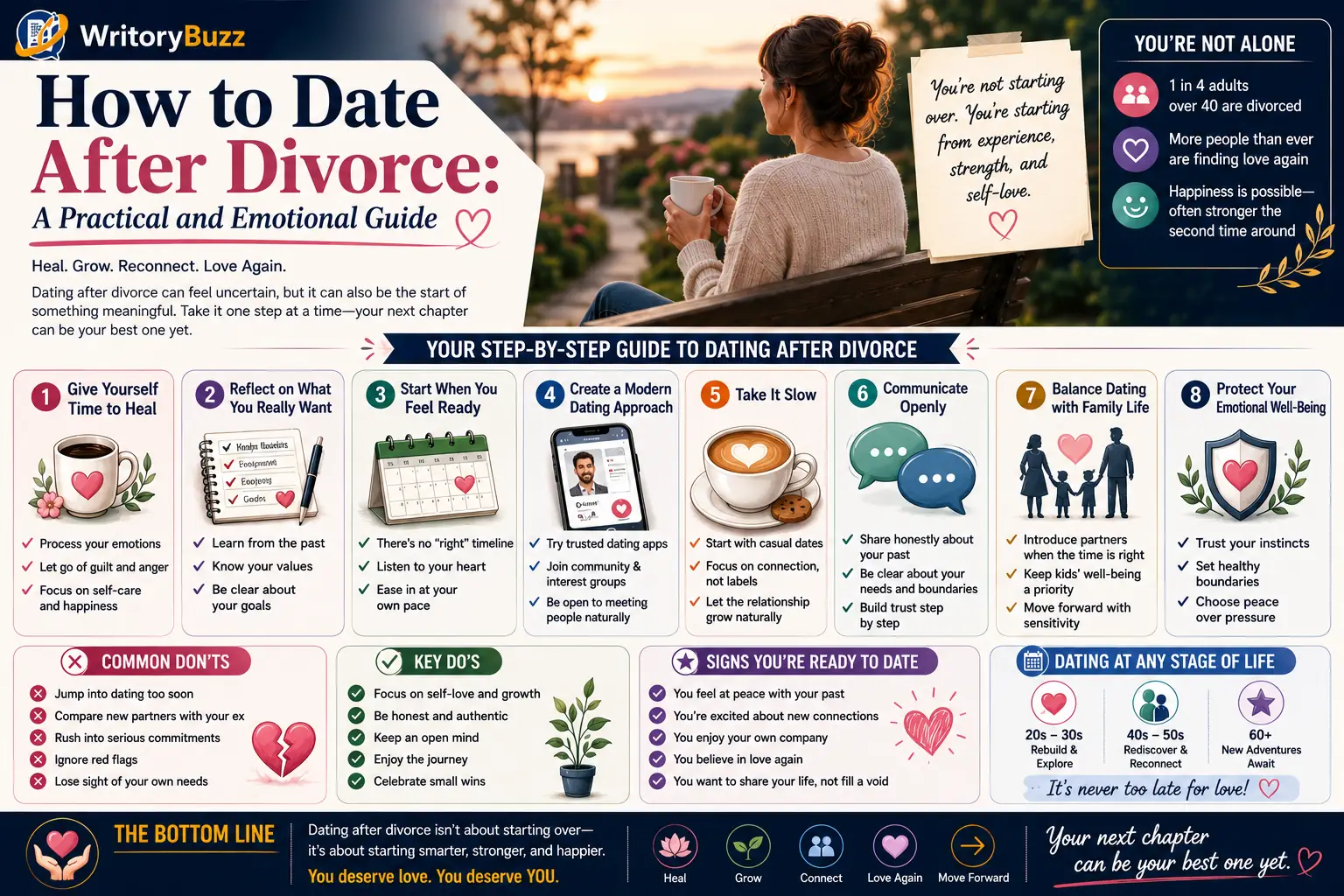
The average time between separation and first post-divorce date is 17 months according to research from the Journal of Social and Personal Relationships. Some people are ready in six months. Some take years. There is no correct timeline, and the pressure to establish one creates more problems than it prevents. The question is not ‘how long should I wait?’ but ‘what does being ready actually look like?’
Dating after divorce is different from dating before marriage in ways that deserve acknowledgment rather than minimisation. You have more life experience, clearer values, and better self-knowledge. You also have relationship history that shapes what you bring to new relationships, and potentially children whose wellbeing is central to every decision you make. Both of these realities are assets when approached thoughtfully.
Are You Ready? The Honest Assessment
Emotionally ready does not mean healed: Waiting until you feel completely over your marriage to date again produces permanent waiting for most people. A more useful threshold: you can think about your ex without primary emotional responses being anger or grief, you are dating from interest rather than loneliness or revenge, and you can imagine a future that does not involve your former partner.
The loneliness trap: Dating primarily to fill the emotional void of separation produces relationships that serve an immediate emotional need without genuine compatibility assessment. Distinguishing loneliness-driven dating from readiness-driven dating is worth honest self-reflection before starting.
Therapy before dating: This is not universally required, but for divorces involving infidelity, significant conflict, or patterns you want to understand before repeating, a therapist provides perspective that friends and family cannot. Understanding what you contributed to the end of your marriage is not blame — it is information that produces better choices in subsequent relationships.
The Practical Realities of Modern Dating After Divorce
Dating Apps and Their Appropriate Use
The majority of post-divorce dating in 2026 begins on apps. This is not inferior to meeting organically — it is simply where the pool of eligible, single adults is concentrated. The challenge is managing app fatigue and maintaining the energy for genuine connection when the volume and transactional nature of apps can make it feel dehumanising.
App selection: Hinge’s ‘designed to be deleted’ positioning has the strongest track record for relationship-seekers rather than casual dating. Bumble’s mandatory woman-initiates format reduces low-quality contact for women. Match has the highest proportion of users specifically seeking long-term relationships. Tinder’s larger user base comes with more varied intent.
Profile honesty: Mentioning children on a profile upfront filters out people who are not open to dating a parent, which is more efficient than discovering this incompatibility later. Presenting your actual current life rather than a curated projection produces better early-stage compatibility matching.
First Dates After Divorce
The nervousness of first dates after a long marriage is real and does not reflect poorly on you. The social skills involved in early romantic connection atrophy from disuse. Expect the first few dates to feel awkward regardless of the person you are meeting. The awkwardness typically resolves within 3 to 5 dates across different people.
Managing expectations: A first date after divorce is information-gathering, not evaluation for marriage. The habit of assessing everyone for long-term compatibility within the first 30 minutes is both anxiety-producing and inaccurate. First dates answer one question: is this person interesting enough to see again?
Children and New Relationships
This deserves more thoughtfulness than most post-divorce dating guides provide. The general research-backed guidance: do not introduce new partners to children until the relationship is well-established (minimum 3 to 6 months of consistent dating), the introduction should be casual and low-pressure rather than formally announced, and children’s comfort should be the primary driver of the pacing of any integration.
Your children’s emotional state: Children of divorce are often still processing significant emotional disruption. A new romantic partner represents another change in the stability they need most. This does not mean forever delaying a new relationship. It means being appropriately patient about integration timing.
Communication with your ex: For divorced parents sharing custody, communication about a new partner is a matter of discretion versus transparency that depends heavily on your co-parenting relationship. Legal agreements sometimes include notification requirements. Regardless, avoiding surprise introductions through the children’s reporting protects everyone.
Common First-Year Dating Mistakes After Divorce
Comparing new people to your ex: Both favourably and unfavourably. New partners are different people in different contexts. Comparisons are inevitable and mostly unhelpful.
Moving too fast: The intensity of connection after the desert of a failing marriage or the loneliness of separation can make a new relationship feel more significant faster than it genuinely is. The emotional need that the other person is meeting is real. Whether the relationship itself warrants the pace it is moving is a separate question.
Moving too slowly out of fear: The reverse problem. Using legitimate caution as indefinite postponement of vulnerability. At some point, every new relationship requires accepting that you might be hurt again.
Looking for your former spouse in a new body: Either choosing someone as similar as possible to your ex, or avoiding anyone who shares any characteristics. Neither extreme represents clear thinking about what actually works for you.
How long should you wait to date after divorce?
Research suggests an average of 17 months between separation and first post-divorce date, but the range is enormous and no specific timeline is correct for everyone. Readiness signs: you can think about your ex without primary grief or anger, you are dating from genuine interest rather than loneliness, and you can imagine a future that does not involve your former partner.
How do you introduce a new partner to your children after divorce?
Wait until the relationship is well-established (minimum 3 to 6 months of consistent dating) before introductions. Make the first introduction casual and low-pressure rather than formally announced. Follow the children’s pace for subsequent contact, not your own. Research consistently shows children adjust better to new parental partners when introduced gradually over time.
What dating apps work best after divorce?
Hinge has the strongest reputation for relationship-seekers post-divorce. Bumble reduces low-quality contact with its woman-initiates format. Match has the highest proportion of users seeking long-term relationships. Tinder offers the largest pool with more varied intent. Honest profiles mentioning children efficiently filter for compatibility.
Is it normal to feel anxious about dating after divorce?
Yes, completely. Social skills involved in early romantic connection atrophy from disuse during a long marriage. First-date nervousness after years of partnership does not reflect anything about your readiness or desirability. Most post-divorce daters find the awkwardness resolves after a few dates across different people.
Should you go to therapy before dating after divorce?
Not universally required but recommended if: the divorce involved infidelity, significant conflict, or patterns you recognise from previous relationships that you want to understand before repeating. Understanding what you contributed to the end of your marriage is not self-blame it is information that produces better choices. A therapist provides this perspective more effectively than friends or family.
What are the biggest mistakes people make dating after divorce?
Moving too fast due to loneliness or emotional intensity. Comparing new partners to the ex (both favourably and unfavourably). Introducing children to new partners too soon or too abruptly. Dating primarily to fill emotional void rather than from genuine readiness. Avoiding all vulnerability indefinitely under the guise of appropriate caution.
Date at Your Own Speed
The most important thing about dating after divorce is that it is yours to do on your timeline, at your pace, by your standards. There is no externally correct speed. The pressures from well-meaning people who are concerned about your singlehood or who think you are moving on too quickly are both real and irrelevant to what is actually right for your life.