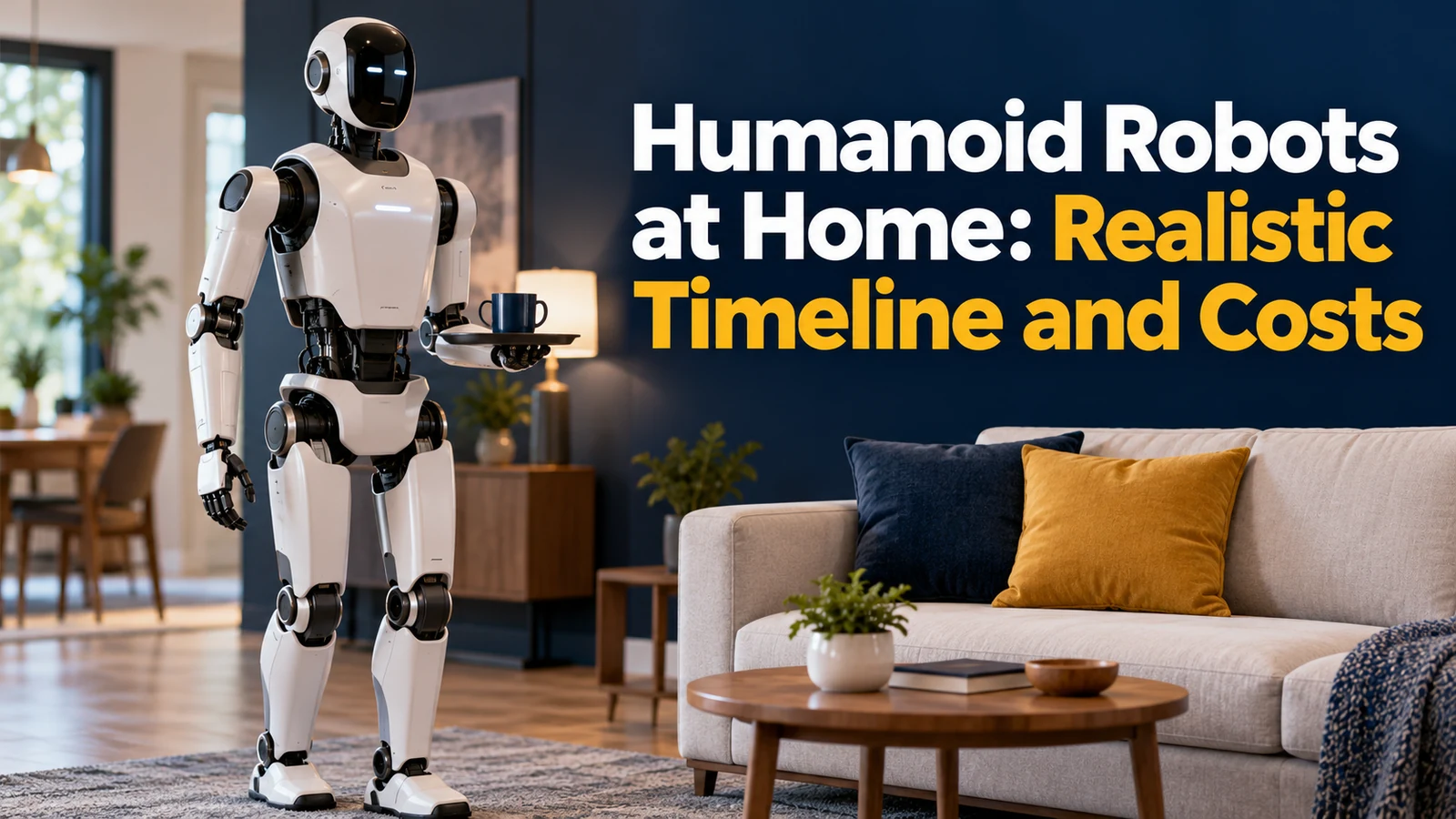
The Robot Report, in an October 30, 2025 article on the 1X NEO launch, says early access costs 20,000 dollars with priority delivery in 2026, or 499 dollars a month on a subscription. It is the clearest price anchor yet for a humanoid robot for household chores, and it comes with a catch: for tasks NEO does not know, a human teleoperator may guide it.
This guide explains what the NEO home robot can and cannot do, what a realistic timeline looks like, what it costs, and what to weigh on privacy before you pre-order. It draws on The Robot Report and DroneXL.
What the 1X NEO Is Meant to Do
The 1X NEO is a home humanoid robot, about 5 feet 6 inches tall and 66 pounds, according to DroneXL and The Robot Report. It can lift 154 pounds and carry 55 pounds. Day-one tasks include opening doors for guests, fetching items and turning off lights at night.
Owners can give NEO a task list and a schedule, such as folding laundry or tidying a room. The Robot Report says it uses speech and vision, can recall context such as birthdays and grocery lists, and will gain skills through software updates.
How Much a Home Humanoid Robot Costs
The headline price is large. The Robot Report and DroneXL give the same numbers.
| Cost item | Figure (The Robot Report, DroneXL) |
|---|---|
| Early access purchase | 20,000 dollars |
| Subscription | 499 dollars per month, six month minimum (DroneXL) |
| Deposit | 200 dollars, refundable (DroneXL) |
| Delivery | Planned for 2026, mainly in the US, other markets from 2027 |
Over a year, the subscription comes to 5,988 dollars, so it takes more than three years of subscription fees to reach the purchase price, before any updates or repairs. Check the current terms before you pay, since they may change.
What Teleoperation Means in Practice
For chores NEO does not yet know, owners can schedule a 1X teleoperator to guide it through the task, which also helps it learn, according to The Robot Report. DroneXL reports that the Wall Street Journal found NEO could not perform any task autonomously in testing, and that the CEO said much of the work will be done by teleoperators at first.
| Task in the WSJ test (via DroneXL) | Time taken |
|---|---|
| Fetching a water bottle | Over a minute |
| Loading dishes | About five minutes |
| Folding one sweater | About two minutes |
Multiple reports also described its movements as slow and erratic. That is useful context for anyone expecting a fully independent helper in 2026.
Privacy: What You Agree To
DroneXL reports that buyers must accept remote operators will view the inside of their homes. Privacy tools include face blurring, no-go zones and owner-controlled access scheduling, and The Robot Report confirms the no-go zones and face blurring.
| Privacy question | What to ask before you buy |
|---|---|
| Who can see my home? | Which operators, when and under what rules |
| What is recorded? | Whether video, audio and maps are stored, and for how long |
| Can I limit access? | How no-go zones and scheduling work in practice |
| Is data used for training? | DroneXL quotes the CEO saying data helps improve the product |
Our guide to smart home tech covers wider privacy habits, and our piece on AI regulation before 2027 tracks the rules that may apply.
A Realistic Timeline for Household Robots
DroneXL notes that the product is not autonomous at launch and that it may take years to reach that point, and that Morgan Stanley estimates only 80 million humanoid robots will operate in homes by 2050. Those are forecasts and can change.
| Stage | What to expect |
|---|---|
| 2026 | Early adopters, heavy teleoperation, limited tasks |
| Next few years | More tasks learned, though autonomy is uncertain |
| Longer term | Wider adoption if price, safety and trust improve |
The stage descriptions are our summary of the reporting, not a forecast from the companies.
Is a Humanoid Robot Worth It Compared With Cheaper Options
DroneXL contrasts NEO with DJI’s ROMO robot vacuum, which costs 1,299 to 1,899 euros and works autonomously today. For tasks such as floor cleaning, a proven specialised machine is a safer buy.
A humanoid may suit tech enthusiasts who want to support early development, and people with specific needs who can use help fetching or tidying. For most households, waiting for evidence of independent performance is sensible. See our roundup of the best AI gadgets in 2026 for devices that work today.