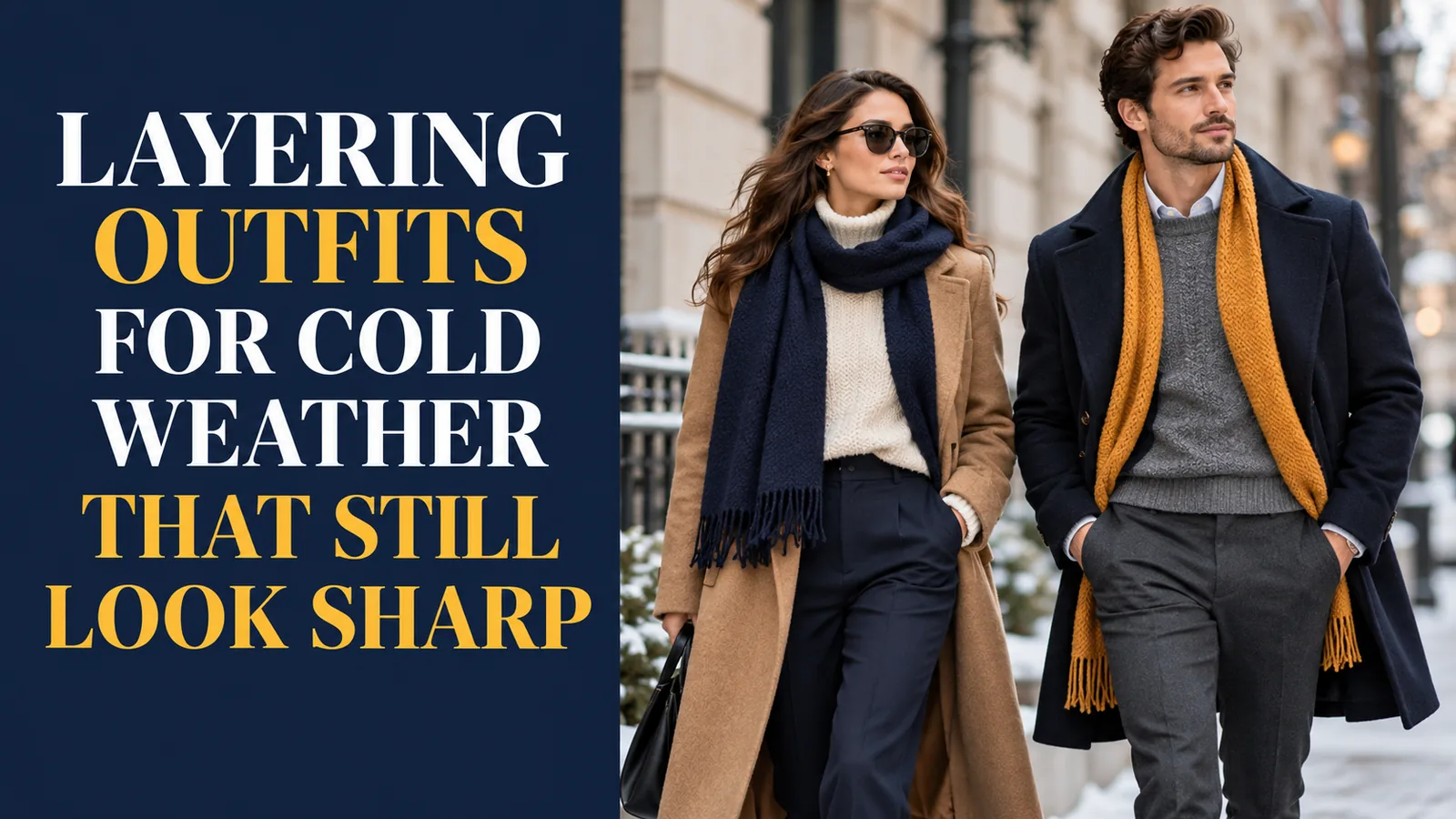
REI’s layering guidance reduces cold-weather dressing to three jobs: a base layer that sits against the skin and wicks sweat away, a middle layer that insulates by trapping body heat, and an outer layer that protects against wind, rain and snow. It also tells you to avoid cotton in cold or wet weather because it absorbs water and can leave you chilled. Those two rules explain why some people stay warm and look polished in winter while others are either freezing or bulky.
This guide adapts the three-layer system for everyday life, not just hiking. It covers the fabrics to choose, how to layer without looking like a snowman, outfit formulas for work, weekends and mild cold, and the mistakes that ruin otherwise good outfits. If you can follow three rules, you can build a winter wardrobe from a handful of pieces.
The Three-Layer Rule, Explained for Daily Life
The base layer does the least visible work and the most important. According to REI, it wicks sweat away to keep you dry, which prevents chilling. The middle layer insulates by trapping body heat, and the outer layer protects against wind, rain and snow. In everyday dressing, the base is a thin tee or long-sleeve top, the middle is a sweater, cardigan or fleece, and the outer is a coat or jacket.
| Layer | Job | Everyday examples | Fabric guidance (REI) |
|---|---|---|---|
| Base | Wick moisture and sit against skin | Thin long-sleeve top, thermal, camisole | Polyester or nylon, or merino wool and silk |
| Middle | Trap body heat | Sweater, cardigan, fleece, vest | Fleece stays warm when damp; down is very warm but loses power when wet; synthetic works when damp |
| Outer | Block wind, rain and snow | Coat, jacket, shell | Wind- and water-resistant shell |
REI adds a practical tip: you can remove layers you do not need but you cannot add ones you did not bring. Carry a thin extra layer in your bag when the weather changes through the day.
Fabrics to Choose and Avoid
For base layers, REI says synthetics such as polyester and nylon, or natural fibres such as merino wool and silk, all work, so choose based on preference. For middle layers, fleece stays warm when damp and dries quickly but wind passes through it, so pair it with a shell. Down is very warm for its weight but loses insulating power when wet, and synthetic insulation keeps working when damp. Avoid cotton in cold or wet weather, since it absorbs water and can leave you chilled.
Cotton tees are fine for indoor days when you are not sweating or getting wet, but under a coat on a long commute, a thin merino or synthetic top is a better choice. To plan which pieces you actually need, our capsule wardrobe guide is a good place to start.
How to Layer Without Looking Bulky
Start thin and go thicker as you move outward. Fitted base layers and a mid-weight sweater take less space than two chunky sweaters. Keep necklines varied: a crew neck under a V-neck, or a turtleneck under a blazer, creates visible depth. Match the lengths so the base peeks out slightly at the hem or wrists instead of bunching. Choose slim, smooth fabrics next to the body and add texture in the outer layers. Our guide to how to style oversized blazers shows how a structured layer can sit over knitwear without overwhelming it.
| Do | Avoid |
|---|---|
| Thin base, mid-weight middle layer, structured outer layer | Two or three bulky knits stacked together |
| Vary necklines so layers show | All layers with the same neckline |
| Choose a cohesive neutral palette | Clashing colours in every layer |
| Let the base peek out slightly | Hems that bunch or gap |
| Tailor sleeves so they layer smoothly | Tight sleeves under a thick coat |
Outfit Formulas for Work, Weekends and Mild Cold
| Occasion | Base | Middle | Outer | Finish |
|---|---|---|---|---|
| Office, cold commute | Thin merino or synthetic top | Fine-knit sweater or cardigan | Wool coat or tailored overcoat | Scarf, leather gloves, boots |
| Weekend errands | Long-sleeve tee | Fleece or hoodie | Insulated jacket or puffer | Beanie, sneakers or boots |
| Mild cold (cool but not freezing) | Thin long-sleeve top | Light sweater or vest | Trench or light jacket | Scarf, closed shoes |
| Evening out | Silk or fine-knit top | Blazer or tailored vest | Coat that fits over a blazer | Statement scarf, polished boots |
| Active day outdoors | Moisture-wicking base | Fleece or synthetic mid-layer | Wind- and water-resistant shell | Hat, gloves, warm socks |
For men, the formulas translate to a thin crew or henley, a fine-knit jumper or overshirt, and a coat. Our men’s style guide for 2026 shows how to build the pieces. For seasonal trends and colours, our fall fashion preview for 2026 is a good starting point. For mild cold, such as outfits for 45 degree weather, aim for a base, a mid-weight sweater and a light jacket, and add a scarf for flexibility.
Accessories That Do the Heavy Lifting
Heat escapes quickly from the head, hands and neck, so a hat, scarf and gloves add warmth without bulk. Wool socks and boots with good grip help on cold days. A scarf adds colour, and a belt over a coat or cardigan defines the waist. Keep accessories in a basket by the door so they are easy to grab. Pick one or two statement items, and keep the rest neutral to maintain a polished look.
Common Layering Mistakes
The most common mistakes are wearing cotton next to the skin on a wet day, choosing a coat that cannot fit over a sweater, layering too many thick items, ignoring wind, and forgetting that indoor heating means you need removable layers. Plan for temperature swings between outside and the office by choosing layers you can take off easily. If you are building a wardrobe on a budget, our affordable luxury fashion guide helps you spot pieces that last.