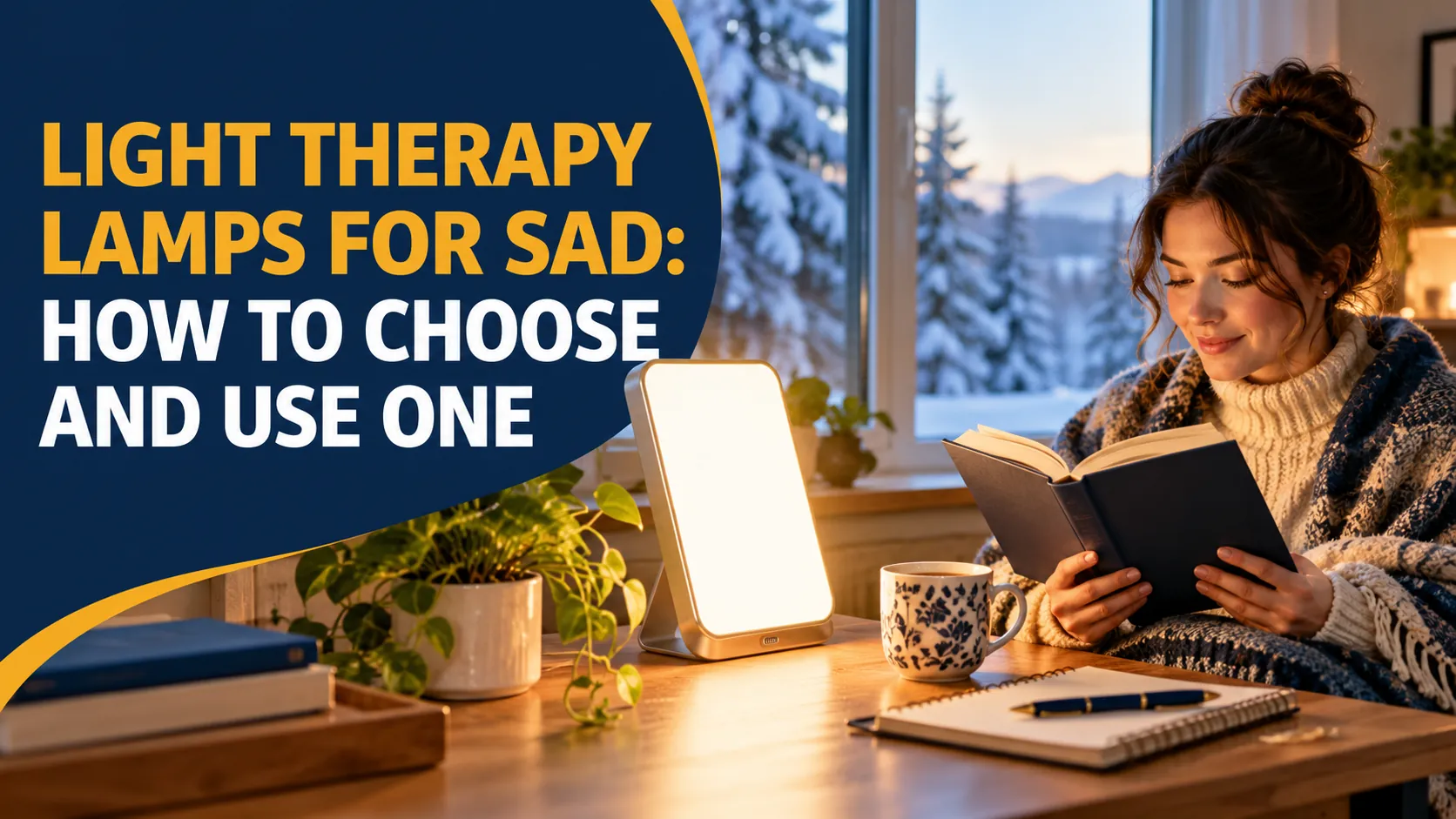
Mayo Clinic’s guidance on light therapy for seasonal affective disorder is specific: choose a light box of about 10,000 lux with most or all UV light filtered out, sit roughly 16 to 24 inches (41 to 61 cm) from it, and use it for about 20 to 30 minutes within the first hour after waking. The NHS gives the same brightness and adds that the lamp should be UV-free and carry a recognised safety mark.
Those few details are what separate a useful SAD lamp from an expensive desk ornament. This guide explains how light therapy works, how to choose a light therapy lamp, how to use it day by day, what side effects to watch for, and who should check with a doctor first. It is general information, not medical advice.
What Light Therapy Does and Who It Helps
Seasonal affective disorder is a pattern of depression that returns each winter. Researchers do not fully understand the causes, but Mayo Clinic points to disrupted circadian rhythm, lower serotonin and changes in melatonin when there is less sunlight. Light therapy uses a bright light box to replace some of that missing morning light.
The NHS lists light therapy alongside talking therapies and antidepressants as a treatment for SAD, and notes that many people need treatment every winter to stop symptoms returning. If you are not sure whether your symptoms are seasonal, our guide to the signs of chronic stress helps you separate the two.
How to Choose a Light Therapy Lamp
Choosing well means checking five things. Brightness: look for about 10,000 lux, the level Mayo Clinic and the NHS cite. Confirm that figure is delivered at the distance the manufacturer states, because brightness drops quickly as you move away. UV: choose a lamp that filters out most or all UV light. Safety marks: the NHS advises a lamp that carries a UKCA or CE mark where relevant. Size: a larger surface lets you move and read comfortably.
| Feature | What to look for | Why it matters |
|---|---|---|
| Brightness | About 10,000 lux at the stated distance | Matches the level used in guidance from Mayo Clinic and the NHS |
| UV filtering | Most or all UV filtered out | Reduces skin and eye risk |
| Safety marks | UKCA or CE mark where relevant, or the equivalent for your country | Shows basic compliance with product rules |
| Distance and angle | Works at 16 to 24 inches and can be angled | You can sit comfortably at the right distance |
| Size and surface | Large, even light surface | More comfortable and more consistent exposure |
| Controls | Timer, brightness settings, stable stand | Makes daily use easier |
| Return policy | Trial period or warranty | Not every lamp suits every room or routine |
Be careful with products sold as wellness gadgets without brightness or UV information. A pretty bedside lamp that glows warmly is not a light therapy device, and a sun lamp built for tanning is not a SAD treatment. Consider brands that publish test data, and read independent reviews before you buy.
How to Use a SAD Lamp
Mayo Clinic’s guidance is to use the light box within the first hour after waking, for about 20 to 30 minutes, with your eyes open but not looking directly at the light. Place it roughly 16 to 24 inches (41 to 61 cm) away, or follow the manufacturer’s instructions. Many people place it on a desk or kitchen table and have breakfast or answer email while using it.
Consistency matters more than perfection. Use it every morning, at the same time, rather than in bursts. Mayo Clinic also notes that some people begin treatment before symptoms normally start in the autumn or winter and continue past the point where symptoms usually lift, while others need continuous treatment to prevent recurrence. Pair the lamp with daylight outdoors, regular sleep and exercise, as the NHS advises. Our guides to better sleep habits and sleeping better tonight can help you build the routine around it.
Side Effects and Safety
Bright light can cause eyestrain, headaches or a wired feeling in some people, especially if they sit too close or use the lamp late in the day. If side effects appear, check the distance, shorten sessions, and talk to your doctor. Avoid using the lamp in the evening, since bright light late in the day can interfere with sleep.
Mayo Clinic advises talking with your health care provider before starting, and checking with an eye specialist if you have glaucoma, cataracts or diabetic eye damage. If you have bipolar disorder, get guidance first, because increasing exposure too fast or for too long may induce manic symptoms. The NHS adds that you should speak to a GP first if you have eye conditions or take medicines that increase light sensitivity.
Light Therapy Alongside Other Treatments
Mayo Clinic notes that light therapy may work better combined with an antidepressant or psychotherapy. The NHS lists talking therapies such as cognitive behavioural therapy and antidepressants as other treatments. If you are noticing a drop in mood that affects daily life, book an appointment rather than relying on a lamp alone. For general stress and anxiety support, our guide to managing anxiety without medication offers practical techniques.
| Option | How it helps | Notes |
|---|---|---|
| Light therapy | Replaces missing morning light | 10,000 lux, UV filtered, daily morning use |
| Talking therapy such as CBT | Changes thinking and behaviour patterns | Available via your doctor or, in the UK, NHS talking therapies |
| Medication | Adjusts brain chemistry | Prescribed by a doctor; discuss benefits and side effects |
| Daylight, exercise and routine | Supports body clock and mood | Free and works with the other options |
Common Mistakes to Avoid
The most common mistakes are buying a lamp without checking lux and UV, using it too far away, using it too late in the day, stopping after a few days because the effect is not instant, and treating the lamp as the only strategy. Another is starting too late in the season. Beginning in early autumn, before the darkest weeks, gives you a head start, which fits Mayo Clinic’s note that some people begin treatment before symptoms usually start.