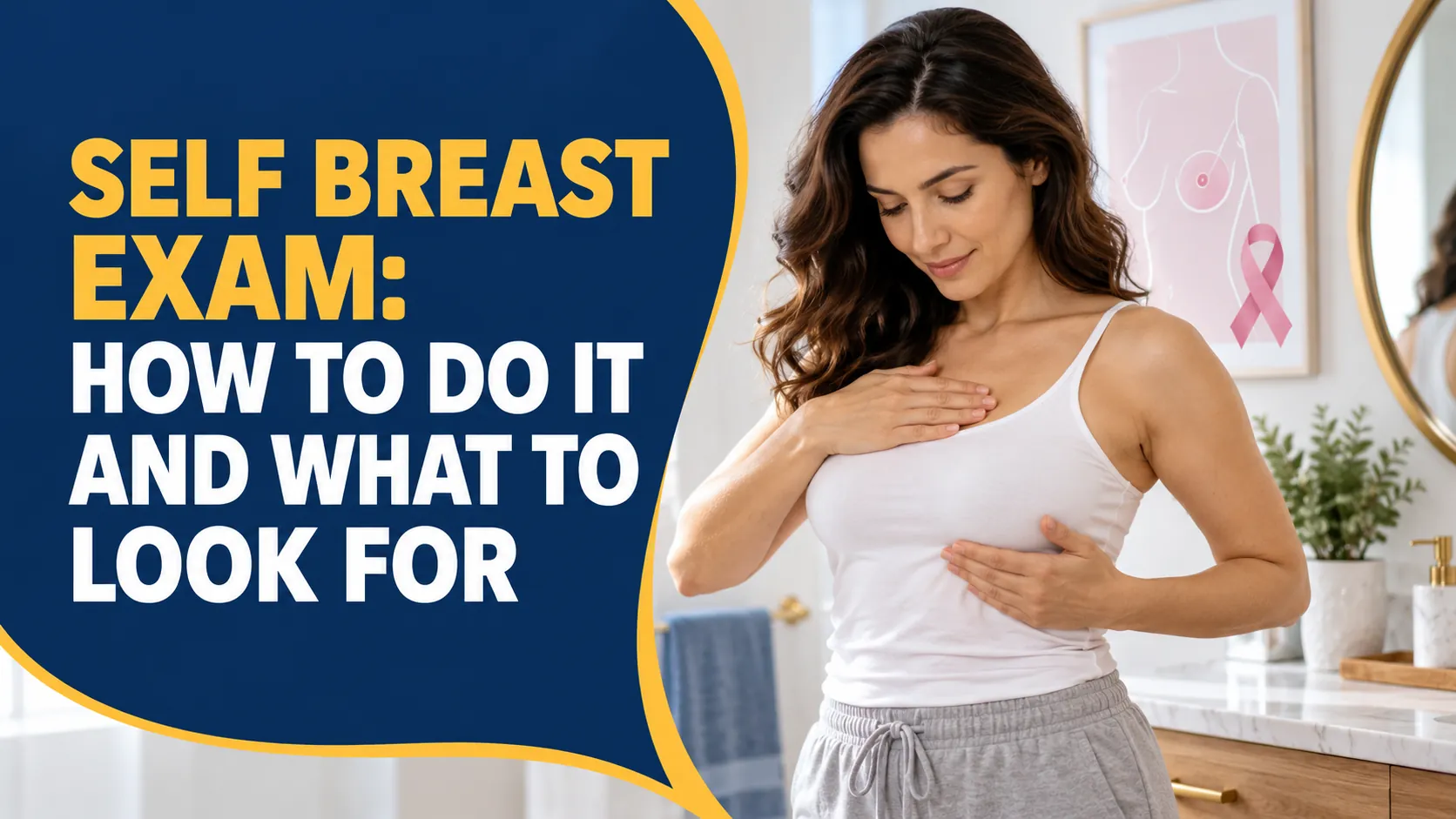
The American Cancer Society states plainly that most breast lumps are not cancer, yet any new lump or change should still be checked by a healthcare professional. The NHS advises checking your breasts or chest about once a month so you learn what is normal for you. Those two statements capture the modern view of the self breast exam: it is a habit of awareness, not a diagnosis.
This guide shows you how to do a self breast exam at home in simple steps, how often to check, what changes to look for, what to do if you find something, and where a self exam fits alongside mammograms. It is general information, not medical advice.
What a Self Breast Exam Is and What It Is Not
A self breast exam is a simple routine of looking at and feeling your own breasts so you notice changes early. Modern guidance often frames it as breast awareness: knowing how your breasts normally look and feel, and reporting changes promptly. The ACS says that breast self-exams and clinical exams are not sufficient for screening and are unlikely to find early cancer in average-risk people, and that mammograms remain the main screening tool. A self exam can still help you notice a change between screenings.
The NHS notes that there is no special technique to learn. What matters is regularity, so you can tell when something is different. If you are looking for screening ages and schedules, our separate guide to screening guidelines by age is the right companion.
How to Do a Self Breast Exam: Step by Step
The steps below follow the NHS guidance on how to check your breasts or chest. Choose a time when you are relaxed, and use a mirror and good light.
Step 1: Look in a mirror with your arms at your sides
Stand in front of a mirror with your shoulders straight and arms down. Look for changes in size, shape, colour or skin texture, and note whether one breast hangs differently from the other.
Step 2: Raise your arms
The NHS advises looking first with arms at your sides and then with arms raised. Raising the arms changes how the skin and breast tissue sit and may make dimpling or other changes more visible.
Step 3: Feel each breast in circles
Using the pads of your fingers, feel each breast or side of the chest in circles, covering the whole area up to the collarbone and into the armpit. Use light pressure and then firmer pressure, as the NHS describes, and avoid pressure that hurts.
Step 4: Check around the nipple
Feel around and over each nipple, and look for any changes in shape, direction or discharge.
Step 5: Try a different position
The NHS notes that the shower or lying down can make checking easier. Soapy skin is slippery, which can make it easier to feel changes, and lying flat spreads the breast tissue.
Step 6: Write down what you notice
Note the date and anything unusual. Over time, the notes help you separate normal cyclical changes from new ones.
How Often Should You Check?
The NHS suggests checking around once a month. If you menstruate, choosing the same point in your cycle each month can make comparisons easier, because breasts can change with the menstrual cycle, pregnancy, breastfeeding and after menopause. If you no longer have periods, pick a date you will remember, such as the first of the month.
To make it stick, link the check to an existing routine. Our guide to building good habits explains how to attach a new behaviour to an existing one, so it happens without willpower.
What Changes to Look For
The ACS lists the possible signs of breast cancer, noting that a new lump or mass is the most common symptom. The NHS lists similar changes, including a lump or swelling in the breast, chest or armpit, skin changes such as dimpling, orange-peel texture or redness (which can be harder to see on darker skin), changes in size or shape, nipple discharge, and nipple changes.
| Change | What it may look or feel like | Source |
|---|---|---|
| New lump or mass | A hard or firm area that feels different from the surrounding tissue | ACS, NHS |
| Swelling | Swelling in part or all of a breast, even without a lump | ACS |
| Skin changes | Puckering, dimpling or orange-peel texture; red, dry, flaky or thickened skin | ACS, NHS |
| Nipple changes | Nipple turning inward, or a rash that looks like eczema | ACS, NHS |
| Nipple discharge | Discharge that is not breast milk, possibly bloody | ACS, NHS |
| Pain | Breast or nipple pain; armpit pain that does not go away | ACS, NHS |
| Swollen lymph nodes | Swollen glands under the arm or near the collarbone | ACS |
| Size or shape change | One breast or side of the chest looks different from before | NHS |
Remember that these changes are common and often have other causes. The NHS notes that they should still be checked, because early assessment helps if cancer is the cause.
What to Do If You Find a Change
Do not panic and do not wait. The NHS recommends seeing a GP for any lump or swelling in the breast, chest or armpit, any change that differs from your usual, and breast or armpit pain that does not go away. In practice, book an appointment, note when you first noticed the change and whether it has varied with your cycle, and bring your notes.
Your clinician may examine you and arrange imaging or a biopsy if needed. The wait for results can be stressful, so plan support. If anxiety is building, our guide to managing anxiety without medication has practical techniques, and our article on mental health days explains how to ask for time away from work.
Self Exam, Clinical Exam and Mammogram: How They Fit Together
| Method | Who it is for | Role |
|---|---|---|
| Self exam or breast awareness | Everyone with breast tissue | Notice changes between screenings and report them promptly |
| Clinical breast exam | Women with symptoms, or as advised by a clinician | The ACS does not recommend routine exams for average-risk women |
| Mammogram | Women of screening age, per national guidelines | Detects cancer before it can be felt, per the CDC |
| MRI plus mammogram | Women at high risk | Yearly from about age 30 for high-risk women, per the ACS |
Men and trans or non-binary people with breast or chest tissue can also develop breast cancer, which is why the NHS guidance uses the language of breasts or chest. Anyone who notices a lump or change should seek assessment.