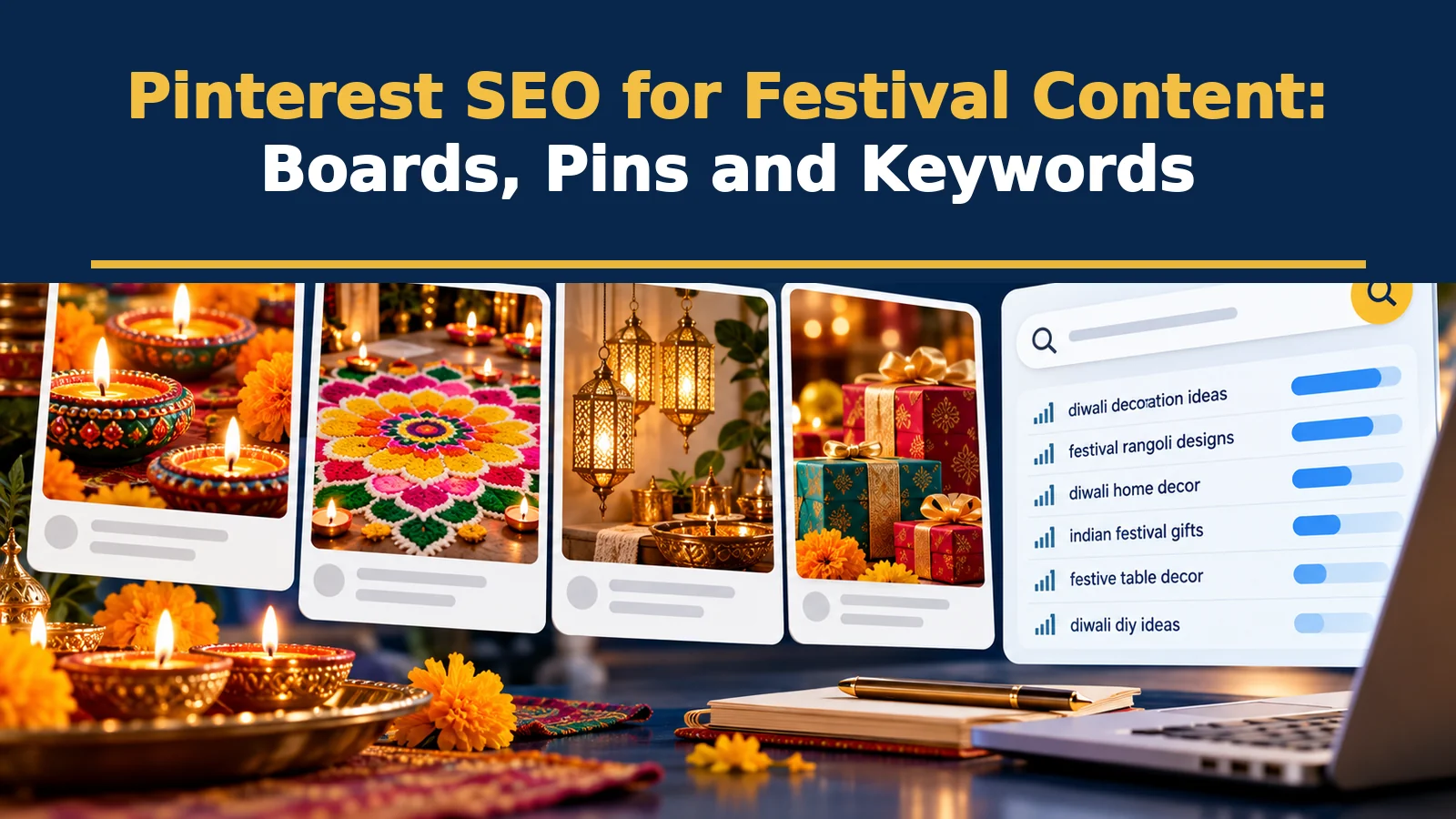
Pinterest is a search engine as much as a social network, and Tailwind notes that users often search months ahead for seasonal ideas, which makes it a strong match for festival content such as Diwali, Dhanteras and Bhai Dooj.
People use Pinterest to plan: rangoli designs, home decor, recipes, outfits and gifts. They search before the festival, not during it. That timing is an advantage for bloggers who publish early and organise their pins well. This guide shows how to find keywords, where to place them, how to build boards and how to schedule seasonal content so your pins are discoverable when planning begins.
How Pinterest Search Works for Bloggers
Pinterest matches a user’s search to pins, boards and profiles using keywords, plus the content of the image and engagement signals. That means each pin should describe what it shows and link to a page that delivers what the pin promises. For bloggers, pins act like extra entrances to your posts, and a pin can keep bringing visitors long after you share it.
Find Festival Keywords
- Search suggestions: type a seed such as “diwali” in the Pinterest search bar and note the suggestions.
- Guided search: the coloured tiles under a search show related subtopics, such as “diwali rangoli simple” or “diwali decor balcony”.
- Pinterest Trends: shows how interest in a term changes through the year and when it peaks.
- Trending pins and Today: browse what is currently being saved and recommended.
- Your own blog data: use Search Console queries to see festival phrases that already bring visitors.
| Seed | Specific variations to test |
|---|---|
| diwali rangoli | diwali rangoli simple, rangoli designs with diyas, easy rangoli for small spaces |
| diwali decor | diwali decor balcony, diwali decor ideas on a budget, diya decoration ideas |
| diwali gifts | diwali gift ideas for family, eco-friendly diwali gifts, diwali hamper ideas |
| bhai dooj | bhai dooj thali decoration, bhai dooj gift ideas, bhai dooj sweets |
Where to Place Keywords
| Element | Best practice |
|---|---|
| Pin title | Clear, specific, under 100 characters, main keyword early |
| Pin description | Natural sentences with key words first; describe the idea and the click benefit |
| Board name and description | Use searchable terms, such as “Diwali Decor Ideas”, not clever names |
| Profile name and bio | Include your main topic so Pinterest knows what you cover |
| Image alt text | Describe what is shown, as you would for web accessibility |
| Hashtags | Use a few relevant ones; they matter less than clear titles and descriptions |
| Destination URL | Link to a post that really matches the pin |
Avoid keyword stuffing. A pin titled “Easy Diwali Rangoli Designs With Diyas for Small Spaces” and a description explaining the five patterns inside will perform better than a list of repeated terms.
Build Boards and Pins That Last
Board Structure
Create a few focused boards rather than one huge board. For example: “Diwali Rangoli Designs”, “Diwali Home Decor”, “Diwali Gift Ideas”, “Diwali Sweets and Snacks”. Add your own pins and relevant ones from others, and keep them organised.
Pin Design
- Use vertical images, commonly 2:3, with clear subjects.
- Add short text overlays that say what the pin offers.
- Make several pin versions per post with different images and titles.
- Keep branding light and consistent so your pins are recognisable.
Seasonal Timing
Tailwind advises planning seasonal content early because users search months ahead. Use Pinterest Trends to find when interest in your festival terms starts to rise, publish the pins before that point, and consider shoulder seasons, the weeks before and after the peak. After the festival, keep boards live but remove expired details or update them next year.