Home
Categories
Free Tools
Write For UsAbout UsContact

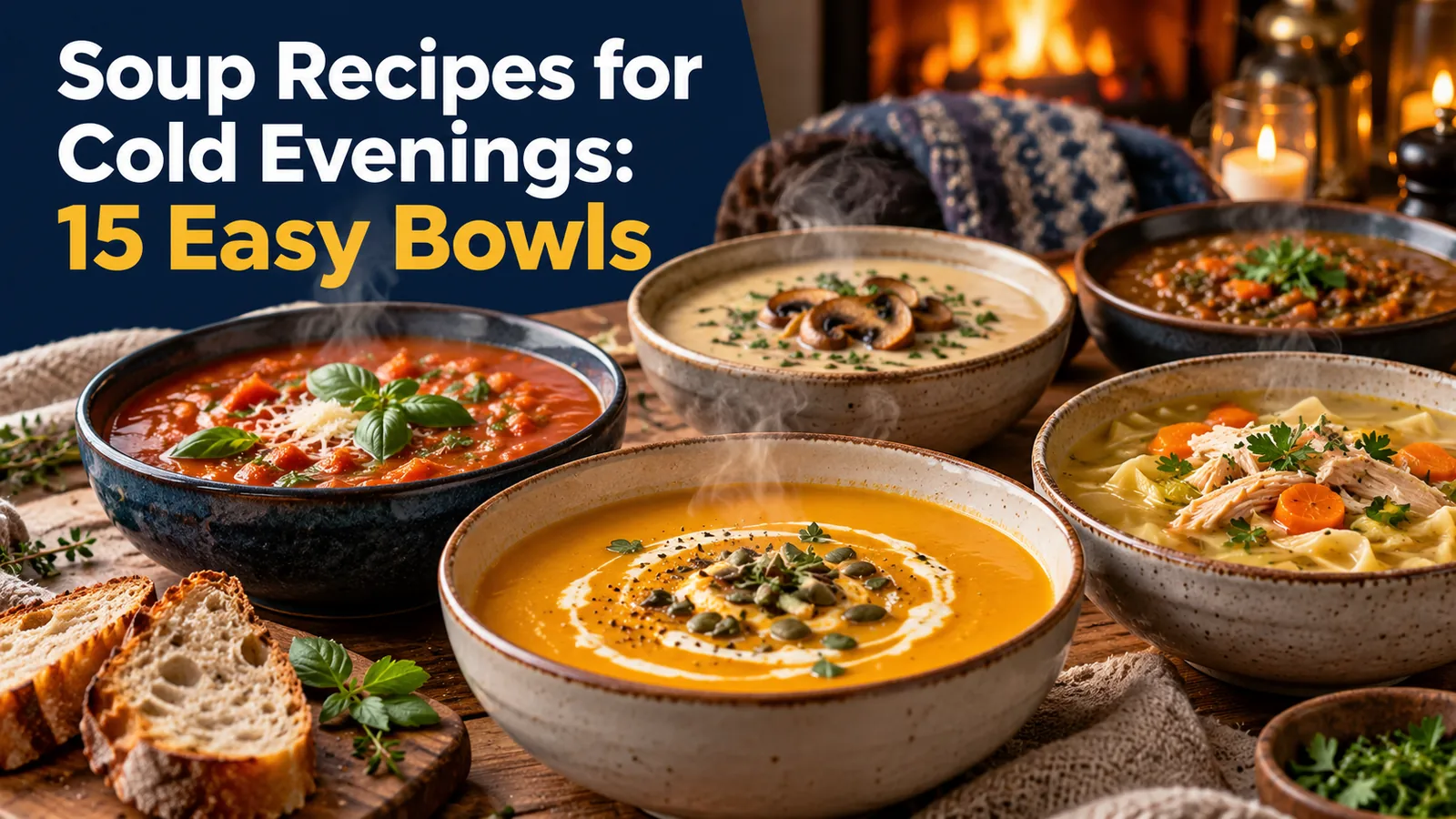
Soup Recipes for Cold Evenings: 15 Easy Bowls

Soup recipes for cold evenings: 15 easy vegetarian bowls with simple methods, plus safe cooling, storage and reheating rules from university guidance.

October 28, 2026 6 min read
Soup Recipes for Cold Evenings: 15 Easy Bowls

Key takeaways

  • The 15 recipes in this guide are our own designs, built from common vegetables, dals and spices.
  • University of Illinois Extension says to refrigerate or freeze cooked food within 2 hours.
  • Eat refrigerated leftovers within 3 to 4 days, and frozen soup within 3 to 4 months.
  • Reheat leftovers to 165 degrees Fahrenheit, and label containers with the date.
  • The CDC advises limiting salt, so season gradually and taste before adding more.

The University of Illinois Extension advises refrigerating or freezing cooked food within 2 hours, eating refrigerated leftovers within 3 to 4 days and reheating them to 165 degrees Fahrenheit. Those three rules matter more than any recipe, because a pot of soup is the food most often cooked in bulk and kept for days.

Here are 15 easy vegetarian soups for cold evenings, with a simple method for each, and a food safety section based on university guidance. The recipes are my own designs, not taken from a source, so adjust seasoning and quantities to taste. Each one serves about four, and uses ingredients available in most Indian kitchens.

Light Vegetable Soups

These five soups are quick, mild and good for a weeknight. Sauté onion and garlic in a little oil, add vegetables and water or stock, simmer until tender and season at the end.

SoupMain ingredientsMethod in brief
1. Classic vegetable soupCarrot, beans, peas, cabbage, onionSimmer 20 minutes with pepper
2. Tomato basil soupTomatoes, onion, garlic, basilCook, blend and strain if you like
3. Sweet corn soupCorn, carrot, beans, gingerSimmer and thicken lightly with corn flour
4. Spinach soupPalak, potato, onionCook, blend until smooth
5. Lemon coriander soupCarrot, beans, lemon, corianderSimmer and finish with lemon

For more dinner ideas that stay inexpensive, see our list of budget friendly family dinners.

Hearty Dal and Lentil Soups

These soups are thicker and work as a full meal with bread or rice. Rinse the dal well and cook until soft.

SoupMain ingredientsMethod in brief
6. Masoor dal soupRed lentils, tomato, cuminPressure cook, blend lightly
7. Moong dal soupYellow moong, ginger, turmericCook soft, temper with cumin
8. Lentil and carrot soupLentils, carrot, onionSimmer, blend half for texture
9. Rajma chili soupKidney beans, tomato, chiliCook beans, simmer with tomato
10. Chana and spinach soupChickpeas, palak, garlicSimmer, mash a few chickpeas

Creamy and Roasted Soups

Roast or simmer the vegetables, then blend. Use a little milk, curd or coconut milk for creaminess if you like, and skip it for a lighter bowl.

SoupMain ingredientsMethod in brief
11. Pumpkin soupPumpkin, onion, gingerRoast or simmer, blend with pepper
12. Roasted carrot ginger soupCarrot, ginger, onionRoast, blend with stock
13. Mushroom soupMushrooms, onion, garlicSauté well, simmer, blend half
14. Broccoli and potato soupBroccoli, potato, onionSimmer, blend until smooth
15. Sweet potato and peanut soupSweet potato, peanut butter, gingerSimmer, blend with a spoon of peanut butter

If you plan soups ahead, our guides to easy meal prep recipes and meal planning for a week show how to cook once and eat twice.

Safe Cooling, Storing and Reheating

University of Illinois Extension advises refrigerating or freezing food within two hours, using smaller containers and an ice bath to cool it faster, and labelling each container with the date. A University of Georgia turkey page confirms the same rules: two hours, three to four days and 165 degrees Fahrenheit.

StepRule
CoolRefrigerate or freeze within 2 hours; use small containers or an ice bath
LabelWrite the date on the container
RefrigeratorEat within 3 to 4 days
FreezerEat within 3 to 4 months
ReheatHeat to 165 degrees Fahrenheit

Do not leave a big pot on the counter overnight. Divide it into shallow containers and chill promptly.

Seasoning and Salt

The CDC advises limiting salt as part of a healthy eating pattern. Add salt in small amounts, taste, and build flavor with ginger, garlic, pepper, lemon, herbs and spices. Packaged stock cubes can be very salty, so use them sparingly.
Related readThanksgiving Vegetable Sides That Steal the ShowRead →

Free tools for Food and Recipes

FAQs

How long can I keep leftover soup in the fridge?

University of Illinois Extension advises eating refrigerated leftovers within 3 to 4 days. Cool the soup within two hours, store it in small containers and label them with the date. When you reheat it, bring it to 165 degrees Fahrenheit. If you are unsure how old it is, throw it out. Always cool the soup promptly, keep it covered and use a clean spoon each time, which lowers the chance of spoilage in the days you keep it in the fridge.

Can I freeze soup?

Yes. University of Illinois Extension says frozen leftovers keep their best quality for 3 to 4 months. Cool the soup quickly, freeze it in small labelled containers and thaw in the refrigerator. Leave a little space at the top of the container for expansion, write the date on a label, and thaw it overnight in the refrigerator before heating it again until it is steaming hot throughout. Use up the thawed soup within a few days and avoid refreezing it more than once.

How do I cool a big pot of soup safely?

Refrigerate or freeze cooked food within two hours. University of Illinois Extension suggests dividing it into smaller containers and using an ice bath to cool it faster. Avoid leaving a large, hot pot on the counter or putting it straight in the refrigerator, where it may stay warm for hours. Stir the soup now and then while it chills, because this releases heat faster, and put the containers in the fridge as soon as they are warm instead of waiting.

What temperature should I reheat soup to?

Heat leftovers to 165 degrees Fahrenheit, according to University of Illinois Extension and the University of Georgia. A thermometer is the best way to check. Stir while heating so the soup warms evenly. Stir during heating and let it stand for a minute, and discard anything that smells off or looks unusual, because reheating cannot always make spoiled food safe again. When in doubt, throw it out, since the cost of one pot is small next to the risk of illness.

Are these recipes from a source?

No. The 15 soups here are our own designs, built from common vegetables, dals and spices. The food safety rules come from University of Illinois Extension and University of Georgia guidance. Adjust seasoning, thickness and spice level to taste, and treat the methods as a starting point. Feel free to swap vegetables with whatever is in season, change the spice level, and use the table methods as a template for your own favorite bowl.

How can I make soup healthier?

Load it with vegetables and pulses, use a little oil and season with spices, lemon and herbs. The CDC advises limiting salt, so add it gradually and taste before adding more. Be careful with packaged stock, cream and fried toppings, which can raise salt and fat quickly. Taste before you serve, and let fresh herbs, lemon and black pepper add flavor, so that you can keep the salt low while the bowl still tastes satisfying.

Cook Once, Eat Safely Twice

A pot of soup is one of the easiest ways to eat well on a cold evening, as long as you cool and store it properly.

Pick one recipe from each group this week, cook a pot on Sunday and label the containers. By Thursday, you will have a warm, ready meal and a kitchen that feels organised.

Sources: University of Illinois Extension: Leftovers and food safety; University of Georgia: Food safety tips for preparing a holiday turkey; CDC: Healthy habits, enhancing immunity

Was this guide helpful?
Jinal Mistry
Written by

Jinal Mistry

Jinal Mistry is the Founder of WritoryBuzz and an SEO & Digital Growth Specialist with 5+ years of experience in Technical SEO, AI SEO, International SEO, and organic growth strategy. She helps businesses improve search visibility through data-driven SEO, content optimization, search experience enhancement, and AI-focused search strategies.Having worked with clients across multiple industries and international markets, Jinal specializes in building sustainable organic growth through technical excellence, user-focused optimization, and future-ready digital marketing practices. Through WritoryBuzz, she shares insights on SEO, AI search, content strategy, digital marketing, and emerging search trends to help businesses and marketers stay ahead in the evolving digital landscape.

More from this author

More in Food and Recipes

View all in Food and Recipes →

Keep exploring

Have expertise to share? Write for WritoryBuzz.Read the guidelines and send us your pitch.
Become a contributor
Free tools

63 free tools for writers, SEOs and developers

Open one in your browser and start. Nothing to install, and your text stays on your device.

PrivateInstant resultsNo sign up
Write for us

Have expertise to share?

  • Original, well researched guides
  • Reviewed by our editors
  • 29 categories to publish in
Submit a guest post
© 2026 WritoryBuzz. All rights reserved.Back to top